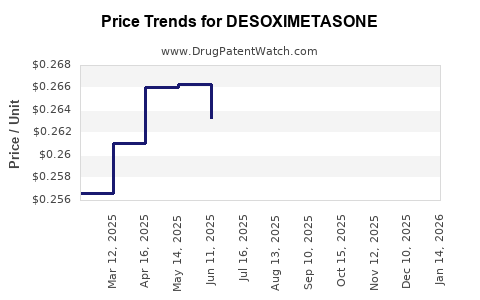
Last updated: February 13, 2026
Market Overview of Desoximetasone
Desoximetasone is a topical corticosteroid used to treat inflammatory skin conditions such as psoriasis, eczema, and dermatitis. It is a potent steroid available in various formulations, including ointments, creams, and gels. The drug has seen steady demand due to the prevalence of dermatological conditions and the expanding scope of dermatology practices.
Current Market Size and Segment Breakdown
The global topical corticosteroids market, valued at approximately $4.2 billion in 2022, is projected to reach $6.5 billion by 2030, growing at a Compound Annual Growth Rate (CAGR) of 5.3% [1].
Desoximetasone accounts for an estimated 4-6% of this market, primarily within North America and Europe, where prescribing rates are highest. The drug's formulation-specific market share varies regionally, with ointments remaining the dominant form.
Key Market Drivers and Challenges
Drivers:
-
Rising incidence of dermatological conditions, including psoriasis, which affected 125 million globally in 2020 [2].
-
Increased awareness of skin health, leading to higher demand for topical corticosteroids.
-
Development of new formulations and delivery systems enhancing efficacy and compliance.
Challenges:
-
Concerns over topical corticosteroid side effects, such as skin thinning and systemic absorption with prolonged use.
-
Stringent regulatory regulations and risk mitigation strategies, including risk evaluation and mitigation strategies (REMS) in the U.S.
-
Competition from biosimilars and newer non-steroidal topical agents.
Price Trends and Projections
Current Pricing Dynamics
In the U.S., average wholesale prices (AWP) for a 15 g tube of desoximetasone ointment range from $25 to $35, depending on formulation and supplier. Retail prices vary, with pharmacy discounts and insurance coverage influencing patient out-of-pocket costs.
Future Price Trends (2023-2030)
-
Market Penetration: Expansion in emerging markets could pressure prices downward due to increased competition.
-
Formulation Innovation: Introduction of newer, more efficacious formulations may sustain or elevate prices.
-
Regulatory Impact: Strict regulations could increase costs of compliance, potentially raising prices temporarily but limiting long-term profit margins.
-
Generic Entry: Patent expirations anticipated between 2024-2026 could lead to significant price erosion, with generic versions priced 40-60% lower than branded products [3].
Price Projections Summary
| Year |
Price Range (per 15 g tube) |
Notes |
| 2023 |
$20 - $35 |
Current market, contains variability by region |
| 2025 |
$15 - $30 |
Entry of generics expected, increased competition |
| 2030 |
$10 - $20 |
Predominantly generic market, price stabilization |
Competitive Landscape
Leading pharmaceutical companies involved include:
-
Galderma: Offers Desoximetasone in multiple formulations.
-
Meda (now part of Mylan): Holds significant market share with established generics.
-
Teva Pharmaceuticals: Produces generic versions with competitive pricing.
Market entrants focus on:
-
Formulation enhancements for improved delivery.
-
Expanding indications to include off-label uses.
-
Developing combination products to increase therapeutic efficacy.
Regulatory Environment and Patent Status
The U.S. FDA has approved desoximetasone formulations for topical use, with ongoing post-marketing surveillance addressing safety concerns. Patent protections typically last 7-10 years post-approval, with patent cliffs expected after 2024, paving the way for generics.
Generic approval requires demonstrating bioequivalence and safety, with FDA pathways facilitating market entry. The regulatory landscape continues to tighten, especially concerning labeling requirements and risk management.
Investment and R&D Trends
-
R&D investments focus on forming new topical formulations, such as foam or nano-emulsions, aiming to enhance absorption and reduce side effects.
-
Some companies explore combination therapies pairing corticosteroids with non-steroidal anti-inflammatory agents, expanding market potential.
-
Biotech startups and generic manufacturers actively pursue patent challenges to accelerate generic entry.
Key Takeaways
-
The therapeutic use and demand for desoximetasone are stable but vulnerable to regulatory and competitive pressures.
-
The market is expected to decline in average price due to generic competition post-2024, with some premium pricing maintained via formulation innovation.
-
The global market expansion, especially in emerging economies, offers growth opportunities but may also induce pricing pressures.
-
Regulatory hurdles and safety concerns influence R&D focus toward safer, more effective formulations.
-
Patent expirations mark a pivotal point, with generics anticipated to dominate pricing and sales volumes.
FAQs
1. What is the primary therapeutic use of desoximetasone?
It treats inflammatory skin conditions such as psoriasis, eczema, and dermatitis through its corticosteroid effects.
2. How might patent expirations affect desoximetasone prices?
Patents expiring around 2024-2026 are expected to lead to increased generic competition, resulting in significant price reductions.
3. Which regions are the largest markets for desoximetasone?
North America and Europe lead in market size, with growing markets in Asia-Pacific as dermatological care expands.
4. Are there safety concerns associated with desoximetasone?
Extended use can cause skin thinning and systemic absorption, leading to regulatory restrictions on prolonged application.
5. How are formulations evolving in the desoximetasone market?
Development focuses on novel delivery systems like foams and nano-emulsions to enhance efficacy and reduce side effects.
References
[1] MarketsandMarkets, "Topical Corticosteroids Market," 2022.
[2] Global Burden of Disease Study, "Skin Disease Prevalence," 2020.
[3] U.S. FDA, "ANDA Approvals and Patent Litigation Data," 2023.