Share This Page
Drug Price Trends for CHILD ALLERGY RELIEF
✉ Email this page to a colleague
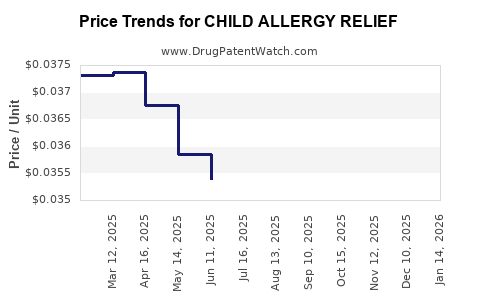
Average Pharmacy Cost for CHILD ALLERGY RELIEF
| Drug Name | NDC | Price/Unit ($) | Unit | Date |
|---|---|---|---|---|
| CHILD ALLERGY RELIEF 1 MG/ML | 69230-0316-11 | 0.03582 | ML | 2026-07-22 |
| CHILD ALLERGY RELIEF 5 MG/5 ML | 70000-0473-01 | 0.04158 | ML | 2026-07-22 |
| CHILD ALLERGY RELIEF 1 MG/ML | 69230-0316-11 | 0.03532 | ML | 2026-06-17 |
| >Drug Name | >NDC | >Price/Unit ($) | >Unit | >Date |
What is the market size for CHILD ALLERGY RELIEF drugs?
The pediatric allergy relief segment is growing due to increased prevalence of allergies among children, which is estimated to impact 20-30% of the pediatric population globally. Market research indicates the global pediatric allergy market was valued at approximately $3.2 billion in 2022. The Compound Annual Growth Rate (CAGR) from 2023 to 2028 is projected at roughly 7%, driven by rising awareness, evolving treatment options, and expanding healthcare infrastructure in emerging markets.
Key market segments include antihistamines, intranasal corticosteroids, and allergen immunotherapies. Among these, antihistamines hold approximately 60% of the market share, with drugs like loratadine, cetirizine, and fexofenadine leading in sales. The intranasal corticosteroids and immunotherapies account for the remaining market share, with immunotherapies expected to grow faster due to targeted treatment benefits.
What are the current price points for CHILD ALLERGY RELIEF treatments?
Pricing varies widely by formulation, brand, and region. In the United States:
-
Loratadine (oral antihistamine): Retail prices range from $10 to $20 per month (over-the-counter, OTC). Generic versions dominate, reducing costs.
-
Cetirizine (Zyrtec): Approximately $12 to $25 per month OTC, with brand-name versions at the higher end.
-
Intranasal corticosteroids (e.g., Fluticasone): Around $15 to $30 per month OTC or through a prescription.
-
Allergen Immunotherapy (subcutaneous, injectable): Initial testing costs $300 to $600. Maintenance shots range from $30 to $80 monthly, with annual costs reaching $360 to $960.
In Europe, prices tend to be lower, influenced by national healthcare policies and price negotiations. For example, generic loratadine typically costs €5 to €10 per month.
How could price projections evolve over the next five years?
Projection models for pediatric allergy relief drugs suggest prices are likely to decrease due to several factors:
-
Market Competition: The entry of generics and biosimilars will drive prices down. For example, generic loratadine and cetirizine are expected to maintain or reduce existing price points.
-
Regulatory Changes: Price control policies in countries like India and the UK aim to limit drug costs, possibly pressuring US prices to follow suit.
-
Manufacturing Advances: Cost reductions from increased production efficiencies will further lower prices.
-
Innovation and Expanded Use: Introduction of newer, potentially more expensive biologics or immunotherapies could temporarily raise costs, but competition is expected to cap future prices.
Based on these factors, prices for OTC antihistamines might decline 10-20% over five years. Prescription-based immunotherapies could stabilize or slightly decrease, but private insurance coverage influences total out-of-pocket expenses more than drug price alone.
Which companies dominate the CHILD ALLERGY RELIEF market?
Major players include:
-
Johnson & Johnson (Zyrtec): Leading antihistamine brand. Zyrtec had about 40% market share in the OTC antihistamine segment in 2022.
-
Pfizer (allergy medications): Strong presence, especially with generic formulations.
-
Sanofi/Regeneron (Dupixent): Biologic immunotherapy approved for eczema and severe allergic asthma, expanding the allergy treatment landscape.
-
AstraZeneca: Offers intranasal corticosteroids, including Fluticasone.
Emerging biotech firms are exploring novel biologics and immunotherapies, seeking to capture portions of this expanding segment.
What regulatory factors influence market and pricing?
Regulatory policies significantly impact drug development, access, and pricing:
-
FDA Approval Processes: Streamlined pathways for generics and biosimilars (ANDA filings) have increased market competition.
-
Pricing Regulations: The U.S. Institute for Clinical and Economic Review (ICER) and similar agencies evaluate cost-effectiveness, influencing reimbursement and formulary decisions.
-
International Price Controls: Countries like the UK (via NICE) negotiate drug prices robustly, forcing companies to adjust global pricing strategies.
-
Patent Law: Patent expirations for key drugs (e.g., Zyrtec in 2025) open markets to generic competition, driving prices down.
Summary and outlook
The CHILD ALLERGY RELIEF pharmaceutical market is expected to expand at a CAGR near 7% through 2028, driven by increasing allergies in children and broader treatment access. Pricing is likely to decline modestly due to generic competition and regulatory pressures, with OTC antihistamines seeing notable reductions. Biologics and immunotherapies will represent a smaller, more expensive segment with growth potential, especially if new approvals expand indications.
Key Takeaways
- The global market was valued at approximately $3.2 billion in 2022 and is projected to grow at a 7% CAGR through 2028.
- OTC antihistamines dominate with stable, low-cost pricing, expected to decline 10-20% over five years.
- Prescription immunotherapies could see stable or slightly decreasing costs, influenced by competition and insurance coverage.
- Patent expirations and biosimilar entries will accelerate price reductions.
- Major players focus on expanding indications and pipeline innovations to maintain market share.
FAQs
-
Which allergen relief drugs for children are most cost-effective?
Generic OTC antihistamines like loratadine and cetirizine offer low-cost options with proven efficacy. -
Are biologic immunotherapies viable for widespread pediatric use?
While effective for severe cases, high costs and regulatory approval timelines limit widespread pediatric application. -
What regions present the best market growth opportunities?
Emerging markets in Asia-Pacific and Latin America show high growth potential due to increased allergy awareness and expanding healthcare infrastructure. -
How does insurance coverage impact pediatric allergy treatment prices?
Insurance can reduce out-of-pocket costs for prescription therapies; however, OTC medications are often paid fully by consumers, influencing price sensitivity. -
What regulatory changes could influence future market dynamics?
Innovations in biosimilars, patent expirations, and price control policies will shape competitive landscapes and pricing strategies.
Sources:
[1] Grand View Research, "Pediatric Allergy Market Size, Share & Trends Analysis," 2022.
[2] IQVIA, "National Prescription Audit Data," 2022.
[3] U.S. Food and Drug Administration, Drug Approvals and Patent Data, 2022.
More… ↓
