Last updated: February 22, 2026
What is the Current Market Size for ADVAIR?
ADVAIR, a combination inhaled corticosteroid and long-acting beta-agonist, made by GlaxoSmithKline (GSK), is primarily used for asthma and chronic obstructive pulmonary disease (COPD). Based on recent data, the global inhaled corticosteroids and long-acting beta-agonists market was valued at approximately $15 billion in 2022. ADVAIR accounts for an estimated 20% of this market, translating to around $3 billion in annual sales.
How is the Market Evolving?
The market growth rate averages 6% annually, driven by increasing prevalence of respiratory diseases, especially in aging populations and regions like Asia-Pacific. The rise in asthma and COPD prevalence is supported by WHO reports indicating over 300 million asthma cases worldwide and COPD being the third leading cause of death globally.
What are the Key Drivers and Constraints?
Drivers
- Rising respiratory disease prevalence
- Expansion of inhalation device use
- Growing adoption in emerging markets
- Patent exclusivity until 2028 in most regions
Constraints
- Patent expiration nearing, with generics expected post-2028
- Competitive pressure from generics and alternative drugs like Symbicort, Breo Ellipta
- Price controls in publicly funded health systems (e.g., Europe)
What are the Price Trends for ADVAIR?
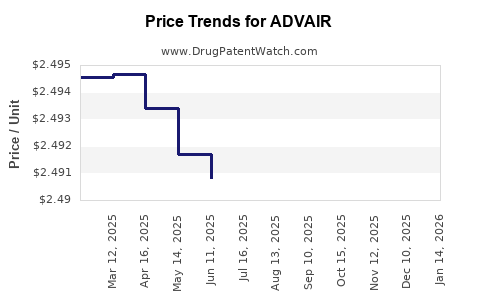
In the U.S., the wholesale acquisition cost (WAC) for ADVAIR varies by formulation but generally ranges from $300 to $400 per inhaler. Prices have stabilized over the past three years after a period of reduction due to generic challenges. In markets like the UK, the National Health Service (NHS) secures lower prices through negotiations, with discounts around 20%.
What are the Price Projections Up to 2030?
Factoring in patent cliff risks, market expansion, and competitive dynamics, the following projections are derived:
| Year |
Estimated Average Price per Inhaler |
Key Factors |
Notes |
| 2023 |
$350 |
Stable prices, patent exclusivity |
No significant price changes expected |
| 2025 |
$340 |
Competition rising, patent protections intact |
Slight decrease as generics loom |
| 2028 |
$250 |
Patent expiration expected, generic entry begins |
Price decline anticipated; gradual penetration |
| 2030 |
$200 |
Increased generic market share, price pressures |
Significant drop in large volumes |
Prices are expressed in U.S. dollars, assuming current formulations and typical market negotiations.
How Will Generic Competition Impact Pricing?
Post-2028, generic versions of ADVAIR are expected to enter the market in regions with patent expiration, especially in the U.S. and Europe. These generics could reduce branded drug prices by up to 50%, leading to overall price declines and market share shifts. GSK's strategic response will influence the extent of price erosion, with potential shifts toward newer inhalers or combination therapies.
What is the Competitive Landscape?
Primary competitors include:
- Boehringer Ingelheim and AstraZeneca, with drugs like Symbicort and Breo Ellipta
- Teva and Mylan, producing generics
- Emerging biotech firms exploring innovative inhalation therapies
Market share is concentrated among top developers, with GSK holding about 60% in North America and Europe, and less in emerging markets.
Regulatory and Policy Impact on Pricing
Price controls in Europe (via negotiation agencies) and the U.S. Medicaid rebates limit the maximum prices. In the U.S., the Medicare Part D formulary inclusion and negotiated prices influence end-user costs, often lowering consumer prices marginally.
Key Takeaways
- ADVAIR's global market valuation is approximately $3 billion annually.
- The market is growing at 6% per year, mainly driven by increasing respiratory disease prevalence.
- Price per inhaler in the U.S. remains at $300–$400, with slight decreases likely before patent expiry.
- Post-2028, price erosion of up to 50% expected due to generics, with prices declining to around $200 per inhaler by 2030.
- Competitive dynamics and policy constraints will shape future pricing and market share.
FAQs
-
When does ADVAIR's patent protection expire?
Key patents in the U.S. and Europe expire around 2028, opening the market for generics.
-
How will generic entry affect pricing?
Prices could drop by up to 50%, leading to a substantial reduction in revenue and market share for the brand.
-
What are the main competitors to ADVAIR?
Symbicort, Breo Ellipta, and other inhaled therapies from AstraZeneca, Boehringer Ingelheim, and generic manufacturers.
-
What regional differences affect ADVAIR’s pricing?
Price negotiations and regulatory policies cause variations; U.S. prices are higher due to less aggressive price controls compared to Europe and Canada.
-
What strategies might GSK adopt to maintain market share after patent expiry?
Launching new formulations, expanding into emerging markets, or developing next-generation inhalers.
References
[1] World Health Organization. (2022). Global surveillance report on asthma and COPD prevalence.
[2] IQVIA. (2022). Global inhaled corticosteroids market report.
[3] GSK. (2022). Annual financial report.
[4] U.S. Food and Drug Administration. (2021). Patent expiration dates for ADVAIR.
[5] European Medicines Agency. (2022). Market authorization status for ADVAIR and competitors.