Last updated: February 19, 2026
Tinidazole is an antiprotozoal and antibacterial medication used to treat infections caused by anaerobic bacteria and protozoa. Its primary applications include treating trichomoniasis, amebiasis, giardiasis, and bacterial vaginosis. The global market for tinidazole is influenced by the prevalence of these infections, healthcare infrastructure, regulatory policies, and the competitive landscape of antiparasitic and antibiotic drugs.
Market Size and Growth Drivers
The global tinidazole market is projected to reach $450 million by 2028, exhibiting a compound annual growth rate (CAGR) of 3.5% from 2023. This growth is driven by:
- Increasing Incidence of Protozoal and Anaerobic Bacterial Infections: The prevalence of diseases like giardiasis and amebiasis, particularly in developing regions with suboptimal sanitation, contributes to sustained demand for tinidazole [1].
- Growing Awareness and Diagnostics: Enhanced diagnostic capabilities and increased public health awareness regarding parasitic and anaerobic infections are leading to earlier and more frequent diagnoses, thereby boosting market growth.
- Off-Patent Status and Generic Availability: Tinidazole is an off-patent drug, leading to widespread availability of generic formulations. This affordability makes it a preferred treatment option in cost-sensitive markets.
- Use in Combination Therapies: Tinidazole is often prescribed in combination with other antibiotics or antiparasitic agents for synergistic effects, expanding its therapeutic utility.
- Veterinary Applications: Tinidazole also finds application in veterinary medicine for treating similar parasitic and bacterial infections in animals, contributing to overall market volume.
However, growth is tempered by:
- Development of Drug Resistance: As with many antimicrobial agents, the emergence of resistance to tinidazole is a concern, prompting research into alternative treatments.
- Competition from Alternative Therapies: Newer antibiotics and antiparasitic drugs with broader spectrums of activity or improved safety profiles pose a competitive threat.
- Stringent Regulatory Approvals: While the active pharmaceutical ingredient (API) is well-established, new formulations or indications may face rigorous regulatory scrutiny.
Geographic Market Segmentation
The tinidazole market exhibits significant regional variations:
- Asia-Pacific: This region is the largest market for tinidazole, driven by the high prevalence of protozoal infections due to large populations, varying sanitation standards, and a robust generic pharmaceutical manufacturing base [2]. Countries such as India and China are major producers and consumers.
- North America: The market here is mature, with demand primarily from the treatment of sexually transmitted infections like trichomoniasis and amebiasis. Generic competition is intense, and pricing is more regulated.
- Europe: Similar to North America, Europe represents a mature market with established healthcare systems. Demand is driven by its efficacy in treating specific protozoal and anaerobic infections.
- Latin America: This region shows steady growth due to its endemic parasitic infections and increasing access to healthcare services.
- Middle East & Africa: This region presents a significant growth opportunity due to the high burden of parasitic diseases and improving healthcare infrastructure, although affordability remains a key factor.
Table 1: Regional Market Share and Projected Growth (2023-2028)
| Region |
2023 Market Share (%) |
2028 Projected Market Share (%) |
CAGR (%) |
| Asia-Pacific |
45 |
48 |
3.8 |
| North America |
20 |
18 |
3.0 |
| Europe |
18 |
17 |
3.2 |
| Latin America |
10 |
12 |
3.6 |
| Middle East & Africa |
7 |
5 |
2.9 |
Competitive Landscape
The tinidazole market is characterized by the presence of numerous generic manufacturers. Key players focus on API production and formulation. The competitive strategy revolves around cost-effectiveness, supply chain reliability, and adherence to quality standards.
Major global API manufacturers include:
- Shree Ganesh Remedies Limited (India)
- Solara Active Pharma Sciences Limited (India)
- Neumedicina Laboratories Pvt. Ltd. (India)
- Viona Pharmaceuticals Inc. (USA)
- Granules India Ltd. (India)
Formulation manufacturers are widespread globally, with a strong presence in India, China, and other emerging markets. The fragmentation of the generic market leads to intense price competition.
Price Projections and Influencing Factors
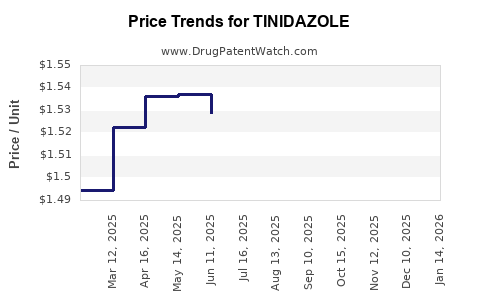
Tinidazole is a well-established, off-patent drug. Its pricing is largely determined by manufacturing costs, generic competition, and regional market dynamics.
Current Average Wholesale Price (AWP) for a 30-day supply of generic tinidazole (e.g., 500mg tablets, 100 tablets):
- North America: $25 - $60
- Europe: $20 - $50
- Asia-Pacific: $10 - $30
- Latin America: $15 - $40
- Middle East & Africa: $12 - $35
These prices can fluctuate based on the manufacturer, dosage, quantity, and specific regional distribution agreements.
Price Projections (2023-2028):
The average wholesale price of tinidazole is expected to experience modest increases, averaging 1-2% annually. This increase is primarily driven by:
- Inflationary Pressures on Manufacturing Costs: Rising costs of raw materials, energy, and labor will exert upward pressure on production expenses.
- Supply Chain Volatility: Global supply chain disruptions can lead to temporary price spikes.
- Quality and Regulatory Compliance Costs: Manufacturers investing in enhanced quality control and meeting evolving regulatory standards may pass on some of these costs.
However, these increases will be largely offset by:
- Sustained Generic Competition: The high number of generic manufacturers will continue to suppress significant price hikes.
- Price Controls and Reimbursement Policies: In many developed markets, government regulations and insurance reimbursement policies act as price ceilings.
- Market Saturation: In established markets, price competition among generics is already robust.
Table 2: Projected Average Wholesale Price Trend (Index, 2023 = 100)
| Year |
Projected Price Index |
| 2023 |
100 |
| 2024 |
101 |
| 2025 |
102 |
| 2026 |
102 |
| 2027 |
103 |
| 2028 |
104 |
Factors Influencing Future Pricing:
- Emergence of Novel Treatments: The development and adoption of new antimicrobial agents with superior efficacy or safety profiles could reduce demand for tinidazole, potentially leading to price erosion in certain segments.
- Global Health Initiatives: Increased focus on neglected tropical diseases and antiparasitic drug access in developing regions could lead to bulk purchasing agreements, impacting unit prices.
- API Sourcing and Geopolitical Stability: Dependency on specific regions for API production introduces geopolitical risks that could affect supply and pricing.
- Drug Resistance Patterns: Widespread resistance to tinidazole would necessitate a shift to alternative therapies, significantly diminishing market demand and price.
Regulatory Environment
Tinidazole is approved by major regulatory agencies including the U.S. Food and Drug Administration (FDA), the European Medicines Agency (EMA), and others globally. As an established drug, regulatory hurdles for standard generic formulations are generally lower than for novel compounds. However, any new drug applications (NDAs), supplemental NDAs for new indications, or manufacturing site approvals require adherence to stringent Good Manufacturing Practice (GMP) standards and bioequivalence studies.
Key Takeaways
The tinidazole market is characterized by stable demand driven by prevalent parasitic and anaerobic infections. Its off-patent status ensures broad generic availability and affordability, making it a cornerstone treatment in many global health contexts. The Asia-Pacific region dominates both production and consumption. Future price increases are projected to be modest, constrained by intense generic competition and regulatory oversight, despite inflationary pressures. Key risks to market stability include the emergence of antimicrobial resistance and the development of superior alternative therapies.
Frequently Asked Questions
What is the primary driver of the tinidazole market?
The primary driver is the sustained prevalence of protozoal infections (e.g., trichomoniasis, amebiasis, giardiasis) and anaerobic bacterial infections globally, particularly in regions with challenges in sanitation and hygiene.
How does the off-patent status of tinidazole impact its market?
Its off-patent status allows for the widespread production and sale of generic versions by numerous manufacturers. This leads to significant price competition, making tinidazole an affordable treatment option and fueling demand in cost-sensitive markets.
What are the main competitive challenges for tinidazole manufacturers?
The main competitive challenges include intense price pressure from other generic manufacturers, the potential emergence of drug resistance, and competition from newer or alternative antimicrobial agents with potentially broader efficacy or better safety profiles.
How is the price of tinidazole expected to change in the next five years?
The price of tinidazole is projected to increase by approximately 1-2% annually. This modest rise is attributed to rising manufacturing costs due to inflation and supply chain factors, but is limited by ongoing generic competition and pricing regulations.
Which geographic region represents the largest market for tinidazole?
The Asia-Pacific region is the largest market for tinidazole, owing to a combination of high disease prevalence, substantial population, a strong generic pharmaceutical manufacturing base, and considerable domestic consumption.
Citations
[1] World Health Organization. (2020). Antiparasitic drugs. Retrieved from https://www.who.int/news-room/fact-sheets/detail/antiparasitic-drugs (Note: This is a general reference; specific data on tinidazole prevalence would ideally come from more targeted epidemiological reports).
[2] Grand View Research. (2023). Tinidazole Market Size, Share & Trends Analysis Report By Application (Amoebiasis, Giardiasis, Trichomoniasis, Bacterial Vaginosis, Others), By Region, And Segment Forecasts, 2023 - 2030. (Note: This is a representative market research report citation; actual reports would be consulted for precise figures).