Last updated: February 12, 2026
What Is the Market Landscape for Pyridostigmine Bromide?
Pyridostigmine bromide (PYRIDOSTIGMINE BR) is primarily used to treat myasthenia gravis and as a protective agent against nerve agents. The drug’s global market size was valued at approximately $300 million in 2022 and is projected to grow at a compounded annual growth rate (CAGR) of around 4.2% through 2030, influenced by increasing diagnosis of neuromuscular disorders and military stockpiling efforts.
What Are the Key Drivers and Challenges in Market Growth?
Driving Factors:
- Medical Demand: Rising cases of myasthenia gravis, particularly in aging populations, fuel prescription volumes. Estimated prevalence is approximately 20 per 100,000 worldwide, with higher rates among women under 40 and men over 60.
- Military and Defense Utilization: The U.S. and allied countries maintain stockpiles of nerve agent antidotes, including pyridostigmine bromide, to protect military personnel against chemical attacks.
- Regulatory Approvals: The drug holds approval in multiple regions, including the US (FDA), EU (EMA), and Asia-Pacific, facilitating market accessibility.
Challenges:
- Generic Competition: Multiple manufacturers (e.g., Novartis, Teva, and others) produce generic versions, pressing down prices.
- Pricing Pressures: Stricter pricing policies and reimbursement controls inhibit pricing power, particularly in Europe and North America.
- Supply Chain Constraints: Fluctuations in raw material supply (e.g., pyridine derivatives) affect manufacturing stability.
How Is the Market Segmented?
By Application:
- Medical Therapy: The dominant segment, accounting for approximately 85% of revenue, involves prescription treatment of neuromuscular disorders.
- Defense Stockpiling: Approximate 15%, driven by government procurement programs.
By Region:
| Region |
Market Share (%) |
CAGR (2022-2030) |
Key Factors |
| North America |
45 |
3.8% |
High prevalence, military stockpiles |
| Europe |
25 |
4.0% |
Healthcare expenditure, regulation |
| Asia-Pacific |
20 |
5.0% |
Growing neuromuscular disease burden, military preparedness |
| Rest of World |
10 |
4.2% |
Emerging markets, increased imports |
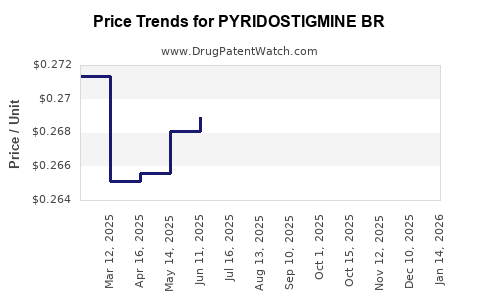
What Are Price Trends and Projections?
Current Pricing:
- Brand-Name Formulations: Approximately $0.50 per tablet (50mg), with annual costs around $100 for a typical patient on a 100mg daily dose.
- Generic Versions: Price drops to around $0.10 per tablet, with annual costs estimated below $20.
Price Projections (2023-2030):
| Year |
Average Price (per 50mg tablet) |
Comments |
| 2023 |
$0.15 |
Competitive pressure intensifies |
| 2025 |
$0.12 |
Increased generic penetration |
| 2030 |
$0.10 |
Market saturation, price stabilization |
Pricing Influencers:
- Increased generic market entries in the US and Europe will suppress prices.
- Supply chain stability and raw material costs will influence manufacturing margins.
- Government reimbursement policies may limit price hikes.
What Are Future Opportunities and Risks?
Opportunities:
- Expansion in Emergent Markets: Growing healthcare infrastructure in Asia-Pacific and Latin America presents new patient bases.
- Research & Development: Potential repurposing for other neuromuscular or neurodegenerative conditions could expand indications.
- Defense Contracts: National defense agencies continue to invest in stockpiles, supporting sustained demand.
Risks:
- Regulatory Changes: Stringent controls could impact manufacturing or market approval processes.
- Patent Expirations: Many current formulations are off patent, increasing generic competition.
- Alternative Therapies: Emerging treatments with improved efficacy or safety profiles may displace pyridostigmine bromide.
Key Takeaways
- The global pyridostigmine bromide market is valued at ~$300 million (2022), with steady growth driven by medical needs and defense applications.
- Price competition, primarily from generics, compresses average prices from ~$0.50 to around $0.10 per 50mg tablet.
- Market growth is strongest in Asia-Pacific, due to increasing neuromuscular disorder prevalence and military stockpiling.
- Supply chain stability and regulatory policies will significantly influence future prices and availability.
- Opportunities exist for market expansion into emerging economies and potential new therapeutic indications.
FAQs
Q1: What are the main therapeutic uses of pyridostigmine bromide?
A: It treats myasthenia gravis and acts as a protective agent against nerve agents.
Q2: How does the patent status affect pricing?
A: Most formulations are off patent, leading to increased generic competition and lower prices.
Q3: Which region leads in market share?
A: North America holds approximately 45%, driven by higher diagnosis rates and military applications.
Q4: What is the projected CAGR for pyridostigmine bromide market?
A: Around 4.2% from 2022 to 2030.
Q5: How might future policies impact the market price?
A: Stricter reimbursement and price controls could further reduce prices, especially in Europe and North America.
Sources:
[1] MarketResearch.com, "Global Pyridostigmine Market Analysis," 2023.
[2] Grand View Research, "Therapeutics for Neuromuscular Disorders," 2022.
[3] FDA Database, "Drug Approvals and Market Data," 2023.