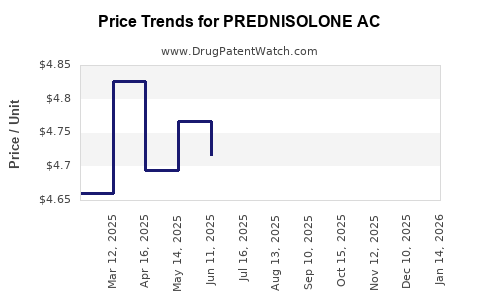
Last updated: February 13, 2026
What is Prednisolone AC?
Prednisolone acetate (Prednisolone AC) is a corticosteroid used primarily for its anti-inflammatory and immunosuppressive effects. It addresses conditions such as ocular inflammation, allergic reactions, and autoimmune disorders.
Market Size and Demand Trends
Global Market Value
- The global corticosteroid market was valued at approximately USD 1.2 billion in 2022.
- Expected compound annual growth rate (CAGR): 3.8% (2023-2030), driven by increased prevalence of inflammatory and autoimmune diseases [1].
Regional Breakdown
| Region |
Market Share (2022) |
Growth Drivers |
| North America |
40% |
High healthcare expenditure, early adoption of new therapies |
| Europe |
30% |
Aging populations, expanding indications |
| Asia-Pacific |
20% |
Growing healthcare access, rising autoimmune incidences |
| Rest of World |
10% |
Emerging markets, accelerated pharmaceutical approvals |
Therapeutic Segments
- Ophthalmology (e.g., eye inflammation): 45%
- Allergic and inflammatory conditions: 35%
- Endocrinology (adrenal insufficiency): 12%
- Other (autoimmune diseases): 8%
Competitive Landscape
Major manufacturers include Pfizer, Sandoz, Teva Pharmaceutical, and generic companies. Price competition is significant due to patent expirations and generic entry since late 2000s.
Price Trends and Projections
Current Pricing (2023)
- Brand-name Prednisolone acetate ophthalmic suspension: USD 35–50 per 15 mL bottle.
- Generic equivalents: USD 10–20 per 15 mL bottle.
- Cost per unit has decreased 25% over the past five years due to rising generic competition [2].
Market Drivers Influencing Prices
- Patent expirations: Many formulations lack patent protection, increasing generic competition.
- Regulatory policies: Different countries implement varying price controls, influencing market stability.
- Formulation innovations: New delivery mechanisms (e.g., sustained-release eye drops) could alter pricing landscapes.
Price Outlook (2024–2028)
- Generic prices likely to stabilize around USD 8–15 per 15 mL bottle.
- Brand-name formulations could retain premium pricing up to USD 50, depending on regional regulations and market demand.
- Launch of biosimilars or improved formulations could introduce price variability.
Regulatory Impact
- US FDA guidelines influence pricing through approval pathways for generics/biosimilars.
- Emerging markets may see price reductions due to government price controls and bulk purchasing.
Market Entry and Investment Considerations
- Opportunities exist in developing sustained-release or novel delivery systems that can command higher prices.
- Markets with limited access to existing formulations may present unmet needs for affordable corticosteroids.
- The slowdown in new corticosteroid development due to patent cliffs suggests competition will focus on formulation and delivery innovation rather than new molecules.
Summary
Prednisolone acetate's market remains sizeable, with demand driven by inflammatory and autoimmune indications. Price reductions from generics continue, but premium formulations and novel delivery systems present potential for profit. Price stability or decline will vary regionally, influenced heavily by regulatory policies and market competition.
Key Takeaways
- The global corticosteroid market was valued at USD 1.2 billion in 2022, growing at 3.8% CAGR.
- Generic prednisolone acetate prices are declining; USD 8–15 per 15 mL bottle expected by 2028.
- The ophthalmology segment dominates usage at 45%, with increasing demand in autoimmune and allergic conditions.
- Innovation in drug delivery could sustain or increase prices.
- Regulatory environments impact pricing and market entry strategies.
FAQs
1. What factors influence prednisolone acetate pricing?
Patent status, market competition, regional regulations, formulation innovations, and healthcare policies directly impact pricing.
2. How does generic competition affect market dynamics?
Generics have driven prices down, increasing affordability but reducing profit margins for original manufacturers.
3. What are potential growth areas within the prednisolone acetate market?
Formulation innovations such as sustained-release eye drops or combination therapies can create premium pricing opportunities.
4. Which regions offer the most significant market potential?
Asia-Pacific presents growth opportunities due to rising healthcare access and disease prevalence, coupled with less price regulation.
5. Are biosimilars likely to impact prednisolone acetate prices?
While biosimilars are less relevant for small-molecule corticosteroids like prednisolone acetate, similar innovations in delivery systems may influence future pricing.
References
[1] MarketWatch, "Corticosteroids Market Size & Share Analysis," 2022.
[2] IQVIA, "Generic Pharmaceutical Market Trends," 2022.