Last updated: February 12, 2026
What Is Mupirocin and Its Current Market Status?
Mupirocin is a topical antibiotic primarily used to treat skin infections and to eradicate nasal carriage of methicillin-resistant Staphylococcus aureus (MRSA). It was first approved in the US in 1987. The drug is marketed under brand names such as Bactroban and Centany, with generic versions widely available.
The global mupirocin market has experienced steady growth, driven by increasing antibiotic resistance, particularly MRSA, and rising incidence of skin infections. The drug's application in hospital settings and community health contributes to its demand.
How Does the Market Size and Revenue Breakdown Look?
As of 2022, the global mupirocin market size is estimated at approximately USD 400 million. North America accounts for roughly 55% of this market, driven by high MRSA prevalence and extensive healthcare infrastructure. Europe follows with about 25%, expanding due to increasing antibiotic resistance cases.
Growth projections suggest a compound annual growth rate (CAGR) of 4-6% over the next five years. The growth is influenced by:
- Rising MRSA infections globally
- Aging populations with increased skin infection risks
- Expanded use in decolonization protocols in hospitals
The United States leads the market, with revenues exceeding USD 200 million annually. The Asia-Pacific region shows potential for growth, expected to reach USD 100 million by 2027, supported by improving healthcare access and emerging antimicrobial resistance issues.
What Are the Key Drivers and Barriers?
Drivers
- Antibiotic Resistance: The rise of antibiotic-resistant bacteria heightens demand for effective topical agents like mupirocin.
- Hospital Protocols: The routine use of mupirocin in infection control and decolonization strategies enhances steady demand.
- Regulatory Approvals: Expanding indications and approvals for different formulations drive market growth.
Barriers
- Generic Competition: The drug's patent expired in many regions, leading to price reductions and intense price competition.
- Concerns Over Resistance Development: Increased resistance may limit mupirocin's efficacy, potentially restricting its use.
- Limited Patent Protection: Absence of patent exclusivity limits opportunities for premium pricing.
What Are the Development and Patent Trends?
The original patent for mupirocin expired in 2001 in the US, leading to a surge in generic products. Limited patents remain for new formulations or combination therapies, with some companies exploring derivatives or enhanced delivery systems to extend market exclusivity.
No recent patents have been filed for new chemical entities of mupirocin, but innovative formulations—such as liposomal or sustained-release versions—are under investigation, potentially offering competitive advantages.
What Are the Price and Revenue Trends?
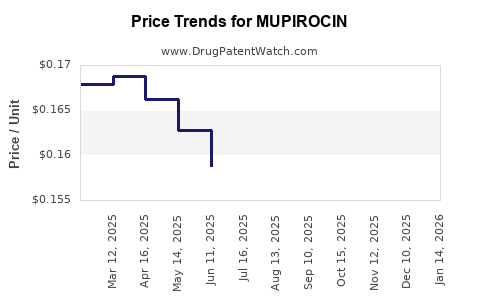
Unit prices for branded mupirocin preparations historically ranged from USD 8 to USD 12 per tube in the US. Generics sell at approximately USD 4 to USD 7, resulting in significant price competition.
In hospital settings, per-treatment costs average USD 15-25, considering multiple applications. Price erosion due to generic entry has affected revenue, but growth in volume offsets this.
Projections indicate that:
- Overall prices will decline by 2-4% annually in mature markets.
- Revenue growth will mainly stem from increased volume rather than price increases.
What Regulatory and Reimbursement Environments Impact Pricing?
In the US, mupirocin is covered largely under Medicare and commercial insurance plans, with reimbursement levels comparable across providers.
In Europe, approvals are managed at the national level, with reimbursement policies varying. In many countries, mupirocin remains off-patent with government-subsidized pricing, influencing profit margins.
Regulatory pressures to combat antibiotic resistance could lead to restrictions on use or mandatory stewardship protocols, potentially impacting sales volume and pricing.
How Do Competitive Dynamics Affect Market Outlook?
The presence of multiple generic brands intensifies price competition. Few recent innovations or new formulations hold significant market share potential unless backed by strong clinical evidence or improved delivery mechanisms.
Companies exploring alternative application methods, such as nasal gels or combination therapies, seek to differentiate offerings and extend lifecycle.
Key Takeaways
- The global mupirocin market is valued at USD 400 million (2022) with a CAGR of 4-6% anticipated.
- North America leads due to high MRSA prevalence; Asia-Pacific offers growth opportunities.
- Market growth mainly derives from volume increases, not price hikes, due to intense generic competition.
- Resistance concerns and stewardship policies could restrict future use, impacting long-term demand.
- Innovation in formulations offers potential but requires validation and regulatory approval.
FAQs
1. What are the main clinical uses of mupirocin?
Treats skin and soft tissue infections and facilitates nasal decolonization of MRSA.
2. How has patent expiration impacted mupirocin pricing?
Patent expiry in 2001 led to generic entry and significant price reductions.
3. Are there ongoing efforts to develop new mupirocin formulations?
Yes. Liposomal and sustained-release formulations are under investigation to improve delivery and efficacy.
4. What factors could limit the future growth of mupirocin?
Increasing resistance, restrictive stewardship policies, and a saturated generic market.
5. How does resistance development affect mupirocin's market?
Rising resistance could restrict its use to specific indications, lowering overall sales.
References
- Market Research Future. "Mupirocin Market Analysis," 2022.
- EvaluatePharma. "Global Antibiotics Market Review," 2022.
- CDC. "Methicillin-Resistant Staphylococcus Aureus (MRSA) Surveillance," 2021.
- U.S. Food and Drug Administration (FDA). "Drug Approvals and Patents," 2021.
- IQVIA. "Prescription Trends for Top Antibiotics," 2022.