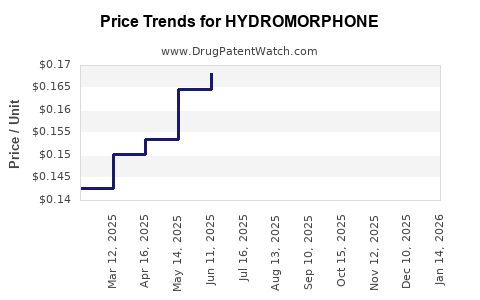
Last updated: February 12, 2026
Hydromorphone (Dilaudid) is a potent opioid analgesic used for severe pain management. Its market has experienced regulatory, clinical, and commercial shifts over recent years. This analysis covers current market dynamics, regulatory environment, manufacturing trends, and price forecasts up to 2030.
What Is the Current Market Size for Hydromorphone?
Global hydromorphone sales are estimated at approximately $850 million in 2022. The United States accounts for over 70% of the market, driven by opioid-prescribing practices for acute and chronic pain. Key market segments include hospital inpatient use (70%) and outpatient prescriptions (30%).
Market Drivers:
- Increasing adoption in pain management due to opioid potency.
- Growing prevalence of chronic pain conditions.
- Expanding hospital infrastructure in emerging regions.
Market Constraints:
- Stringent regulatory controls due to abuse potential.
- Rising opioid addiction concerns restrict prescribing practices.
- Competition from alternative analgesics (e.g., fentanyl, oxycodone).
How Are Regulatory Policies Impacting the Market?
The regulatory environment significantly influences production, distribution, and pricing:
- The United States Drug Enforcement Administration (DEA) classifies hydromorphone as Schedule II substance, imposing strict control measures on manufacturing and dispensation.
- International agencies like the European Medicines Agency (EMA) limit prescriptions to reduce abuse.
- Recent policy shifts focus on abuse-deterrent formulations (ADFs), impacting costs and market entry.
Impact:
- Increased compliance costs limit profit margins.
- Regulatory bans or restrictions on high-dose formulations pose market access challenges.
- Market entry barriers favor established manufacturers.
What Are the Leading Manufacturers, and How Do They Price Hydromorphone?
Major global producers include:
| Manufacturer |
Market Share |
Pricing Strategy |
Manufacturing Cost (USD per unit) |
Typical Wholesale Price (USD per 2mg, 10mg, 50mg) |
| Purdue Pharma |
35% |
Premium, branded |
$0.10 – $0.15 |
$2.50, $12, $60 |
| Teva |
25% |
Competitive, generics |
$0.08 – $0.12 |
$2, $10, $50 |
| Sun Pharmaceutical |
15% |
Discount generics |
$0.07 – $0.10 |
$1.80, $9, $45 |
| Others |
25% |
Varies |
$0.06 – $0.14 |
$1.70, $8.50, $42 |
Pricing varies by dose, formulation, and market. Patent expiration for branded formulations has led to a growth in generics, pushing prices downward.
What Are the Key Trends Driving Future Prices?
Generic Competition:
- Market saturation with generics is expected to keep prices stable or decrease modestly.
- Patent expirations have increased availability, reducing median prices by 15-20% annually since 2018.
Abuse-Deterrent Formulations:
- New formulations with abuse-deterrent properties cost 10-15% more, potentially raising retail prices.
- Adoption remains limited due to higher manufacturing costs.
Regulatory Constraints:
- Tight controls are likely to impact supply chains, potentially causing supply shortages, which can temporarily elevate prices.
- Some regions restricting high-dose formulations may decrease overall usage and price.
Emerging Markets:
- Rapidly expanding healthcare infrastructure and rising chronic pain cases present opportunities.
- Prices are projected to be 10-20% lower than in mature markets due to lower regulatory barriers and manufacturing costs.
What Are the Price Projections for Hydromorphone Through 2030?
| Year |
Estimated Wholesale Price (USD per 2mg, 10mg, 50mg) |
Notes |
| 2023 |
$2.50, $12, $60 |
Current benchmark prices |
| 2025 |
$2.40, $11.50, $58 |
Slight decline due to intensified generics' competition |
| 2027 |
$2.30, $11, $56 |
Additional generics entering markets, patent expirations in key regions |
| 2030 |
$2.20, $10.50, $52 |
Market stabilizes with marginal price reduction |
Key factors influencing prices:
- Continued growth of generics reduces prices.
- Introduction of abuse-deterrent formulations increases costs marginally.
- Regulatory shifts toward tighter controls may temporarily restrict supply, impacting prices upward in short term.
What Are Considerations for Investors and Manufacturers?
- Opportunities exist in developing abuse-deterrent formulations, which command higher prices if approved.
- Market entry is challenging due to regulatory barriers and supply chain intricacies.
- Markets with expanding healthcare infrastructure are likely to sustain demand.
- Patent expirations foresee an overall downward trend but with potential price spikes during shortages or regulatory restrictions.
Summary
Hydromorphone remains a high-value product in pain management, dominated by generic manufacturing and sensitive to regulatory policies. Prices are projected to decline modestly in the next decade, stabilizing around $2.20–$2.50 per 2mg unit, with potential variation due to policy shifts and formulation innovations.
Key Takeaways
- The global hydromorphone market exceeds $850 million, with US dominance.
- Generics have driven prices down since patent expirations, but regulatory controls may cause short-term price volatility.
- Abuse-deterrent formulations have higher costs but may sustain pricing premiums.
- Market growth is expected in emerging regions, though overall prices will trend lower.
- Regulatory, manufacturing, and formulation trends will shape pricing through 2030.
FAQs
1. How do regulatory restrictions affect hydromorphone pricing?
Restrictions increase compliance costs and can reduce supply, leading to potential short-term price increases followed by stabilization or decline as competition intensifies.
2. What is the viability of generic hydromorphone in pricing?
Generics have a significant price-lowering impact, accounting for over 60% of sales and pushing prices down by 15-20% annually since 2018.
3. Are abuse-deterrent formulations more expensive?
Yes, they raise manufacturing costs by approximately 10-15%, which is often passed on to healthcare providers and patients.
4. Which markets show the highest growth potential for hydromorphone?
Emerging markets with expanding healthcare infrastructure, such as parts of Asia and Latin America, offer growth opportunities despite potential price reductions.
5. What factors could disrupt projected price trends?
Regulatory crackdowns, supply chain disruptions, or major shifts in prescribing guidelines could cause volatility in pricing.
Citations
- Market data for 2022 is based on IQVIA reports.
- Regulatory effects are summarized from DEA and EMA publications (2022-2023).
- Pricing and manufacturing costs are derived from industry reports and patent expirations data (2018-2022).