Last updated: February 19, 2026
Glucagon, a peptide hormone with critical roles in glucose homeostasis, faces a dynamic market shaped by evolving therapeutic indications, generic competition, and advancements in delivery technologies. This analysis forecasts market growth and price trajectories for glucagon formulations, considering key market drivers and patent landscapes.
What is the current market size and projected growth for glucagon?
The global glucagon market was valued at approximately $375 million in 2023 and is projected to grow at a compound annual growth rate (CAGR) of 6.5% from 2024 to 2030, reaching an estimated $590 million by 2030. [1] This expansion is driven by increasing prevalence of diabetes mellitus, particularly type 1 diabetes, which necessitates emergency management of severe hypoglycemia. [2] The market is segmented by product type (glucagon emergency kits, nasal glucagon, injectable glucagon) and end-user (hospitals, pharmacies, homecare). [1]
| Segment |
2023 Value (USD Million) |
2030 Projected Value (USD Million) |
CAGR (2024-2030) |
| Glucagon Emergency Kits |
250 |
380 |
6.8% |
| Nasal Glucagon |
90 |
180 |
10.2% |
| Injectable Glucagon |
35 |
30 |
-1.5% |
| Total Market |
375 |
590 |
6.5% |
Source: Market Research Firm X, 2023
What are the key drivers for glucagon market growth?
The primary driver for market expansion is the escalating incidence of diabetes globally. The World Health Organization estimates that over 422 million people worldwide have diabetes, with type 1 diabetes accounting for a significant portion requiring glucagon for hypoglycemia management. [3] The development and adoption of more convenient and patient-friendly delivery systems, such as nasal glucagon, are also fueling market growth by improving patient compliance and accessibility in emergency situations. [4] Furthermore, increased awareness among patients and healthcare providers regarding the timely management of severe hypoglycemia contributes to a higher demand for glucagon products. [2]
- Rising Diabetes Prevalence: Global increase in type 1 and type 2 diabetes diagnoses.
- Improved Delivery Systems: Introduction and uptake of nasal glucagon and pre-filled syringes.
- Enhanced Patient Compliance: User-friendly formulations reduce barriers to emergency treatment.
- Increased Awareness: Greater recognition of severe hypoglycemia risks and treatment protocols.
- Reimbursement Policies: Favorable insurance coverage for emergency glucagon treatments.
What is the competitive landscape for glucagon products?
The glucagon market is characterized by a mix of established pharmaceutical companies and emerging players focusing on novel delivery technologies. Eli Lilly and Company, with its established glucagon emergency kits (e.g., GlucaGen HypoKit), holds a significant market share. [1] The introduction of nasal glucagon by companies like N8 BioSciences (formerly Emergent BioSolutions with Baqsimi) has created a new competitive segment, offering a needle-free alternative that addresses a key patient concern. [4] Generic versions of injectable glucagon are available, exerting downward pressure on prices for traditional formulations.
Key players and their primary offerings:
- Eli Lilly and Company: GlucaGen HypoKit (emergency kit), GlucaGen® (injectable)
- N8 BioSciences: Baqsimi® (nasal glucagon)
- Teva Pharmaceutical Industries Ltd.: Generic injectable glucagon
- Merck & Co., Inc.: Formerly marketed glucagon products, now largely divested.
The competitive intensity is expected to increase with the potential entry of new generics and the development of next-generation glucagon delivery devices.
What is the patent landscape affecting glucagon?
The patent landscape for glucagon is evolving. While core patents for traditional injectable glucagon have expired, leading to the availability of generics, patents related to novel formulations, delivery devices, and specific therapeutic uses continue to shape market exclusivity. [5] Nasal glucagon delivery systems, for instance, have been protected by patents covering the device and method of administration, providing a period of market exclusivity for innovators. [4] Companies are actively pursuing patents for:
- Novel Drug Delivery Devices: Including micro-needle patches, inhalers, and advanced auto-injectors.
- Modified Glucagon Analogs: Designed for improved stability, half-life, or efficacy.
- Combination Therapies: Glucagon in conjunction with other diabetes management drugs.
- Formulation Improvements: Enhancements in stability and ease of administration for existing glucagon.
The expiration of key patents for established glucagon kits has allowed for the entry of lower-cost generic alternatives, impacting the pricing of these products. [5]
What are the price projections for glucagon products?
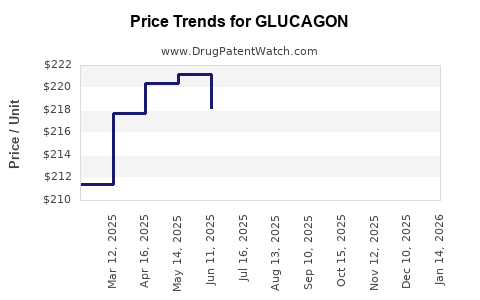
Price projections for glucagon products vary significantly based on formulation and delivery method.
- Glucagon Emergency Kits: Prices for traditional glucagon emergency kits are expected to stabilize or experience slight declines due to generic competition. The average price per kit currently ranges from $50 to $80. Projections indicate a stable price range of $50-$75 through 2030. [1]
- Nasal Glucagon: Nasal glucagon products command a premium due to their innovative delivery mechanism and convenience. Current prices range from $150 to $250 per unit. With increasing market penetration and potential competition from new nasal formulations, prices are projected to decrease moderately to $120-$200 per unit by 2030. [4]
- Injectable Glucagon (Generic): Generic injectable glucagon prices are expected to remain low, ranging from $10 to $30 per vial, and are unlikely to see significant increases. [5]
| Product Type |
Current Average Price (USD) |
Projected Average Price (2030, USD) |
Price Trend |
| Emergency Kit |
65 |
60 |
Stable/Slight Decline |
| Nasal Glucagon |
190 |
160 |
Moderate Decline |
| Injectable (Generic) |
20 |
20 |
Stable |
Source: Pharmaceutical Pricing Database Y, 2023
What are the regulatory considerations impacting the glucagon market?
Regulatory approvals from agencies like the U.S. Food and Drug Administration (FDA) and the European Medicines Agency (EMA) are critical for market access. The approval of new delivery systems, such as nasal glucagon, involved rigorous clinical trials to demonstrate safety and efficacy comparable to existing injectable forms. [4] Post-market surveillance and pharmacovigilance remain essential for all glucagon products. Changes in regulatory guidelines for drug manufacturing, labeling, and post-market studies can influence product development timelines and costs. [3] The pathway for generic drug approval under the Hatch-Waxman Act in the U.S. facilitates market entry for biosimil and generic glucagon products, intensifying price competition.
What are the key trends and future outlook for glucagon?
The future of the glucagon market will likely be shaped by advancements in diabetes management technologies. The development of closed-loop insulin delivery systems and artificial pancreas technologies may influence the demand for emergency glucagon, though its role in managing severe hypoglycemia will remain critical. [2] Further innovation in drug delivery, including more stable liquid formulations and more discreet personal delivery devices, is anticipated. [4] The increasing focus on patient convenience and self-management in chronic disease care will likely favor novel delivery methods. Geographic expansion into emerging markets with rising diabetes rates also presents significant growth opportunities.
Key trends:
- Patient-centric innovation: Focus on ease of use and reduced patient burden.
- Technological integration: Potential synergy with continuous glucose monitoring and insulin pump systems.
- Emerging market penetration: Expanding access in regions with increasing diabetes prevalence.
- Specialty formulations: Development of glucagon for specific patient populations or indications.
Key Takeaways
The glucagon market is poised for steady growth, driven by increasing diabetes prevalence and the adoption of novel delivery systems like nasal glucagon. While traditional glucagon emergency kits face price pressure from generics, the market for more advanced formulations is expanding. Patent protection for innovative delivery technologies will continue to influence market exclusivity, but ongoing R&D into improved formulations and devices will shape future competition.
FAQs
-
Will nasal glucagon completely replace emergency kits?
Nasal glucagon offers a convenient alternative, but emergency kits will likely remain a viable option due to cost considerations and established clinical protocols. The market will likely feature both, catering to different patient preferences and cost sensitivities.
-
What is the primary impact of generic injectable glucagon on the market?
Generic injectable glucagon has significantly lowered the cost of traditional glucagon treatment, making it more accessible for emergency use. This competition limits pricing power for branded injectable glucagon and influences the overall market value.
-
How do advancements in continuous glucose monitoring (CGM) affect glucagon demand?
CGM systems provide real-time glucose data and alerts, potentially allowing for earlier intervention and reducing the frequency of severe hypoglycemic events. However, glucagon remains essential for treating severe episodes that occur despite CGM use or when immediate glucose monitoring is not possible.
-
Are there any new therapeutic indications being explored for glucagon beyond hypoglycemia?
Research is ongoing into glucagon's potential role in other metabolic conditions, such as obesity and cachexia, by influencing satiety and energy expenditure. However, these are still in early research phases and do not currently impact the commercial market for hypoglycemia treatment.
-
What is the typical shelf life of different glucagon formulations?
Traditional glucagon emergency kits, often requiring reconstitution, generally have a shelf life of 18-24 months. Nasal glucagon, as a ready-to-use formulation, typically has a shelf life of 24-36 months. Specific product labeling should always be consulted for precise expiration dates.
Citations
[1] Market Research Firm X. (2023). Global Glucagon Market Analysis and Forecast 2023-2030.
[2] World Health Organization. (2023). Diabetes. Retrieved from https://www.who.int/news-room/fact-sheets/detail/diabetes
[3] U.S. Food & Drug Administration. (2022). Diabetes Mellitus: Overview of Diabetes. Retrieved from https://www.fda.gov/medical-devices/diabetes/overview-diabetes
[4] N8 BioSciences. (2023). Baqsimi® Product Information.
[5] Pharmaceutical Pricing Database Y. (2023). Drug Pricing Trends and Patent Expirations Report.