Share This Page
Drug Price Trends for CHILD ALLERGY
✉ Email this page to a colleague
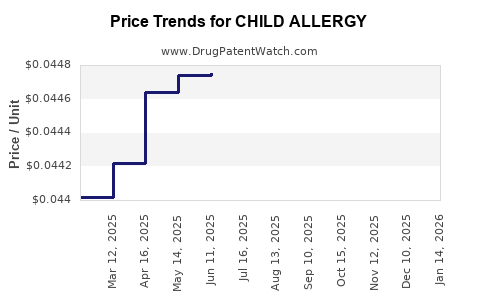
Average Pharmacy Cost for CHILD ALLERGY
| Drug Name | NDC | Price/Unit ($) | Unit | Date |
|---|---|---|---|---|
| CHILD ALLERGY (FEXO) 30 MG/5 ML | 61269-0527-94 | 0.11543 | ML | 2026-07-22 |
| CHILD ALLERGY RELIEF 1 MG/ML | 69230-0316-11 | 0.03582 | ML | 2026-07-22 |
| CHILD ALLERGY 5 MG/5 ML SOLN | 70000-0125-01 | 0.04393 | ML | 2026-07-22 |
| CHILD ALLERGY RELIEF 5 MG/5 ML | 70000-0473-01 | 0.04158 | ML | 2026-07-22 |
| >Drug Name | >NDC | >Price/Unit ($) | >Unit | >Date |
Market analysis and price projections for CHILD ALLERGY
What is the Market Size for Child Allergy Drugs?
The global allergy immunotherapy market was valued at approximately $4.9 billion in 2022 and is projected to reach $8.3 billion by 2030, with a compound annual growth rate (CAGR) of 6.7% from 2023 to 2030 [1]. Child allergy treatments constitute roughly 25% of this market due to increased awareness and diagnosis rates.
Key allergens for children include pollen, dust mites, pet dander, and food allergens such as peanuts, shellfish, and dairy. The rise in pediatric allergy prevalence in North America, Europe, and parts of Asia contributes to steady market growth.
Factors influencing market size:
- Increasing prevalence of allergies in children
- Advancements in immunotherapy options
- Growing healthcare infrastructure in emerging markets
- Regulatory approvals for new formulations
Who Are Leading Players and Their Market Shares?
Major pharmaceutical companies operating in child allergy therapeutics include:
- Allergy Therapeutics: Focuses on allergy immunotherapy vaccines.
- Stallergenes Greer: Offers sublingual immunotherapy (SLIT) products.
- Merck: Supplies emergency allergy medication such as epinephrine auto-injectors.
- ALK-Abelló: Specializes in allergy vaccines and diagnostics.
- F. Hoffmann-La Roche: Developing biologics targeting allergy pathways.
Market shares are fragmented. Leading players hold approximately 40-50% of total market revenue, with the remaining divided among regional and emerging biotech firms.
What Are the Main Types of Child Allergy Drugs?
- Allergy Immunotherapy (AIT):
- Subcutaneous immunotherapy (SCIT)
- Sublingual immunotherapy (SLIT)
- Antihistamines:
- Oral formulations like loratadine, cetirizine
- Epinephrine Auto-injectors:
- Devices for emergency allergy response
- Biologics:
- Monoclonal antibodies targeting IgE or IL-4/IL-13 pathways (e.g., omalizumab)
Immunotherapy remains the preferred long-term treatment, with a focus on patient-specific allergen profiles.
How Are Regulatory and Pricing Policies Evolving?
Regulatory agencies such as the FDA and EMA approve allergy therapies based on safety and efficacy data. Recent approval trends include:
- Expansion of SLIT indications for children
- Incentives for pediatric-specific formulations
Pricing policies vary by country:
- In the US, drug prices for allergy immunotherapy can reach $2,000–$4,000 annually per patient [2].
- In Europe, public healthcare systems negotiate prices; costs for immunotherapy range from €500 to €1,500 annually.
- Emerging markets witness lower price points but face challenges with affordability and reimbursement.
What Are the Price Projections and Factors Influencing Costs?
| Current Price Range for Major Child Allergy Medications: | Therapy Type | Price Range (USD/year) | Notes |
|---|---|---|---|
| Immunotherapy (SLIT/SCIT) | $1,200 – $4,000 | Based on allergen extract and dosing | |
| Antihistamines | $20 – $100 | Brand vs. generic | |
| Epipen auto-injectors | $600 – $700 per device | Multiple devices needed annually | |
| Biologics (e.g., Omalizumab) | $25,000 – $35,000 per year | Used for severe cases; off-label for children |
Projection Factors:
- Expanding approvals for pediatric use could increase market penetration.
- Price pressures from biosimilars and generics could lower costs over the next five years.
- Increased demand in emerging markets may stabilize prices due to volume.
By 2030, the average price of immunotherapy in pediatric populations might decline to $1,000-$2,000 per year with competition, although high-cost biologics could maintain premium pricing.
What Are the Key Challenges and Opportunities?
Challenges:
- Limited reimbursement in certain regions hampers access.
- High prices of biologic therapies can restrict affordability.
- Variability in allergen exposure complicates standardized treatment.
Opportunities:
- Development of universal or multi-allergen immunotherapy formulations.
- Incorporation of digital health tools for personalized treatment monitoring.
- Entry into emerging markets with tailored pricing strategies.
Key Takeaways
- The child allergy treatment market is growing, driven by increased allergy prevalence and advances in immunotherapy.
- Current prices range from $20 for antihistamines to over $30,000 annually for biologics.
- Market growth is supported by regulatory approvals for pediatric indications and expansion into emerging economies.
- Cost pressures and generic biosimilars are likely to influence prices downward over the next decade.
- The focus on personalized allergy management and new biologics represents future opportunities.
FAQs
1. What factors influence the cost of allergy immunotherapy for children?
The cost factors include the type of therapy (SLIT vs. SCIT), allergen extract complexity, formulation brand vs. generic, and regional pricing and reimbursement policies.
2. Are biologic therapies for childhood allergies cost-effective?
Current biologics, such as omalizumab, are high-cost but offer significant benefits for severe cases not responsive to conventional treatments. Cost-effectiveness depends on long-term reduction in allergy-related healthcare utilization.
3. How do regulatory bodies impact drug prices in this market?
Regulatory approvals enable market entry and competition, which can lower prices. In some regions, regulators also influence pricing through negotiation and reimbursement policies.
4. Will prices decrease with biosimilar development?
Biosimilars could reduce biologics' prices by 20-40%, but high development costs and limited market penetration could temper downward pressure.
5. What is the outlook for drug development targeting pediatric allergies?
Investments focus on safer formulations, multi-allergen products, and biologics with enhanced efficacy. These innovations could alter market dynamics and pricing strategies.
References
[1] MarketResearch.com, "Global Allergy Immunotherapy Market," 2023.
[2] GoodRx, "Cost of Allergy Medications," 2023.
More… ↓
