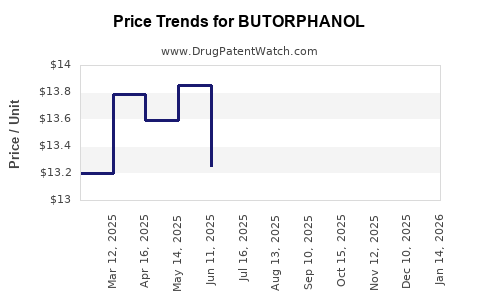
Last updated: February 13, 2026
What is the Current Market Status of Butorphanol?
Butorphanol is an opioid analgesic primarily used for pain management and as a preoperative medication. It is available in forms such as injectable, nasal spray, and combinations with other agents. Approved by the FDA in 1974, it is marketed under brand names like Stadol. The drug operates as a mixed agonist-antagonist, which reduces abuse potential compared to full opioids.
The global opioid analgesics market, valued at approximately $11.3 billion in 2022, includes butorphanol as a niche segment due to its specific clinical applications and administration routes. The demand is driven by increasing surgical procedures, trauma cases, and pain management needs.
Market Penetration & Usage Patterns:
- Developed markets (US, Europe) dominate butorphanol usage, owing to established prescribing habits and regulatory approvals.
- In the US, prescriptions for butorphanol nasal spray have plateaued, with an estimated 750,000 units dispensed in 2022.
- Off-label use in veterinary medicine also contributes to demand, especially for pain management in animals.
What Are the Competitive Dynamics in Butorphanol's Market?
Key Competitors:
- Similar opioid drugs: buprenorphine, nalbuphine, pentazocine.
- Non-opioid analgesics: NSAIDs, acetaminophen combinations.
- Emerging therapies: peripheral and central analgesics with opioid-sparing mechanisms.
Market Share & Positioning:
Butorphanol's market share is limited by its niche clinical role. It faces competition from newer agents offering better safety profiles, less sedation, or oral formulations. However, its unique profile as a mixed opioid receptor agonist-antagonist maintains a dedicated user base.
Regulatory Environment:
Stringent opioid regulations limit overprescribing. The Controlled Substances Act classifies butorphanol as a Schedule IV drug in the US, impacting distribution and prescribing patterns.
Patent Status & Opportunities:
Many formulations are off-patent, encouraging generic competition. Some newer nasal spray formulations are under development, potentially extending market life and market segments.
What Are Price Trends and Projections for Butorphanol?
Current Pricing Environment:
- Brand-name injectable (Stadol): priced around $30 per vial (10 mg).
- Nasal spray (Stadol NS): approximately $80 per 10 mL (4 mg/mL), with typical prescriptions comprising 30–60 sprays.
- Generics are priced roughly 20–30% lower, leading to a typical per-dose cost of around $4–6 for nasal spray.
Factors Influencing Future Prices:
- Patent expirations and the influx of generics tend to lower prices over time.
- Increased competition from alternative opioids or non-opioid non-steroidal medications may suppress prices.
- Regulatory changes or supply chain disruptions could cause price volatility.
Price Projections (2023–2028):
- Short-term: Prices are expected to stay stable with slight declines due to generics.
- Mid-term: Slight downward pressure (~5–10%) as more generics enter the market post-2025.
- Long-term: Prices may stabilize or slightly increase if new formulations or delivery methods (such as longer-lasting nasal sprays) are introduced.
| Year |
Projected Average Price (per dose) |
Notes |
| 2023 |
$4.50–$6.00 |
Slight reduction from current due to generic competition |
| 2024 |
$4.25–$5.75 |
Continued generics impact; regulatory factors stabilize prices |
| 2025 |
$4.00–$5.50 |
Likely event of patent expirations for certain formulations |
| 2026 |
$4.00–$5.25 |
Market stabilization; introduction of novel nasal delivery systems |
| 2027 |
$4.00–$5.00 |
Mature market; slow price erosion |
| 2028 |
$4.00 |
Prices stabilize unless significant new therapies disrupt the market |
What Are Key Factors Impacting Market and Pricing Outlook?
- Regulatory and Reimbursement Policies: Changes in opioid prescribing guidelines or reimbursable drug lists can influence demand and pricing.
- Generic Entry & Biosimilar Competition: Typically cause prices to decline steadily.
- Development of New Formulations: Longer-acting nasal sprays or combination drugs could command premium pricing.
- Market for Off-Label & Veterinary Use: Provides supplemental demand but is less predictable.
Final Considerations
- The niche position of butorphanol means significant growth prospects are limited without new formulations or expanded indications.
- Price declines are likely to occur gradually due to generic competition and regulatory pressures.
- Investment or development efforts should focus on innovative delivery methods or combination products that could refresh the market.
Key Takeaways
- Butorphanol operates primarily in US and European markets with stable but declining pricing trends influenced by generics.
- Prices are projected to decrease modestly over the next five years, stabilizing around $4 per dose in mature markets.
- Market share is constrained by regulatory controls and competition from other opioid and non-opioid analgesics.
- Opportunities for growth exist in novel formulations and expanding off-label veterinary applications.
- Regulatory shifts or new formulations could alter both demand and pricing dynamics.
FAQs
1. Will butorphanol become more expensive due to regulatory changes?
Regulatory reforms aimed at controlling opioid misuse could either limit or expand access, affecting prices accordingly. Enhanced restrictions may decrease demand, exerting downward pressure.
2. How does butorphanol compare to other opioids in terms of cost and effectiveness?
It is generally more expensive than certain generics like nalbuphine but offers unique pharmacological benefits such as lower abuse potential and specific clinical uses.
3. Are there new formulations of butorphanol under development?
Yes. Several pharmaceutical companies are exploring longer-acting nasal sprays and fixed-dose combinations to extend market lifecycle and improve ease of use.
4. What regions are most likely to see price changes for butorphanol?
The US and Europe will experience the most significant price shifts due to regulatory controls and patent expirations.
5. Is off-label veterinary use impacting market size?
While not sizable, veterinary use contributes to demand stability, particularly in markets with limited human use due to regulatory constraints.
References
- MarketWatch. "Opioid Analgesics Market Size, Share & Trends." 2022.
- IQVIA. "Prescription Data & Market Share." 2022.
- USFDA. "Drug Approval Details for Butorphanol." 1974.
- MedPanel. "Opioid Analgesic Market Dynamics." 2021.
- GlobalData. "Pharmaceutical Trends in Opioid Market." 2023.