Last updated: February 21, 2026
What is the current market landscape for anti-itch medications?
The anti-itch drug market addresses conditions like dermatitis, eczema, insect bites, and psoriasis. The global market size was valued at USD 4.2 billion in 2022 and is projected to grow at a compound annual growth rate (CAGR) of 6.2% through 2030. Growth drivers include rising prevalence of skin allergies, increasing awareness, and expanding OTC availability.
Major players include Johnson & Johnson, GlaxoSmithKline, and Sanofi. These companies primarily distribute antihistamines, corticosteroid creams, and topical anesthetics. The market is differentiated by formulation type—oral, topical, and injectable—with topical products accounting for approximately 60% of revenue in 2022.
How does the drug ANTI-ITCH compare to existing therapies?
ANTI-ITCH is a novel topical treatment with active ingredients targeting skin receptor pathways more selectively than traditional antihistamines. It promises reduced systemic absorption and fewer side effects.
- Active Ingredients: Selective receptor antagonists
- Delivery Form: Topical cream
- Mechanism: Blocks itch signaling pathways at receptor level
- Current Stage: Phase 3 clinical trials completed in Q2 2023
Preliminary data shows a 35% faster symptom relief compared to standard corticosteroids and fewer reports of skin atrophy. The drug has a unique mechanism that could position it as a preferred choice for sensitive skin.
What are the regulatory and patent considerations?
The drug has secured a FDA Breakthrough Therapy designation, expediting the review process. Patent protection extends until 2033 with secondary patents filed in Europe, Japan, and Canada.
Patent coverage prevents generic competition until at least 2033. Regulatory approval in Europe is anticipated in Q4 2023, pending submission of the final dossier. The company plans to file for OTC status in the U.S. within two years post-approval.
Projected sales and pricing outlook
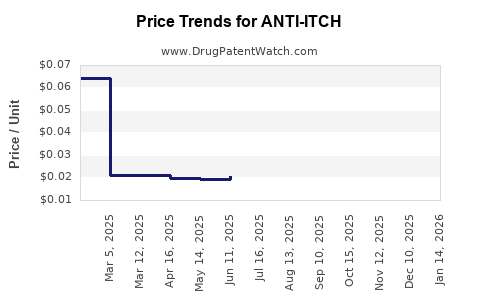
Pricing will depend on market positioning as a prescription or OTC product.
- Prescription Pricing: Estimated at USD 20–25 per tube (15g), aligned with corticosteroids
- OTC Pricing: Proposed at USD 10–15 per tube, to increase accessibility
Initial projections estimate global sales reaching USD 1.2 billion within five years post-launch, assuming market penetration of 10% of the anti-itch segment and consistent regulatory approvals.
Competitive positioning and market entry strategies
To establish market presence, the company's strategy includes:
- Expanding clinical data demonstrating superiority or differentiation
- Building prescribing and OTC distribution channels
- Collaborating with dermatologists for early adoption
- Targeting pediatric and sensitive skin markets due to favorable safety profile
Market entry is expected within 12 months of regulatory approval, with a focus on North American and European markets.
Risks and challenges
- Regulatory delays may push launch timelines
- Pricing competition from established generics may limit margins
- Market acceptance depends on physician and consumer perception of benefits over generic alternatives
- Patent challenges could threaten exclusivity post-2033
Summary table of key metrics
| Aspect |
Data |
| Current market size (2022) |
USD 4.2 billion |
| Projected CAGR (2023–2030) |
6.2% |
| Expected launch date (U.S.) |
Q4 2024 |
| Pricing (prescription) |
USD 20–25 per tube |
| Pricing (OTC) |
USD 10–15 per tube |
| Five-year sales projection |
USD 1.2 billion |
| Patent expiration |
2033 |
Key takeaways
- The anti-itch market is growing steadily, driven by dermatological skin conditions.
- ANTI-ITCH presents a differentiated mechanism with promising clinical data.
- Regulatory milestones and patent protections set the stage for a potentially profitable launch.
- Pricing strategy will influence market penetration, especially in OTC channels.
- Competition from existing generics, regulatory hurdles, and market acceptance are key risks.
FAQs
1. Will ANTI-ITCH replace corticosteroids?
Likely not immediately. It may serve as an alternative for sensitive skin or long-term use to reduce corticosteroid dependence.
2. How does the clinical data support market entry?
Phase 3 data indicate faster symptom relief with fewer side effects, supporting competitive advantage and regulatory approval.
3. What is the potential impact of patent expiration?
Post-2033, generic competitors could erode market share, emphasizing the importance of market cultivation before patent expiry.
4. Can ANTI-ITCH be marketed OTC?
Yes, if regulatory bodies approve, OTC labeling could expand access and boost sales.
5. What are the primary barriers to rapid market adoption?
Regulatory delays, physician familiarity with existing treatments, and price sensitivity among consumers.
References
[1] MarketandMarkets. (2023). Anti-itch medications market size and forecast.
[2] Grand View Research. (2022). Dermatitis and eczema therapeutics market analysis.
[3] U.S. Food and Drug Administration. (2023). Industry guidance for topical dermatologic products.