You're using a free limited version of DrugPatentWatch: Upgrade for Complete Access

Last Updated: December 28, 2025

TRESIBA Drug Profile


✉ Email this page to a colleague

« Back to Dashboard


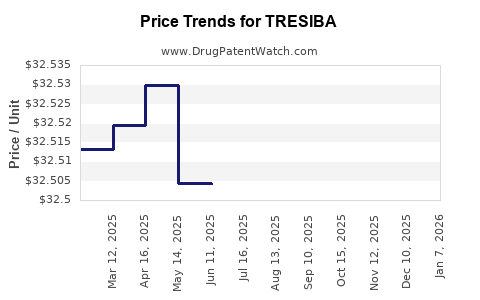
Summary for Tradename: TRESIBA
Recent Clinical Trials for TRESIBA

Identify potential brand extensions & biosimilar entrants

SponsorPhase
Gan and Lee Pharmaceuticals, USAPHASE1
Profil Institut fr Stoffwechselforschung GmbHPHASE1
Novo Nordisk A/SPHASE1

See all TRESIBA clinical trials

Pharmacology for TRESIBA
Established Pharmacologic ClassInsulin Analog
Chemical StructureInsulin
Note on Biologic Patents

Matching patents to biologic drugs is far more complicated than for small-molecule drugs.

DrugPatentWatch employs three methods to identify biologic patents:

  1. Brand-side disclosures in response to biosimilar applications
  2. These patents were identified from disclosures by the brand-side company, in response to a potential biosimilar seeking to launch. They have a high certainty of blocking biosimilar entry. The expiration dates listed are not estimates — they're expiration dates as indicated by the brand-side company.

  3. DrugPatentWatch analysis and company disclosures
  4. These patents were identified from searching various sources, including drug labels and other general disclosures from the brand-side company. This list may exclude some of the patents which block biosimilar launch, and some of these patents listed may not actually block biosimilar launch. The expiration dates listed for these patents are estimates, based on the grant date of the patent.

  5. Patents from broad patent text search
  6. For completeness, these patents were identified by searching the patent literature for mentions of the branded or ingredient name of the drug. Some of these patents protect the original drug, whereas others may protect follow-on inventions or even inventions casually mentioning the drug. The expiration dates listed for these patents are estimates, based on the grant date of the patent.

1) High Certainty: US Patents for TRESIBA Derived from Brand-Side Litigation

No patents found based on brand-side litigation

2) High Certainty: US Patents for TRESIBA Derived from DrugPatentWatch Analysis and Company Disclosures

These patents were obtained from company disclosures
Applicant Tradename Biologic Ingredient Dosage Form BLA Patent No. Estimated Patent Expiration Source
Novo Nordisk Inc. TRESIBA insulin degludec Injection 203314 ⤷  Get Started Free 2035-04-30 DrugPatentWatch analysis and company disclosures
Novo Nordisk Inc. TRESIBA insulin degludec Injection 203314 ⤷  Get Started Free 2035-08-27 DrugPatentWatch analysis and company disclosures
Novo Nordisk Inc. TRESIBA insulin degludec Injection 203314 ⤷  Get Started Free 2036-03-08 DrugPatentWatch analysis and company disclosures
Novo Nordisk Inc. TRESIBA insulin degludec Injection 203314 ⤷  Get Started Free 2026-07-17 DrugPatentWatch analysis and company disclosures
Novo Nordisk Inc. TRESIBA insulin degludec Injection 203314 ⤷  Get Started Free 2037-11-15 DrugPatentWatch analysis and company disclosures
Novo Nordisk Inc. TRESIBA insulin degludec Injection 203314 ⤷  Get Started Free 2037-11-17 DrugPatentWatch analysis and company disclosures
Novo Nordisk Inc. TRESIBA insulin degludec Injection 203314 ⤷  Get Started Free 2037-02-24 DrugPatentWatch analysis and company disclosures
>Applicant >Tradename >Biologic Ingredient >Dosage Form >BLA >Patent No. >Estimated Patent Expiration >Source

3) Low Certainty: US Patents for TRESIBA Derived from Patent Text Search

These patents were obtained by searching patent claims

Supplementary Protection Certificates for TRESIBA

Supplementary Protection Certificate SPC Country SPC Expiration SPC Description
92213 Luxembourg ⤷  Get Started Free PRODUCT NAME: INSULINE DEGLUDEC SOUS TOUTES LES FORMES PROTEGEES PAR LE BREVET DE BASE
C20130014 00133 Estonia ⤷  Get Started Free PRODUCT NAME: DEGLUDEKINSULIIN/ASPARTINSULIIN;REG NO/DATE: K(2013)368 (LOPLIK) 23.01.2013
C300597 Netherlands ⤷  Get Started Free PRODUCT NAME: INSULINE DEGLUDEC EN INSULINE ASPART; REGISTRATION NO/DATE: EU/1/12/806/001EU/1/12/806/004EU/1/12/806/005EU/1/12/806/007EU/1/12/806/008 2013210121
C02107069/01 Switzerland ⤷  Get Started Free PRODUCT NAME: INSULIN DEGLUDEC; SWISSMEDIC-ZULASSUNG, 62562 12.03.2013
92226 Luxembourg ⤷  Get Started Free PRODUCT NAME: COMBINATION D'INSULINE DEGLUDEC ET INSULINE ASPARTE SOUS TOUTES LES FORMES PROTEGEES PAR LE BREVET DE BASE; FIRST REGISTRATION DATE: 20130121
CA 2013 00030 Denmark ⤷  Get Started Free
1390029-5 Sweden ⤷  Get Started Free PRODUCT NAME: INSULIN DEGLUDEK; REG. NO/DATE: EU/1/12/807/001 20130121
>Supplementary Protection Certificate >SPC Country >SPC Expiration >SPC Description

Market Dynamics and Financial Trajectory for the Biologic Drug: Tresiba

Last updated: September 23, 2025


Introduction

Tresiba, developed by Novo Nordisk, is a long-acting basal insulin analogue positioned to revolutionize diabetes management. Launched globally, its market dynamics are shaped by evolving healthcare landscapes, technological innovation, regulatory environments, and competitive forces. This analysis examines Tresiba's current market position, growth drivers, challenges, and future financial trajectory to inform stakeholder decisions.


Product Overview

Tresiba (insulin degludec) was approved by the U.S. Food and Drug Administration (FDA) in September 2015 and by the European Medicines Agency (EMA) earlier, in 2013. It offers an ultra-long duration of action (~42 hours), enabling once-daily dosing with increased flexibility and a reduced risk of hypoglycemia compared to older basal insulins [1].

The product caters predominantly to Type 1 and Type 2 diabetes patients who require basal insulin therapy. Its unique pharmacokinetics aims to improve glycemic control, reduce dosing complexity, and enhance patient adherence—factors that collectively influence its adoption and market penetration.


Market Dynamics

1. Growth Drivers

  • Rising Diabetes Prevalence: The global incidence of diabetes, currently estimated at over 537 million adults, sustains a substantial demand for insulin therapies. The International Diabetes Federation projects this to reach 643 million by 2030, amplifying Tresiba’s market potential [2].

  • Preference for Long-Acting Insulin: Clinical guidelines favor basal insulins that minimize hypoglycemic episodes and provide consistent glucose control. Tresiba’s ultra-long duration and flexibility address these needs, encouraging prescriber preference.

  • Innovation and Differentiation: Tresiba's pharmacokinetic profile offers a competitive edge over traditional insulins like insulin glargine and detemir. Its potential to reduce hypoglycemia risk and allow flexible dosing enhances its appeal, especially in patient-centric care models.

  • Regulatory Approvals and Expanding Indications: Continued approvals, including for use in pediatric populations in some markets, extend Tresiba’s reach, opening avenues for increased sales.

  • Manufacturing Efficiency and Market Penetration Strategies: Novo Nordisk’s robust supply chain and targeted marketing foster deeper penetration into developing markets and specialty segments.

2. Market Challenges

  • Intense Competition: Tresiba faces competition from biosimilar insulins and other long-acting analogues such as Sanofi’s Toujeo and Lilly’s Basaglar. Although biosimilars have gained a foothold, Tresiba’s differentiated profile maintains its premium positioning.

  • Pricing Pressures: Governments and payers across markets pursue cost containment, exerting downward pressure on insulin prices. The affordability challenge impacts margins and sales volume.

  • Physician and Patient Acceptance: Despite its benefits, some prescribers and patients remain loyal to established insulins. Adherence issues, misconceptions, and market inertia slow penetration.

  • Regulatory and Patent Landscape: Patent expiries, potential biosimilar entries, and evolving regulatory standards influence market exclusivity and pricing strategies.

3. Market Penetration and Adoption Trends

In North America, Tresiba has captured approximately 15%–20% of the long-acting insulin market segment, with growth propelled by increased awareness and insurtech initiatives that promote personalized management [3].

In Europe and Asia-Pacific, adoption varies, influenced by healthcare infrastructure, reimbursement policies, and physician practices. Notably, Japan and China exhibit rapidly expanding markets for basal insulins, driven by rising diabetes prevalence and modernization of healthcare delivery.


Financial Trajectory Analysis

1. Revenue Trends

Post-launch, Tresiba has demonstrated consistent revenue growth. Novo Nordisk’s 2022 earnings report indicated that Tresiba contributed approximately 25% of the company's global insulin sales, reflecting a steady upward trajectory [4]. This growth is predicated on increased market share in mature markets and burgeoning demand in emerging economies.

2. Revenue Drivers

  • Volume Growth: An expanding diabetic population and increased patient adherence contribute to higher demand.

  • Market Expansion: Entry into new geographic markets and endorsement by clinical guidelines bolster revenue streams.

  • Pricing Strategies: Premium pricing sustains profit margins but is balanced against payer negotiations. Novo Nordisk employs tiered pricing to access emerging markets.

3. Future Revenue Forecasts

Analysts project Tresiba’s sales to reach USD 3.5–4.0 billion globally by 2025, driven by:

  • Continued adoption in Type 2 diabetes management
  • Introduction of fixed-dose combinations and new delivery devices
  • Strategic partnerships and licensing arrangements to penetrate low-income markets

Furthermore, the ongoing patent litigations and biosimilar developments could influence market exclusivity, impacting revenue potential.

4. Investment and R&D Outlook

Novo Nordisk’s commitment to innovation suggests ongoing pipeline enhancements for Tresiba, including next-generation formulations and novel delivery systems, potentially expanding its user base and revenue contributions.


Regulatory and Competitive Landscape

The regulatory environment remains favorable, with continuous updates emphasizing safety and efficacy standards. Patent landscapes, however, pose looming threats: biosimilar competitors in the U.S. and Europe could erode market share post-patent expiry (expected around 2027-2028).

In addition, emergent competitors utilize advanced biosimilar platforms and digital health integrations to gain footholds in the diabetes market.


Market Opportunities and Risks

  • Digital Health Integration: Wearables and smart insulin pens embedded with dose-tracking capabilities present opportunities for Tresiba to enhance adherence and outcomes, potentially translating into increased sales.

  • Expanding into Type 1 Diabetes: While predominantly used for Type 2, increasing acceptance among Type 1 patients can further propel growth.

  • Risks: Biosimilar entry, pricing pressures, regulatory delays, and patient preference shifts toward oral or non-insulin therapies pose ongoing risks.


Key Financial Trajectory Summary

Parameter Current Status Projected Outlook (2023-2025)
Global Sales USD 2.5 Billion (2022) USD 3.5–4.0 Billion
Market Share (Long-acting Insulin) 15-20% (North America) Incremental growth to 25%
Revenue Growth Rate 8-12% annually 10-15% driven by market expansion
Patent Expiry Impact Expected in late 2020s Biosimilar competition influencing margins

Conclusion

Tresiba’s market dynamics are favorable owing to its differentiated pharmacology and expanding global diabetes burden. Strategic positioning, innovation, and market expansion will underpin its continued financial growth. However, competitive pressures, pricing constraints, and patent expiries necessitate proactive adaptation.

Investors and stakeholders should monitor biosimilar developments, healthcare policy shifts, and technological integrations to sustain profitability and market relevance.


Key Takeaways

  • Robust Growth Driver: Increasing global diabetes prevalence and preference for long-acting, flexible insulin therapies underpin Tresiba's expansion prospects.
  • Market Penetration: Emerging markets and digital health tools are key opportunities for increased adoption.
  • Competitive Risks: Biosimilar competition and pricing pressures threaten revenue stability post-patent expiry.
  • Innovation Focus: Ongoing R&D and device advancements are crucial for maintaining strategic advantage.
  • Financial Outlook: Revenue is projected to grow steadily, with potential for acceleration through market expansion and pipeline development.

FAQs

1. When will Tresiba face biosimilar competition, and how will it affect its market share?
Biosimilar versions are expected around 2027–2028, given patent expiries. Entry of biosimilars could significantly reduce Tresiba’s market share and margins, prompting Novo Nordisk to innovate further and diversify its insulin portfolio.

2. How does Tresiba compare with other long-acting insulins in terms of efficacy and safety?
Tresiba offers a longer, more stable pharmacokinetic profile, reducing hypoglycemia risk and providing dosing flexibility. Clinical studies confirm comparable or superior efficacy with a favorable safety profile relative to competitors [1].

3. What role will digital health play in Tresiba's future market performance?
Digital health tools such as smart insulin pens and continuous glucose monitoring can enhance adherence and real-time management, potentially driving increased Tresiba uptake and user engagement.

4. Are there emerging markets with significant growth potential for Tresiba?
Yes, markets like China and India, experiencing rapid diabetes prevalence growth and evolving healthcare systems, offer considerable expansion prospects through tailored pricing and local partnerships.

5. How does regulatory environment influence Tresiba’s market strategy?
Regulatory approvals determine geographic access; evolving standards, especially regarding biosimilar approval pathways, could impact timing and competitiveness, requiring strategic navigation by Novo Nordisk.


References

[1] Novo Nordisk. (2015). FDA approves Tresiba for adults with diabetes.
[2] International Diabetes Federation. (2022). Diabetes Atlas.
[3] MarketWatch. (2022). North American long-acting insulin market share analysis.
[4] Novo Nordisk. (2022). Annual Report 2022.


Note: All data are projections based on current market analyses, regulatory landscapes, and company disclosures as of 2023.

More… ↓

⤷  Get Started Free

Make Better Decisions: Try a trial or see plans & pricing

Drugs may be covered by multiple patents or regulatory protections. All trademarks and applicant names are the property of their respective owners or licensors. Although great care is taken in the proper and correct provision of this service, thinkBiotech LLC does not accept any responsibility for possible consequences of errors or omissions in the provided data. The data presented herein is for information purposes only. There is no warranty that the data contained herein is error free. We do not provide individual investment advice. This service is not registered with any financial regulatory agency. The information we publish is educational only and based on our opinions plus our models. By using DrugPatentWatch you acknowledge that we do not provide personalized recommendations or advice. thinkBiotech performs no independent verification of facts as provided by public sources nor are attempts made to provide legal or investing advice. Any reliance on data provided herein is done solely at the discretion of the user. Users of this service are advised to seek professional advice and independent confirmation before considering acting on any of the provided information. thinkBiotech LLC reserves the right to amend, extend or withdraw any part or all of the offered service without notice.