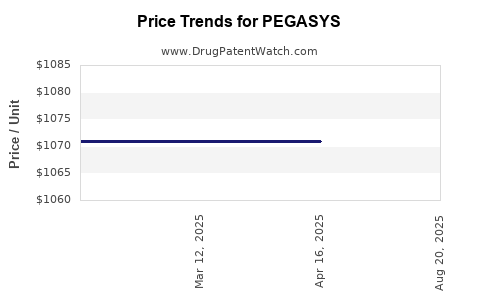
Last updated: September 26, 2025
Introduction
PEGASYS (peginterferon alfa-2a) remains a prominent biologic in the therapeutic landscape for hepatitis B and hepatitis C. Since its initial approval by the U.S. Food and Drug Administration (FDA) in 2001, PEGASYS has experienced significant shifts driven by advances in antiviral therapy, patent expirations, and evolving market dynamics. This analysis dissects the current competitive environment, regulatory landscape, and future financial prospects for PEGASYS, providing vital insights for stakeholders navigating this complex ecosystem.
Historical Context and Therapeutic Use
PEGASYS is a pegylated interferon alfa-2a, designed to provide sustained antiviral activity in hepatic infections. Its mechanism involves modulation of the immune response, expediting viral clearance, and reducing disease progression. Historically, PEGASYS was a cornerstone in treating hepatitis C, often in combination with ribavirin. However, the advent of direct-acting antivirals (DAAs) has revolutionized hepatitis C management, reducing reliance on interferon-based therapies.
In hepatitis B, PEGASYS continues to serve as a primary therapeutic option, particularly for patients with specific genotypes or comorbidities. Despite its therapeutic efficacy, the clinical use of PEGASYS is increasingly constrained by the preference for oral, interferon-free regimens that boast higher cure rates and better tolerability.
Market Dynamics: A Shifting Landscape
Competition from Direct-Acting Antivirals (DAAs)
The revolutionary rise of DAAs marks the most significant shift in the antiviral market. Oral regimens such as sofosbuvir-based combinations have delivered cure rates exceeding 95% for hepatitis C, with shorter treatment durations and fewer side effects. Consequently, the demand for interferon-based therapies, including PEGASYS, has plummeted. This trend is reflected in declining prescriptions and revenue, especially in regions where DAAs are widely accessible.
Patent Expiration and Market Entry of Biosimilars
PEGASYS’s patent landscape influences its market share substantially. Its original patent expired in several jurisdictions around 2018–2020, prompting the entry of biosimilar versions, particularly from manufacturers in India and China. These biosimilars typically offer lower-cost options, pressuring the original’s pricing and market penetration. The extent of biosimilar adoption depends on regulatory acceptance, physician familiarity, and reimbursement policies.
Regulatory and Reimbursement Environment
Regulatory agencies have shifted focus towards newer therapies, often deprioritizing older biologics like PEGASYS. Reimbursement policies increasingly favor drugs with highest efficacy and cost-effectiveness. In several markets, payers have limited coverage for interferon-based therapies, influencing prescribing behaviors. Conversely, some regions still favor PEGASYS in specific indications owing to its established safety profile and existing clinical data.
Global Market Variability
Emerging markets exhibit divergent trends. In countries with limited access to DAAs due to cost or infrastructure constraints, PEGASYS remains part of the standard treatment armamentarium. The GAVI Alliance and other global health initiatives aim to improve access to antiviral therapies, but affordability remains a concern, sustaining PEGASYS’s relevance in these contexts.
Financial Trajectory Analysis
Revenue Trends and Market Share
The global sales of PEGASYS have declined markedly in the past decade. Data from IQVIA indicates a peak in sales around 2013, followed by a consistent decline paralleling the introduction of DAAs. In 2021, PEGASYS’s global revenue is estimated to be in the low hundreds of millions USD, a fraction of its peak sales exceeding one billion USD in early 2010s.
Market share has shifted from being a dominant interferon therapy to a niche product in specific indications. The advent of generic biosimilars has further eroded revenues, compelling the original manufacturer to reevaluate its positioning strategy.
Cost Dynamics and Pricing Strategies
Pegylated interferons are inherently expensive due to complex manufacturing processes. Patent expiry enables biosimilars to operate on a lower price point, pressuring the innovator’s pricing strategies. Manufacturers have responded by emphasizing clinical data, safety profiles, and niche indications to sustain revenues. Price competition is intense in low- and middle-income countries, where payers are highly sensitive to drug costs.
Future Revenue Projections
Projections suggest PEGASYS’s revenue will decline at a compound annual growth rate (CAGR) of approximately -10% to -15% over the next five years, driven by:
- Continued market erosion from biosimilars.
- Favorable shifts towards oral DAA regimens.
- Limited indications where PEGASYS’s use remains clinically justified.
However, niche applications, such as in specific hepatitis B patient populations and potential off-label uses, could sustain marginal revenue streams.
Regulatory and Innovation Outlook
While existing approvals in hepatitis B and C are well established, regulatory agencies prioritize novel therapies demonstrating superior efficacy and safety. PEGASYS’s potential for new indications is limited due to competition and demographic considerations.
Innovation in biologic formulations and combination regimens remains focused on newer molecules and personalized medicine approaches rather than PEGASYS’s traditional profile. Consequently, the likelihood of significant regulatory reform or new licensed indications for PEGASYS appears low.
Strategic Implications for Stakeholders
- Pharmaceutical Manufacturers: Diversify portfolios towards innovation, biologics with broader indications, and biosimilars. Focus on value differentiation through extended patent protections or new combination therapies.
- Investors: Recognize the declining trend in PEGASYS’s revenue but consider niche markets and emerging indications that may offer short-term opportunities.
- Healthcare Payers: Favor cost-effective oral regimens and restrict reimbursement for older biologics like PEGASYS, aligning coverage policies with contemporary standards.
Key Takeaways
- The landscape for PEGASYS is characterized by declining revenues due to competition from DAAs and biosimilars.
- Patent expirations and biosimilar entries have driven price erosion and reduced market share.
- Its future financial trajectory hinges on niche indications, regulatory decisions, and global access policies.
- Stakeholders must pivot towards innovation, biosimilar stewardship, and strategic positioning to manage diminishing revenues.
- The trend underscores the broader shift in antiviral therapy from injectable biologics to oral, targeted, and more efficacious agents.
FAQs
-
What are the primary reasons for PEGASYS’s declining market share?
The advent of highly effective, oral DAA regimens for hepatitis C has rendered interferon-based therapies like PEGASYS less favorable. Additionally, patent expirations and biosimilar competition have reduced revenues and market dominance.
-
How does biosimilar entry impact PEGASYS’s profitability?
Biosimilars typically offer lower-cost alternatives, creating price competition that compresses profit margins for the original biologic, thereby diminishing revenue streams.
-
Are there any current or future indications for PEGASYS beyond hepatitis?
Currently, PEGASYS remains primarily indicated for hepatitis B and C, with limited scope for additional indications due to market dynamics and existing therapeutic approvals.
-
What strategies can manufacturers employ to sustain PEGASYS’s relevance?
Focus on niche patient populations, emphasize clinical safety profiles, develop combination therapies, and leverage biosimilar market positioning to retain some market share.
-
What is the outlook for PEGASYS in global markets?
Its prospects are limited in developed markets due to alternative therapies, but it may persist in low-resource settings with restricted access to newer treatments, maintaining a marginal role.
References
[1] IQVIA. (2022). Pharmaceutical Market Analytics.
[2] U.S. Food and Drug Administration. (2001). PEGASYS Approval Documentation.
[3] World Health Organization. (2021). Hepatitis B and C Treatment Access Report.
[4] MarketResearch.com. (2021). Biologics and Biosimilars Market Outlook.
[5] GlobalData. (2022). Biologics Patent Expiry and Biosimilar Penetration Analysis.