You're using a free limited version of DrugPatentWatch: Upgrade for Complete Access

Last Updated: January 1, 2026

LANTUS Drug Profile


✉ Email this page to a colleague

« Back to Dashboard


Summary for Tradename: LANTUS
Recent Clinical Trials for LANTUS

Identify potential brand extensions & biosimilar entrants

SponsorPhase
Xentria, Inc.PHASE1
University of BasrahN/A
Hospital de Especialidades, Centro Medico Nacional "La Raza", Instituto Mexicano del Seguro SocialPhase 4

See all LANTUS clinical trials

Pharmacology for LANTUS
Established Pharmacologic ClassInsulin Analog
Chemical StructureInsulin
Note on Biologic Patents

Matching patents to biologic drugs is far more complicated than for small-molecule drugs.

DrugPatentWatch employs three methods to identify biologic patents:

  1. Brand-side disclosures in response to biosimilar applications
  2. These patents were identified from disclosures by the brand-side company, in response to a potential biosimilar seeking to launch. They have a high certainty of blocking biosimilar entry. The expiration dates listed are not estimates — they're expiration dates as indicated by the brand-side company.

  3. DrugPatentWatch analysis and company disclosures
  4. These patents were identified from searching various sources, including drug labels and other general disclosures from the brand-side company. This list may exclude some of the patents which block biosimilar launch, and some of these patents listed may not actually block biosimilar launch. The expiration dates listed for these patents are estimates, based on the grant date of the patent.

  5. Patents from broad patent text search
  6. For completeness, these patents were identified by searching the patent literature for mentions of the branded or ingredient name of the drug. Some of these patents protect the original drug, whereas others may protect follow-on inventions or even inventions casually mentioning the drug. The expiration dates listed for these patents are estimates, based on the grant date of the patent.

1) High Certainty: US Patents for LANTUS Derived from Brand-Side Litigation

No patents found based on brand-side litigation

2) High Certainty: US Patents for LANTUS Derived from DrugPatentWatch Analysis and Company Disclosures

These patents were obtained from company disclosures
Applicant Tradename Biologic Ingredient Dosage Form BLA Patent No. Estimated Patent Expiration Source
Sanofi-aventis U.s. Llc LANTUS insulin glargine Injection 021081 ⤷  Get Started Free 2013-10-13 DrugPatentWatch analysis and company disclosures
Sanofi-aventis U.s. Llc LANTUS insulin glargine Injection 021081 ⤷  Get Started Free 2014-09-12 DrugPatentWatch analysis and company disclosures
>Applicant >Tradename >Biologic Ingredient >Dosage Form >BLA >Patent No. >Estimated Patent Expiration >Source

3) Low Certainty: US Patents for LANTUS Derived from Patent Text Search

These patents were obtained by searching patent claims

Supplementary Protection Certificates for LANTUS

Supplementary Protection Certificate SPC Country SPC Expiration SPC Description
300883 Netherlands ⤷  Get Started Free PRODUCT NAME: INSULIN GLARGINE/LIXISENATIDE; REGISTRATION NO/DATE: EU/1/16/1157 20170113
00C0023 France ⤷  Get Started Free PRODUCT NAME: INSULIN GLARGINE; NAT. REGISTRATION NO/DATE: EU/0/00/134/001 20000609; FIRST REGISTRATION: EU/1/00/134/001 20000609
2017030 Norway ⤷  Get Started Free PRODUCT NAME: INSULIN GLARGINE/LIXISENATIDE; REG. NO/DATE: EU/1/16/1157 20170125
>Supplementary Protection Certificate >SPC Country >SPC Expiration >SPC Description

Market Dynamics and Financial Trajectory for the Biologic Drug: LANTUS

Last updated: November 20, 2025


Introduction

LANTUS (insulin glargine) remains a pivotal molecule in the management of diabetes mellitus, particularly type 1 and type 2 diabetes. As a long-acting insulin analog, LANTUS was developed by Sanofi and achieved global recognition shortly after its FDA approval in 2000. Its unique pharmacokinetic profile offers consistent basal insulin coverage, reducing glycemic variability. This article evaluates the evolving market dynamics and financial trajectory of LANTUS within the broader context of diabetes therapeutics, considering competitive landscape shifts, regulatory trends, and evolving payer and patient preferences.


Market Landscape and Competitive Position

Initial Market Penetration and Growth

Upon its launch, LANTUS quickly became a frontline option, driven by clinical advantages over human insulins such as improved convenience and more stable glycemic control. The rising global prevalence of diabetes—expected to exceed 700 million affected individuals by 2045[1]—fueled demand. During the early 2000s, Sanofi dominated the long-acting insulin market, capturing significant market share thanks to LANTUS’s proven efficacy and safety profile.

Competitive Dynamics and Biosimilar Entry

Since 2017, the landscape has faced substantial disruption with biosimilar entrants. In Europe, biosimilars like Basaglar (by Eli Lilly/Boehringer Ingelheim), authorized as a follow-on insulin glargine product, captured a significant share, followed by other players such as Mylan’s Semglee and Biocon’s Insulin Glargine[2]. While biosimilars initially gained traction due to lower pricing and policy incentives, their impact in extending access to insulin therapies has been complex, influenced by physician prescribing habits, regulatory nuances, and payer strategies.

In the U.S., Sanofi’s LANTUS faced delays in biosimilar approval, but with subsequent approvals, the product began experiencing pricing pressure and increased competition. Notably, the emergence of interchangeable biosimilars and shifting formulary preferences minimized LANTUS’s monopoly power.

Evolving Formulations and Product Differentiation

Sanofi responded by innovating with newer formulations—such as Toujeo (insulin glargine U300), which offers a more concentrated and potentially better pharmacokinetic profile, promising fewer injections and less glycemic variability[3]. These advancements attempted to reinforce market share amidst biosimilar competition by emphasizing clinical benefits.


Regulatory and Reimbursement Trends

Patent Expiry and Biosimilar Regulations

Sanofi’s key patents covering LANTUS expired in various jurisdictions from 2015 onward. The patent cliff led to an influx of biosimilar products, which exerted downward pressure on prices. Regulatory pathways for biosimilar approval, especially in the U.S. and Europe, have matured, enabling faster market entry for competitors.

Pricing Strategies and Market Access

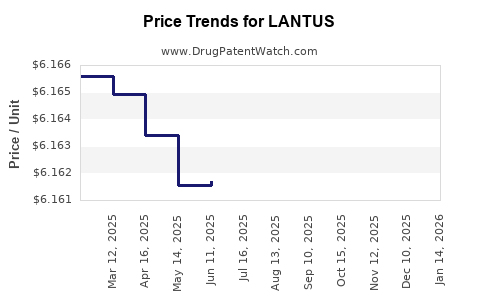
Switching from monopolistic pricing to a more competitive landscape, Sanofi and other manufacturers engaged in various market access strategies, including tiered formulary placements, rebates, and patient assistance programs. Payers increasingly favor biosimilars for cost containment, impacting LANTUS’s revenue streams.


Financial Trajectory

Revenue Trends

LANTUS’s annual revenue peaked around 2015 at approximately €5 billion (roughly $5.8 billion)[4]. Post-patent expiration and biosimilar arrival, revenues declined substantially. Sanofi reported an 11% decrease in insulin sales in 2018, with LANTUS significantly impacted[5].

Profitability and Cost Structure

The high manufacturing costs associated with biologics, coupled with pricing erosion, compressed profit margins. Sanofi largely refocused efforts on newer insulin analogs like Toujeo and biosimilar insulin glargine products to sustain growth. The company projected that LANTUS revenues would continue to decline as biosimilar competition increased.

Strategic Response and Portfolio Optimization

Sanofi’s strategic repositioning includes expanding into adjunct therapies like GLP-1 receptor agonists (e.g., Lyxumia) and focusing on integrated diabetes management platforms. The company’s biosimilar insulin glargine offerings, such as Insulin Glargine Biosimilar, aim to maintain market share and capitalize on the continued need for affordable insulin options.


Market Trends and Future Outlook

Shift Towards Biosimilars and Cost Competition

The insulin market’s future hinges on biosimilar proliferation, which is likely to exert persistent price pressures. Policy initiatives advocating for biosimilar substitution (e.g., in Europe) and potential legislation promoting insulin affordability in the U.S. could further impact LANTUS’s revenues.

Innovation and Next-Generation Therapies

Advancements such as ultra-long-acting insulins, biosimilar insulin formulations, and closed-loop insulin delivery systems (artificial pancreas) are redefining the treatment paradigm. These innovations could diminish LANTUS’s role unless complemented by differentiation strategies emphasizing clinical benefits.

Emerging Markets and Access

High-growth regions like Asia, Africa, and South America present opportunities for insulin access expansion. Price-sensitive markets favor biosimilars and generics, pressuring traditional brands to innovate on affordability and distribution strategies.


Conclusion

LANTUS’s market dynamics exemplify the transformative impact of biosimilars, innovation, and evolving healthcare policies on blockbuster biologics. While Sanofi’s flagship insulin has experienced revenue erosion, strategic adaptations—such as formulation enhancements, biosimilar launches, and diversification into complementary therapies—will shape its financial trajectory. The insulin market’s future remains competitive, marked by price sensitivity, regulatory shifts, and an emphasis on improving affordability and access.


Key Takeaways

  • Patent expiry and biosimilar entry have substantially diminished LANTUS’s market share, leading to revenue declines.
  • Competition from biosimilars has driven pricing pressure, prompting Sanofi and others to innovate and diversify.
  • Market trends favor affordability and access, particularly in emerging markets, compelling brands to adopt flexible pricing and access strategies.
  • Future growth hinges on the successful development of next-generation insulins, improved delivery systems, and broader regional access initiatives.
  • Strategic differentiation through clinical benefits, formulary positioning, and patient-centric innovations remains crucial for maintaining relevance.

FAQs

1. How has biosimilar competition affected LANTUS’s market share?
Biosimilars such as Basaglar and Semglee introduced more affordable alternatives, reducing LANTUS’s market dominance. Payers favor biosimilars for cost savings, leading to erosion of LANTUS’s premium pricing and share.

2. What strategies has Sanofi implemented to sustain its insulin business?
Sanofi has launched newer formulations like Toujeo, expanded biosimilar offerings, and diversified its diabetes portfolio with adjunct therapies, aiming to maintain market relevance amid biosimilar competition.

3. Will LANTUS remain relevant in the next decade?
While its market share declines, LANTUS retains clinical utility. Its role will diminish with the advent of ultra-long-acting insulins, closed-loop systems, and biosimilars, but it will still serve certain patient populations.

4. How do regulatory changes influence the insulin market?
Regulatory pathways for biosimilars, patent policies, and reimbursement frameworks significantly impact market entry and pricing strategies, affecting LANTUS’s financial prospects.

5. What is the outlook for insulin pricing globally?
Global initiatives aim to reduce insulin costs, especially in emerging markets. Increased biosimilar penetration and policy reforms are expected to continue exerting downward pressure on insulin prices.


References:

  1. International Diabetes Federation. IDF Diabetes Atlas, 9th Edition, 2019.
  2. European Medicines Agency (EMA). Biosimilar insulin glargine approvals.
  3. Sanofi. Toujeo (insulin glargine U300) product literature.
  4. Sanofi Annual Report, 2015.
  5. Sanofi Financial Statements, 2018.

More… ↓

⤷  Get Started Free

Make Better Decisions: Try a trial or see plans & pricing

Drugs may be covered by multiple patents or regulatory protections. All trademarks and applicant names are the property of their respective owners or licensors. Although great care is taken in the proper and correct provision of this service, thinkBiotech LLC does not accept any responsibility for possible consequences of errors or omissions in the provided data. The data presented herein is for information purposes only. There is no warranty that the data contained herein is error free. We do not provide individual investment advice. This service is not registered with any financial regulatory agency. The information we publish is educational only and based on our opinions plus our models. By using DrugPatentWatch you acknowledge that we do not provide personalized recommendations or advice. thinkBiotech performs no independent verification of facts as provided by public sources nor are attempts made to provide legal or investing advice. Any reliance on data provided herein is done solely at the discretion of the user. Users of this service are advised to seek professional advice and independent confirmation before considering acting on any of the provided information. thinkBiotech LLC reserves the right to amend, extend or withdraw any part or all of the offered service without notice.