Last updated: September 25, 2025
Introduction
INFLECTRA (infliximab-dyyb) is a biosimilar to the blockbuster biologic Remicade (infliximab), developed by Celltrion. Approved by the FDA in 2016, INFLECTRA entered a highly competitive biologics market originally dominated by Johnson & Johnson’s Remicade, which achieved blockbuster status with annual sales exceeding $7 billion at its peak. Over time, INFLECTRA's market dynamics reveal shifts driven by patent landscapes, regulatory evolutions, payer strategies, and market penetration patterns. This analysis explores how these factors influence INFLECTRA's current landscape and forecasts its financial trajectory in the coming years.
Market Entry and Competitive Landscape
The biologic infliximab targets autoimmune conditions such as rheumatoid arthritis, Crohn’s disease, ulcerative colitis, and psoriasis. Biosimilar entry, including INFLECTRA, was buoyed by patent expiration for Remicade, which occurred in 2018 in the U.S. [1]. The subsequent influx of biosimilars, including Amgevita (Amgen/AbbVie’s infliximab), Renflexis (Samsung Bioepis), and others, intensified price competition, substantially eroding originator sales.
INFLECTRA's initial market penetration capitalized on cost advantages, offering roughly 15-30% lower pricing compared to innovator brands. Its marketing strategy focused heavily on hospital systems and specialty providers, segments where biologic switching helped broaden access. However, with multiple biosimilars introduced, price erosion accelerated, compressing margins and challenging revenue growth prospects.
Regulatory and Patent Landscape
Patent litigations and settlements significantly impact INFLECTRA's market longevity. Johnson & Johnson, through complex patent strategies, delayed biosimilar entry in certain markets. The U.S. biosimilar market faced jurisdictional hurdles early but has gained momentum, fostering competition. Importantly, the Biologics Price Competition and Innovation Act (BPCIA) of 2009 established pathways for biosimilar approval, facilitating INFLECTRA’s market presence.
Furthermore, patent exclusivities for the originator expired at different times across jurisdictions, influencing INFLECTRA’s market share. In Europe, Remicade’s patent loss happened earlier, allowing a more mature biosimilar market that compressed INFLECTRA's growth potential there compared to the U.S.
Market Dynamics: Adoption and Penetration
INFLECTRA's penetration varies by region. In the U.S., biosimilar uptake has been steady but slower compared to Europe, owing to market hesitancy, provider preferences, and payer policies. Managed care organizations increasingly favor biosimilars for cost containment, fluctuating INFLECTRA’s revenue streams. For example, in 2020, biosimilar infliximab’s share in the U.S. reached approximately 25%, with ongoing growth expected.
Additionally, physician acceptance remains crucial. Real-world evidence shows that switching stable patients from Remicade to INFLECTRA is generally well tolerated, reinforcing confidence but still encountering initial resistance due to brand loyalty and perception.
Pricing and Reimbursement Trends
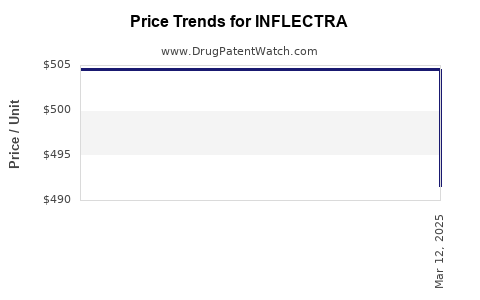
Pricing strategies are central to INFLECTRA’s financial forecasts. Celltrion initially priced INFLECTRA (~$2,500 per dose) considerably lower than Remicade (~$3,500), leading to rapid uptake. Subsequent price reductions from competitors further intensified competition.
Reimbursement policies, especially from Medicare and private insurers, increasingly favor biosimilars. CMS has included biosimilar infliximab formulations in its outpatient drug payment bundles, promoting biosimilar utilization. As reimbursement pathways stabilize and expand, INFLECTRA’s average selling price (ASP) may decline further, constraining margins but expanding volume.
Market Potential and Financial Trajectory
The outlook for INFLECTRA hinges on multiple factors: biosimilar market expansion, provider acceptance, payer strategies, and pipeline developments such as indications and formulations.
Current Financial Status (2022-2023)
- Sales Volume: In the U.S., INFLECTRA’s sales have plateaued at approximately $500 million annually, reflecting market saturation and aggressive competition [2].
- Pricing Pressure: Continued price reductions have compressed per-unit revenue, although volume increases somewhat offset these trends.
- Market Share: INFLECTRA maintains roughly 10-15% market share among infliximab biosimilars in the U.S. but faces challenges from newer entrants.
Projected Growth (2024–2028)
Analysts project moderate growth driven by expanding indications, patient switching, and emerging markets. The increasing use of biosimilars in developing countries (e.g., Asia, Latin America) offers additional revenue streams, albeit at lower price points.
Strategic Developments Influencing Trajectory
- Indication Expansion: approvals in pediatric and novel autoimmune indications will bolster demand.
- Formulation and Delivery Advancements: innovations like subcutaneous formulations improve convenience, broadening adoption.
- Partnerships and Market Penetration Efforts: collaborations with healthcare providers and payers will enhance uptake.
Based on current trends, INFLECTRA's revenue in the U.S. may stabilize between $400–600 million annually over the next 3-5 years, with potential growth in overseas markets. Global revenues could approach $1 billion if market penetration accelerates, especially in emerging economies.
Challenges and Risks
- Increased Biosimilar Competition: New biosimilars with improved efficacy or convenience can diminish INFLECTRA’s market share.
- Patent and Regulatory Barriers: Ongoing patent litigations and regulatory hurdles can delay or limit market expansion.
- Provider and Payer Acceptance: Slow adoption or restrictive reimbursement can hinder revenue growth.
- Pipeline and Innovation: Lack of new formulations or indications may constrain long-term growth.
Opportunities for Growth
- Market Expansion: Penetration into open markets with limited biosimilar availability.
- Strategic Pricing: Discount strategies to secure formulary placement.
- Indication Broadening: Approval for additional autoimmune conditions.
- Combination Therapies: Inclusion in combination regimens expands its utility.
Conclusion
INFLECTRA’s market dynamics are shaped by a confluence of patent expirations, competitive biosimilars, reimbursement strategies, and evolving clinical practices. While recent years experienced revenue plateauing owing to price competition and market saturation, future growth hinges on strategic positioning, indication expansion, and global market penetration. The pharmaceutical landscape’s ongoing commoditization of biosimilars underscores the importance of differentiating through value, efficiency, and innovation.
Key Takeaways
- INFLECTRA remains a key player in the constrained but expanding biosimilar infliximab market, primarily driven by cost savings and market acceptance.
- Revenue has plateaued in mature markets due to intense competition, with projections indicating stable or modest growth in the near term.
- Successful market expansion relies on regulatory approvals for new indications, formulations, and geographic regions.
- Payer policies favor biosimilar adoption, but provider and patient acceptance remain critical to capturing additional market share.
- Long-term growth prospects depend on innovation, pipeline development, and strategic alliances to sustain competitive advantage.
FAQs
-
What factors have most influenced INFLECTRA’s market presence?
Patent expirations, biosimilar competition, pricing strategies, and payer reimbursement policies primarily influence INFLECTRA’s market share and revenue.
-
How does INFLECTRA compare to other infliximab biosimilars?
INFLECTRA offers competitive pricing and has established a solid presence, but newer biosimilars with better formulations or broader approval portfolios are emerging, posing competitive threats.
-
What are the prospects for INFLECTRA in emerging markets?
Growing healthcare infrastructure and demand for cost-effective therapies create opportunities, although price sensitivity and regulatory challenges may impact growth.
-
Will pipeline developments impact INFLECTRA’s future revenues?
Yes, approvals for new indications, formulations, or delivery methods can increase demand and extend lifecycle, positively affecting revenue trajectory.
-
What strategies can Celltrion employ to sustain INFLECTRA’s market position?
Focus on indication expansion, cost leadership, formulation innovation, strategic partnerships, and tailored marketing to healthcare providers and payers.
References
- FDA approves biosimilar infliximab-dyyb (INFLECTRA). (2016). U.S. Food & Drug Administration.
- Company financial reports and market analyses (2022-2023).
- European Medicines Agency (EMA) biosimilar infliximab approvals.
- Market research reports on biosimilar infliximab market share and pricing trends.
- Industry publications and analysts’ forecasts.