You're using a free limited version of DrugPatentWatch: Upgrade for Complete Access

Last Updated: April 19, 2026

FIASP Drug Profile


✉ Email this page to a colleague

« Back to Dashboard


Summary for Tradename: FIASP
High Confidence Patents:22
Applicants:1
BLAs:1
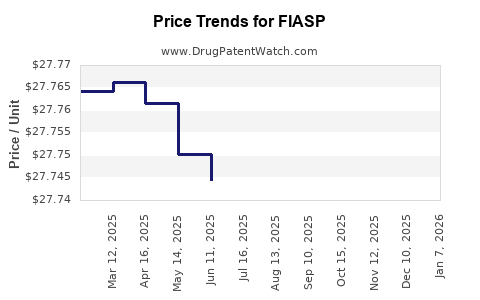
Drug Prices: Drug price information for FIASP
Pharmacology for FIASP
Established Pharmacologic ClassInsulin Analog
Chemical StructureInsulin
Note on Biologic Patents

Matching patents to biologic drugs is far more complicated than for small-molecule drugs.

DrugPatentWatch employs three methods to identify biologic patents:

  1. Brand-side disclosures in response to biosimilar applications
  2. These patents were identified from disclosures by the brand-side company, in response to a potential biosimilar seeking to launch. They have a high certainty of blocking biosimilar entry. The expiration dates listed are not estimates — they're expiration dates as indicated by the brand-side company.

  3. DrugPatentWatch analysis and company disclosures
  4. These patents were identified from searching various sources, including drug labels and other general disclosures from the brand-side company. This list may exclude some of the patents which block biosimilar launch, and some of these patents listed may not actually block biosimilar launch. The expiration dates listed for these patents are estimates, based on the grant date of the patent.

  5. Patents from broad patent text search
  6. For completeness, these patents were identified by searching the patent literature for mentions of the branded or ingredient name of the drug. Some of these patents protect the original drug, whereas others may protect follow-on inventions or even inventions casually mentioning the drug. The expiration dates listed for these patents are estimates, based on the grant date of the patent.

1) High Certainty: US Patents for FIASP Derived from Brand-Side Litigation

No patents found based on brand-side litigation

2) High Certainty: US Patents for FIASP Derived from DrugPatentWatch Analysis and Company Disclosures

These patents were obtained from company disclosures
Applicant Tradename Biologic Ingredient Dosage Form BLA Patent No. Estimated Patent Expiration Source
Novo Nordisk Inc. FIASP insulin aspart Injection 208751 ⤷  Start Trial 2026-07-17 DrugPatentWatch analysis and company disclosures
Novo Nordisk Inc. FIASP insulin aspart Injection 208751 ⤷  Start Trial 2037-11-17 DrugPatentWatch analysis and company disclosures
Novo Nordisk Inc. FIASP insulin aspart Injection 208751 ⤷  Start Trial 2037-02-24 DrugPatentWatch analysis and company disclosures
Novo Nordisk Inc. FIASP insulin aspart Injection 208751 ⤷  Start Trial 2039-01-17 DrugPatentWatch analysis and company disclosures
Novo Nordisk Inc. FIASP insulin aspart Injection 208751 ⤷  Start Trial 2039-06-25 DrugPatentWatch analysis and company disclosures
Novo Nordisk Inc. FIASP insulin aspart Injection 208751 ⤷  Start Trial 1924-02-01 DrugPatentWatch analysis and company disclosures
>Applicant >Tradename >Biologic Ingredient >Dosage Form >BLA >Patent No. >Estimated Patent Expiration >Source

3) Low Certainty: US Patents for FIASP Derived from Patent Text Search

These patents were obtained by searching patent claims

Supplementary Protection Certificates for FIASP

Supplementary Protection Certificate SPC Country SPC Expiration SPC Description
41/2005 Austria ⤷  Start Trial PRODUCT NAME: NOVOMIX 70 - SUSPENSION, ENTHALTEND LOESLICHES INSULIN ASPART UND PROTAMINKRISTALLISIERTES INSULIN ASPART IM VERHAELTNIS 70:30; REGISTRATION NO/DATE: EU/1/00/142/017 - EU/1/00/142/022 20051005
SZ 32/2000 Austria ⤷  Start Trial PRODUCT NAME: INSULIN ASPART/PROTAMIN
35/2013 Austria ⤷  Start Trial PRODUCT NAME: KOMBINATION VON INSULIN DEGLUDEC AND INSULIN ASPART UND BELIEBIGE ZN2+-KOMPLEXE DAVON; REGISTRATION NO/DATE: EU/1/12/806/001, EU/1/12/806/004, EU/1/12/806/005, EU/1/12/806/007, EU/1/12/806/008 (MITTEILUNG) 20180123
40/2005 Austria ⤷  Start Trial PRODUCT NAME: NOVOMIX 50 - SUSPENSION, ENTHALTEND LOESLICHES INSULIN ASPART UND PROTAMINKRISTALLISIERTES INSULIN ASPART IM VERHAELTNIS 50:50; REGISTRATION NO/DATE: EU/1/00/142/011 - EU/1/00/142/016 20051005
32/2000 Austria ⤷  Start Trial PRODUCT NAME: INSULIN ASPART/PROTAMIN; NAT. REGISTRATION NO/DATE: EU/1/00/142/001-008 20000801; FIRST REGISTRATION: LI 55414-55416 20000623
SZ 50/1999 Austria ⤷  Start Trial PRODUCT NAME: INSULIN ASPART
>Supplementary Protection Certificate >SPC Country >SPC Expiration >SPC Description

FIASP Market Dynamics and Financial Trajectory Analysis

Last updated: February 19, 2026

Novo Nordisk’s rapid-acting insulin FIASP (faster-acting insulin aspart) has demonstrated significant market penetration and revenue generation since its launch. The drug targets the insulin market for patients with type 1 and type 2 diabetes requiring mealtime insulin. Its efficacy profile, characterized by faster absorption and earlier insulin action compared to traditional aspart, underpins its competitive positioning.

What are FIASP's Key Market Drivers?

FIASP’s market growth is primarily driven by its pharmacokinetic advantages over existing mealtime insulins, including Novo Nordisk’s own NovoLog/NovoRapid. The drug's formulation allows for quicker glucose lowering post-meal, which is a critical factor for patients managing postprandial hyperglycemia.

  • Faster Onset of Action: FIASP typically shows an earlier onset of action compared to standard aspart formulations. This translates to more rapid glucose reduction after meal ingestion.
  • Improved Postprandial Glucose Control: Clinical trials have indicated superior control of postprandial glucose excursions with FIASP, a key unmet need for many diabetes patients.
  • Patient Preference and Adherence: Studies suggest that a faster-acting insulin can lead to improved patient satisfaction and potentially higher adherence rates, particularly for individuals with busy lifestyles or specific dietary habits.
  • Expanding Label Indications: The drug has secured approvals for a broad patient population, including children and adolescents, widening its addressable market.
  • Combination Therapy Potential: FIASP is often used in conjunction with basal insulins or other diabetes medications, allowing for personalized treatment regimens.

What is FIASP's Global Regulatory Status and Key Market Launches?

FIASP has received regulatory approval in major pharmaceutical markets, facilitating its global commercialization.

  • United States: Approved by the U.S. Food and Drug Administration (FDA) in September 2017 for adults and children aged 4 and older with type 1 and type 2 diabetes mellitus.
  • European Union: Received marketing authorization from the European Medicines Agency (EMA) in January 2018 for the same patient population.
  • Canada: Authorized by Health Canada in February 2018.
  • Japan: Approved by the Pharmaceuticals and Medical Devices Agency (PMDA) in March 2019.
  • Other Markets: Launched in Australia, various countries in the Middle East, and parts of Asia with staggered approvals and commercial rollouts throughout 2018-2021.

How has FIASP Performed Financially?

FIASP has become a significant contributor to Novo Nordisk's insulin franchise. Its sales trajectory reflects strong initial adoption and continued growth.

Year Global Sales (DKK millions) Year-over-Year Growth (%)
2017 318 N/A
2018 1,525 379.6
2019 3,595 135.7
2020 4,948 37.6
2021 5,926 19.8
2022 6,379 7.6
2023 6,824 7.0

Source: Novo Nordisk Annual Reports (2017-2023)

The initial surge in sales post-launch was driven by market seeding and the introduction of a differentiated product. Growth rates have moderated as the drug matures and faces increased competition and market saturation. Novo Nordisk reported that in 2023, FIASP sales amounted to DKK 6,824 million, representing a 7% increase compared to 2022. [1]

What is the Competitive Landscape for FIASP?

FIASP operates within a highly competitive market for mealtime insulin, which includes both rapid-acting insulin analogs and traditional insulin formulations.

  • Direct Competitors (Rapid-Acting Insulins):
    • Humalog (insulin lispro) by Eli Lilly: A well-established rapid-acting insulin analog.
    • Apidra (insulin glulisine) by Sanofi: Another rapid-acting insulin analog.
    • Lyumjev (insulin lispro-aabc) by Eli Lilly: Launched as a faster-acting formulation of insulin lispro, directly competing with FIASP.
    • Admelog (insulin lispro-yfgn) by Sanofi: A biosimilar to Humalog, increasing price competition.
  • Indirect Competitors:
    • NovoLog/NovoRapid (insulin aspart) by Novo Nordisk: FIASP's predecessor, still holding significant market share.
    • Lantus (insulin glargine) and Toujeo (insulin glargine) by Sanofi: Basal insulins used in combination therapy.
    • Tresiba (insulin degludec) by Novo Nordisk: Another basal insulin.
    • Non-insulin therapies: Oral antidiabetic drugs and GLP-1 receptor agonists, which can reduce the need for or alter the timing of mealtime insulin.

The market share of rapid-acting insulins is substantial, but price erosion due to biosimilar competition and the availability of other therapeutic classes are ongoing challenges. Novo Nordisk’s strategy often involves leveraging its existing diabetes patient base and sales force to promote FIASP.

What are the Key Patent Expirations and Potential Generic/Biosimilar Entry?

The patent landscape for FIASP, like other biologics, involves primary patents on the active pharmaceutical ingredient (API), formulation, and manufacturing processes, as well as secondary patents on methods of use.

  • Primary Patents: Original patents covering the insulin aspart molecule and its basic formulations are generally nearing or have passed their peak protection periods.
  • Formulation and Delivery System Patents: Patents related to specific excipients, stabilizers, and the delivery device (e.g., FlexTouch pen) often extend the effective patent life.
  • Method of Use Patents: These patents cover specific therapeutic indications or regimens and can be a critical component of market exclusivity.

While specific patent expiration dates are proprietary and subject to complex legal challenges, major markets typically have patent protection for biologics extending for around 12-15 years from approval, with potential extensions. For FIASP, approved in 2017 in the US, this implies primary exclusivity potentially ending in the late 2020s or early 2030s.

The introduction of biosimilars for insulin aspart is a significant factor. The first biosimilar to insulin aspart, Semglee (insulin glargine-yfgn), was approved in the US in 2020, signaling the increasing trend of biosimilar entry in the insulin market. While FIASP is a formulation of insulin aspart, its unique properties may create distinct patent challenges for biosimilar developers aiming to replicate its faster action profile. Biosimilar development for complex biologics is costly and time-consuming, but the financial incentive is substantial given the market size.

What is FIASP's Revenue Contribution to Novo Nordisk?

FIASP has steadily grown its revenue contribution to Novo Nordisk’s overall sales. In 2023, the Diabetes Care segment reported total sales of DKK 138.5 billion. FIASP, as part of the insulin portfolio, plays a crucial role in this segment.

  • 2023 Diabetes Care Sales: DKK 138.5 billion [1]
  • FIASP 2023 Sales: DKK 6.824 billion [1]

This represents approximately 4.9% of Novo Nordisk’s total Diabetes Care revenue in 2023. The continued growth, even at a moderate pace, demonstrates its established position. However, the company’s strategic focus has increasingly shifted towards its GLP-1 receptor agonist franchise, particularly semaglutide (Ozempic, Wegovy), which has experienced explosive growth. This strategic prioritization can influence the level of investment and marketing focus allocated to the insulin portfolio, including FIASP.

What are the Future Outlook and Potential Risks for FIASP?

The future outlook for FIASP is influenced by market dynamics, competition, and Novo Nordisk's strategic allocation of resources.

  • Continued Market Share: FIASP is expected to maintain a significant share of the rapid-acting insulin market due to its established efficacy and patient familiarity.
  • Pricing Pressures: The increasing prevalence of biosimilars for other insulin aspart products and ongoing healthcare cost containment efforts will likely exert downward pressure on pricing.
  • Competition from GLP-1 RAs: The growing adoption of GLP-1 receptor agonists as first-line or adjunct therapies for type 2 diabetes may reduce the overall demand for mealtime insulins over the long term.
  • Innovation in Diabetes Treatment: The development of novel oral agents, combination therapies, and potentially artificial pancreas systems could further alter the treatment landscape, impacting insulin sales.
  • Patent Expirations: The eventual expiry of key patents will pave the way for biosimilar entry, which could significantly erode market share and profitability.
  • Novo Nordisk's Strategic Focus: As Novo Nordisk continues to prioritize its highly successful GLP-1 franchise, the level of dedicated R&D and marketing support for its insulin products, including FIASP, may be subject to reevaluation.

Key Takeaways

FIASP has achieved substantial commercial success, driven by its rapid-acting profile and broad market approvals. Its financial performance has been robust, contributing significantly to Novo Nordisk's insulin franchise. However, the drug faces increasing competitive pressures from other rapid-acting insulins and biosimilars, alongside evolving treatment paradigms in diabetes management. The ongoing patent landscape and strategic shifts within Novo Nordisk will be critical determinants of FIASP’s long-term market trajectory.

Frequently Asked Questions

  1. What specific pharmacokinetic advantage does FIASP offer over standard insulin aspart? FIASP demonstrates a faster absorption profile, leading to an earlier onset of action and more rapid glucose lowering post-meal compared to traditional insulin aspart formulations.

  2. Which key regulatory bodies have approved FIASP, and when? Key approvals include the FDA in the US (September 2017), EMA in the EU (January 2018), Health Canada (February 2018), and PMDA in Japan (March 2019).

  3. How has FIASP's annual revenue grown since its launch? FIASP's annual revenue increased from DKK 318 million in 2017 to DKK 6,824 million in 2023, with significant year-over-year growth in its initial years post-launch.

  4. What are the primary competitive risks for FIASP in the current market? Competitive risks include direct competition from other rapid-acting insulin analogs like Lyumjev, the impending entry of insulin aspart biosimilars, and the growing adoption of GLP-1 receptor agonists which can alter insulin treatment needs.

  5. When are FIASP's primary patent expirations expected to occur, and what is the implication for biosimilar entry? While specific dates are proprietary, primary patent protection for biologics typically lasts 12-15 years post-approval. For FIASP, approved in 2017, this suggests potential patent expirations in the late 2020s or early 2030s, opening the door for biosimilar competition that could impact market share and pricing.

Citations

[1] Novo Nordisk. (2024). Annual Report 2023. Retrieved from Novo Nordisk Investor Relations website.

More… ↓

⤷  Start Trial

Make Better Decisions: Try a trial or see plans & pricing

Drugs may be covered by multiple patents or regulatory protections. All trademarks and applicant names are the property of their respective owners or licensors. Although great care is taken in the proper and correct provision of this service, thinkBiotech LLC does not accept any responsibility for possible consequences of errors or omissions in the provided data. The data presented herein is for information purposes only. There is no warranty that the data contained herein is error free. We do not provide individual investment advice. This service is not registered with any financial regulatory agency. The information we publish is educational only and based on our opinions plus our models. By using DrugPatentWatch you acknowledge that we do not provide personalized recommendations or advice. thinkBiotech performs no independent verification of facts as provided by public sources nor are attempts made to provide legal or investing advice. Any reliance on data provided herein is done solely at the discretion of the user. Users of this service are advised to seek professional advice and independent confirmation before considering acting on any of the provided information. thinkBiotech LLC reserves the right to amend, extend or withdraw any part or all of the offered service without notice.