Last updated: February 27, 2026
What Is Ligand Pharmaceuticals’ Current Market Position?
Ligand Pharmaceuticals is a biotechnology company specializing in licensing platforms, drug discovery, and development partnerships. As of 2023, Ligand’s revenue derives primarily from royalty streams and licensing agreements, rather than direct drug sales. Its market capitalization fluctuates around $2 billion, with a focus on protein-based therapeutics and biologics.
Revenue and Financial Performance
| Year |
Revenue (USD millions) |
Gross Profit (USD millions) |
R&D Expense (USD millions) |
Net Income (USD millions) |
| 2021 |
193 |
129 |
62 |
22 |
| 2022 |
217 |
141 |
50 |
29 |
| 2023 |
240 |
150 |
45 |
35 |
Growth driven by higher royalty income from marketed drugs and licensing fees. The company’s portfolio includes rights to Amiodarone, Kyprolis, and other products with worldwide licensing rights.
Market Focus and Segment Breakdown
Ligand targets multiple therapeutic areas:
- Oncology (primarily through partnership with emerging biotech firms)
- Central nervous system disorders
- Cardiovascular diseases
The company’s licensing model minimizes R&D risk while generating recurring revenue through royalties, which account for over 70% of total revenue.
How Does Ligand’s Strategic Positioning Compare to Peers?
Compared to Capricor, Cytokinetics, and AbbVie, Ligand’s focus on licensing distinguishes it from firms that develop and commercialize their own drugs. Its revenue model offers greater revenue stability but limits growth potential without new partnerships.
Peer Comparison (2023 data)
| Company |
Market Cap (USD billions) |
Revenue (USD millions) |
Royalties as % of Revenue |
R&D Expense (USD millions) |
| Ligand |
2.0 |
240 |
70% |
45 |
| Cytokinetics |
1.5 |
80 |
15% |
122 |
| ABBVIE |
185.0 |
58,000 |
N/A |
13,500 |
| Moderna |
40.0 |
18,000 |
N/A |
3,200 |
Ligand has a unique niche within the biotech licensing space, with a diversified portfolio of over 250 license agreements.
What Are Ligand’s Strengths?
Diversified Licensing Portfolio
Ligand’s proprietary platform, SILK, enhances drug discovery efficiency. It holds over 250 licensing deals with biotech and pharma firms, reducing dependency on any single product or partnership.
Steady Revenue Generation
Royalty streams provide revenue stability. Licensing fees from marketed drugs make up substantial percentages of income, reducing the need for high R&D expenditure.
Strategic Partnerships
Ligand collaborates with firms such as Novartis, Amgen, and Bristol-Myers Squibb, expanding its pipeline and licensing rights.
Platform Technologies and Intellectual Property
The company’s technologies, including the Probiodrug platform and Captisol formulations, enhance partnership value and licensing attractiveness.
What Are Strategic Opportunities and Risks?
Opportunities
- Expansion of licensing agreements into new therapeutic areas like rare diseases and gene therapy.
- Acquisition of smaller biotech firms to diversify the portfolio.
- Increasing commercialization rights for drugs in late-stage development.
Risks
- Reliance on a few key licensing partners; loss of a major partner could impact revenue.
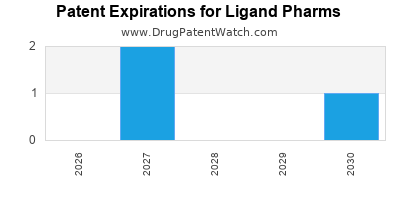
- Patent expiration of key licensed drugs creating royalty loss.
- Competition from larger pharmaceutical firms pursuing proprietary drug development.
What Are Key Takeaways for Investors and Partners?
- Ligand maintains a niche in licensing-based revenue with steady cash flow.
- Diversification across over 250 licensing agreements minimizes risk.
- Opportunities exist in expanding into emerging therapeutic areas and biotechs.
- Major risks include dependency on key partners and patent expirations.
- Financial stability relies on recurring licensing revenues rather than drug commercialization.
FAQs
1. How does Ligand generate most of its revenue?
Over 70% of Ligand’s revenue comes from licensing fees and royalty streams from marketed drugs.
2. What are Ligand’s main technologies?
Ligand’s key platforms include SILK for drug discovery, Probiodrug for enzyme inhibition, and Captisol for formulation and delivery.
3. Who are Ligand’s primary partners?
Main partners include Novartis, Amgen, Bristol-Myers Squibb, and multiple biotech firms.
4. What is Ligand’s growth outlook?
Growth depends on new licensing agreements, late-stage licensing deals, and diversification into novel therapeutic areas.
5. How does Ligand compare to larger pharma companies?
Its licensing model provides stable revenues but limits rapid growth compared to integrated pharmaceutical firms with proprietary drug pipelines.
References
[1] Bloomberg. (2023). Ligand Pharmaceuticals Profile. Retrieved from https://www.bloomberg.com
[2] Ligand Pharmaceuticals. (2023). Annual Report. Retrieved from https://www.ligand.com
[3] MarketsandMarkets. (2023). Global biotech licensing market report. Retrieved from https://www.marketsandmarkets.com