Aeterna Zentaris Company Profile
✉ Email this page to a colleague
What is the competitive landscape for AETERNA ZENTARIS
AETERNA ZENTARIS has one approved drug.
There is one US patent protecting AETERNA ZENTARIS drugs.
Summary for Aeterna Zentaris
| US Patents: | 1 |
| Tradenames: | 1 |
| Ingredients: | 1 |
| NDAs: | 1 |
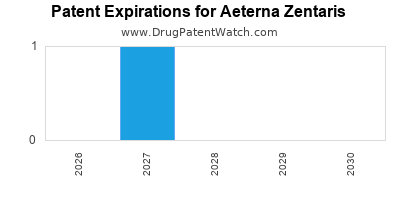
Drugs and US Patents for Aeterna Zentaris
| Applicant | Tradename | Generic Name | Dosage | NDA | Approval Date | TE | Type | RLD | RS | Patent No. | Patent Expiration | Product | Substance | Delist Req. | Exclusivity Expiration |
|---|---|---|---|---|---|---|---|---|---|---|---|---|---|---|---|
| Aeterna Zentaris | MACRILEN | macimorelin acetate | FOR SOLUTION;ORAL | 205598-001 | Dec 20, 2017 | DISCN | Yes | No | 8,192,719*PED | ⤷ Start Trial | Y | ⤷ Start Trial | |||
| >Applicant | >Tradename | >Generic Name | >Dosage | >NDA | >Approval Date | >TE | >Type | >RLD | >RS | >Patent No. | >Patent Expiration | >Product | >Substance | >Delist Req. | >Exclusivity Expiration |
Expired US Patents for Aeterna Zentaris
| Applicant | Tradename | Generic Name | Dosage | NDA | Approval Date | Patent No. | Patent Expiration |
|---|---|---|---|---|---|---|---|
| Aeterna Zentaris | MACRILEN | macimorelin acetate | FOR SOLUTION;ORAL | 205598-001 | Dec 20, 2017 | 6,861,409 | ⤷ Start Trial |
| >Applicant | >Tradename | >Generic Name | >Dosage | >NDA | >Approval Date | >Patent No. | >Patent Expiration |
International Patents for Aeterna Zentaris Drugs
| Country | Patent Number | Estimated Expiration |
|---|---|---|
| Portugal | 1984744 | ⤷ Start Trial |
| Japan | 4852728 | ⤷ Start Trial |
| Denmark | 1984744 | ⤷ Start Trial |
| World Intellectual Property Organization (WIPO) | 2007093820 | ⤷ Start Trial |
| European Patent Office | 1984744 | ⤷ Start Trial |
| >Country | >Patent Number | >Estimated Expiration |
Supplementary Protection Certificates for Aeterna Zentaris Drugs
| Patent Number | Supplementary Protection Certificate | SPC Country | SPC Expiration | SPC Description |
|---|---|---|---|---|
| 1289951 | 122019000074 | Germany | ⤷ Start Trial | PRODUCT NAME: MACIMORELIN, OPTIONAL IN FORM EINER ARZNEIMITTELZUSAMMENSETZUNG, OPTIONAL IN FORM EINES PHARMAZEUTISCH VERTRAEGLICHEN SALZES, INSBESONDERE MACIMORELIN ACETAT.; REGISTRATION NO/DATE: EU/1/18/1337 20190111 |
| 1289951 | 132019000000099 | Italy | ⤷ Start Trial | PRODUCT NAME: MACIMORELINA, OPZIONALMENTE NELLA FORMA DI UNA COMPOSIZIONE FARMACEUTICA, OPZIONALMENTE NELLA FORMA DI UN SALE FARMACEUTICAMENTE ACCETTABILE, COMPRESA MACIMORELINA ACETATO(MACIMORELIN AETERNA ZENTARIS - MACIMORELINA); AUTHORISATION NUMBER(S) AND DATE(S): EU/1/18/1337, 20190115 |
| 1289951 | CA 2019 00037 | Denmark | ⤷ Start Trial | PRODUCT NAME: MACIMORELIN, EN FARMACEUTISK SAMMENSAETNING DERAF ELLER ET FARMACEUTISK ACCEPTABELT SALT DERAF; REG. NO/DATE: EU/1/18/1337 20190115 |
| 1289951 | C201930046 | Spain | ⤷ Start Trial | PRODUCT NAME: MACIMORELINA; NATIONAL AUTHORISATION NUMBER: EU/1/18/1337; DATE OF AUTHORISATION: 20190111; NUMBER OF FIRST AUTHORISATION IN EUROPEAN ECONOMIC AREA (EEA): EU/1/18/1337; DATE OF FIRST AUTHORISATION IN EEA: 20190111 |
| 1289951 | 300999 | Netherlands | ⤷ Start Trial | PRODUCT NAME: MACIMORELIN; REGISTRATION NO/DATE: EU/1/18/1337 20190115 |
| >Patent Number | >Supplementary Protection Certificate | >SPC Country | >SPC Expiration | >SPC Description |
Similar Applicant Names
Applicants may be listed under multiple names.
Here is a list of applicants with similar names.
Here is a list of applicants with similar names.
