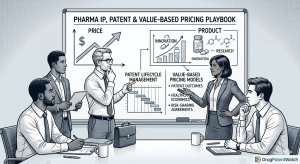
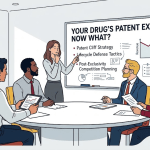
The debate framed as ‘price versus product’ in pharmaceutical competition has always been a false binary. Every drug launch, every Paragraph IV filing, every outcomes-based contract is a negotiation between these two forces, and the companies that treat them as separate problems routinely lose. What follows is a deep technical analysis of how IP valuation, patent lifecycle management, payer dynamics, and value-based pricing interact to determine who wins and who watches their revenue erode within twelve months of a loss of exclusivity (LOE).
This guide is written for pharma and biotech IP teams, portfolio managers, R&D leads, and institutional investors who need more than a framework. They need the mechanism.
Part I: The Blockbuster Era, Its IP Architecture, and Why It Collapsed
What the Blockbuster Model Actually Was
The dominant pharmaceutical business model from roughly 1980 through 2010 was built on a single structural premise: a 20-year patent term, combined with an FDA approval timeline of seven to twelve years, left a brand-name manufacturer with roughly eight to thirteen years of genuine market exclusivity for a successful product. During that window, with no bioequivalent generic competition, the manufacturer set the price, and the market largely accepted it.
This window was not accidental. The Drug Price Competition and Patent Term Restoration Act of 1984 (Hatch-Waxman) codified the bargain explicitly. Title I created the Abbreviated New Drug Application (ANDA) pathway, letting generic manufacturers prove bioequivalence rather than re-run full clinical trials. Title II created patent term restoration, allowing brand manufacturers to recover up to five years of patent life lost during FDA review, capped at fourteen years of remaining protection post-approval. The Act was designed to compress the generic entry timeline after exclusivity ended while protecting the exclusivity period itself.
The model worked. Lipitor (atorvastatin calcium, Pfizer) peaked at $13.7 billion in annual global sales in 2006, making it the highest-grossing pharmaceutical product in history at that time. It achieved that not because it was the cheapest statin, not even because it was the first (lovastatin, pravastatin, and simvastatin all preceded it), but because it demonstrated superior LDL reduction at equivalent doses in a series of head-to-head trials, and Pfizer built a patent portfolio around atorvastatin’s crystalline form, enantiomers, and manufacturing processes that held generic entry at bay until November 2011.
Lipitor’s IP Valuation as a Case Study
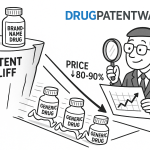
The commercial case for studying Lipitor’s IP architecture in detail is straightforward: Pfizer generated an estimated $130 billion in cumulative Lipitor sales before generic entry. Within six months of Watson Pharmaceuticals (now Actavis/Allergan) launching atorvastatin calcium in November 2011 under the 180-day generic exclusivity granted to the first ANDA filer, Lipitor’s U.S. revenue fell by roughly 80%.
The IP that protected those revenues included composition-of-matter patents on atorvastatin itself (the core), process patents on the synthetic route, formulation patents on the tablet coating and particle size distribution, and a secondary patent on atorvastatin’s hemicalcium salt form. Pfizer’s defense of these patents involved litigation against multiple Paragraph IV filers over a decade. The core composition patent (U.S. Patent No. 4,681,893) expired November 2011, and secondary IP layers proved insufficient to extend the exclusivity period meaningfully once the molecule itself was exposed.
The IP valuation lesson: composition-of-matter patents carry a risk-adjusted premium of 3x-5x versus formulation or process patents in pharma M&A and licensing transactions, because they are the hardest to design around and survive the longest in litigation. When Pfizer’s primary composition patent expired, no secondary patent layer restored the pricing power it had lost. Product quality sustained the brand at a residual share, but price became the market’s primary sorting mechanism overnight.
The Hatch-Waxman Paragraph IV Machine
The mechanism that ends blockbuster exclusivity is a Paragraph IV certification. Under Hatch-Waxman, an ANDA applicant certifying under Paragraph IV asserts that a listed patent is either invalid or will not be infringed by the generic product. This filing triggers a mandatory 30-month stay on FDA approval (absent a court ruling) and typically initiates patent litigation between the brand and the generic filer. The first generic to file a Paragraph IV certification and prevail earns 180 days of market exclusivity before other generics can enter, a financial reward worth hundreds of millions of dollars for high-revenue drugs.
The economics of Paragraph IV filings are deliberately asymmetric. A generic manufacturer investing $1-5 million in a successful challenge to a patent protecting a drug generating $2 billion annually can recover that investment many times over during its 180-day exclusivity window. This creates a permanent, well-funded adversary for every blockbuster on the market. Between 2000 and 2023, Paragraph IV filings increased from approximately 90 per year to over 300 per year, reflecting both the financial incentive and the growing sophistication of generic IP teams.
For brand manufacturers, this means a product’s IP portfolio is not a passive legal asset. It is an active competitive battleground, and its valuation must account for litigation probability, claim scope, and secondary patent coverage depth.
Key Takeaways: The Blockbuster Era
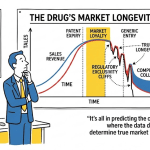
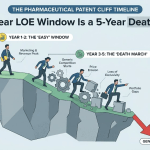
The blockbuster model generated extraordinary returns precisely because it fused product innovation with IP-enforced price protection. When the IP protection expired, price competition became absolute and immediate. The companies that sustained revenue longest were those with the deepest secondary patent portfolios, the most complex litigation histories, and, critically, the most developed line extensions ready at the moment of LOE. Those without these defenses watched their primary revenue streams fall 70-90% within eighteen months of generic entry. The implication for today: IP valuation must be disaggregated by patent type, litigation exposure, and coverage depth, not treated as a binary on/off switch.
Part II: Evergreening – The Lifecycle Management Toolkit and Its Limits
What Evergreening Is and What It Is Not
‘Evergreening’ is frequently misused as a pejorative catch-all for any strategy that extends a drug’s commercial life. In technical terms, it describes a set of distinct, legitimate lifecycle management tactics that delay generic entry or create successor products that sustain revenue after the primary compound loses exclusivity. Understanding the specific mechanics of each tactic matters because they carry different IP durability, regulatory complexity, and litigation risk profiles.
The Six Primary Evergreening Mechanisms
The principal mechanisms, and their respective limitations, are as follows.
New formulation patents cover modified-release technologies (extended-release, delayed-release, osmotic pump delivery) and novel delivery systems (transdermal patches, subcutaneous auto-injectors, nasal sprays). AstraZeneca’s Nexium (esomeprazole magnesium) is the canonical example of this tactic. AstraZeneca isolated the S-enantiomer of omeprazole (Prilosec), filed new composition-of-matter patents, and launched Nexium in 2001 as Prilosec’s patent life was declining. While the active moiety’s pharmacological superiority over the racemate was clinically modest, Nexium generated $6.3 billion in peak annual U.S. sales. The FTC has criticized this approach as ‘chiral switching,’ but it was patent-protected and FDA-approved, and AstraZeneca sustained premium pricing for over a decade.
New indication patents cover new therapeutic uses of existing molecules. A composition-of-matter patent protects the molecule regardless of indication, but if the primary patent expires and a manufacturer secures regulatory exclusivity for a new indication under Section 505(b)(2) (the hybrid approval pathway), it can maintain price separation between the new indication and any generics targeting the old one. Pfizer’s use of sildenafil (Viagra) as a PAH treatment (Revatio, approved 2005) is an instructive case, though here the indication produced its own independent commercial market rather than protecting the original erectile dysfunction franchise.
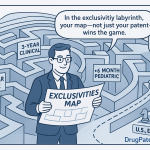
Pediatric exclusivity is a six-month exclusivity extension attached to all existing patents and exclusivities, awarded when a brand manufacturer conducts FDA-requested pediatric studies under the Best Pharmaceuticals for Children Act (BPCA). For a drug with $2 billion in annual U.S. sales, six months of additional exclusivity is worth approximately $1 billion. The strategic implication is that conducting a BPCA-triggered pediatric study often generates returns on investment exceeding 500%, making it a near-mandatory lifecycle management step for large-market drugs.
Authorized generics are generic versions of a brand drug manufactured by or for the brand company, launched simultaneously with or in response to the first Paragraph IV generic filer. The authorized generic competes with the Paragraph IV winner during the 180-day exclusivity period, cutting into the generic challenger’s profit and weakening the financial incentive for future Paragraph IV filings. Pfizer did precisely this with Lipitor at generic entry. Critics argue authorized generics suppress competition; the FTC studied this extensively and found mixed evidence on long-term consumer pricing effects.
Patent thickets are overlapping layers of patents covering different aspects of the same product, filed sequentially to create a wall of IP that generic manufacturers must navigate. AbbVie’s management of Humira (adalimumab) is the most studied example. Humira’s primary biologic composition patent expired in the U.S. in 2016, but AbbVie filed over 130 additional patents covering formulations, concentrations, methods of treatment, and manufacturing processes. AbbVie used this IP estate to negotiate settlement agreements with biosimilar developers, delaying U.S. biosimilar competition until January 2023, despite EU biosimilar entry in 2018. The resulting price divergence between the U.S. and EU markets for adalimumab biosimilars generated significant policy attention and Congressional scrutiny.
Authorized biosimilar arrangements (for biologic reference products) function similarly to authorized generics in the small molecule space. A reference product sponsor can license a biosimilar to a third party, capturing a revenue share while managing the pace and terms of market entry.
IP Valuation Implications of Evergreening Portfolios
From an IP valuation standpoint, evergreening tactics extend the net present value (NPV) of a product portfolio beyond what a single patent expiration date would suggest. Standard DCF models that apply a hard revenue cliff at first patent expiration systematically undervalue brand portfolios with dense secondary IP coverage and, conversely, overvalue generic pipeline targets where the brand has executed aggressive lifecycle management. Analysts modeling Humira’s U.S. revenue trajectory in 2015-2016 who failed to account for AbbVie’s thicket strategy missed roughly seven additional years of U.S. exclusivity, a $70+ billion revenue underestimate.
For IP teams evaluating a target in M&A, the standard practice of listing Orange Book-listed patents is insufficient. A proper IP diligence exercise requires mapping the full patent estate across granted claims, pending continuations, foreign equivalents, litigation history, and inter partes review (IPR) petition exposure. Patents before the Patent Trial and Appeal Board (PTAB) in IPR proceedings are worth materially less than granted, uninstituted claims, and that discount should be quantified.
The Regulatory Carve-Out Problem for Biosimilar Evergreening
Biologics operate under a separate exclusivity framework from small molecules. The Biologics Price Competition and Innovation Act (BPCIA, 2009) grants reference biologic sponsors twelve years of data exclusivity before a biosimilar can receive approval based on the reference product’s clinical data. This exclusivity runs from the date of first licensure of the reference product, regardless of when individual patents expire.
The BPCIA also established the ‘patent dance,’ a structured information exchange between reference product sponsors and biosimilar applicants that determines which patents will be litigated pre-launch versus post-launch. Unlike Hatch-Waxman’s 30-month stay, the BPCIA framework does not impose an automatic stay; injunctions are litigated on a case-by-case basis. Amgen v. Sandoz (2017, Supreme Court) resolved that the patent dance is optional for biosimilar applicants but that a 180-day notice of commercial marketing remains required, a distinction with real strategic implications for launch timing.
For reference product sponsors, evergreening a biologic portfolio means maintaining manufacturing process patents, formulation patents (e.g., for subcutaneous versus intravenous formulations), and method-of-treatment claims that biosimilar manufacturers cannot easily design around, because altering the manufacturing process for a biologic can affect the product’s immunogenicity profile and require additional clinical data.
Key Takeaways: Evergreening
No single evergreening tactic is reliable in isolation. Pediatric exclusivity is the most capital-efficient extension available. Patent thickets require sustained investment in IP prosecution and litigation but have delivered years of additional exclusivity for products like Humira. Authorized generics and authorized biosimilar arrangements monetize the LOE transition rather than preventing it. For IP teams and portfolio managers, the practical output of this analysis is a patent expiration waterfall model that assigns probability-weighted exclusivity extensions to each tactic deployed, producing a more accurate revenue forecast than any static patent cliff analysis.
Investment Strategy Note
Investors assessing brand pharma companies with major products approaching LOE should model four scenarios: hard cliff (no evergreening), soft cliff (formulation patent defends 3-4 years), managed transition (authorized generic plus lifecycle successor), and full defense (thicket holds 5+ years post-primary expiration). The valuation spread between these scenarios for a $3 billion annual revenue product can exceed $15 billion in NPV terms, which explains why IP due diligence is now a standard component of buy-side equity research rather than a legal department function.
Part III: The Generic and Biosimilar Market – Competing on Something Other Than Price Alone
Why Pure Price Competition Destroys Margin
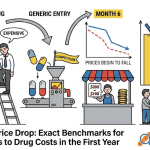
The economic logic of generic pharmaceuticals is straightforward: enter the market at a price below the brand, capture volume, and generate profit on a thin margin at high scale. The first generic entrant during its 180-day exclusivity period typically prices at 15-25% below the brand. After exclusivity ends and multiple generics enter, prices compress to 80-90% below brand within six to twelve months for oral solid dosage forms in competitive therapeutic categories.
At that level of price compression, the only sustainable competitive position is manufacturing efficiency and supply chain scale. Teva Pharmaceutical Industries built the world’s largest generic business (by revenue) on this premise, operating manufacturing facilities across Israel, Hungary, Croatia, the Czech Republic, and the U.S. The problem is that scale-based commoditization eventually reaches a floor where API sourcing costs, particularly from China and India, become the primary margin lever, and that lever is exposed to supply chain disruption, quality failures, and geopolitical risk.
The 2018-2019 valsartan recall, triggered by N-nitrosodimethylamine (NDMA) contamination at Zhejiang Huahai Pharmaceutical’s API facility in China, affected multiple generic manufacturers sourcing from the same supplier and led to a significant drug shortage. The recalls extended to ranitidine (Zantac) across both brand and generic formulations. The direct cost to the industry ran into the hundreds of millions; the reputational and regulatory cost was larger. Supply chain concentration is not a risk at the margins; it is a core business risk for any generic company sourcing more than 40% of its API from a single geography.
Value-Added Generics: The Supergeneric Model
The ‘value-added generic’ concept, sometimes called a ‘505(b)(2) product’ for its approval pathway, covers drugs approved based on existing safety and efficacy data combined with new company-generated data on a modified formulation or delivery system. These products sit in a commercial and regulatory middle ground between a brand drug and a standard ANDA generic.
Assertio Therapeutics (formerly Depomed) built its portfolio largely on 505(b)(2) reformulations. Gralise (gabapentin extended-release) is gabapentin, a molecule with dozens of generic competitors, reformulated into an extended-release tablet specifically designed for post-herpetic neuralgia that allows once-daily dosing versus the three-times-daily regimen of immediate-release gabapentin. The pharmacokinetic difference is real, not cosmetic: the extended-release profile avoids the peak-and-trough plasma concentration swings associated with CNS side effects, and the adherence improvement is clinically meaningful for a patient population that includes a high proportion of elderly patients. Gralise generated approximately $200 million at peak before its own market matured.
Dexilant (dexlansoprazole, Takeda) is another instructive example. Lansoprazole (Prevacid) had generic competition. Takeda isolated the R-enantiomer, developed a dual delayed-release capsule technology (Dual Delayed Release, DDR), and launched Dexilant with a differentiated dosing profile that maintained acid suppression without requiring the drug be taken on an empty stomach, a clinically relevant improvement for GERD patients. Peak sales exceeded $1.5 billion annually. The key point is that the ‘product’ here was the delivery system and dosing convenience, not a new molecule, and it commanded a substantial price premium over standard lansoprazole generics for years.
Biosimilar Interchangeability: The Regulatory Threshold That Changes Market Dynamics
In the biologic space, the generic analog is the biosimilar, but the regulatory equivalence standard is materially different. An ANDA generic must demonstrate bioequivalence to be substitutable at the pharmacy level without prescriber intervention. A biosimilar approved under the BPCIA pathway is approved as ‘biosimilar’ but not automatically interchangeable, meaning a pharmacist cannot substitute it for the reference product without explicit prescriber authorization in most U.S. states.
Biosimilar interchangeability requires an additional switching study demonstrating that patients can alternate between the reference product and the biosimilar without increased immunogenicity risk. This is a higher regulatory bar, but it unlocks automatic pharmacy-level substitution, which drives volume uptake without requiring prescriber education campaigns.
Coherus BioSciences received the first interchangeability designation for Udenyca (pegfilgrastim-cbqv, biosimilar to Neulasta) in 2021. Alvotech’s Simlandi (adalimumab-ryvk) received an interchangeability designation for the high-concentration formulation in 2023, potentially enabling pharmacy-level substitution for Humira’s high-concentration citrate-free formulation. The commercial implications for the brand are significant: interchangeability converts a prescriber-pull market into a payer-push market, where formulary placement by PBMs and payer rebate negotiation drive the substitution rate rather than physician habit.
For biosimilar developers, investing in the switching study data to pursue interchangeability is a strategic capital allocation decision. The FDA’s current biosimilar switching study guidance requires a minimum of three switches (two periods on reference, two on biosimilar, or the reverse). The incremental development cost is typically $10-30 million. The payoff is access to pharmacy-level substitution, which can increase biosimilar market share by 15-25 percentage points in mature markets compared to non-interchangeable biosimilars, according to IQVIA analysis of European biosimilar markets where automatic substitution policies are more widespread.
Key Takeaways: Generic and Biosimilar Competition
Generic companies competing purely on price reach a structural margin floor set by API commodity pricing and manufacturing efficiency. Value-added generics and 505(b)(2) reformulations offer a materially better margin profile and greater defensibility, but require genuine clinical differentiation, not cosmetic reformulation. In the biologic space, biosimilar interchangeability is the most important regulatory milestone between approval and commercial scale, because it unlocks payer-driven substitution that no amount of prescriber detailing can replicate. Supply chain reliability has graduated from an operational KPI to a commercial differentiator as post-COVID and post-NDMA-recall procurement teams treat it as a sourcing criterion alongside price.
Part IV: Payer Architecture, PBM Leverage, and the Formulary War
How PBMs Actually Control Pharmaceutical Revenue
Pharmacy Benefit Managers (PBMs) are the least-understood power centers in U.S. pharmaceutical economics. The three largest, CVS Caremark, Express Scripts (Cigna), and OptumRx (UnitedHealth Group), together manage pharmaceutical benefits for approximately 80% of commercially insured Americans. Their business model depends on negotiating rebates from brand manufacturers in exchange for favorable formulary placement (preferred tier status, lower patient cost-sharing, exclusion of competing products).
These rebates are substantial. Rebates on brand drugs in the U.S. averaged approximately 48% of list price across the major therapeutic categories by 2022, according to IQVIA data. The gap between a drug’s list price (Wholesale Acquisition Cost, WAC) and its net price after rebates has widened dramatically over the past decade. Humira’s list price increased from approximately $19,000 per year in 2012 to over $84,000 by 2023, while AbbVie simultaneously increased rebates to PBMs to maintain formulary placement. The net price increase to PBMs was much lower, but the WAC-to-net spread obscured the actual cost structure from public and policy view.
The inflation here matters for IP valuation. A drug’s list price is not its revenue per unit. Analysts who model brand pharma revenue using WAC without accounting for gross-to-net adjustments systematically overestimate realized revenue. Gross-to-net adjustments for major biologics commonly run 40-60% of WAC, meaning a $50,000 WAC biologic may net the manufacturer $20,000-$30,000 after rebates, chargebacks, and government price adjustments. This is the number that matters for NPV modeling.
Formulary Tiering and Step Therapy Protocols
PBM formulary tier structures range from preferred generics (Tier 1, lowest patient cost-sharing) through preferred brands (Tier 2-3) to non-preferred brands (Tier 4-5, highest cost-sharing or coverage exclusion). Step therapy requirements, which mandate that a patient try and fail a lower-cost therapy before a higher-cost alternative is covered, are standard across most commercial and Medicare Part D formularies.
For brand manufacturers, tier placement determines volume. A Tier 3 placement with $60 co-pay versus a Tier 2 placement with $30 co-pay on the same drug can reduce adherence by 20-30%, measurably affecting real-world outcomes and reducing the manufacturer’s per-patient revenue. This is why brand manufacturers pay substantial rebates to secure Tier 2 placement, and why formulary exclusions, where a PBM removes a drug from coverage entirely, are used as leverage in rebate negotiations.
The IRA’s Medicare drug price negotiation provisions (effective 2026 for the first ten drugs, expanding thereafter) create a new variable in this model. Drugs subject to Medicare negotiation will have a Maximum Fair Price (MFP) that applies in Part D, removing a portion of the manufacturer’s pricing flexibility for that patient population. The negotiated MFP does not apply to commercial markets, creating a structural bifurcation between Medicare and commercial pricing that manufacturers and PBMs are still working through.
The Rebate Trap and Its Effect on Biosimilar Adoption
The PBM rebate model has created what analysts at the USC Schaeffer Center and RAND Corporation have described as a ‘rebate trap’ for biosimilar market entry. Because reference biologic manufacturers offer substantial rebates on their products to maintain formulary exclusivity, a biosimilar priced at a 20-30% discount to WAC cannot generate a comparable rebate and cannot achieve preferred formulary status. The lower list price of the biosimilar translates to a lower absolute rebate dollar amount, making the reference product more financially attractive to the PBM despite the biosimilar’s lower gross price.
This dynamic visibly delayed adalimumab biosimilar adoption in 2023. Despite FDA approval of biosimilars from AbbVie’s licensing agreements (Hadlima, Hyrimoz, Cyltezo) as well as from Coherus, Fresenius Kabi, and others, the initial uptake was concentrated in markets where PBMs adopted rebate-contract agnostic formularies or where the biosimilar was designated interchangeable. Express Scripts and CVS Caremark added several biosimilars to their preferred formularies by mid-2023, but AbbVie’s aggressive contracting with certain PBMs sustained Humira’s share in segments of the market well past biosimilar entry.
The policy implication: ‘rebate reform,’ specifically the movement toward net price transparency and point-of-sale rebate pass-through, would structurally alter the biosimilar adoption curve by removing the PBM’s financial incentive to prefer higher-list-price rebate-generating reference products. The Trump administration’s proposed rebate rule (later withdrawn in 2019) and the Biden IRA’s transparency provisions moved incrementally in this direction. For biosimilar developers and investors, monitoring PBM contracting reform is as strategically important as tracking FDA approval timelines.
Key Takeaways: Payer Architecture
Formulary dynamics determine realized volume for both brand and generic products. PBM rebate leverage has sustained brand pricing power well beyond what patent expiration dates would predict, and it has simultaneously suppressed biosimilar uptake below what FDA-approved options would otherwise permit. Gross-to-net adjustments are the single most common source of revenue model error in pharma equity analysis. For IP and commercial teams, payer contracting strategy must be integrated into lifecycle management planning at the development stage, not at the reimbursement stage.
Investment Strategy Note
Investors evaluating biosimilar commercial programs should stress-test uptake assumptions against current PBM contracting environments, not against European biosimilar precedents. U.S. biosimilar uptake curves are 18-36 months slower than EU equivalents for the same product class, due to formulary dynamics rather than clinical acceptance. Interchangeability designation materially accelerates the U.S. curve and should be treated as a separate risk-adjusted NPV event, not as a binary factor included in a base case.
Part V: Value-Based Pricing, Outcomes Contracts, and the ICER Threshold Problem
The Mechanics of Outcomes-Based Contracting
Value-based pricing (VBP) in pharmaceuticals operates through outcomes-based contracts (OBCs), also called performance-based risk-sharing arrangements. In an OBC, the manufacturer and payer agree on a predefined clinical endpoint. If the drug fails to meet the endpoint at the population level, the manufacturer provides a rebate, credit, or price reduction. If the drug meets or exceeds the endpoint, the agreed price holds.
The earliest large-scale OBC in the U.S. was Novartis’s arrangement with CMS for Kymriah (tisagenlecleucel), a CAR-T cell therapy approved in 2017 for relapsed/refractory B-cell ALL in pediatric and young adult patients. List price at launch was $475,000 for a single infusion. Novartis structured the CMS contract so that payment was triggered only if the patient achieved remission by month one, with no payment for non-responders. This was a clinical confidence bet backed by the ELIANA trial data, which showed an 81% overall remission rate at three months.
The operational challenge of OBCs is not the commercial logic, which is sound, but the data infrastructure. Measuring outcomes requires patient-level clinical data linked to claims data in near-real time, which requires interoperability between electronic health record (EHR) systems, specialty pharmacy records, and payer claims databases. The U.S. health system’s fragmented data infrastructure makes this technically difficult at scale. Most OBCs deployed to date cover narrow, measurable endpoints (e.g., LDL reduction for PCSK9 inhibitors, remission for CAR-T) in patient populations where follow-up is feasible.
PCSK9 Inhibitors: The OBC as a Market Entry Tool
The PCSK9 inhibitor class is the most instructive case study for OBCs outside of gene and cell therapies. Repatha (evolocumab, Amgen) and Praluent (alirocumab, Sanofi/Regeneron) launched in 2015 at approximately $14,000/year per patient. Initial coverage was restrictive: payers required documented statin intolerance or failure at maximum-tolerated statin doses, prior authorization, and step therapy through high-intensity statins, which nearly all high-risk patients were already on. Real-world uptake was a fraction of the eligible patient population.
Amgen responded by entering OBCs with multiple payers, offering to refund a portion of the drug’s cost for patients who had a major adverse cardiovascular event (MACE) while on therapy. The contractual specifics varied by payer. Some contracts tied rebates to population-level MACE rates compared to a projected baseline; others operated at the individual patient level. Amgen cut Repatha’s list price to approximately $5,850/year in 2018, a 60% reduction, to expand access and improve formulary placement.
The valuation implication for Amgen was direct: Repatha’s IP estate (composition patents for evolocumab, monoclonal antibody manufacturing process patents, and SureClick auto-injector device patents) had a higher realizable NPV under a lower-price/higher-volume scenario than under a premium-price/low-volume scenario, because the total addressable market for secondary prevention post-MI is enormous, approximately 2 million patients annually in the U.S. alone, and statin intolerance/failure is documented in roughly 10-15% of that population.
ICER and the Cost-Effectiveness Threshold
The Institute for Clinical and Economic Review (ICER) has become a de facto pricing arbitrator for specialty pharmaceuticals in the U.S., despite lacking formal regulatory authority. ICER uses incremental cost-effectiveness ratios (ICERs, in dollars per quality-adjusted life year, or QALY) and analyzes whether a drug’s price is consistent with a threshold of $100,000-$150,000 per QALY gained, a range derived from economic literature and Medicare precedent.
A drug priced above ICER’s estimated ‘value-based price range’ receives what the industry calls an ‘unsupported’ or ‘low value’ rating, which payers, most notably state Medicaid programs and self-insured employers, use to justify restrictive formulary placement or prior authorization. ICER’s reviews have directly influenced pricing decisions: Alnylam reduced the net price of patisiran (Onpattro) following ICER scrutiny, and Spark Therapeutics incorporated ICER methodology when designing the outcomes-based installment payment model for Luxturna (voretigene neparvovec), gene therapy for RPE65-mediated retinal dystrophy, priced at $850,000 for bilateral treatment.
The QALY threshold creates a structural tension with rare disease and orphan drug pricing. A drug with a list price of $500,000/year for a patient population of 2,000 in the U.S. may generate a cost-per-QALY well above $500,000 when modeled against a QALY gain of 2-3 years. ICER has developed separate methodological frameworks for ultra-rare conditions, including extended ICER methods that account for severity weighting and societal willingness to pay above the standard threshold, but the fundamental tension between orphan drug economics and cost-effectiveness-based reimbursement remains unresolved.
Gene Therapy Pricing Architecture: Installment Payments and Annuity Models
Gene therapy pricing represents the extreme end of the value-based pricing problem. A one-time curative treatment for a condition like spinal muscular atrophy (SMA) or hemophilia A delivers value over a lifetime but requires immediate payment at the time of administration. Novartis priced Zolgensma (onasemnogene abeparvovec) at $2.125 million per dose at U.S. launch in 2019, the highest list price for any drug at that time.
Novartis offered CMS and commercial payers outcomes-based installment payment options: the payer would make annual payments over five years, with payments in years 2-5 contingent on continued patient benefit. This amortized the financial risk across the payer’s fiscal years and linked payment to outcome. The administrative complexity was substantial; most payers lacked the infrastructure to manage multi-year contingent payment contracts for individual patients, and Medicaid’s annual budget cycle created specific complications for multi-year agreements.
The payment model innovation here is inseparable from IP valuation. Zolgensma’s composition patents, AAV vector patents, and manufacturing process IP collectively support a defendable period of market exclusivity that makes a $2 million list price economically rational for Novartis on a global basis. The total addressable market for SMA Type 1 in the U.S. is approximately 400-500 patients per birth cohort (newborn screening now identifies most cases at birth). At a net price after managed entry agreements that Novartis has not publicly disclosed, but which analysts estimate at 30-40% below list in major markets, the product is commercially viable and IP-defensible.
AveXis (the SMA gene therapy developer acquired by Novartis in 2018 for $8.7 billion) is itself a case in commercial IP valuation. Novartis paid a 2.9x revenue multiple on projected peak sales for a pipeline asset that had not yet received FDA approval, reflecting the expected cash flows from a patent-protected, first-in-class gene therapy in a high-severity, high-need indication where the standard of care was chronically inadequate.
Key Takeaways: Value-Based Pricing
OBCs are technically sound as a concept but operationally constrained by U.S. health data infrastructure. They work best in narrow indications with clean, measurable endpoints, and they are most commonly deployed for high-cost specialty products where the financial risk to payers of non-response is large enough to justify the contractual complexity. ICER cost-effectiveness analysis now functions as a soft pricing ceiling in the U.S. market for most specialty drugs, and portfolio teams that ignore ICER thresholds during pricing strategy development routinely encounter formulary access problems post-launch. Gene therapy installment models are the leading edge of outcomes-based contracting, and they will become more common as the FDA approves additional gene therapies across hemophilia, lysosomal storage disorders, and rare neurological conditions.
Investment Strategy Note
For investors evaluating gene therapy companies, the installment payment model converts a single-period revenue recognition event into a multi-year annuity, which materially affects how revenue appears in financial statements under ASC 606. Companies using variable consideration (contingent payments) must estimate the transaction price under GAAP with significant management judgment, creating a potential source of earnings volatility if outcome rates diverge from projections. This is a financial statement risk that is distinct from the clinical risk and deserves separate modeling.
Part VI: Real-World Evidence, Companion Diagnostics, and the Expanded Definition of ‘Product’
Real-World Evidence as a Pricing Defense Tool
Real-World Evidence (RWE) has moved from a regulatory support tool to a commercial asset. The 21st Century Cures Act (2016) and subsequent FDA guidance formalized the use of RWE in regulatory decision-making, including for label expansions and post-market commitments. For commercial teams, RWE generates a continuous flow of data demonstrating a drug’s effectiveness and economic value outside of controlled trial conditions.
The strategic value of RWE in the price-vs-product debate is specific: it extends the credible life of a product’s value narrative past the clinical trial horizon. A Phase III trial for an oncology drug typically runs three to five years and involves 300-500 patients in a highly selected population. RWE generated from EHR data, specialty pharmacy dispensing records, and tumor registries can cover tens of thousands of patients over five to ten years, capturing outcomes in populations that clinical trials deliberately excluded (elderly patients, those with renal impairment, patients on polypharmacy).
Pfizer’s RWE program for Ibrance (palbociclib) is an instructive example. Ibrance was approved in 2015 for HR+/HER2- metastatic breast cancer based on PALOMA-2/3 trial data. Pfizer subsequently generated extensive real-world registry data through partnerships with academic medical centers, documenting progression-free survival and tolerability in patient populations broader than the clinical trial cohort. This data supported label expansion discussions and provided payers with outcome data beyond the clinical trial setting, strengthening the value argument for Ibrance at its $148,000/year list price against emerging CDK4/6 inhibitor competitors including Eli Lilly’s Verzenio (abemaciclib) and Novartis’s Kisqali (ribociclib).
Companion Diagnostics: The Diagnostic-Therapeutic Bundle as IP
Companion diagnostics (CDx) tie drug efficacy to a specific molecular biomarker identified before treatment, creating a tighter efficacy signal by restricting the treatment population to responders. The CDx itself is an independent regulatory product (approved as a Class III in vitro diagnostic or under 510(k)) developed in co-registration with the drug.
The commercial logic is bidirectional. A CDx-linked drug commands a higher price per patient because it concentrates efficacy in the selected population, reducing the number of non-responders who pay for treatment without benefit. The CDx creates an additional revenue stream for either the pharma company (if it develops the diagnostic internally or through an exclusive partnership) or a diagnostic company (Roche Diagnostics, Foundation Medicine, Guardant Health). It also creates an IP-protected, quasi-proprietary market for the drug, because CDx-guided prescribing creates switching costs for physicians familiar with the biomarker testing workflow.
Merck’s pembrolizumab (Keytruda) and PD-L1 expression testing is the highest-revenue example. FDA approval in non-small cell lung cancer (NSCLC) first-line therapy requires PD-L1 testing via an FDA-approved CDx (the PD-L1 IHC 22C3 pharmDx assay, developed with Dako/Agilent). Patients with PD-L1 expression >= 50% receive pembrolizumab monotherapy; those below that threshold receive combination chemotherapy. The testing requirement limits the monotherapy-eligible population to approximately 30% of NSCLC patients, but within that population, pembrolizumab’s response rates in KEYNOTE-024 were significantly higher than historic chemotherapy benchmarks. Keytruda generated $25 billion in global sales in 2023, making it the world’s highest-revenue pharmaceutical product.
The IP structure here matters for valuation: Merck’s pembrolizumab patents include composition-of-matter claims for the antibody itself, manufacturing process patents, and method-of-treatment patents for specific indications and dosing regimens. The CDx does not belong to Merck, but the prescribing workflow is intertwined with Dako’s assay, creating an embedded dependency that generic or biosimilar entrants (should they eventually appear) would need to address with their own CDx co-development programs.
Digital Therapeutics and the SaMD Regulatory Pathway
Software as a Medical Device (SaMD), under FDA’s Digital Health Center of Excellence framework, covers software-based interventions that function as medical devices. FDA’s De Novo and 510(k) pathways for low-to-moderate risk software and the Pre-Submission program for novel SaMD have created a regulatory route for digital therapeutics (DTx).
Pear Therapeutics received the first DTx prescriptions for a substance use disorder (reSET, reSET-O) and insomnia (Somryst). The product is a prescription app, paid for through the pharmacy benefit in some payer contracts, reimbursed separately in others, and covered under behavioral health benefits in others. Pear filed for bankruptcy in 2023, illustrating the reimbursement infrastructure problem for DTx: coverage determination is inconsistent across payers, coding (J-codes, CPT codes) for DTx reimbursement is not standardized, and prescription drug benefit managers are not designed to adjudicate software claims.
The DTx market remains commercially early-stage, but the strategic logic of bundling an FDA-authorized SaMD with a pharmaceutical agent is compelling for companies able to absorb the development cost and reimbursement risk. A pharmaceutical agent plus a DTx companion app, where the app improves adherence and generates adherence data, theoretically commands a higher combined value argument than either element alone. The IP for the DTx component (software patents, algorithm patents) differs materially from the pharmaceutical IP (composition-of-matter, process patents) and requires separate freedom-to-operate analysis.
Key Takeaways: The Expanded Product Definition
‘Product’ in 2025 includes the therapeutic molecule, its delivery system, the CDx or biomarker test required for prescribing, the RWE generated from real-world use, and, in select cases, a regulated software component. Each of these elements carries its own IP, regulatory status, and reimbursement pathway. Companies that manage all of these elements as an integrated system generate more durable competitive positions than those treating the molecule as the only defensible asset. For IP teams, this means the freedom-to-operate landscape and patent prosecution strategy must cover diagnostics and software components, not just the pharmaceutical compound.
Part VII: Innovation Economics, R&D Productivity, and the Capital Allocation Problem
The Cost of Drug Development and Its Distribution
The $2.6 billion figure for the fully capitalized cost of developing a new drug (Tufts CSDD, 2016, updated from the 2003 DiMasi et al. analysis) is the most cited and most misunderstood number in pharmaceutical economics. It includes the time cost of capital (opportunity cost) on funds invested during the development period, which represents approximately half of the total. The out-of-pocket development cost, excluding time-cost of capital, is approximately $1.4 billion per approved drug. Both figures include the cost of failed compounds: for every drug that reaches the market, roughly nine others fail at various stages of clinical development.
The attrition rate drives the true cost of innovation. Phase I-III clinical attrition rates (the probability of proceeding from one phase to the next) have changed materially by therapeutic area. Oncology, the highest-investment therapeutic category, carries overall Phase I-to-approval success rates of approximately 5-7%, compared to 13-15% for cardiovascular and 8-10% for CNS, according to Biotechnology Innovation Organization (BIO) analysis of 2011-2020 trial data. Gene therapy, the most expensive and technically complex modality, has experienced variable success rates as the technology matures.
Deloitte’s annual analysis of the returns on late-stage R&D investment at the twelve largest biopharmaceutical companies tracked a decline in forecast IRR from approximately 10% in 2010 to 1.2% in 2019, recovering to approximately 5.9% by 2023 as launched assets generated higher peak sales and the pricing environment for specialty drugs remained supportive. The recovery in 2023 figures was disproportionately driven by GLP-1 receptor agonist launches (Novo Nordisk’s Ozempic/Wegovy semaglutide platform and Eli Lilly’s tirzepatide, Mounjaro/Zepbound).
GLP-1 Agonists: The Most Consequential IP Estate of the Decade
Novo Nordisk’s semaglutide IP estate deserves detailed analysis because it is the most commercially significant pharmaceutical IP position of the 2020s. Semaglutide is a GLP-1 receptor agonist approved for type 2 diabetes (Ozempic, once-weekly injection, 2017) and obesity (Wegovy, higher dose weekly injection, 2021). Rybelsus, oral semaglutide, was approved for T2DM in 2019.
Novo’s patent portfolio on semaglutide covers the peptide composition, the C-18 fatty acid linker modification (which extends half-life to enable once-weekly dosing), specific formulations for the oral bioavailability technology (Rybelsus uses a sodium N-[8-(2-hydroxybenzoyl)amino caprylate], or SNAC, absorption enhancer), and the auto-injector pen (FlexTouch). Primary composition patents expire at various dates between 2026 and 2033 depending on jurisdiction, with U.S. primary composition-of-matter protection extending to approximately 2032 for the semaglutide molecule.
The market scale makes this IP extraordinarily valuable. Ozempic and Wegovy generated combined global sales of approximately $21 billion in 2023. Novo Nordisk’s market capitalization exceeded $500 billion in mid-2024, briefly making it Europe’s most valuable company. The IP estate supporting those revenues will face its first serious generic/biosimilar challenge in the late 2020s in markets where the primary composition patents expire earliest. At that point, the secondary IP layers (formulation patents, device patents, manufacturing process patents) and the manufacturing capacity constraint (Novo has had supply shortages for Wegovy) will determine how aggressively generic competitors can enter.
Eli Lilly’s tirzepatide (Mounjaro, approved T2DM 2022; Zepbound, approved obesity 2023) has independent IP covering its dual GIP/GLP-1 receptor agonism, a mechanism distinct from semaglutide’s pure GLP-1 agonism. In head-to-head data (SURMOUNT-5), tirzepatide showed a statistically superior weight loss outcome versus semaglutide at equivalent dosing, which supports Lilly’s pricing parity with Novo’s Wegovy and potentially a premium as more comparative data accumulates.
The combined GLP-1/GIP market is projected to exceed $100 billion globally by 2030, a figure that reflects not just obesity and diabetes indications but emerging clinical data in cardiovascular outcomes (SELECT trial for semaglutide, SURMOUNT-MMO for tirzepatide), MASH (metabolic dysfunction-associated steatohepatitis), chronic kidney disease, and sleep apnea. Each approved indication expansion generates additional regulatory data exclusivity and strengthens the value argument against future competitors.
The Biosimilar GLP-1 Challenge
Unlike monoclonal antibodies (which have defined biosimilar regulatory pathways), peptide GLP-1 receptor agonists like semaglutide are small enough that the question of whether they qualify for the BPCIA’s biologics pathway or Hatch-Waxman’s small molecule pathway is not fully settled. Peptides with 40 or more amino acids generally follow the BPCIA (biologic) pathway, granting 12 years of reference product exclusivity. Semaglutide has 31 amino acids. FDA’s guidance on the peptide/biologic boundary is ambiguous; the agency has generally treated complex peptides as biologics under the BPCIA on a case-by-case basis.
If semaglutide is treated as a small molecule, generic entry could be pursued via ANDA with bioequivalence demonstration, potentially earlier than 2032 in the U.S. If treated as a biologic, the biosimilar pathway applies, potentially extending Novo’s protected window. This regulatory classification question is an active area of legal and regulatory strategy for potential semaglutide generic developers, and its resolution will materially affect the timing and magnitude of competitive entry.
Key Takeaways: Innovation Economics
R&D productivity at large-cap pharma declined significantly from 2010-2019 before partially recovering on the back of GLP-1 and oncology commercial successes. The cost of capital on multi-billion dollar clinical programs means that only drugs with realistic peak sales above $1 billion in developed markets generate adequate returns to justify the investment. This economic pressure concentrates innovation in large markets (obesity, oncology, immunology) and depresses investment in conditions with smaller patient populations unless orphan drug incentives apply. The GLP-1 IP estate at Novo Nordisk and Eli Lilly is the most consequential pharmaceutical IP position of the decade, and its eventual erosion via generic or biosimilar competition will be one of the defining events in 2030s pharmaceutical markets.
Investment Strategy Note
Investors modeling GLP-1 revenue trajectories should build two separate scenario sets: one treating semaglutide/tirzepatide generics as Hatch-Waxman small molecules (potential generic entry 2032-2035, rapid price erosion) and one treating them as biologics (biosimilar entry with 12-year data exclusivity baseline, slower price erosion). The valuation gap between these scenarios for Novo Nordisk alone runs to hundreds of billions of dollars in market capitalization and represents one of the most important unresolved regulatory questions in current pharmaceutical IP.
Part VIII: Strategic Integration – Building the Portfolio That Wins on Both Dimensions
The Decision Architecture for IP-Led Portfolio Strategy
Pharmaceutical portfolio strategy is fundamentally a capital allocation problem under uncertainty. R&D dollars committed today produce assets that will compete in a market environment twelve to fifteen years from now, under a payer framework, regulatory environment, and competitive landscape that are not yet known. The companies that consistently generate above-market returns are those that build decision architectures capable of integrating IP durability, commercial viability, and reimbursement feasibility into a single evaluation framework from the earliest stages of development.
The practical mechanism is a go/no-go gate system that incorporates the following analytical elements at each phase transition.
At the IND/Phase I entry gate, the analysis should cover freedom-to-operate (FTO) in the lead indication, the probability of obtaining a composition-of-matter patent on the lead compound, the competitive patent landscape (are there blocking patents from competitors?), and a preliminary assessment of the target product profile (TPP) against ICER cost-effectiveness thresholds. This is not just a legal analysis; it is a commercial viability screen that determines whether the asset, if successful in clinical development, can achieve the price needed to justify the development investment.
At Phase II completion, the analysis deepens to include preliminary payer advisory feedback, an assessment of the companion diagnostic landscape (is a CDx needed, and if so, is the biomarker patentable?), a competitive intelligence update on similar assets in development (Paragraph IV risks from competitors developing me-too or next-gen compounds), and a lifecycle management plan that identifies at least two or three additional indications or formulation developments that could extend the commercial life of the asset.
At the BLA/NDA submission stage, the commercial team should have completed a full payer landscape analysis, identified the OBC parameters that would satisfy the two or three largest potential payer partners, and finalized the launch price in the context of ICER’s expected review (if the product’s WAC exceeds $50,000/year, an ICER review is near-certain).
Build vs. Buy: IP Acquisition Strategy in the Current Market
The patent cliff affecting multiple large-cap pharma companies in the 2025-2030 period (Bristol-Myers Squibb’s Revlimid generics after its managed LOE arrangement, Merck’s Keytruda primary patents beginning to expire in 2028, AbbVie’s ongoing management of the post-Humira biosimilar environment) has driven aggressive M&A activity as a substitute for internal R&D productivity.
The build-versus-buy decision in pharmaceutical IP strategy is not a binary choice between internal discovery and acquisition. The practical framework involves a spectrum: internal discovery (highest risk, highest return on success), option deals and research collaborations (shared risk, shared return), licensing-in of clinical-stage assets (risk-sharing with milestones), and outright acquisition (immediate certainty, highest upfront capital).
Each of these structures has a different IP valuation methodology. An option to license a Phase I asset is valued using a probability-weighted NPV on the optioned indication, discounted by the option premium and milestone obligations. An outright acquisition of a Phase III asset is valued using a risk-adjusted DCF on the peak sales forecast, net of development completion costs, with a strategic premium that reflects the acquirer’s commercial infrastructure and cross-selling potential.
Merck’s acquisition of Prometheus Biosciences in 2023 for $10.8 billion, for an asset (PRA023/tulisokibart, an anti-TL1A antibody) that had not yet completed Phase III trials, was priced at approximately 43x the acquisition’s annual revenue, a multiple that reflects the expected IP-protected peak sales in Crohn’s disease and ulcerative colitis rather than current revenues. The valuation was a bet on IP durability, clinical differentiation from existing IL-12/23 inhibitors (risankizumab, guselkumab) and IL-23 inhibitors (mirikizumab), and the emerging science around TL1A’s role in fibrosis, a mechanism that could differentiate tulisokibart in a market already crowded with anti-integrin and anti-cytokine biologics.
The Role of Patent Intelligence in Competitive Strategy
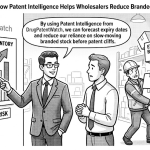
Patent intelligence platforms that aggregate Orange Book data, USPTO filings, PTAB decisions, and litigation records provide a structured way to monitor competitor IP positions and identify LOE opportunities. The analytical outputs of these platforms serve distinct functions for different stakeholders.
For a brand manufacturer, the primary use is monitoring Paragraph IV filings against its own portfolio, tracking PTAB IPR petitions that could invalidate or narrow key claims, and identifying competitor patent applications that might block proposed lifecycle management moves. The 18-month publication lag on USPTO applications means that a competitor’s pending applications are not immediately visible, but published applications and granted continuations provide signal on where competitors are extending their IP estate.
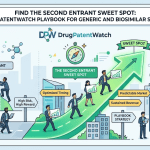
For a generic manufacturer, the primary use is identifying high-revenue branded drugs approaching LOE, assessing the depth of secondary patent coverage that would need to be challenged or designed around, and prioritizing ANDA filing schedules to maximize the probability of capturing 180-day first-filer exclusivity.
For institutional investors, patent expiration analysis informs revenue modeling at a granularity that consensus estimates often miss. Brand companies with aging portfolios and thin secondary IP coverage are more vulnerable to rapid LOE transitions than those with dense patent thickets. Generic companies with first-filer positions in large-market drugs are sitting on time-limited but highly valuable assets that should be explicitly modeled in portfolio valuations.
Key Takeaways: Strategic Integration
Winning on both price and product dimensions requires integrating IP, commercial, medical, and payer perspectives into every major portfolio decision, from molecule selection through LOE transition management. The companies that do this best treat IP not as a compliance function but as a revenue-generating asset class that must be actively managed, prosecuted, defended, and eventually monetized. Build-vs-buy frameworks that incorporate probability-weighted IP valuation at each stage of development produce better capital allocation outcomes than those based on clinical trial success probabilities alone. Patent intelligence is the data infrastructure that makes these decisions tractable.
Conclusion: Price and Product Are Both Consequences of IP Strategy
The original question, whether price or product determines pharmaceutical market success, has a technically precise answer that the debate usually misses. Price and product performance are both downstream consequences of IP strategy. A product’s clinical profile determines the theoretical maximum price the market will bear. IP strategy, through patent portfolio construction, litigation execution, and lifecycle management, determines how long that price can be sustained and how much of the total market opportunity the manufacturer can capture before competitive entry.
The companies generating the highest returns on pharmaceutical innovation are not those that choose between price competition and product differentiation. They are those that understand IP as the mechanism connecting product quality to realized price, and that invest in IP intelligence, portfolio management, and lifecycle strategy with the same rigor applied to clinical development.
Hatch-Waxman created the patent cliff. The BPCIA created the biosimilar pathway. ICER created a soft pricing ceiling. IRA drug price negotiation created a new constraint on the Medicare margin for the highest-revenue drugs. Each of these forces reduced the margin available to manufacturers who relied on a single layer of protection. The adaptive response, visible in the patent thicket strategies of AbbVie, the outcome-based installment models of Novartis and Spark, the CDx-guided pricing of Merck, and the GLP-1 platform expansion of Novo Nordisk and Eli Lilly, is to build portfolios that combine multiple layers of clinical, regulatory, and IP protection simultaneously.
No single tactic sustains a price premium indefinitely. But companies that combine composition-of-matter IP with formulation depth, CDx integration, real-world evidence programs, and proactive payer contracting strategies sustain competitive positions materially longer than those relying on any one layer. That is the operational definition of winning on both dimensions of the price-product competition.
Consolidated Key Takeaways
The core proposition of the blockbuster era was that IP-protected product quality sustained price. That proposition remains true, but the duration of protection has compressed and the number of challenges has increased. Secondary patents, lifecycle management tactics, and companion products now determine how much of a product’s clinical value converts to sustained commercial value.
Generic entry under Hatch-Waxman follows a predictable economic logic: first-filer exclusivity is the most valuable commercial position, and the Paragraph IV challenge is a financial calculation, not primarily a legal one. Companies that treat their Orange Book-listed patents as a passive legal list rather than an active competitive asset underestimate the probability and timing of generic challenge.
Payer architecture, specifically PBM formulary control and rebate-driven tiering, has become as important a determinant of realized revenue as patent expiration dates. Gross-to-net adjustments must be modeled explicitly. The rebate trap for biosimilars is a structural issue, not a temporary market imperfection, and it will require regulatory intervention to resolve.
Value-based pricing is the correct direction for aligning manufacturer incentives with patient outcomes, but it is operationally immature in the U.S. healthcare data infrastructure. OBCs work best in narrow indications with clean endpoints. Gene therapy installment models are the most technically complex form of OBC and carry distinct revenue recognition risks under GAAP.
IP strategy is portfolio strategy. The companies generating the highest long-term returns, measured by revenue durability and NPV per development dollar, are those that integrate IP prosecution, lifecycle management, payer contracting, and real-world evidence generation into a unified commercial strategy rather than treating each as a separate functional discipline.
This analysis covers publicly available data on pharmaceutical patents, regulatory decisions, and commercial performance. It does not constitute investment advice. Patent litigation outcomes, regulatory decisions, and commercial results can differ materially from the analysis presented.