Last Updated: October 21, 2026

zepbound Drug Patent Profile


✉ Email this page to a colleague

« Back to Dashboard


When do Zepbound patents expire, and what generic alternatives are available?

Zepbound is a drug marketed by Eli Lilly And Co and is included in one NDA. There are eight patents protecting this drug.

The generic ingredient in ZEPBOUND is tirzepatide. There is one drug master file entry for this compound. Two suppliers are listed for this compound. Additional details are available on the tirzepatide profile page.

DrugPatentWatch® Generic Entry Outlook for Zepbound

Zepbound was eligible for patent challenges on May 13, 2026.

By analyzing the patents and regulatory protections it appears that the earliest date for generic entry will be December 20, 2027. This may change due to patent challenges or generic licensing.

There have been fourteen patent litigation cases involving the patents protecting this drug, indicating strong interest in generic launch. Recent data indicate that 63% of patent challenges are decided in favor of the generic patent challenger and that 54% of successful patent challengers promptly launch generic drugs.

Indicators of Generic Entry

< Available with Subscription >

  Start Trial

AI Deep Research
Questions you can ask:
  • What is the 5 year forecast for zepbound?
  • What are the global sales for zepbound?
  • What is Average Wholesale Price for zepbound?
DrugPatentWatch® Estimated Loss of Exclusivity (LOE) Date for zepbound
Generic Entry Date for zepbound*:
Constraining patent/regulatory exclusivity:

TREATMENT OF MODERATE TO SEVERE OBSTRUCTIVE SLEEP APNEA (OSA) IN ADULTS WITH OBESITY

NDA:
Dosage:

SOLUTION;SUBCUTANEOUS

*The generic entry opportunity date is the latter of the last compound-claiming patent and the last regulatory exclusivity protection. Many factors can influence early or later generic entry. This date is provided as a rough estimate of generic entry potential and should not be used as an independent source.

Recent Clinical Trials for zepbound

Identify potential brand extensions & 505(b)(2) entrants

SponsorPhase
The University of Texas Medical Branch, GalvestonPHASE2
Schmidt Initiative for Long COVIDPHASE2
Scripps Translational Science InstitutePHASE2

See all zepbound clinical trials

US Patents and Regulatory Information for zepbound

zepbound is protected by seventeen US patents and three FDA Regulatory Exclusivities.

Based on analysis by DrugPatentWatch, the earliest date for a generic version of zepbound is ⤷  Start Trial.

This potential generic entry date is based on TREATMENT OF MODERATE TO SEVERE OBSTRUCTIVE SLEEP APNEA (OSA) IN ADULTS WITH OBESITY.

Generics may enter earlier, or later, based on new patent filings, patent extensions, patent invalidation, early generic licensing, generic entry preferences, and other factors.

Applicant Tradename Generic Name Dosage NDA Approval Date TE Type RLD RS Patent No. Patent Expiration Product Substance Delist Req. Exclusivity Expiration
Eli Lilly And Co ZEPBOUND KWIKPEN tirzepatide SOLUTION;SUBCUTANEOUS 217806-020 Jan 20, 2026 RX Yes Yes ⤷  Start Trial ⤷  Start Trial ⤷  Start Trial
Eli Lilly And Co ZEPBOUND (AUTOINJECTOR) tirzepatide SOLUTION;SUBCUTANEOUS 217806-005 Nov 8, 2023 RX Yes Yes ⤷  Start Trial ⤷  Start Trial ⤷  Start Trial
Eli Lilly And Co ZEPBOUND (AUTOINJECTOR) tirzepatide SOLUTION;SUBCUTANEOUS 217806-002 Nov 8, 2023 RX Yes Yes ⤷  Start Trial ⤷  Start Trial Y ⤷  Start Trial
>Applicant >Tradename >Generic Name >Dosage >NDA >Approval Date >TE >Type >RLD >RS >Patent No. >Patent Expiration >Product >Substance >Delist Req. >Exclusivity Expiration

EU/EMA Drug Approvals for zepbound

Company Drugname Inn Product Number / Indication Status Generic Biosimilar Orphan Marketing Authorisation Marketing Refusal
Eli Lilly Nederland B.V. Mounjaro tirzepatide EMEA/H/C/005620Mounjaro is indicated for the treatment of adults with insufficiently controlled type 2 diabetes mellitus as an adjunct to diet and exercise- as monotherapy when metformin is considered inappropriate due to intolerance or contraindications- in addition to other medicinal products for the treatment of diabetes.For study results with respect to combinations, effects on glycaemic control and the populations studied, see sections 4.4, 4.5 and 5.1. Authorised no no no 2022-09-15
>Company >Drugname >Inn >Product Number / Indication >Status >Generic >Biosimilar >Orphan >Marketing Authorisation >Marketing Refusal

International Patents for zepbound

When does loss-of-exclusivity occur for zepbound?

Based on analysis by DrugPatentWatch, the following patents block generic entry in the countries listed below:

Argentina

Patent: 3242
Patent: COMPUESTOS CO-AGONISTAS DE GIP Y GLP-1
Estimated Expiration: ⤷  Start Trial

Patent: 1857
Patent: COMPUESTOS CO-AGONISTAS DE GIP Y GLP-1
Estimated Expiration: ⤷  Start Trial

Australia

Patent: 16205435
Patent: GIP and GLP-1 co-agonist compounds
Estimated Expiration: ⤷  Start Trial

Brazil

Patent: 2017010596
Patent: compostos coagonistas de gip e glp-1
Estimated Expiration: ⤷  Start Trial

Canada

Patent: 73352
Patent: COMPOSES CO-AGONISTES DE GIP ET DE GLP-1 (GIP AND GLP-1 CO-AGONIST COMPOUNDS)
Estimated Expiration: ⤷  Start Trial

Chile

Patent: 17001760
Patent: Compuestos co-agonistas de gip y glp-1
Estimated Expiration: ⤷  Start Trial

China

Patent: 7207576
Patent: GIP和GLP-1共激动剂化合物 (GIP AND GLP-1 CO-AGONIST COMPOUNDS)
Estimated Expiration: ⤷  Start Trial

Patent: 2608377
Patent: GIP和GLP-1共激动剂化合物 (GIP and GLP-1 co-agonist compounds)
Estimated Expiration: ⤷  Start Trial

Colombia

Patent: 17006737
Patent: Análogos de gip y glp-1 en donde la lisina (k) en la posición 20 está químicamente modificada a través de la conjugación al grupo épsilon-amino de la cadena lateral k con ([2-(2-amino-etoxi)-etoxi]-acetil)2-(γglu)a-co-(ch2)b-co2h activos como agonistas de receptores gip y gip-1
Estimated Expiration: ⤷  Start Trial

Costa Rica

Patent: 170310
Patent: COMPUESTOS CO-AGONISTAS DE GIP Y GLP-1
Estimated Expiration: ⤷  Start Trial

Croatia

Patent: 0191614
Estimated Expiration: ⤷  Start Trial

Cyprus

Patent: 22028
Estimated Expiration: ⤷  Start Trial

Patent: 23003
Estimated Expiration: ⤷  Start Trial

Denmark

Patent: 42887
Estimated Expiration: ⤷  Start Trial

Dominican Republic

Patent: 017000153
Patent: COMPUESTOS CO-AGONISTAS DE GIP Y GLP-1
Estimated Expiration: ⤷  Start Trial

Ecuador

Patent: 17043648
Patent: COMPUESTOS CO-AGONISTAS DE GIP Y GLP-1
Estimated Expiration: ⤷  Start Trial

El Salvador

Patent: 17005453
Patent: COMPUESTOS CO-AGONISTAS DE GIP Y GLP-1
Estimated Expiration: ⤷  Start Trial

Eurasian Patent Organization

Patent: 1591
Patent: СОЕДИНЕНИЯ-КОАГОНИСТЫ ГИП И ГПП-1 (GIP AND GLP-1 CO-AGONIST COMPOUNDS)
Estimated Expiration: ⤷  Start Trial

Patent: 5055
Patent: СОЕДИНЕНИЯ-КОАГОНИСТЫ ГИП И ГПП-1 (GIP AND GLP-1 CO-AGONIST COMPOUNDS)
Estimated Expiration: ⤷  Start Trial

Patent: 1791281
Patent: СОЕДИНЕНИЯ-КОАГОНИСТЫ ГИП И ГПП-1 (GIP AND GLP-1 CO-AGONIST COMPOUNDS)
Estimated Expiration: ⤷  Start Trial

Patent: 1892057
Patent: СОЕДИНЕНИЯ-КОАГОНИСТЫ ГИП И ГПП-1 (GIP AND GLP-1 CO-AGONIST COMPOUNDS)
Estimated Expiration: ⤷  Start Trial

Patent: 2090392
Patent: СОЕДИНЕНИЯ-КОАГОНИСТЫ ГИП И ГПП-1
Estimated Expiration: ⤷  Start Trial

European Patent Office

Patent: 42887
Patent: COMPOSÉS CO-AGONISTES DE GIP ET DE GLP-1 (GIP AND GLP-1 CO-AGONIST COMPOUNDS)
Estimated Expiration: ⤷  Start Trial

Patent: 97662
Patent: COMPOSÉS CO-AGONISTES GIP ET GLP-1 (GIP AND GLP-1 CO-AGONIST COMPOUNDS)
Estimated Expiration: ⤷  Start Trial

Finland

Patent: 0230005
Estimated Expiration: ⤷  Start Trial

France

Patent: C1006
Estimated Expiration: ⤷  Start Trial

Hungary

Patent: 45860
Estimated Expiration: ⤷  Start Trial

Patent: 300006
Estimated Expiration: ⤷  Start Trial

Israel

Patent: 2499
Patent: תרכובות קו-אגוניסטיות ל- gip ו- glp-1 (Gip and glp-1 co-agonist compounds)
Estimated Expiration: ⤷  Start Trial

Patent: 6492
Patent: תרכובות קו–אגוניסטיות ל– gip ו– glp–1 (Gip and glp-1 co-agonist compounds)
Estimated Expiration: ⤷  Start Trial

Patent: 1545
Patent: תרכובות קו–אגוניסטיות ל– gip ו– glp–1 (Gip and glp-1 co-agonist compounds)
Estimated Expiration: ⤷  Start Trial

Patent: 0236
Patent: תרכובות קו-אגוניסטיות ל- gip ו- glp-1 (Gip and glp-1 co-agonist compounds)
Estimated Expiration: ⤷  Start Trial

Japan

Patent: 19534
Estimated Expiration: ⤷  Start Trial

Patent: 45766
Estimated Expiration: ⤷  Start Trial

Patent: 54867
Estimated Expiration: ⤷  Start Trial

Patent: 17507124
Patent: GIPおよびGLP−1コアゴニスト化合物
Estimated Expiration: ⤷  Start Trial

Patent: 18052933
Patent: GIPおよびGLP−1コアゴニスト化合物 (GIP AND GLP-1 CO-AGONIST COMPOUNDS)
Estimated Expiration: ⤷  Start Trial

Patent: 19203000
Patent: GIPおよびGLP−1コアゴニスト化合物 (GIP AND GLP-1 CO-AGONIST COMPOUND)
Estimated Expiration: ⤷  Start Trial

Jordan

Patent: 75
Patent: مركبات مساعد مشترك من GIP وGLP-1 (GIP AND GLP-1 CO-AGONIST COMPOUNDS)
Estimated Expiration: ⤷  Start Trial

Patent: 0200119
Patent: مركبات مساعد مشترك من GIP وGLP-1 (GIP AND GLP-1 CO-AGONIST COMPOUNDS)
Estimated Expiration: ⤷  Start Trial

Lithuania

Patent: 42887
Estimated Expiration: ⤷  Start Trial

Patent: 242887
Estimated Expiration: ⤷  Start Trial

Patent: 2023504
Estimated Expiration: ⤷  Start Trial

Luxembourg

Patent: 0296
Estimated Expiration: ⤷  Start Trial

Malaysia

Patent: 3616
Patent: GIP AND GLP-1 CO-AGONIST COMPOUNDS
Estimated Expiration: ⤷  Start Trial

Mexico

Patent: 2753
Patent: COMPUESTOS CO-AGONISTAS DE GIP Y GLP-1. (GIP AND GLP-1 CO-AGONIST COMPOUNDS)
Estimated Expiration: ⤷  Start Trial

Patent: 17008927
Patent: COMPUESTOS CO-AGONISTAS DE GIP Y GLP-1. (GIP AND GLP-1 CO-AGONIST COMPOUNDS.)
Estimated Expiration: ⤷  Start Trial

Patent: 21005835
Patent: COMPUESTOS CO-AGONISTAS DE GIP Y GLP-1. (GIP AND GLP-1 CO-AGONIST COMPOUNDS.)
Estimated Expiration: ⤷  Start Trial

Moldova, Republic of

Patent: 42887
Estimated Expiration: ⤷  Start Trial

Montenegro

Patent: 494
Patent: SPOJEVI KOJI SU SUAGONISTI GIP I GLP-1 (GIP AND GLP-1 CO-AGONIST COMPOUNDS)
Estimated Expiration: ⤷  Start Trial

Morocco

Patent: 315
Patent: COMPOSÉS CO-AGONISTES DE GIP ET DE GLP-1
Estimated Expiration: ⤷  Start Trial

Patent: 422
Patent: COMPOSÉS CO-AGONISTES GIP ET GLP-1
Estimated Expiration: ⤷  Start Trial

Netherlands

Patent: 1217
Estimated Expiration: ⤷  Start Trial

New Zealand

Patent: 2000
Patent: Gip and glp-1 co-agonist compounds
Estimated Expiration: ⤷  Start Trial

Patent: 8274
Patent: Gip and glp-1 co-agonist compounds
Estimated Expiration: ⤷  Start Trial

Patent: 5618
Patent: Gip and glp-1 co-agonist compounds
Estimated Expiration: ⤷  Start Trial

Patent: 1043
Patent: Gip and glp-1 co-agonist compounds
Estimated Expiration: ⤷  Start Trial

Patent: 1547
Patent: Gip and glp-1 co-agonist compounds
Estimated Expiration: ⤷  Start Trial

Norway

Patent: 23005
Estimated Expiration: ⤷  Start Trial

Peru

Patent: 170954
Patent: COMPUESTOS CO-AGONISTAS DE GIP Y GLP-1
Estimated Expiration: ⤷  Start Trial

Philippines

Patent: 017501252
Patent: GIP AND GLP-1 CO-AGONIST COMPOUNDS.
Estimated Expiration: ⤷  Start Trial

Poland

Patent: 42887
Estimated Expiration: ⤷  Start Trial

Portugal

Patent: 42887
Estimated Expiration: ⤷  Start Trial

Serbia

Patent: 146
Patent: JEDINJENJA KO-AGONISTI GIP I GLP-1 (GIP AND GLP-1 CO-AGONIST COMPOUNDS)
Estimated Expiration: ⤷  Start Trial

Singapore

Patent: 201705603Y
Patent: GIP AND GLP-1 CO-AGONIST COMPOUNDS
Estimated Expiration: ⤷  Start Trial

Slovenia

Patent: 42887
Estimated Expiration: ⤷  Start Trial

South Africa

Patent: 1703930
Patent: GIP AND GLP-1 CO-AGONIST COMPOUNDS
Estimated Expiration: ⤷  Start Trial

South Korea

Patent: 1957620
Estimated Expiration: ⤷  Start Trial

Patent: 2330764
Estimated Expiration: ⤷  Start Trial

Patent: 170092661
Patent: GIP 및 GLP-1 공효능제 화합물 (-1 GIP AND GLP-1 CO-AGONIST COMPOUNDS)
Estimated Expiration: ⤷  Start Trial

Patent: 190026967
Patent: GIP 및 GLP-1 공효능제 화합물 (-1 GIP AND GLP-1 CO-AGONIST COMPOUNDS)
Estimated Expiration: ⤷  Start Trial

Patent: 210145311
Patent: GIP 및 GLP-1 공효능제 화합물 (-1 GIP AND GLP-1 CO-AGONIST COMPOUNDS)
Estimated Expiration: ⤷  Start Trial

Patent: 230023822
Patent: GIP 및 GLP-1 공효능제 화합물 (-1 GIP AND GLP-1 CO-AGONIST COMPOUNDS)
Estimated Expiration: ⤷  Start Trial

Patent: 240135032
Patent: GIP 및 GLP-1 공효능제 화합물 (-1 GIP AND GLP-1 CO-AGONIST COMPOUNDS)
Estimated Expiration: ⤷  Start Trial

Spain

Patent: 47928
Estimated Expiration: ⤷  Start Trial

Taiwan

Patent: 1636362
Patent: GIP and GLP-1 co-agonist compounds
Estimated Expiration: ⤷  Start Trial

Patent: 82109
Estimated Expiration: ⤷  Start Trial

Tunisia

Patent: 17000198
Patent: GIP AND GLP-1 CO-AGONIST COMPOUNDS
Estimated Expiration: ⤷  Start Trial

Ukraine

Patent: 8239
Patent: СПОЛУКА-КОАГОНІСТ GIP І GLP-1 (GIP AND GLP-1 CO-AGONIST COMPOUNDS)
Estimated Expiration: ⤷  Start Trial

Generics may enter earlier, or later, based on new patent filings, patent extensions, patent invalidation, early generic licensing, generic entry preferences, and other factors.

See the table below for additional patents covering zepbound around the world.

Country Patent Number Title Estimated Expiration
Argentina 115542 ⤷  Start Trial
Australia 2019289110 ⤷  Start Trial
Australia 2022279524 ⤷  Start Trial
>Country >Patent Number >Title >Estimated Expiration

Supplementary Protection Certificates for zepbound

Patent Number Supplementary Protection Certificate SPC Country SPC Expiration SPC Description
3242887 CA 2023 00005 Denmark ⤷  Start Trial PRODUCT NAME: TIRZEPATID OG FARMACEUTISK ACCEPTABLE SALTE DERAF; REG. NO/DATE: EU/1/22/1685 20220919
3242887 301217 Netherlands ⤷  Start Trial PRODUCT NAME: TIRZEPATIDE EN FARMACEUTISCH AANVAARDBARE ZOUTEN DAARVAN; REGISTRATION NO/DATE: EU/1/22/1685 20220919
3242887 PA2023504 Lithuania ⤷  Start Trial PRODUCT NAME: TIRZEPATIDAS IR FARMACINIU POZIURIU PRIIMTINOS JO DRUSKOS; REGISTRATION NO/DATE: EU/1/22/1685 20220915
>Patent Number >Supplementary Protection Certificate >SPC Country >SPC Expiration >SPC Description

Zepbound Market Dynamics, Revenue Growth, Patent Exclusivity, and Generic Entry Risk

Last updated: September 30, 2026

Zepbound generated approximately $4.9 billion in U.S. sales during 2024, its first full year on the market. The product is Eli Lilly’s tirzepatide injection for chronic weight management and shares its active ingredient with Mounjaro, which is approved for type 2 diabetes. Zepbound’s commercial trajectory depends on sustained obesity-drug demand, manufacturing expansion, reimbursement, price competition, and Lilly’s ability to defend tirzepatide patents through the 2030s.

The primary market risks are supply execution, payer restrictions, high out-of-pocket costs, competing GLP-1 products, and potential legal or regulatory expansion of compounded tirzepatide. Conventional generic entry is unlikely before the late 2030s unless a challenger prevails in patent litigation or obtains an alternative regulatory pathway.

How large is the Zepbound market?

Zepbound competes in the rapidly expanding chronic obesity-treatment market, alongside Novo Nordisk’s Wegovy and Saxenda, Lilly’s Mounjaro in diabetes, and a growing pipeline of oral and next-generation incretin therapies.

Zepbound is approved for adults with obesity or overweight with at least one weight-related condition, in combination with reduced-calorie diet and increased physical activity. The product is administered once weekly at doses ranging from 2.5 mg to 15 mg. The 2.5 mg dose is for treatment initiation rather than chronic maintenance. The U.S. Food and Drug Administration approved Zepbound on November 8, 2023. (U.S. Food and Drug Administration, 2023)

The commercial opportunity is large because obesity prevalence is high, treatment duration is potentially indefinite, and tirzepatide demonstrated substantial weight reduction in clinical trials. In the SURMOUNT-1 study, adults receiving the highest tirzepatide dose achieved average weight loss of about 21% after 72 weeks, compared with about 3% for placebo. (Jastreboff et al., 2022)

How does Zepbound compare with Wegovy?

Product Company Active ingredient U.S. approval Primary obesity indication Typical list price
Zepbound Eli Lilly Tirzepatide November 2023 Chronic weight management About $1,060 per month
Wegovy Novo Nordisk Semaglutide June 2021 Chronic weight management About $1,350 per month
Saxenda Novo Nordisk Liraglutide December 2014 Chronic weight management About $1,350 per month
Mounjaro Eli Lilly Tirzepatide May 2022 Type 2 diabetes About $1,070 per month

Zepbound has a pharmacologic differentiation because tirzepatide activates both the glucose-dependent insulinotropic polypeptide and GLP-1 receptors. Wegovy activates the GLP-1 receptor alone. Cross-trial comparisons do not establish superiority, but Zepbound’s clinical results and lower list price have supported rapid uptake.

What were Zepbound’s sales and financial trajectory?

Zepbound moved from launch-stage revenue to a multibillion-dollar product within one year.

Period Zepbound revenue Commercial interpretation
2023 Approximately $176 million Partial-year launch after November approval
2024 Approximately $4.9 billion First full year with accelerating demand
2025 onward Dependent on supply, reimbursement, and market expansion Product expected to remain a major Lilly growth driver

Eli Lilly reported total 2024 revenue of approximately $45.0 billion. Mounjaro generated roughly $11.5 billion during the year, while Zepbound contributed approximately $4.9 billion. Combined tirzepatide revenue therefore exceeded $16 billion in 2024, before considering international expansion and future indications. (Eli Lilly and Company, 2025)

The revenue curve has several important characteristics:

  1. Early sales were constrained by the November 2023 launch date.
  2. Demand expanded rapidly during 2024 as prescribing increased and supply improved.
  3. Revenue is highly sensitive to treatment persistence because patients generally use the product monthly over long periods.
  4. Gross sales do not equal net sales. Rebates, discounts, patient assistance, channel fees, and government pricing reduce reported revenue.
  5. Mounjaro and Zepbound share manufacturing capacity and the same active pharmaceutical ingredient, creating portfolio-level supply decisions for Lilly.

What are the main revenue drivers?

The strongest revenue drivers are:

  • New patient starts.
  • Continued treatment among existing patients.
  • Expansion of insurance coverage.
  • Improved availability across all maintenance doses.
  • Increased use in obesity-related conditions.
  • International regulatory approvals.
  • Potential approvals in obstructive sleep apnea, cardiovascular disease, metabolic liver disease, and other related conditions.

The most material offset is discontinuation. Patients may stop therapy because of gastrointestinal adverse events, cost, insurance loss, inadequate coverage, or weight regain after treatment cessation.

What is the U.S. pricing and reimbursement outlook for Zepbound?

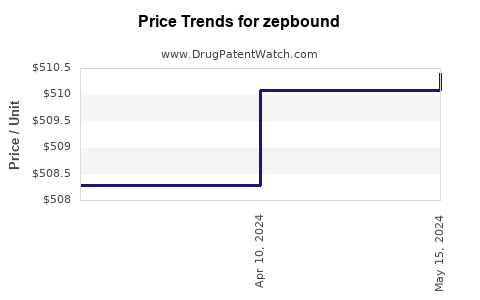
Zepbound has a list price of approximately $1,060 for a four-week supply, although commercial net prices vary. Lilly has offered savings programs for eligible commercially insured patients and introduced lower-cost self-pay options through its direct-to-consumer channel, LillyDirect. Those programs increase access but can lower realized revenue per patient.

Most commercial insurers have historically treated anti-obesity drugs differently from diabetes drugs. Employer plans may exclude obesity medicines, impose prior authorization, or require documentation of failed lifestyle interventions. Medicare coverage remains restricted for weight-loss treatment under the general statutory framework, although coverage may expand when drugs receive approvals for separately recognized diseases such as cardiovascular risk reduction.

Medicaid coverage varies by state. Employers are increasingly evaluating obesity-drug coverage because untreated obesity is associated with diabetes, cardiovascular disease, sleep apnea, and other high-cost conditions. This creates a long-term reimbursement opportunity, but pharmacy-benefit managers can use formulary competition to demand rebates from Lilly and Novo Nordisk.

What manufacturing constraints affect Zepbound sales?

Manufacturing capacity is a central commercial variable. Zepbound is a sterile injectable peptide product requiring active ingredient production, aseptic filling, device assembly, quality release, and cold-chain distribution.

Lilly has invested heavily in manufacturing capacity in the United States and Europe, including facilities associated with tirzepatide production and injectable-device supply. The company has stated that it is expanding capacity to meet demand for Mounjaro and Zepbound. (Eli Lilly and Company, 2024)

Supply constraints create two opposing effects:

  • They limit near-term sales and may delay patient starts.
  • They can increase brand awareness and preserve pricing while demand exceeds supply.

In 2024, the FDA shortage database and FDA communications concerning tirzepatide affected the legal position of compounding pharmacies. When a drug is listed as being in shortage, certain compounding activities may receive broader practical latitude under federal law. When shortage conditions change, that position becomes more restrictive. (U.S. Food and Drug Administration, 2024)

What patents protect Zepbound and tirzepatide?

Zepbound is protected by a portfolio that includes active-ingredient, formulation, manufacturing, dosing, and method-of-use patent rights. Because Mounjaro contains the same active ingredient, the commercial patent estate for tirzepatide spans both diabetes and obesity indications.

The most important protection categories are:

Active-ingredient patents

These cover tirzepatide or related peptide structures. They are generally the strongest barrier to a conventional generic or follow-on product because a challenger cannot avoid infringement merely by changing the injection device.

Formulation and device patents

These may cover concentration, excipients, stability, delivery systems, prefilled pens, cartridges, and manufacturing conditions. Formulation patents can extend protection beyond the core compound patent, although their strength depends on claim scope and validity.

Method-of-use patents

These cover treatment of obesity, overweight, type 2 diabetes, cardiovascular risk, sleep apnea, and other metabolic conditions. A method-of-use patent may not block every commercial product if a generic can rely on a “skinny label” that omits the patented indication, but prescribing and inducement issues can still create litigation risk.

Manufacturing patents

Peptide synthesis, purification, crystallization, and scale-up processes may create practical barriers even when a challenger has a legally available active ingredient. These rights can increase development cost and delay commercial launch.

The FDA Orange Book should be reviewed for the current listed patents and use codes because listings can change through patent issuance, corrections, delisting, or litigation outcomes. The same underlying tirzepatide patent families may be relevant to both Mounjaro and Zepbound, while product-specific use codes can differ. (U.S. Food and Drug Administration, 2025)

When does Zepbound lose exclusivity?

Regulatory and patent exclusivity are separate.

Mounjaro received FDA approval in May 2022, while Zepbound received approval in November 2023. New chemical entity exclusivity is generally tied to the first approval of the active ingredient, which makes the Mounjaro approval date more important than the later Zepbound approval date for the five-year NCE period.

The principal commercial protection is expected to come from Lilly’s patent estate rather than NCE exclusivity alone. Public patent records indicate protection extending into the mid-to-late 2030s, subject to patent-term adjustment, patent-term extension, validity challenges, terminal disclaimers, and the exact claims asserted against a challenger.

A simplified exclusivity framework is:

Protection Approximate timing Commercial effect
FDA approval of Mounjaro May 2022 First U.S. approval of tirzepatide
FDA approval of Zepbound November 2023 Obesity indication launch
NCE exclusivity Primarily linked to 2022 approval Limits certain ANDA approvals during the exclusivity period
Core patent protection Publicly reported into the 2030s Main barrier to generic tirzepatide
Formulation and use patents Potentially later than core protection May delay or complicate specific launches

Are generic or biosimilar competitors likely to challenge Zepbound?

Zepbound is a chemically synthesized peptide, not a traditional biologic such as a monoclonal antibody. The main threat is therefore an ANDA or another small-molecule/peptide regulatory challenge, not a conventional biosimilar application.

A generic challenger would need to address:

  • Tirzepatide identity and sameness.
  • Injectable formulation.
  • Device and delivery requirements.
  • Manufacturing controls.
  • Bioequivalence or other FDA requirements.
  • Orange Book patent certifications.
  • Potential pediatric exclusivity or patent-term extensions.
  • Brand litigation risk.

A peptide product can be more difficult to copy than a conventional oral tablet because of sterile manufacturing, injection-device integration, and complex analytical characterization. These factors raise development costs even if the regulatory route remains more accessible than a biologic biosimilar pathway.

Which companies are challenging Zepbound commercially?

Novo Nordisk is the principal branded competitor through Wegovy and Ozempic-related prescriber familiarity. Other competitive threats include:

  • Amgen, with MariTide and other obesity assets.
  • Roche, through its obesity pipeline and acquired programs.
  • Boehringer Ingelheim and Zealand Pharma, with survodutide.
  • Viking Therapeutics, with VK2735.
  • Structure Therapeutics, with oral and injectable incretin programs.
  • Numerous companies developing oral GLP-1 and multi-receptor agonists.

The competitive landscape is shifting from a two-product GLP-1 market toward a broader class involving dual agonists, triple agonists, oral agents, longer-acting products, and treatments designed to preserve lean mass.

What litigation and settlement issues affect Zepbound?

The most visible legal disputes have involved compounded tirzepatide, FDA shortage status, intellectual-property rights, and the use of unauthorized compounded products. Lilly has pursued enforcement against entities accused of marketing compounded or otherwise unauthorized tirzepatide products and has sent warnings concerning misleading claims, telehealth distribution, and product quality. (Eli Lilly and Company, 2024)

Traditional Paragraph IV litigation against Zepbound or Mounjaro would become more important when ANDA applicants identify patents they believe are invalid, unenforceable, or not infringed. A Paragraph IV notice can trigger a patent suit and, for qualifying listed patents, a 30-month stay of FDA approval. Publicly visible litigation risk is therefore more significant than actual generic launch risk during the current patent period.

Settlement agreements could permit an earlier launch date, but no universal early-entry date should be assumed without a specific agreement involving the relevant applicant and Lilly.

How strong is the Zepbound patent estate?

The estate is commercially strong because it combines:

  • A high-value active ingredient.
  • Broad clinical utility across diabetes and obesity.
  • Multiple dosage strengths and formulations.
  • Substantial manufacturing complexity.
  • Large expected revenue exposure.
  • A branded competitor incentive to remain in the market.
  • Potentially overlapping patents covering composition, formulation, use, and production.

Its principal vulnerabilities are claim validity, enablement and written-description challenges, obviousness arguments, patent-term limitations, and the possibility that a competitor designs around formulation or method-of-use claims.

The revenue base increases litigation intensity. With tirzepatide revenue exceeding $16 billion across Mounjaro and Zepbound in 2024, a successful challenger could create a multibillion-dollar opportunity. Lilly has a strong incentive to enforce the estate aggressively and continue filing patents around new indications, formulations, devices, and manufacturing processes.

What generic launch scenarios exist for Zepbound?

The most likely commercial scenarios are:

Delayed generic entry

A generic or authorized alternative launches after core patents expire in the late 2030s. Zepbound retains brand share through clinical familiarity, device differentiation, and payer contracts.

At-risk Paragraph IV launch

A challenger launches before final patent resolution after certifying that listed patents are invalid or not infringed. Lilly seeks damages and an injunction. This scenario carries substantial litigation risk for the challenger.

Narrow indication launch

A challenger relies on a label that excludes one or more patented indications. This may permit entry in a limited market while avoiding some method-of-use claims, but it does not necessarily avoid composition or formulation patents.

Authorized competition

Lilly licenses or supplies tirzepatide to another company, or launches an authorized lower-price channel. This would preserve Lilly’s manufacturing economics while addressing payer and affordability pressure.

What is the revenue exposure for Eli Lilly?

Tirzepatide is one of Lilly’s most important growth platforms. Mounjaro and Zepbound together accounted for a substantial portion of 2024 revenue growth, and the products have potential expansion into additional metabolic and cardiovascular indications.

Revenue exposure is concentrated in four areas:

Risk Potential impact
Manufacturing shortfall Lost prescriptions and slower patient starts
Reimbursement restrictions Lower access and greater discounting
Competitive clinical data Reduced new-patient share
Patent loss or early generic entry Rapid price erosion and volume migration

The upside is also concentrated. Broader insurance coverage, new disease indications, international launches, improved adherence, and oral tirzepatide development could materially expand the franchise.

Key Takeaways

  • Zepbound generated approximately $4.9 billion in 2024 sales after launching in November 2023.
  • Mounjaro and Zepbound produced more than $16 billion in combined 2024 revenue.
  • Tirzepatide’s commercial opportunity is supported by high obesity prevalence and chronic treatment duration.
  • Lilly’s principal competitive threat is Wegovy, followed by next-generation oral and multi-receptor obesity drugs.
  • Supply capacity, reimbursement, and patient affordability are the main near-term market constraints.
  • Zepbound does not face a conventional biosimilar threat because tirzepatide is a chemically synthesized peptide.
  • The principal exclusivity barrier is Lilly’s patent estate, which is expected to protect tirzepatide into the 2030s.
  • A generic launch before patent expiry would most likely require successful Paragraph IV litigation or a settlement permitting early entry.

FAQs

Is Zepbound more profitable than Wegovy?

Public product-level profitability data are limited. Zepbound has a lower list price than Wegovy, but profitability depends on net discounts, manufacturing cost, adherence, payer mix, and Lilly’s production scale. Zepbound’s rapid revenue growth gives Lilly significant operating leverage.

Can Medicare cover Zepbound?

Coverage depends on the indication and applicable statutory rules. Weight-loss treatment alone has faced Medicare restrictions, while coverage may expand if tirzepatide receives approval for a separately recognized cardiovascular or metabolic disease.

Will Zepbound prices fall when competition increases?

Greater competition is likely to increase rebates, savings offers, and payer negotiation. List-price reductions are less certain. Price pressure will be strongest if multiple products achieve comparable weight loss, tolerability, cardiovascular outcomes, and supply reliability.

Is compounded tirzepatide the same as Zepbound?

Compounded products are not FDA-approved Zepbound products and may differ in manufacturing controls, formulation, labeling, device quality, and regulatory oversight. FDA treatment of compounding eligibility has depended in part on the status of tirzepatide shortages.

Does Zepbound have patent protection outside the United States?

Yes. Lilly has pursued patent and regulatory protection across major pharmaceutical markets, but expiration dates, patent scope, supplementary protection certificates, regulatory exclusivity, and litigation outcomes vary by country.

References

  1. Eli Lilly and Company. (2024). 2023 annual report and fourth-quarter results. https://investor.lilly.com
  2. Eli Lilly and Company. (2024). Information concerning tirzepatide supply, compounding, and enforcement actions. https://www.lilly.com
  3. Eli Lilly and Company. (2025). 2024 annual report. https://investor.lilly.com
  4. Jastreboff, A. M., Aronne, L. J., Ahmad, N. N., Wharton, S., Connery, L., Alves, B., Kiyosue, A., Zhang, S., Liu, B., Bunck, M. C., & Stefanski, A. (2022). Tirzepatide once weekly for the treatment of obesity. The New England Journal of Medicine, 387(3), 205-216. https://doi.org/10.1056/NEJMoa2206038
  5. U.S. Food and Drug Administration. (2023). FDA approves new medication for chronic weight management, first since 2014. https://www.fda.gov
  6. U.S. Food and Drug Administration. (2024). Drug shortages and compounding-related information for tirzepatide. https://www.fda.gov
  7. U.S. Food and Drug Administration. (2025). Orange Book: Approved drug products with therapeutic equivalence evaluations. https://www.accessdata.fda.gov/scripts/cder/ob/

More… ↓

⤷  Start Trial

Make Better Decisions: Try a trial or see plans & pricing

Drugs may be covered by multiple patents or regulatory protections. All trademarks and applicant names are the property of their respective owners or licensors. Although great care is taken in the proper and correct provision of this service, thinkBiotech LLC does not accept any responsibility for possible consequences of errors or omissions in the provided data. The data presented herein is for information purposes only. There is no warranty that the data contained herein is error free. We do not provide individual investment advice. This service is not registered with any financial regulatory agency. The information we publish is educational only and based on our opinions plus our models. By using DrugPatentWatch you acknowledge that we do not provide personalized recommendations or advice. thinkBiotech performs no independent verification of facts as provided by public sources nor are attempts made to provide legal or investing advice. Any reliance on data provided herein is done solely at the discretion of the user. Users of this service are advised to seek professional advice and independent confirmation before considering acting on any of the provided information. thinkBiotech LLC reserves the right to amend, extend or withdraw any part or all of the offered service without notice.