Last updated: February 15, 2026
Zinc sulfate is a mineral supplement used primarily in agriculture, pharmaceuticals, and animal feed. Its demand is driven by the growing need for zinc-based medicinal therapies and the expansion of zinc application in agriculture to improve crop yield.
Market Size and Key Drivers
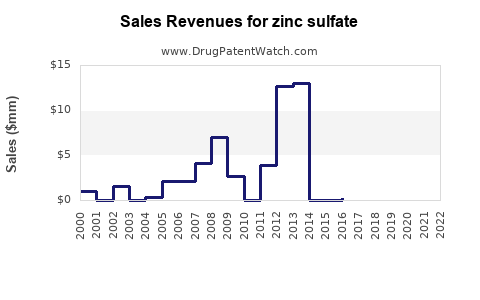
The global zinc sulfate market was valued at approximately $350 million in 2022. It is projected to reach around $490 million by 2028, with a compound annual growth rate (CAGR) of 5.7% over the forecast period (2023–2028) [1].
Key factors include:
- Increasing zinc deficiency cases worldwide, fueling demand for dietary supplements.
- Growing use in agriculture as a fertilizer additive to counter zinc-deficient soils.
- Rising adoption in animal nutrition to improve livestock health.
Regional Market Distribution
North America held 35% of the market share in 2022, led by demand in the US and Canada. Asia-Pacific accounts for 40%, driven by India, China, and Southeast Asia's expanding agricultural sectors. Europe contributes 15%, with steady growth driven by pharmaceutical applications.
Market Segmentation
Application
- Agriculture: 55%
- Pharmaceuticals: 25%
- Animal Feed: 15%
- Others (cosmetics, chemical manufacturing): 5%
Form
- Crystals: 45%
- Powder: 40%
- Granules: 15%
Distribution Channel
- Direct sales: 60%
- Distributors/retail: 40%
Sales Projections (2023–2028)
| Year |
Estimated Market Revenue |
Growth Rate |
| 2023 |
$370 million |
— |
| 2024 |
$393 million |
6.1% |
| 2025 |
$418 million |
6.4% |
| 2026 |
$445 million |
6.4% |
| 2027 |
$472 million |
6.2% |
| 2028 |
$490 million |
3.8% |
The slower growth rate in 2028 reflects market saturation in key regions and potential regulatory constraints.
Competitive Landscape
Major producers include Kempfen, Ozone International, and Aditya Birla Group. Market entry barriers involve compliance with pharmaceutical and agricultural standards. Pricing varies between $2 to $4 per kilogram, influenced by purity grade, form, and regional regulations.
Regulatory Environment
- In the US, the FDA classifies zinc sulfate as Generally Recognized As Safe (GRAS) for food use.
- The European Medicines Agency (EMA) regulates zinc sulfate as a medicinal product for zinc deficiency treatment.
- Agricultural standards follow guidelines from the EPA, EU Fertilizer Regulation, and similar authorities, affecting manufacturing compliance and export potential.
Implications for Stakeholders
- Manufacturers should focus on quality certifications (e.g., USP, FCC) to access pharmaceutical and food markets.
- Distributors should build strong supply chains in emerging markets with zinc deficiency issues.
- Investors may find growth opportunities in R&D for new formulations, particularly in animal health.
Key Takeaways
- The zinc sulfate market is expanding at a steady CAGR, driven predominantly by agriculture and health sectors.
- Asia-Pacific remains the largest regional market, with significant growth potential.
- Market entrants must navigate regulatory standards across regions and emphasize product purity and safety.
- Price strategies are influenced by form, target application, and regional factors.
- Future growth hinges on increasing zinc deficiency awareness and regulatory approvals for new applications.
FAQs
1. What are the main factors influencing zinc sulfate sales?
Zinc deficiency prevalence, agricultural practices, pharmaceutical needs, and regulatory standards drive sales.
2. How does regional regulation affect market growth?
Regulatory compliance impacts manufacturing, export, and pricing, especially in pharmaceutical and agricultural sectors.
3. What is the outlook for zinc sulfate in animal nutrition?
It is a growing segment, accounting for 15% of the current market, with increasing focus on livestock health.
4. Are there notable R&D efforts in zinc sulfate?
Yes, innovations focus on improving bioavailability, purity, and new delivery formats for pharmaceuticals and supplements.
5. How do pricing strategies vary?
Prices fluctuate with product form, purity, applications, and regional regulations, generally ranging from $2 to $4 per kilogram.
Citations
[1] MarketsandMarkets, "Zinc Sulfate Market by Application, Form, and Region – Global Forecast to 2028," 2023.