Share This Page
Drug Sales Trends for isosorbide mononitrate
✉ Email this page to a colleague
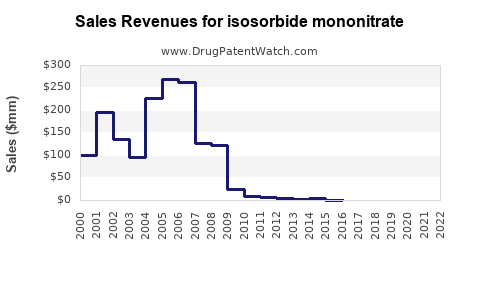
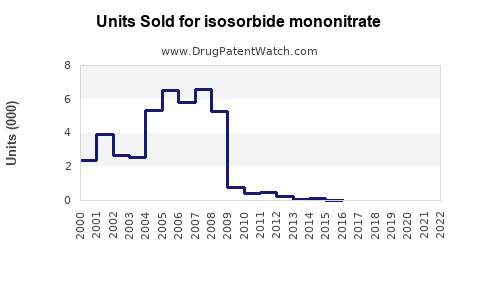
Annual Sales Revenues and Units Sold for isosorbide mononitrate
| Drug Name | Revenues (USD) | Units | Year |
|---|---|---|---|
| ISOSORBIDE MONONITRATE | ⤷ Start Trial | ⤷ Start Trial | 2022 |
| ISOSORBIDE MONONITRATE | ⤷ Start Trial | ⤷ Start Trial | 2021 |
| ISOSORBIDE MONONITRATE | ⤷ Start Trial | ⤷ Start Trial | 2020 |
| ISOSORBIDE MONONITRATE | ⤷ Start Trial | ⤷ Start Trial | 2019 |
| ISOSORBIDE MONONITRATE | ⤷ Start Trial | ⤷ Start Trial | 2018 |
| ISOSORBIDE MONONITRATE | ⤷ Start Trial | ⤷ Start Trial | 2017 |
| ISOSORBIDE MONONITRATE | ⤷ Start Trial | ⤷ Start Trial | 2016 |
| >Drug Name | >Revenues (USD) | >Units | >Year |
Isosorbide Mononitrate Market Analysis and Sales Projections, 2025-2030
Isosorbide mononitrate is a mature, low-cost generic antianginal drug with stable clinical demand but limited pricing power. The market is driven by chronic coronary artery disease, especially in older patients, and is supplied primarily through multiple generic manufacturers. U.S. patent and regulatory exclusivity barriers have expired, making the product commercially accessible but unattractive for premium-price investment.
A reasonable base-case estimate places the global isosorbide mononitrate product market at approximately $150 million to $250 million in 2024, with value growth of about 1% to 3% annually through 2030. Unit demand should grow faster than revenue because generic prices remain under pressure.
What is isosorbide mononitrate used for?
Isosorbide mononitrate is an oral organic nitrate used primarily for the prevention of angina pectoris caused by coronary artery disease. It is available in immediate-release and extended-release tablets. The drug reduces cardiac preload and myocardial oxygen demand through nitric oxide-mediated vasodilation.
The product is used for prevention rather than rapid relief of an acute angina attack. FDA labeling states that extended-release isosorbide mononitrate is not intended to provide immediate relief of acute angina because of its delayed onset of action.[1]
| Attribute | Isosorbide mononitrate |
|---|---|
| Therapeutic class | Organic nitrate; antianginal |
| Primary indication | Prevention of chronic stable angina |
| Common dosage forms | Immediate-release and extended-release oral tablets |
| Typical dosing | Once daily for extended-release products; multiple daily doses for immediate-release products |
| Key competitors | Isosorbide dinitrate, nitroglycerin, beta blockers, calcium-channel blockers, ranolazine |
| Main commercial status | Generic, mature product |
| Biosimilar exposure | None |
| U.S. patent barrier | No material unexpired composition-of-matter barrier |
| Principal commercial risk | Generic price erosion and declining use in favor of other cardiovascular therapies |
How large is the isosorbide mononitrate market?
The product market is fragmented and difficult to measure through public company filings because manufacturers generally report isosorbide mononitrate within broad generic portfolios. No major originator currently depends on the product for a material share of consolidated revenue.
The following estimate uses a bottom-up framework based on prescription volume, generic net pricing, product mix, and geographic availability.
| Market measure | 2024 estimate | 2030 base-case estimate |
|---|---|---|
| Global product revenue | $150 million-$250 million | $160 million-$290 million |
| Global annual treatment courses | 25 million-40 million | 27 million-44 million |
| Revenue CAGR | Not applicable | 1%-3% |
| Volume CAGR | Not applicable | 1%-2% |
| U.S. share of revenue | 25%-35% | 22%-32% |
| Extended-release share of revenue | 55%-70% | 58%-72% |
| Generic share of units | More than 95% | More than 97% |
These figures are modeled market estimates rather than reported manufacturer sales. The broad range reflects limited public disclosure, differences in reimbursement systems, and the large number of low-price markets where the drug is sold.
The U.S. market is likely to generate approximately $40 million to $80 million in annual product revenue, with a higher share of value than volume because U.S. reimbursement is above the level found in many developing markets.
What are the 2025-2030 sales projections for isosorbide mononitrate?
The base case assumes stable cardiovascular disease prevalence, modest growth in the treated elderly population, continued substitution toward extended-release products, and ongoing generic price erosion.
| Year | Low case | Base case | High case |
|---|---|---|---|
| 2024 | $150 million | $200 million | $250 million |
| 2025 | $149 million | $202 million | $255 million |
| 2026 | $148 million | $204 million | $260 million |
| 2027 | $147 million | $206 million | $266 million |
| 2028 | $146 million | $208 million | $272 million |
| 2029 | $145 million | $210 million | $278 million |
| 2030 | $144 million | $212 million | $284 million |
Base-case assumptions
The base case produces a market value increase of approximately 6% from 2024 to 2030. This modest expansion reflects competing forces:
- Aging populations support prescription volume.
- Generic competition reduces average selling prices.
- Stable angina treatment is increasingly managed with beta blockers, calcium-channel blockers, and newer antianginal agents.
- Extended-release adherence benefits support continued use of once-daily products.
- Supply disruptions can create temporary price increases without changing long-term market value.
The low case assumes accelerated substitution away from organic nitrates and greater reimbursement pressure. The high case assumes stronger demand in emerging markets, improved diagnosis and treatment of coronary artery disease, and higher use of extended-release formulations.
Which companies manufacture isosorbide mononitrate?
Isosorbide mononitrate is supplied by numerous generic manufacturers and contract manufacturers. U.S. and international availability can change as companies enter or leave the market.
The competitive field typically includes:
- Large U.S. generic companies with cardiovascular portfolios
- Regional manufacturers in Europe, Latin America, India, and Asia
- Contract manufacturers supplying private-label products
- Hospital and retail pharmacy suppliers
- Branded or legacy products such as Imdur and Monoket, where still commercially available
Competition is based on supply reliability, approved dosage strengths, wholesaler contracts, reimbursement status, and manufacturing cost. Clinical differentiation is limited because the active ingredient and approved therapeutic purpose are well established.
How does isosorbide mononitrate compare with isosorbide dinitrate?
Isosorbide dinitrate has broader historical use in combination with hydralazine, including heart-failure treatment in selected patients. Isosorbide mononitrate generally has a simpler oral dosing profile and is used principally for angina prevention.
| Factor | Isosorbide mononitrate | Isosorbide dinitrate |
|---|---|---|
| Main use | Chronic stable angina prevention | Angina; selected heart-failure combinations |
| Dosing convenience | Extended-release once daily available | Often requires multiple daily doses |
| Market positioning | Mature generic antianginal | Mature generic antianginal and combination therapy |
| Heart-failure relevance | Limited | Higher in hydralazine combination regimens |
| Commercial differentiation | Low | Combination-product and indication differentiation |
Isosorbide mononitrate is more exposed to substitution by other antianginal therapies, while isosorbide dinitrate retains a distinct role in hydralazine-based heart-failure regimens.
What is the FDA regulatory status of isosorbide mononitrate?
Isosorbide mononitrate is an FDA-approved prescription drug available in immediate-release and extended-release tablets. The reference products include Imdur and Monoket-related products, with generic approvals issued through abbreviated new drug applications.
The FDA-approved labeling identifies extended-release isosorbide mononitrate for the prevention of angina pectoris due to coronary artery disease.[1] The product does not replace sublingual nitroglycerin for acute angina relief.
Generic manufacturers must demonstrate pharmaceutical equivalence and bioequivalence to the relevant reference product. The product does not require a biologics license application, clinical biosimilar pathway, or complex biologic manufacturing process.
What is the Orange Book status of isosorbide mononitrate?
Isosorbide mononitrate is a mature small-molecule generic product. The relevant U.S. reference-product exclusivity periods have expired, and generic manufacturers do not face a meaningful remaining market-exclusivity period.
The Orange Book is relevant for identifying reference listed drugs, approved dosage forms, therapeutic equivalence ratings, and any listed patents or exclusivity.[2] For isosorbide mononitrate, the commercial landscape is characterized by:
- Expired original product protection
- Multiple approved generic products
- No biosimilar pathway
- No commercially significant active ingredient patent
- Limited scope for Paragraph IV litigation
- Product-specific risks concentrated in manufacturing and approval compliance
What patents protect isosorbide mononitrate?
The original composition-of-matter and product protection for isosorbide mononitrate expired long ago. Any legacy patents associated with Imdur, Monoket, or related formulations do not create a meaningful current barrier to standard generic tablets.
Potentially relevant historical or secondary patent categories include:
- Extended-release matrix or coating systems
- Tablet-release profiles
- Manufacturing processes
- Specific dosing regimens
- Combination products
- Packaging or device configurations
These categories have limited commercial effect where the claims have expired, are not listed in the Orange Book, or can be designed around through alternative formulations.
Are there Paragraph IV challenges for isosorbide mononitrate?
Paragraph IV litigation is not a major current market factor. The product has been generic for many years, and the commercial incentive to challenge a blocking patent is low because no material unexpired patent barrier controls market entry.
A new applicant would more likely rely on an ordinary abbreviated new drug application pathway than pursue a high-cost Paragraph IV campaign. Any future litigation would probably concern manufacturing processes, formulation patents, labeling, or product quality rather than the core active ingredient.
What formulation patents protect extended-release isosorbide mononitrate?
Extended-release products have historically offered the strongest technical differentiation. The relevant value proposition is once-daily delivery with controlled drug release and a daily nitrate-free interval intended to reduce tolerance.
Potential formulation barriers include:
- Release-controlling excipients
- Hydrophilic or matrix-based tablets
- Film coatings
- Dissolution profiles
- Dose-strength proportionality
- Stability and packaging systems
Most commercial opportunities remain available because an applicant can use a different excipient system or release mechanism if the original formulation claims are expired or avoidable. The regulatory burden is higher for extended-release products than for simple immediate-release tablets because bioequivalence and dissolution performance must be demonstrated carefully.
How strong is the patent estate for isosorbide mononitrate?
The current patent estate is weak from an exclusivity perspective.
| Patent factor | Assessment |
|---|---|
| Active ingredient protection | Expired |
| Original branded-product patents | Expired or commercially nonblocking |
| Formulation protection | Limited and generally old |
| Method-of-use protection | Limited commercial impact |
| Orange Book blocking risk | Low |
| Generic entry risk | High |
| Freedom-to-operate risk | Low to moderate, depending on formulation and jurisdiction |
The principal barriers are regulatory execution, quality systems, supply continuity, and commercial scale. Patent ownership is not the central competitive advantage.
What generic entry risks exist for isosorbide mononitrate?
Generic entry risk is already fully realized in the United States and most developed markets. New entrants can gain approval, but commercial success is harder because the market is price-sensitive and incumbent suppliers have established wholesaler relationships.
Key risks include:
- Price compression after approval by additional manufacturers.
- Low market share for suppliers without pharmacy-benefit-manager or wholesaler access.
- Manufacturing interruptions caused by active pharmaceutical ingredient or packaging shortages.
- Product withdrawal if quality or dissolution specifications are not maintained.
- Limited physician switching because prescriptions are often dispensed at the pharmacy level.
- Declining use in patients whose treatment shifts to other antianginal or cardiovascular therapies.
A new entrant needs a low-cost supply chain and reliable distribution. A differentiated formulation alone is unlikely to support premium pricing unless it improves adherence, tolerability, or reimbursement status.
What is the competitive landscape for antianginal therapy?
Isosorbide mononitrate competes with both generic and branded cardiovascular products. Its principal alternatives include:
- Sublingual and transdermal nitroglycerin
- Isosorbide dinitrate
- Beta blockers
- Dihydropyridine and nondihydropyridine calcium-channel blockers
- Ranolazine
- Revascularization procedures
- Combination cardiovascular therapy
Generic beta blockers and calcium-channel blockers exert the strongest price pressure. Ranolazine competes in patients with persistent angina, although its price and patent history differ from those of isosorbide mononitrate.
The product retains a role where clinicians value established efficacy, low cost, and once-daily extended-release dosing. Its limitations include nitrate tolerance, headache, hypotension, and contraindication with phosphodiesterase-5 inhibitors because of the risk of severe hypotension.[1]
What licensing deals and partnerships affect isosorbide mononitrate?
No major current licensing transaction is central to the global isosorbide mononitrate market. The drug is generally manufactured and distributed under generic supply agreements, authorized-generic arrangements, regional registrations, and contract manufacturing relationships.
Commercial transactions are more likely to involve:
- Acquisition of a generic product portfolio
- Transfer of marketing authorization
- Regional distribution rights
- Private-label supply
- Contract manufacturing
- API sourcing agreements
These arrangements usually do not generate publicly disclosed milestone economics. Deal value is linked to approved market access, supply reliability, and portfolio scale rather than patent exclusivity.
What manufacturing and geographic barriers affect the market?
The active pharmaceutical ingredient is established and chemically straightforward, but manufacturing risk remains relevant. Suppliers must manage nitrate handling, impurity controls, content uniformity, dissolution performance, and stability.
Geographic market conditions differ materially:
| Region | Market characteristics |
|---|---|
| United States | Mature generic market; reimbursement and wholesaler access drive share |
| Western Europe | National reimbursement controls and tendering pressure |
| Central and Eastern Europe | Generic penetration with variable pricing and registration requirements |
| India | Large manufacturing base and strong generic competition |
| Latin America | Brand-generic coexistence and country-specific registration |
| Middle East and Africa | Public procurement and supply continuity are important |
| Asia-Pacific | Volume opportunity, but local pricing and registration requirements vary |
A manufacturer with multi-region registrations can reduce dependence on one reimbursement system. However, local regulatory filings and pharmacopoeial requirements increase operating complexity.
What is the revenue exposure for pharmaceutical companies?
Revenue exposure is generally low for diversified pharmaceutical companies. Isosorbide mononitrate is more important to small or regional generic manufacturers than to multinational innovators.
A supplier could experience meaningful product-level exposure if:
- It has one of few approved extended-release products.
- A competitor exits the market.
- A shortage temporarily raises contract prices.
- The product is included in a cardiovascular portfolio sold to a strategic buyer.
- The company relies heavily on a narrow group of mature oral solids.
Under normal conditions, the product has low gross-margin potential. The strongest economics are usually achieved through manufacturing efficiency, broad geographic registrations, and portfolio bundling.
What generic launch scenarios are most likely?
The U.S. market does not require a conventional future generic launch event because multiple generic products are already approved. The relevant scenarios are portfolio entry, re-entry after withdrawal, and expansion into additional strengths or extended-release presentations.
| Scenario | Market effect |
|---|---|
| New immediate-release entrant | Lower prices with limited volume displacement |
| New extended-release entrant | Greater pressure on branded and incumbent extended-release products |
| Competitor withdrawal | Temporary price and supply improvement for remaining suppliers |
| Manufacturing shortage | Short-term revenue increase for available suppliers |
| New combination product | Limited incremental demand unless supported by a distinct indication |
| International registration expansion | Volume growth with low unit pricing |
Key Takeaways
- Isosorbide mononitrate is a mature generic antianginal drug with no meaningful remaining U.S. patent exclusivity.
- Estimated global product revenue is approximately $150 million to $250 million in 2024.
- Base-case revenue is projected to reach about $212 million by 2030, representing roughly 1% annual growth from the midpoint estimate.
- Unit demand should grow faster than revenue because generic prices remain under pressure.
- Extended-release tablets provide the main formulation opportunity, but patent barriers are limited.
- Paragraph IV litigation and biosimilar risk are not material current factors.
- Commercial success depends on low-cost manufacturing, supply continuity, regulatory approvals, and distribution access.
- The product has low strategic value for large innovative pharmaceutical companies but can support regional generic portfolios.
FAQs
Is isosorbide mononitrate still commercially attractive for generic manufacturers?
Yes, but mainly as a portfolio product. It offers stable demand and established manufacturing processes, but limited pricing power and high generic competition reduce standalone profitability.
Will isosorbide mononitrate sales grow faster than cardiovascular drug sales overall?
Probably not. Cardiovascular disease prevalence supports demand, but newer therapies, combination treatment, and alternative antianginal drugs limit growth in isosorbide mononitrate prescriptions.
Does isosorbide mononitrate have biosimilar competition?
No. It is a chemically synthesized small molecule, so competition occurs through generic drug applications rather than biosimilar applications.
Which formulation has the strongest commercial opportunity?
Extended-release tablets have greater value than immediate-release tablets because once-daily dosing can support adherence and product differentiation. The opportunity remains price-sensitive because the formulation is mature.
Can a new manufacturer obtain premium pricing for isosorbide mononitrate?
Premium pricing is unlikely without a meaningful supply advantage, differentiated delivery system, shortage-driven market position, or exclusive distribution arrangement.
References
-
U.S. Food and Drug Administration. (2019). Isosorbide mononitrate extended-release tablets: Prescribing information. FDA/DailyMed labeling database.
-
U.S. Food and Drug Administration. (2024). Approved drug products with therapeutic equivalence evaluations: Orange Book. https://www.accessdata.fda.gov/scripts/cder/ob/
-
National Institutes of Health. (2024). DailyMed: Isosorbide mononitrate drug labeling. https://dailymed.nlm.nih.gov/
-
World Health Organization. (2023). Cardiovascular diseases fact sheet. https://www.who.int/news-room/fact-sheets/detail/cardiovascular-diseases
More… ↓
