Share This Page
Drug Sales Trends for divalproex sodium
✉ Email this page to a colleague
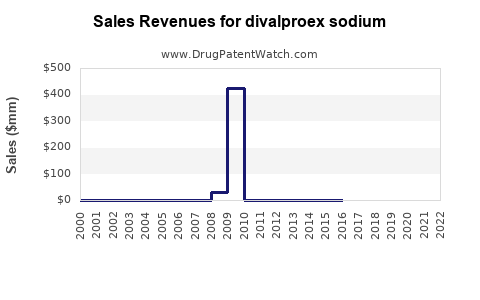
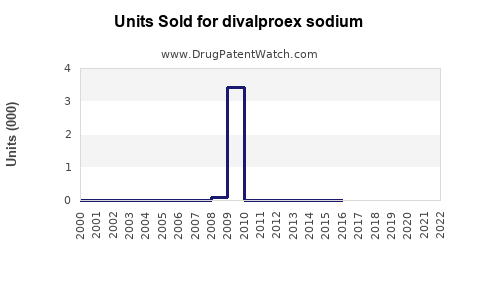
Annual Sales Revenues and Units Sold for divalproex sodium
| Drug Name | Revenues (USD) | Units | Year |
|---|---|---|---|
| DIVALPROEX SODIUM | ⤷ Start Trial | ⤷ Start Trial | 2022 |
| DIVALPROEX SODIUM | ⤷ Start Trial | ⤷ Start Trial | 2021 |
| DIVALPROEX SODIUM | ⤷ Start Trial | ⤷ Start Trial | 2020 |
| >Drug Name | >Revenues (USD) | >Units | >Year |
Divalproex Sodium Market Analysis and Sales Projections
Divalproex sodium is a mature, low-cost generic anticonvulsant with durable demand in epilepsy, bipolar mania, and migraine prophylaxis. The market is structurally defensive but commercially unattractive for premium pricing because multiple manufacturers supply delayed-release, extended-release, and sprinkle formulations. U.S. sales are likely to remain broadly stable in volume and decline modestly in value through 2029 as generic substitution, pharmacy purchasing pressure, and low-cost competitors offset population growth and chronic use.
The base-case global market estimate is approximately $0.8 billion to $1.1 billion in 2024, including branded and generic divalproex sodium products. A reasonable base-case forecast is $0.7 billion to $1.0 billion by 2029, representing a low-single-digit annual decline in nominal sales. Public companies generally do not report divalproex sodium revenue as a standalone product category, so the projections below are modeled estimates rather than audited market totals.
What is the current market size for divalproex sodium?
Divalproex sodium is sold primarily as a generic prescription product and under legacy brand names including Depakote, Depakote ER, and Depakote Sprinkle. The active pharmaceutical ingredient dissociates to valproate in the gastrointestinal tract and supports several dosage forms with different release profiles.
| Market characteristic | Assessment |
|---|---|
| Primary therapeutic areas | Epilepsy, bipolar mania, migraine prophylaxis |
| Main dosage forms | Delayed-release tablets, extended-release tablets, sprinkle capsules |
| U.S. regulatory status | FDA-approved prescription drug |
| Market maturity | Mature generic market |
| Pricing power | Low |
| Demand profile | Chronic, recurring, medically necessary |
| Biosimilar exposure | None |
| Generic competition | Extensive |
| Brand exposure | Limited and declining |
| Main commercial risks | Price compression, safety restrictions, substitution, manufacturing interruptions |
The product retains recurring demand because epilepsy and bipolar disorder require long-term maintenance therapy for many patients. The market is less exposed to discretionary prescribing than acute-care products, but it is sensitive to clinical switching, tolerability concerns, and the availability of alternative therapies.
The FDA-approved product family includes delayed-release tablets, extended-release tablets, and sprinkle capsules. Depakote and related formulations were developed by Abbott Laboratories and are now associated with AbbVie following the Abbott separation. Generic products are marketed by multiple manufacturers, including major generic suppliers and private-label distributors.
How are divalproex sodium sales expected to change through 2029?
The following model uses a 2024 global market base of $0.95 billion, a 2% annual volume decline, and a 3% annual net price decline. The result is a roughly 5% annual revenue decline in the base case.
| Year | Bear case | Base case | Bull case |
|---|---|---|---|
| 2024 | $0.75 billion | $0.95 billion | $1.15 billion |
| 2025 | $0.70 billion | $0.90 billion | $1.14 billion |
| 2026 | $0.65 billion | $0.86 billion | $1.13 billion |
| 2027 | $0.61 billion | $0.82 billion | $1.12 billion |
| 2028 | $0.57 billion | $0.78 billion | $1.11 billion |
| 2029 | $0.53 billion | $0.74 billion | $1.10 billion |
| 2024-2029 CAGR | -6.6% | -4.9% | -0.9% |
The bull case assumes stable prescription volume, slower price erosion, and continued use of extended-release products in commercially insured and private-pay channels. The bear case assumes accelerated generic price competition, greater switching to alternative antiseizure medicines, and lower use in women of childbearing potential because of reproductive safety concerns.
What drives divalproex sodium volume?
Volume is supported by:
- Long-term maintenance treatment for epilepsy and bipolar disorder.
- Established physician familiarity.
- Low generic acquisition cost.
- Availability of multiple release mechanisms.
- Use in institutional, Medicaid, and hospital formularies.
- Patient stability on an existing regimen.
Volume is constrained by:
- Alternative antiseizure medicines, including levetiracetam, lamotrigine, topiramate, and carbamazepine.
- Increased attention to fetal risk and neurodevelopmental outcomes.
- Weight gain, tremor, hepatotoxicity, thrombocytopenia, and other tolerability concerns.
- Clinical preference for newer agents in selected patient groups.
- Restrictions on use during pregnancy and in patients who may become pregnant.
The commercial effect is a split market: stable use among established patients, weaker initiation rates in certain populations, and continued switching to alternatives where safety or tolerability is a concern.
What is the U.S. sales outlook for divalproex sodium?
The U.S. remains the most commercially important market because of its high prescription spending and broad access to extended-release formulations. The U.S. revenue pool is likely in the range of $0.4 billion to $0.7 billion annually across branded and generic products, depending on whether sales are measured at manufacturer revenue, wholesaler acquisition cost, or retail value.
A U.S. base-case forecast is shown below.
| U.S. market metric | 2024 estimate | 2029 base case |
|---|---|---|
| Prescription volume | 100 index | 96 index |
| Net price per prescription | 100 index | 83 index |
| Market revenue | 100 index | 80 index |
| Generic share by volume | Very high | Higher |
| Branded share | Low | Lower |
The U.S. market should experience continued unit stability but lower revenue per prescription. Generic manufacturers face reimbursement pressure from pharmacy benefit managers, Medicaid programs, Medicare Part D plans, and hospital procurement groups.
Branded Depakote retains some residual demand where physicians or patients prefer a specific formulation, but brand economics are limited by generic substitution and the age of the product. The extended-release segment has greater commercial differentiation than standard delayed-release tablets because dose convenience can support persistence and reduce pill burden.
How does divalproex sodium compare with competing antiseizure medicines?
Divalproex sodium remains clinically broad but faces competition from products with more favorable safety or tolerability profiles in selected populations.
| Drug | Primary competitive position | Commercial profile |
|---|---|---|
| Divalproex sodium | Broad-spectrum antiseizure therapy; bipolar mania; migraine prophylaxis | Low-cost, mature generic |
| Levetiracetam | Common epilepsy alternative | Generic, strong volume position |
| Lamotrigine | Epilepsy and bipolar maintenance | Generic, favored in some reproductive-risk settings |
| Topiramate | Epilepsy and migraine prevention | Generic, competing indications |
| Carbamazepine | Focal seizures and bipolar disorder | Mature generic |
| Lacosamide | Focal-onset seizures | Generic and branded history; higher unit value |
| Brivaracetam | Epilepsy | Higher-cost branded or specialty generic positioning |
Divalproex sodium has an advantage in broad-spectrum seizure coverage and bipolar mania. It has a disadvantage in reproductive safety, weight gain, drug interactions, and laboratory monitoring. Levetiracetam and lamotrigine are the most important volume alternatives in many treatment pathways, although the choice depends on seizure type, psychiatric profile, age, comorbidities, pregnancy risk, and prior response.
What is the FDA regulatory status of divalproex sodium?
The FDA has approved divalproex sodium for several indications:
- Complex partial seizures.
- Simple and complex absence seizures.
- Multiple seizure types.
- Acute manic episodes associated with bipolar disorder.
- Prevention of migraine headaches.
The product is not approved as an interchangeable treatment for every valproate-containing medicine. Divalproex sodium, valproic acid, and valproate sodium have different chemical forms, dosage forms, release characteristics, and labeling requirements. Substitution must follow the applicable product-specific rules.
FDA labeling carries major safety restrictions. These include hepatotoxicity, pancreatitis, thrombocytopenia, teratogenicity, and fetal neurodevelopmental risk. The labeling is a commercial constraint because it can reduce new starts and encourage use of alternatives in patients with pregnancy potential.[1]
When does divalproex sodium lose exclusivity?
Divalproex sodium has already lost core pharmaceutical exclusivity in the United States. The principal Depakote products were approved decades ago, and generic competition is established. The market therefore has no meaningful remaining composition-of-matter exclusivity.
| Exclusivity issue | Current position |
|---|---|
| Original product exclusivity | Expired |
| Core compound patent protection | Expired |
| Generic entry | Established |
| Brand-only market protection | No longer material |
| Biosimilar exclusivity | Not applicable |
| Future protection | Limited to formulation, manufacturing, or device-specific rights |
Orange Book-listed patents associated with legacy Depakote products do not provide a commercially meaningful barrier to ordinary generic divalproex sodium entry. Any remaining listed rights would need to be assessed by specific dosage form, strength, formulation, and expiration date in the current FDA Orange Book.[2]
What formulation patents protect divalproex sodium?
The commercially relevant intellectual-property distinction is formulation rather than the underlying active ingredient. Potentially protectable features include:
- Delayed-release coatings.
- Extended-release matrix systems.
- Sprinkle capsule composition.
- Particle size and granulation.
- Dissolution profiles.
- Manufacturing processes.
- Tablet strength and dose-conversion characteristics.
Those rights are generally weaker than a new chemical entity patent because competing manufacturers can design around formulation claims. A generic company can also target a different release mechanism, provided its product satisfies FDA bioequivalence and labeling requirements.
Extended-release products may preserve higher net pricing than conventional delayed-release tablets, but the advantage narrows as multiple generic suppliers enter. Manufacturing complexity can create short-term barriers involving coating uniformity, dissolution control, content uniformity, and stability. These barriers usually affect launch timing and supply reliability rather than creating durable market exclusivity.
Are there Paragraph IV challenges involving divalproex sodium?
Paragraph IV litigation is no longer the main commercial issue for standard divalproex sodium products because generic entry is mature and the major branded patents have expired. Earlier generic challenges may have involved Depakote and Depakote ER patents, but current competition is primarily driven by abbreviated new drug applications, abbreviated product launches, pricing, and manufacturing capacity.
A generic applicant making a Paragraph IV certification would assert that a listed patent is invalid, unenforceable, or not infringed. For a product with long-established generic competition, the economic significance of a new Paragraph IV case is limited unless it concerns a specific extended-release formulation, a narrow dosage form, or a newly listed manufacturing patent.
Which companies compete in the divalproex sodium market?
Competition varies by dosage form and country. In the United States, generic supply has historically included large manufacturers such as Teva Pharmaceutical Industries, Viatris, Dr. Reddy's Laboratories, Zydus Pharmaceuticals, Sun Pharmaceutical Industries, Lupin, and privately labeled products distributed through wholesalers. The exact supplier set changes with FDA approvals, manufacturing transfers, shortages, and contracting arrangements.
AbbVie remains commercially associated with Depakote and related branded products, but the economic center of gravity has shifted to generic manufacturers and pharmacy purchasers. Generic companies compete on:
- Product availability.
- Contract pricing.
- FDA compliance history.
- Manufacturing scale.
- Ability to supply multiple strengths.
- Stability of extended-release production.
- Wholesaler and group-purchasing relationships.
No single manufacturer is guaranteed to control the market across all dosage forms and strengths.
What generic launch risks exist for divalproex sodium?
Generic launch risk is moderate operationally but low legally. The main risks are manufacturing and commercial rather than patent-related.
Manufacturing risks
Extended-release products require tight control of dissolution and release characteristics. A failed batch, plant inspection issue, or supply disruption can remove a supplier from a contract and create temporary shortages. Delayed-release tablets also require reliable enteric coating performance.
Regulatory risks
FDA action can affect product availability through:
- Complete response letters.
- Manufacturing observations.
- Recalls.
- Post-approval manufacturing changes.
- Bioequivalence or dissolution failures.
- Labeling discrepancies.
Commercial risks
High generic penetration creates rapid price erosion after entry. A new supplier may gain volume but fail to achieve acceptable margins if several manufacturers bid for the same managed-care or wholesaler contracts.
What licensing deals affect divalproex sodium?
Divalproex sodium has no widely recognized current licensing transaction comparable to the major licensing structures seen in oncology, biologics, or specialty drugs. Commercial arrangements are more likely to involve:
- Contract manufacturing.
- Authorized generic supply.
- Private-label distribution.
- Product transfers.
- Regional marketing rights.
- API supply agreements.
The absence of a major active licensing premium reflects the product's mature generic status. Transaction value is tied to manufacturing capacity, regulatory approvals, geographic rights, and supply reliability rather than patent exclusivity.
How strong is the divalproex sodium patent estate?
The patent estate is weak from a market-exclusivity perspective and moderate only for narrow formulation or manufacturing claims.
| Patent-estate dimension | Strength |
|---|---|
| Active ingredient | Very weak; long expired |
| Standard delayed-release tablets | Weak |
| Extended-release formulation | Moderate for narrow claims, but commercially eroded |
| Sprinkle capsules | Weak to moderate |
| Manufacturing process | Potentially moderate |
| Method of use | Limited practical exclusivity |
| Geographic coverage | Broad historical coverage; little effective U.S. exclusivity |
| Litigation leverage | Low |
Method-of-use patents may cover treatment of specific seizure types, bipolar mania, or migraine prevention, but generic products can often enter with labeling strategies that omit protected uses where permitted under the regulatory framework. Because the principal indications are longstanding and the market is mature, method-of-use rights are unlikely to restore meaningful product-level exclusivity.
What is the revenue exposure for manufacturers?
Divalproex sodium is unlikely to be a material growth driver for diversified pharmaceutical companies. Revenue exposure is most relevant for smaller generic manufacturers with limited portfolios and for suppliers holding strong positions in extended-release strengths.
The product can still generate attractive cash flow when a manufacturer has:
- Low-cost API sourcing.
- High plant utilization.
- Stable institutional contracts.
- Reliable supply of difficult extended-release strengths.
- Limited exposure to aggressive price competition.
Revenue quality is weaker than for patented products because customers can switch suppliers when price or availability changes. A supply interruption can temporarily increase sales for remaining manufacturers, but the effect is usually reversible after competitors restore inventory.
What are the main sales scenarios for divalproex sodium?
Base case
Generic pricing continues to decline, while chronic epilepsy and bipolar demand remains stable. Global revenue declines approximately 4% to 6% annually through 2029. Extended-release products decline more slowly than conventional tablets.
Bull case
Prescription volume remains stable, supply disruptions support temporary price improvement, and clinical demand persists in epilepsy and bipolar disorder. Revenue is approximately flat through 2029.
Bear case
New starts decline because of reproductive safety concerns, patients switch to levetiracetam or lamotrigine, and additional generic capacity intensifies price competition. Revenue declines 6% to 8% annually.
The most likely outcome is volume resilience combined with continued value erosion. This is a classic mature-generic profile: medically durable demand, limited innovation, and declining manufacturer revenue per unit.
Key Takeaways
- Divalproex sodium is a mature generic market with recurring demand in epilepsy, bipolar mania, and migraine prophylaxis.
- Estimated global 2024 sales are approximately $0.8 billion to $1.1 billion across branded and generic products.
- Base-case revenue is projected to decline to approximately $0.7 billion to $1.0 billion by 2029.
- Generic competition is extensive, and core compound exclusivity has expired.
- Extended-release and sprinkle formulations provide the main remaining product differentiation.
- The strongest commercial risks are price compression, reproductive safety concerns, and substitution by levetiracetam, lamotrigine, and other antiseizure medicines.
- Patent and Paragraph IV risk is low compared with manufacturing, regulatory, and contracting risk.
- Divalproex sodium is more valuable as a stable cash-flow product than as a growth asset.
FAQs
Is divalproex sodium still a profitable drug?
It can be profitable for manufacturers with efficient production and stable contracts, but pricing power is limited. Profitability depends more on manufacturing cost, supply reliability, and contract position than on patents.
What is the difference between Depakote ER and generic divalproex sodium?
Depakote ER is an extended-release branded formulation. Generic divalproex sodium products may be delayed-release, extended-release, or sprinkle formulations. Therapeutic substitution depends on the dosage form, labeling, bioequivalence, and applicable pharmacy rules.
Can divalproex sodium sales increase despite generic competition?
Yes. Sales can increase temporarily if prescription volume rises, competitors experience shortages, or a manufacturer gains a supply contract. Sustained market-wide revenue growth is unlikely without a major change in treatment patterns or pricing.
Does divalproex sodium have biosimilar competition?
No. Divalproex sodium is a small-molecule drug, not a biologic. Competition occurs through generic drug applications rather than the biosimilar pathway.
Which divalproex sodium formulation has the strongest commercial outlook?
Extended-release tablets have the strongest commercial positioning because they reduce dosing frequency and can support patient persistence. Their advantage is limited by generic competition and the absence of durable patent exclusivity.
References
- U.S. Food and Drug Administration. (2024). Depakote and divalproex sodium prescribing information. FDA.
- U.S. Food and Drug Administration. (2025). Approved drug products with therapeutic equivalence evaluations: Orange Book. FDA.
- AbbVie Inc. (2024). Annual report for the fiscal year ended December 31, 2023. AbbVie.
- U.S. Food and Drug Administration. (2024). Drugs@FDA: FDA-approved drugs database. FDA.
- National Institute of Neurological Disorders and Stroke. (2024). Epilepsy and seizure disorders. National Institutes of Health.
More… ↓
