Drug Sales Trends for atorvastatin calcium
Payment Methods and Pharmacy Types for atorvastatin calcium (2022)
Revenues by Pharmacy Type
Units Sold by Pharmacy Type
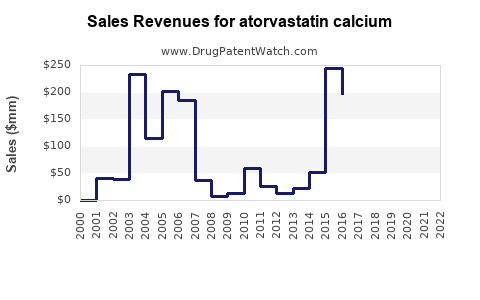
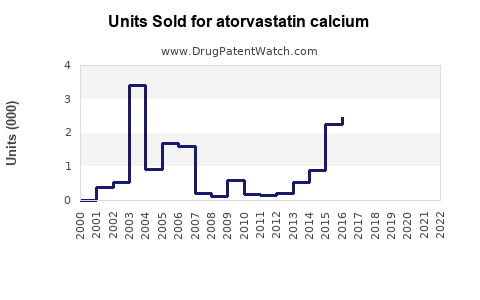
Annual Sales Revenues and Units Sold for atorvastatin calcium
| Drug Name | Revenues (USD) | Units | Year |
|---|---|---|---|
| ATORVASTATIN CALCIUM | ⤷ Start Trial | ⤷ Start Trial | 2022 |
| ATORVASTATIN CALCIUM | ⤷ Start Trial | ⤷ Start Trial | 2021 |
| ATORVASTATIN CALCIUM | ⤷ Start Trial | ⤷ Start Trial | 2020 |
| ATORVASTATIN CALCIUM | ⤷ Start Trial | ⤷ Start Trial | 2019 |
| >Drug Name | >Revenues (USD) | >Units | >Year |
Atorvastatin Calcium Market Analysis, Sales Forecast, Patents, and Generic Competition
Atorvastatin calcium is the largest-selling statin by global prescription volume and remains a high-volume generic medicine despite the loss of Lipitor exclusivity. The market is mature, price-sensitive, and driven by cardiovascular disease prevalence, guideline-based LDL reduction, and generic access. Global atorvastatin sales across finished-dose products are estimated at approximately $4.8 billion to $5.5 billion in 2024, with a base-case market value of about $6.3 billion by 2030. Volume growth is likely to exceed value growth because generic price erosion continues.
Pfizer's Lipitor franchise generated $9.6 billion in 2011 before generic entry. Originator revenue has since fallen sharply, while generic manufacturers now capture most commercial value. The principal risks are procurement-driven price compression, substitution by rosuvastatin, fixed-dose combination competition, and manufacturing concentration for active pharmaceutical ingredient supply.
What is the current market size for atorvastatin calcium?
The global atorvastatin calcium market is estimated at $4.8 billion to $5.5 billion in 2024 on a finished-product sales basis. This estimate includes branded generics, unbranded generics, hospital procurement, retail prescriptions, and mail-order distribution. It excludes atorvastatin API sold into downstream manufacturing.
Market estimates differ because analysts use different definitions:
| Market definition | 2024 estimated value | 2030 base-case value | Expected CAGR |
|---|---|---|---|
| Global finished-dose atorvastatin products | $4.8B-$5.5B | $6.0B-$6.5B | 2.5%-4.5% |
| Global statin market attributable to atorvastatin | $5.0B-$6.0B | $6.5B-$7.2B | 3%-4% |
| U.S. retail atorvastatin prescriptions | $1.2B-$1.7B | $1.3B-$1.8B | 0%-2% |
| Atorvastatin API and contract manufacturing | $0.7B-$1.0B | $0.9B-$1.2B | 3%-5% |
The broad market has high unit demand but low average selling prices. In the United States, a 90-day generic prescription can be available at a small fraction of the historical Lipitor price. Revenue therefore depends more on prescription volume, channel mix, tender awards, and supply contracts than on clinical differentiation.
IQVIA data historically ranked atorvastatin among the most dispensed prescription medicines in the United States. FDA-approved strengths include 10 mg, 20 mg, 40 mg, and 80 mg tablets, supporting treatment initiation, titration, and high-intensity statin therapy.
How are atorvastatin calcium sales projected through 2030?
The base-case forecast assumes continued global prescription growth, stable adherence in chronic cardiovascular treatment, modest price erosion, and increased use in emerging markets.
| Year | Downside case | Base case | Upside case |
|---|---|---|---|
| 2024 | $4.8B | $5.2B | $5.5B |
| 2025 | $4.8B | $5.3B | $5.7B |
| 2026 | $4.9B | $5.5B | $5.9B |
| 2027 | $4.9B | $5.7B | $6.1B |
| 2028 | $5.0B | $5.9B | $6.4B |
| 2029 | $5.0B | $6.1B | $6.7B |
| 2030 | $5.1B | $6.3B | $7.0B |
The base-case model implies approximately 3.2% annual growth from 2024 through 2030. Unit demand could grow by 4% to 6% annually, but net revenue growth will be reduced by generic price declines of roughly 1% to 3% per year in developed markets.
What drives the atorvastatin calcium forecast?
The principal growth drivers are:
- Aging populations with elevated cardiovascular risk.
- Expansion of screening and treatment for dyslipidemia.
- Greater use of high-intensity statin therapy after myocardial infarction and ischemic stroke.
- Increasing diagnosis of diabetes and chronic kidney disease.
- Generic procurement in middle-income markets.
- Lower treatment costs compared with PCSK9 inhibitors and branded combination products.
- Continued inclusion in national formularies and essential-medicine lists.
The main constraints are treatment discontinuation, therapeutic substitution, reimbursement pressure, and concerns about adherence or tolerability. Clinical guidelines generally treat atorvastatin and rosuvastatin as interchangeable high-intensity statins at appropriate doses, creating persistent competitive pressure.
How much revenue did Lipitor generate before generic entry?
Lipitor, Pfizer's branded atorvastatin calcium product, generated approximately $9.6 billion in global revenue in 2011, according to Pfizer's annual reporting. It was one of the highest-revenue pharmaceutical products in history before loss of U.S. exclusivity.
The commercial timeline was:
| Milestone | Date |
|---|---|
| U.S. FDA approval of Lipitor | 1997 |
| Expansion to broader cardiovascular-risk indications | Late 1990s-2000s |
| First major U.S. generic approvals | 2011 |
| Generic launch by Ranbaxy | November 30, 2011 |
| Broad multi-source generic competition | 2012 onward |
| Originator revenue collapse | 2012-2014 |
Pfizer retained some post-exclusivity sales through brand loyalty, payer contracting, and authorized-generic arrangements, but the company no longer controlled the economics of the molecule after multi-source generic entry.
What patents protected atorvastatin calcium and Lipitor?
Atorvastatin is a small-molecule statin, so biosimilar regulation is not relevant. The principal historical U.S. patent estate covered the active compound, pharmaceutical compositions, crystalline forms, and selected uses.
| Patent or patent family | Subject matter | Historical U.S. status |
|---|---|---|
| U.S. Patent No. 4,681,893 | Early atorvastatin compound and related chemistry | Expired |
| U.S. Patent No. 5,273,995 | Atorvastatin compound and pharmaceutical use claims | Expired; commercial exclusivity ended in 2011 |
| U.S. Patent No. 5,969,156 | Process and formulation-related protection | Expired |
| U.S. Patent No. 6,087,511 | Additional atorvastatin composition or process claims | Expired by the late 2010s |
| Pediatric exclusivity | Regulatory extension attached to qualifying listed patents | Expired after generic launch period |
The relevant commercial event was the end of enforceable exclusivity that allowed generic atorvastatin to enter the U.S. market in late 2011. Historical patent expiry dates must be distinguished from pediatric exclusivity and settlement-based launch dates. A patent may have expired before the commercial launch date while litigation, settlement terms, or regulatory exclusivity delayed market entry.
Current generic atorvastatin products do not depend on an active compound patent. Residual patents, where relevant, concern individual formulations, manufacturing processes, combination products, or jurisdictions outside the United States.
What is the Orange Book status of atorvastatin calcium?
Lipitor was approved under FDA NDA 020702. Generic atorvastatin calcium tablets are approved through ANDAs that reference the Lipitor NDA.
The current U.S. regulatory position is:
- Atorvastatin calcium tablets are approved in 10 mg, 20 mg, 40 mg, and 80 mg strengths.
- The product is a conventional immediate-release tablet.
- Generic products are therapeutically equivalent when assigned the applicable FDA rating.
- No active compound patent currently blocks ordinary generic atorvastatin entry.
- Orange Book-listed protections associated with the original Lipitor franchise have expired or are no longer commercially blocking.
- New formulations or fixed-dose combinations may have separate regulatory and patent profiles.
FDA approval does not guarantee commercial success. Generic manufacturers still must maintain cGMP compliance, bioequivalence, reliable API sourcing, and adequate supply capacity.
Which companies compete in the atorvastatin calcium market?
The market is fragmented across multinational generic companies, regional suppliers, and contract manufacturers. Major participants have included:
- Viatris, through legacy Mylan products.
- Teva Pharmaceutical Industries.
- Sandoz.
- Lupin.
- Dr. Reddy's Laboratories.
- Aurobindo Pharma.
- Zydus Lifesciences.
- Sun Pharmaceutical Industries.
- Cipla.
- Torrent Pharmaceuticals.
- Hikma Pharmaceuticals.
- Apotex.
- Regional manufacturers in China, India, Latin America, and Eastern Europe.
Pfizer remains associated with the Lipitor brand but is no longer the primary economic beneficiary of the global atorvastatin molecule. Generic companies compete on manufacturing cost, supply reliability, pharmacy benefit manager access, government tenders, and product breadth.
How does atorvastatin compare with rosuvastatin?
| Factor | Atorvastatin calcium | Rosuvastatin calcium |
|---|---|---|
| Market status | Mature generic market | Mature generic market |
| High-intensity doses | 40 mg and 80 mg | 20 mg and 40 mg |
| Generic price pressure | Very high | High |
| Clinical positioning | Broad evidence base and long use history | Strong potency per milligram |
| Competitive threat | High from rosuvastatin | High from atorvastatin |
| Fixed-dose combination opportunity | Ezetimibe and amlodipine combinations | Ezetimibe combinations |
| Biosimilar risk | None | None |
Atorvastatin retains advantages in physician familiarity, formulary inclusion, extensive clinical evidence, and manufacturing scale. Rosuvastatin is the principal direct substitute, particularly when prescribers seek lower milligram dosing or a different drug-interaction profile.
What formulations are protected by atorvastatin patents?
The standard immediate-release tablet is no longer protected by an active U.S. compound patent. Commercial opportunities are more likely to arise from product differentiation than from basic atorvastatin protection.
Potential formulation and combination categories include:
- Atorvastatin plus ezetimibe.
- Atorvastatin plus amlodipine.
- Atorvastatin plus antihypertensive agents.
- Pediatric or lower-dose presentations.
- Orally disintegrating tablets.
- Modified-release formulations.
- Combination products aimed at adherence improvement.
- Coated tablets with improved stability or swallowability.
Formulation patents must be evaluated claim by claim. A patent covering a specific excipient system, dosage form, manufacturing process, or fixed-dose combination does not recreate exclusivity for ordinary atorvastatin calcium tablets.
What patent litigation affected Lipitor generic entry?
The principal U.S. litigation involved Pfizer and Ranbaxy Laboratories. Ranbaxy challenged Lipitor patents through the Paragraph IV ANDA process and entered into a settlement that permitted a commercial launch in November 2011.
The litigation affected timing rather than long-term market access. Once the first generic entered, additional suppliers progressively compressed prices. The first-filer position created a temporary commercial advantage, but it did not preserve a durable monopoly after the market moved to multiple generic suppliers.
Paragraph IV risk is now largely historical for standard atorvastatin tablets. Future disputes are more likely to involve:
- Fixed-dose combinations.
- New delivery systems.
- Manufacturing patents.
- Formulation-specific claims.
- ANDA litigation over nonstandard dosage forms.
- Antitrust or supply-contract issues.
Are there biosimilar risks for atorvastatin calcium?
No. Atorvastatin calcium is a chemically synthesized small molecule, not a biologic. The relevant competitive pathway is the ANDA generic pathway, not the biosimilar pathway under the Public Health Service Act.
This distinction reduces regulatory complexity for standard tablets. Generic entrants generally need to demonstrate pharmaceutical equivalence, bioequivalence, manufacturing compliance, and labeling conformity rather than conduct the comparative clinical development typically associated with biosimilars.
What generic launch scenarios exist for atorvastatin?
The standard U.S. generic launch scenario is already complete. Future commercial changes will occur through market share shifts rather than initial loss of exclusivity.
Base-case scenario
The market maintains broad supplier participation. Retail and mail-order volume grows modestly, while average net prices decline. Top suppliers retain share through low-cost production and reliable supply.
Downside scenario
Payer consolidation, tender pricing, and oversupply reduce net prices faster than prescription volume increases. Market value stagnates near $5 billion despite higher unit demand.
Upside scenario
Emerging-market diagnosis expands, cardiovascular prevention guidelines increase statin use, and fixed-dose combinations improve adherence. Market value approaches $7 billion by 2030.
What manufacturing and IP barriers affect atorvastatin calcium?
The technical barrier to manufacturing standard atorvastatin tablets is moderate rather than high. The active ingredient requires control of stereochemistry, impurity profiles, residual solvents, particle characteristics, and stability. Finished-dose production requires validated blending, compression, coating, dissolution, and packaging processes.
Key manufacturing risks include:
- API supply concentration in India and China.
- Batch failures related to impurities or degradation.
- Regulatory observations at API and finished-dose facilities.
- Price competition that reduces redundancy.
- Dependence on a limited number of qualified suppliers.
- Serialization and data-integrity requirements.
- Regional registration differences.
The strongest remaining IP positions are likely to be process-specific or formulation-specific. They are less commercially significant than the historical compound patents unless they cover a product with a clear procurement or adherence advantage.
What is the revenue exposure for generic manufacturers?
Revenue exposure is distributed across many suppliers, so no single generic company has Lipitor-era concentration. The economic profile is characterized by high volume, low unit price, and limited brand differentiation.
| Participant type | Revenue profile | Strategic exposure |
|---|---|---|
| Originator brand | Minimal compared with pre-2011 revenue | Brand erosion and limited residual demand |
| Large generic manufacturers | High unit volume and tender exposure | Price compression and compliance risk |
| Regional manufacturers | Country-specific volume | Reimbursement and registration risk |
| API suppliers | Lower-margin upstream sales | Customer concentration and quality risk |
| Combination-product developers | Higher potential pricing | Formulation patents and regulatory complexity |
For investors and licensors, atorvastatin is better viewed as a durable cash-flow generic than as a high-growth branded asset. Value depends on manufacturing efficiency, geographic reach, supply reliability, and portfolio bundling.
How strong is the atorvastatin calcium patent estate?
The patent estate for ordinary atorvastatin calcium tablets is weak from an exclusivity perspective because the principal U.S. patents have expired and generic competition is established. Its commercial strength lies in scale and demand rather than enforceable patent barriers.
| Patent-estate factor | Assessment |
|---|---|
| Active U.S. compound patent | None blocking standard generic tablets |
| Formulation protection | Potentially relevant for specific products |
| Method-of-use protection | Historical claims largely expired or commercially weak |
| Manufacturing-process protection | May matter in selected jurisdictions |
| Generic entry barrier | Low |
| Biosimilar exposure | Not applicable |
| Litigation risk | Low for standard tablets; higher for combinations |
| Commercial durability | High volume, low margin |
Key Takeaways
- Global atorvastatin calcium sales are estimated at $4.8 billion to $5.5 billion in 2024.
- Base-case market value is approximately $6.3 billion by 2030.
- Unit growth should exceed revenue growth because generic prices continue to decline.
- Lipitor generated approximately $9.6 billion in 2011 before broad generic entry.
- U.S. generic entry began in November 2011, led by Ranbaxy.
- Standard atorvastatin tablets have no active U.S. compound patent blocking generic competition.
- Rosuvastatin is the principal direct therapeutic competitor.
- Biosimilar risk is not applicable because atorvastatin is a small molecule.
- The strongest commercial opportunities are in low-cost manufacturing, emerging markets, and fixed-dose combinations.
- The principal risks are price erosion, API concentration, regulatory compliance, and substitution by rosuvastatin.
FAQs
When did atorvastatin lose U.S. exclusivity?
Commercial generic entry began on November 30, 2011. The date reflected the interaction of patent expiry, pediatric exclusivity, regulatory approval, and settlement arrangements.
Is atorvastatin calcium still a profitable drug?
Yes, but profitability is concentrated in efficient generic manufacturing and high-volume distribution. The molecule is no longer a high-margin originator product.
Does atorvastatin have an active Orange Book patent?
Standard immediate-release atorvastatin calcium tablets do not have an active U.S. compound patent that blocks generic entry. Individual combination or formulation products may have separate listings.
Which drug is more competitive with atorvastatin, rosuvastatin or simvastatin?
Rosuvastatin is the stronger direct competitor because it is also widely used for high-intensity LDL reduction. Simvastatin competes mainly in lower-intensity and price-sensitive treatment segments.
Can a new company enter the atorvastatin market?
Yes. Entry is technically and legally feasible through an ANDA for a standard tablet, but commercial success requires competitive pricing, approved manufacturing capacity, reliable API supply, and access to pharmacy or government procurement channels.
References
-
Food and Drug Administration. (2024). Approved drug products with therapeutic equivalence evaluations: The Orange Book. U.S. Department of Health and Human Services.
-
Food and Drug Administration. (2024). Drugs@FDA: FDA-approved drugs. U.S. Department of Health and Human Services.
-
Pfizer Inc. (2012). 2011 annual report. New York, NY: Pfizer.
-
U.S. Patent and Trademark Office. (1988). U.S. Patent No. 4,681,893: Trans-6-[2-(3- or 4-substituted phenyl)-3-(1H-imidazol-1-yl)propyl]-4-hydroxy-2-pyrone derivatives. Washington, DC.
-
U.S. Patent and Trademark Office. (1993). U.S. Patent No. 5,273,995: Trans-6-[2-(3- or 4-substituted phenyl)-3-(1H-imidazol-1-yl)propyl]-4-hydroxy-2-pyrone derivatives. Washington, DC.
-
U.S. Patent and Trademark Office. (1999). U.S. Patent No. 5,969,156: Pharmaceutical compositions containing atorvastatin. Washington, DC.
-
U.S. Patent and Trademark Office. (2000). U.S. Patent No. 6,087,511: Pharmaceutical compositions and processes relating to atorvastatin. Washington, DC.
-
World Health Organization. (2023). WHO model list of essential medicines: 23rd list. Geneva, Switzerland: World Health Organization.
More… ↓