Drug Sales Trends for VIVLODEX
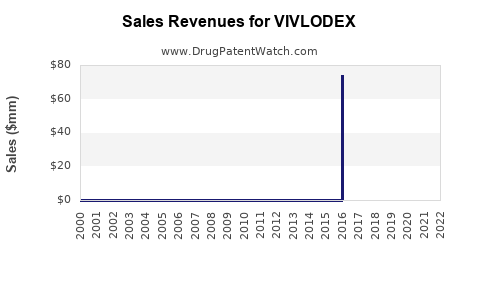
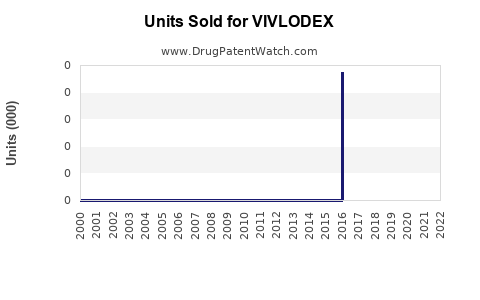
Annual Sales Revenues and Units Sold for VIVLODEX
| Drug Name | Revenues (USD) | Units | Year |
|---|---|---|---|
| VIVLODEX | ⤷ Start Trial | ⤷ Start Trial | 2022 |
| VIVLODEX | ⤷ Start Trial | ⤷ Start Trial | 2021 |
| VIVLODEX | ⤷ Start Trial | ⤷ Start Trial | 2020 |
| >Drug Name | >Revenues (USD) | >Units | >Year |
VIVLODEX Market Analysis and Sales Projections
VIVLODEX is a low-dose celecoxib capsule approved for the treatment of osteoarthritis pain. Its commercial opportunity is constrained by generic celecoxib, limited dose strengths, payer substitution, and the absence of a large exclusivity barrier. The product has a differentiated formulation and dosing proposition, but it operates in a mature NSAID market where price and formulary access dominate prescribing decisions.
Public filings do not consistently disclose recent VIVLODEX-specific revenue. A reasonable base-case estimate is that annual U.S. sales remain in the low-single-digit to low-double-digit millions, with downside risk from generic entry and continued brand erosion.
What is VIVLODEX and how does it compete in osteoarthritis treatment?
VIVLODEX contains celecoxib, a selective cyclooxygenase-2 inhibitor. It is available in 5 mg and 10 mg capsules and is approved for the management of osteoarthritis pain in adults [1].
| Product | Active ingredient | Dose strengths | Primary use | Commercial position |
|---|---|---|---|---|
| VIVLODEX | Celecoxib | 5 mg, 10 mg | Osteoarthritis pain | Branded low-dose product |
| Celebrex | Celecoxib | 50 mg, 100 mg, 200 mg, 400 mg | Osteoarthritis, rheumatoid arthritis and other indications | Original branded product; largely genericized |
| Generic celecoxib | Celecoxib | Generally 50 mg to 400 mg | Multiple approved indications | Low-cost standard of care |
| Meloxicam | Meloxicam | 7.5 mg, 15 mg | Osteoarthritis and rheumatoid arthritis | Generic NSAID competitor |
| Naproxen | Naproxen | Multiple strengths | Osteoarthritis and other pain conditions | Generic NSAID competitor |
VIVLODEX was designed to offer lower celecoxib doses than conventional celecoxib products. The commercial argument is that some patients may obtain adequate osteoarthritis pain relief at a lower dose, potentially reducing dose-related NSAID exposure. The product remains subject to the class warnings associated with celecoxib, including cardiovascular and gastrointestinal risks [1].
What is the FDA regulatory status of VIVLODEX?
VIVLODEX was approved by the U.S. Food and Drug Administration in October 2016 under NDA 208358 [2]. The product is a small-molecule drug, not a biologic, so future competition would occur through the abbreviated new drug application pathway rather than the biosimilar pathway.
| Regulatory item | Status |
|---|---|
| FDA application | NDA 208358 |
| Approval date | October 2016 |
| Active ingredient | Celecoxib |
| Dosage form | Oral capsule |
| Approved strengths | 5 mg and 10 mg |
| FDA pathway | 505(b)(2) new drug application |
| Biosimilar exposure | Not applicable |
| Generic pathway | ANDA pathway potentially applicable |
| New chemical entity exclusivity | Not applicable to celecoxib |
| Clinical-investigation exclusivity | Any applicable period has expired |
VIVLODEX did not receive new chemical entity exclusivity because celecoxib was already an established active ingredient. Any three-year clinical-investigation exclusivity associated with the approval would have ended no later than the late 2010s. The product therefore depends primarily on formulation, method-of-use, and commercial execution rather than active-ingredient exclusivity.
When does VIVLODEX lose exclusivity?
VIVLODEX’s regulatory exclusivity has already expired. The key commercial question is whether formulation or method-of-use patents continue to delay or discourage generic entry.
The FDA Orange Book should be used to verify the current patent listings, delisting status, patent-use codes, and expiration dates. Patent coverage for a low-dose celecoxib product may not prevent all generic celecoxib competition because conventional generic celecoxib products already compete with VIVLODEX at higher strengths.
The relevant distinction is:
- Generic celecoxib at conventional strengths can compete therapeutically without being an exact VIVLODEX substitute.
- An ANDA product matching the 5 mg and 10 mg capsule strengths could compete more directly.
- A formulation patent may cover a particular composition or manufacturing process without blocking all low-dose celecoxib products.
- Method-of-use patents may be difficult to enforce if the proposed generic label omits the patented use or if physicians prescribe outside the label.
What patents protect VIVLODEX?
VIVLODEX was developed around low-dose celecoxib formulation technology. Public patent records associated with the product and its development should be evaluated across four categories:
| Patent category | Potential commercial protection | Generic-entry impact |
|---|---|---|
| Low-dose formulation patents | Composition, dissolution, excipients or dose uniformity | May support an ANDA challenge or settlement |
| Manufacturing patents | Processes for producing low-dose capsules | Usually narrower than product patents |
| Method-of-use patents | Use of low-dose celecoxib for osteoarthritis pain | Depends on Orange Book use code and label scope |
| Device or packaging patents | Delivery or package configuration | Usually limited impact for an oral capsule |
The product’s patent estate is weaker than an NCE estate because celecoxib itself is off patent and generic. The commercial value of remaining patents depends on whether they cover the finished dosage form broadly enough to prevent design-around products.
No biosimilar risk exists because VIVLODEX is a small molecule. The principal risks are ANDA litigation, authorized generic competition, therapeutic substitution, and physician switching to inexpensive generic celecoxib or other NSAIDs.
How large is the market for VIVLODEX?
The addressable market is the U.S. osteoarthritis pain market, not the entire celecoxib market. Osteoarthritis is highly prevalent, but treatment is fragmented across acetaminophen, topical NSAIDs, oral NSAIDs, intra-articular injections, physical therapy, and prescription analgesics.
VIVLODEX’s practical addressable segment is narrower:
- Adults requiring prescription oral NSAID therapy.
- Patients for whom celecoxib is clinically preferred over nonselective NSAIDs.
- Patients considered appropriate for a lower celecoxib dose.
- Patients whose insurers reimburse the branded product.
- Prescribers willing to use a branded capsule when generic celecoxib is available.
The product does not capture the full value of the estimated osteoarthritis population. Its realistic market is a specialty or niche segment of the broader prescription NSAID market.
What are the main VIVLODEX growth drivers?
The strongest potential growth drivers are clinical positioning and targeted prescribing rather than broad population expansion.
Lower-dose positioning
VIVLODEX’s 5 mg and 10 mg strengths distinguish it from standard generic celecoxib strengths. This may support use in patients for whom clinicians want to start or maintain therapy at a lower dose.
Celecoxib class familiarity
Physicians are familiar with celecoxib, which lowers the educational burden compared with a novel mechanism. VIVLODEX can benefit from existing awareness of celecoxib’s efficacy and gastrointestinal profile relative to some nonselective NSAIDs.
Osteoarthritis prevalence
The aging population and increasing prevalence of obesity support long-term demand for osteoarthritis treatment. These trends expand the underlying disease population but do not guarantee branded product growth.
Potential payer or channel strategies
VIVLODEX could generate incremental demand through cash-pay programs, specialty-pharmacy distribution, discount cards, employer benefits, or targeted contracts. These strategies may increase prescription volume while reducing realized net price.
What factors limit VIVLODEX sales?
Generic substitution is the primary constraint. Generic celecoxib is widely available at a fraction of the branded price. Payers may require step therapy, prior authorization, or documented intolerance to generic alternatives before covering VIVLODEX.
Other constraints include:
- Limited 5 mg and 10 mg dose range.
- No broad indication expansion that materially enlarges the market.
- Competition from generic meloxicam, naproxen and diclofenac.
- Cardiovascular and renal safety concerns associated with chronic NSAID use.
- Low willingness among prescribers to pay a premium for a known active ingredient.
- Uncertain standalone commercial reporting after corporate ownership changes.
- Risk that generic manufacturers design around formulation claims.
What are the VIVLODEX sales projections through 2030?
Because recent product-level revenue has not been consistently reported, the following estimates are scenario-based rather than company-reported guidance. They assume U.S. net sales only and exclude licensing revenue.
| Year | Downside case | Base case | Upside case |
|---|---|---|---|
| 2024 | $2 million | $6 million | $12 million |
| 2025 | $1.5 million | $6 million | $14 million |
| 2026 | $1 million | $5.5 million | $15 million |
| 2027 | $0.7 million | $5 million | $15 million |
| 2028 | $0.5 million | $4.5 million | $14 million |
| 2029 | $0.3 million | $4 million | $13 million |
| 2030 | $0.2 million | $3.5 million | $12 million |
Downside case
The downside case assumes continued payer rejection, declining physician awareness, and direct generic competition at the 5 mg and 10 mg strengths. Under this scenario, VIVLODEX becomes a commercially marginal product by 2030.
Base case
The base case assumes continued niche prescribing, stable availability, modest price erosion, and no major generic launch that fully replicates the VIVLODEX formulation. Annual revenue remains approximately $3 million to $6 million.
Upside case
The upside case requires successful specialty-pharmacy execution, improved payer access, evidence supporting low-dose use, and limited direct generic competition. Even in this case, the product is unlikely to become a major branded pharmaceutical because its active ingredient is generic and its market is narrow.
What generic entry risks exist for VIVLODEX?
The generic-entry risk is high over the long term and moderate to high in the near term, depending on the status of Orange Book-listed patents.
| Risk | Probability assessment | Revenue effect |
|---|---|---|
| Generic substitution using conventional celecoxib | High | Persistent erosion |
| Direct 5 mg or 10 mg generic capsule | Moderate to high | Severe erosion |
| ANDA Paragraph IV challenge | Possible | Litigation and settlement risk |
| Authorized generic launch | Possible | Rapid price compression |
| Label carve-out for method-of-use patent | Possible | May permit partial entry |
| Formulation design-around | High over time | Reduces durability of patent protection |
A Paragraph IV certification could trigger Hatch-Waxman litigation and a 30-month stay if the patent holder sues within the statutory period. The commercial outcome would depend on the scope and validity of the asserted claims, not merely on the presence of an Orange Book listing.
No reliable public basis supports a claim that a specific generic manufacturer has launched or settled a VIVLODEX challenge. The competitive watchlist should focus on ANDA approvals, FDA tentative approvals, Orange Book changes, court dockets, and settlement announcements.
Which companies compete with VIVLODEX?
The most important competitors are generic manufacturers rather than branded pharmaceutical companies.
Relevant competitive groups include:
- Generic celecoxib manufacturers, including large U.S. and international generic suppliers.
- Manufacturers of generic meloxicam and naproxen.
- Brand and generic topical NSAID suppliers.
- Companies selling injections or other non-oral osteoarthritis therapies.
- Specialty-pharmacy products targeting patients who cannot tolerate conventional NSAIDs.
VIVLODEX’s competition is therefore both molecule-level and treatment-level. A physician does not need to select another low-dose celecoxib product to displace VIVLODEX. A standard 100 mg generic celecoxib prescription, a lower-cost meloxicam prescription, or a topical NSAID can produce the same commercial effect.
What is the commercial value and revenue exposure of VIVLODEX?
VIVLODEX is unlikely to represent material revenue exposure for a diversified pharmaceutical company unless it is bundled with a broader pain portfolio. The product may have strategic value as:
- A niche branded prescription asset.
- A platform for low-dose NSAID lifecycle management.
- A specialty-pharmacy product.
- A commercial add-on to a pain-management portfolio.
- A licensing asset for a company with payer and specialty distribution capabilities.
Its standalone value is limited by low expected peak sales, high generic substitution, uncertain reimbursement, and the absence of active-ingredient exclusivity. An acquirer would likely value VIVLODEX on current cash flow, patent durability, net pricing, and the probability of a direct generic launch.
How strong is the VIVLODEX patent estate?
The patent estate is commercially useful but not strong by specialty-pharmaceutical standards. Its strength depends on whether the claims cover the specific 5 mg and 10 mg products broadly, whether alternative formulations can be designed around, and whether method-of-use claims are listed with enforceable FDA use codes.
A practical assessment is:
| Factor | Assessment |
|---|---|
| Active-ingredient protection | Weak or expired |
| Regulatory exclusivity | Expired |
| Formulation protection | Potentially meaningful but claim-specific |
| Method-of-use protection | Narrow and enforcement-sensitive |
| Generic design-around risk | Material |
| Litigation leverage | Dependent on Orange Book claims |
| Long-term sales durability | Low to moderate |
What licensing deals or settlements affect VIVLODEX?
No major publicly documented licensing transaction or Paragraph IV settlement can be treated as a confirmed current driver of VIVLODEX sales without a verified company filing, FDA record, or court document. Corporate ownership and portfolio changes may affect promotion, distribution, and reporting, but those changes do not independently create market exclusivity.
The most important transaction diligence points are:
- Current holder of U.S. commercialization rights.
- Whether rights are exclusive by territory.
- Royalty obligations and milestone payments.
- Minimum purchase or supply commitments.
- Any authorized-generic rights.
- Patent litigation settlements and launch dates.
- Whether net sales are reported separately or aggregated with other products.
Key Takeaways
- VIVLODEX is a branded low-dose celecoxib product approved in 2016 for osteoarthritis pain.
- Its regulatory exclusivity has expired, and its commercial protection depends on formulation and method-of-use patents.
- Generic celecoxib is the central competitive threat.
- No biosimilar pathway applies because VIVLODEX is a small-molecule drug.
- Public product-level sales disclosure is limited, making scenario modeling more reliable than a single-point forecast.
- Base-case U.S. sales are estimated at approximately $3 million to $6 million annually through 2030.
- The upside case requires strong specialty-pharmacy execution and delayed direct generic entry.
- The downside case is rapid erosion toward immaterial revenue following direct low-dose generic competition.
FAQs about VIVLODEX market opportunity and exclusivity
Is VIVLODEX still commercially available?
VIVLODEX has an FDA approval, but commercial availability and distribution status can change with portfolio ownership, manufacturing decisions, and channel strategy. FDA approval does not guarantee continuous market supply.
Can a generic manufacturer make 5 mg or 10 mg celecoxib?
Potentially. A manufacturer would need to satisfy FDA requirements for the applicable dosage form, strength, bioequivalence, labeling, and patent certifications. The exact pathway depends on the Orange Book listing and the proposed product design.
Does VIVLODEX have new chemical entity exclusivity?
No. Celecoxib was already an established active ingredient when VIVLODEX was approved. Any applicable clinical-investigation exclusivity would not provide current long-term protection.
Is VIVLODEX safer than generic celecoxib?
VIVLODEX contains the same active ingredient as generic celecoxib. Its lower strength may support lower-dose prescribing, but it does not eliminate celecoxib’s class-related cardiovascular, gastrointestinal, renal, or other safety risks.
What would make VIVLODEX sales increase materially?
Material growth would require improved insurance coverage, durable low-dose clinical differentiation, expanded distribution, stronger prescriber adoption, or delayed direct generic entry. Price increases alone would likely be difficult to sustain in a genericized celecoxib market.
References
-
U.S. Food and Drug Administration. (2016). VIVLODEX (celecoxib) capsules prescribing information.
-
U.S. Food and Drug Administration. (2016). Drugs@FDA: VIVLODEX, NDA 208358.
-
U.S. Food and Drug Administration. (2024). Approved drug products with therapeutic equivalence evaluations: Orange Book.
-
U.S. Congress. (1984). Drug Price Competition and Patent Term Restoration Act of 1984, Pub. L. No. 98-417.
More… ↓
