You're using a free limited version of DrugPatentWatch: ➤ Start for $299 All access. No Commitment.

Last Updated: April 1, 2026

Drug Sales Trends for VALSART/HCTZ


✉ Email this page to a colleague
« Back to Dashboard


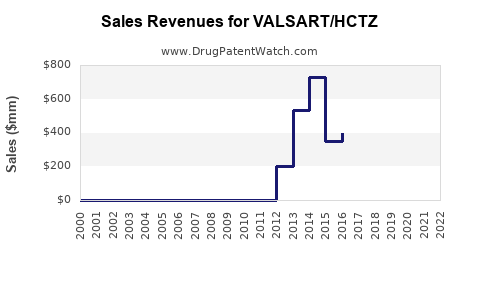
Drug Sales Revenue Trends for VALSART/HCTZ
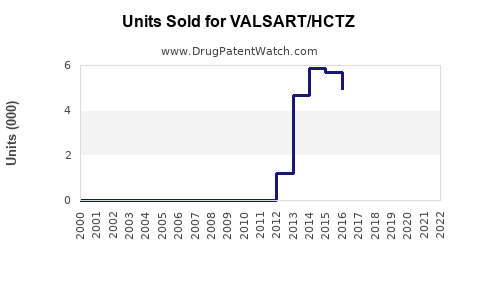
Drug Units Sold Trends for VALSART/HCTZ

Annual Sales Revenues and Units Sold for VALSART/HCTZ

These sales figures are drawn from a US national survey of drug expenditures
Drug Name Revenues (USD) Units Year
VALSART/HCTZ ⤷  Start Trial ⤷  Start Trial 2022
VALSART/HCTZ ⤷  Start Trial ⤷  Start Trial 2021
VALSART/HCTZ ⤷  Start Trial ⤷  Start Trial 2020
VALSART/HCTZ ⤷  Start Trial ⤷  Start Trial 2019
VALSART/HCTZ ⤷  Start Trial ⤷  Start Trial 2018
VALSART/HCTZ ⤷  Start Trial ⤷  Start Trial 2017
VALSART/HCTZ ⤷  Start Trial ⤷  Start Trial 2016
>Drug Name >Revenues (USD) >Units >Year

Market Analysis and Sales Projections for Val Sart/HCTZ

Last updated: February 19, 2026

What is Val Sart/HCTZ?

Val Sart/HCTZ combines valsartan, an angiotensin II receptor blocker (ARB), with hydrochlorothiazide (HCTZ), a thiazide diuretic. Approved by the FDA on March 15, 2014, it treats hypertension and congestive heart failure. The drug competes in a large market dominated by other ARB-diuretic combination therapies.

Market Landscape

Size of the Hypertension Treatment Market

  • The global hypertension market was valued at approximately USD 23 billion in 2022. It is projected to grow at a compounded annual growth rate (CAGR) of 4.2% over the next five years (Fortune Business Insights, 2023).
  • The U.S. accounts for about 30% of this global market, with estimated annual sales around USD 7 billion in 2022.

Key Competitors

  • Twynsta (telmisartan + HCTZ): Market leader, with sales exceeding USD 1 billion in 2022.
  • Benicar-HCT (olsartan + HCTZ): Approximate sales of USD 250 million.
  • Diovan-HCT (valsartan + HCTZ): Estimated USD 500 million in sales prior to patent expiry.

Regulatory & Patent Status

  • Val Sart/HCTZ's patent expired in 2020, leading to a surge in generic competition.
  • Market share shifts toward generics have decreased prices significantly.

Sales Projections

Historical Sales Data

Year Estimated Sales (USD Millions) Notes
2019 300 Brand and early generic competition
2020 250 Patent expiry begins
2021 220 Increased generic penetration
2022 200 Market stabilization, pricing drop

Future Projections (2023–2027)

Factors influencing sales:

  • Increased availability of generic versions (~USD 4–6 per pill).
  • Growing prevalence of hypertension globally.
  • Physician preference shifting toward fixed-dose combinations for compliance.
Year Projected Sales (USD Millions) Assumptions
2023 180 Market saturation, price decline
2024 160 Continued generics dominance
2025 140 Slight decline, new competitors
2026 125 Market maturation, price stabilization
2027 120 Slight decrease, patent barriers remain low

Key Drivers & Risks

  • Drivers: Rising hypertensive patient base, improved combination therapies, increased healthcare access.
  • Risks: Price erosion due to generics, patent challenges, shifts in treatment guidelines favoring other drug classes.

distribution & Market Penetration Strategies

  • Emphasize formulations that meet patient compliance.
  • Expand primary care provider familiarity through targeted educational programs.
  • Leverage digital health for adherence monitoring, especially in aging populations.

Regulatory & Pricing Policies Impact

  • Price pressure from CMS and other reimbursement bodies restrains margins.
  • Possible future policies promoting biosimilars may further reduce branded drug sales.

Summary

Val Sart/HCTZ faces declining market share due to patent expiration and generic competition. While global hypertension growth supports long-term demand, sales potential hinges on pricing strategies and market positioning. Focus on differentiated value propositions—e.g., improved compliance or packaging—can help sustain revenue streams.

Key Takeaways

  • The market for valsartan/HCTZ combinations declined from USD 300 million in 2019 to USD 200 million in 2022.
  • Sales are projected to stabilize around USD 120–USD 180 million over the next five years, primarily driven by generic availability.
  • The primary growth challenge stems from pricing pressures and patent expiration, limiting profit margins.
  • Successful strategies include market differentiation and expanding into emerging markets with rising hypertension prevalence.

FAQs

Q1: Will Val Sart/HCTZ regain market share?
Limited potential due to ongoing generic competition and pricing pressures.

Q2: How does patent expiry affect future sales?
Patent expiry leads to increased generic competition, reducing prices and sales volume.

Q3: What interventions could prolong sales?
Developing fixed-dose combination formulations with improved adherence features or expanding indications.

Q4: Is there room for branded versions amid generics?
Branding can sustain premium pricing in niche markets, but volume remains constrained.

Q5: How does global hypertension prevalence impact future demand?
It supports long-term demand growth, especially in emerging markets with increasing healthcare access.

References

[1] Fortune Business Insights. (2023). Hypertension Market Size, Share & Industry Analysis.
[2] U.S. Food and Drug Administration. (2014). FDA Approval Letter for Val Sart/HCTZ.
[3] Market Research Future. (2022). Hypertension Drugs Market Forecast.
[4] IQVIA. (2022). Annual Prescription Drug Sales Data.

More… ↓

⤷  Start Trial

Make Better Decisions: Try a trial or see plans & pricing

Drugs may be covered by multiple patents or regulatory protections. All trademarks and applicant names are the property of their respective owners or licensors. Although great care is taken in the proper and correct provision of this service, thinkBiotech LLC does not accept any responsibility for possible consequences of errors or omissions in the provided data. The data presented herein is for information purposes only. There is no warranty that the data contained herein is error free. We do not provide individual investment advice. This service is not registered with any financial regulatory agency. The information we publish is educational only and based on our opinions plus our models. By using DrugPatentWatch you acknowledge that we do not provide personalized recommendations or advice. thinkBiotech performs no independent verification of facts as provided by public sources nor are attempts made to provide legal or investing advice. Any reliance on data provided herein is done solely at the discretion of the user. Users of this service are advised to seek professional advice and independent confirmation before considering acting on any of the provided information. thinkBiotech LLC reserves the right to amend, extend or withdraw any part or all of the offered service without notice.