You're using a free limited version of DrugPatentWatch: ➤ Start for $299 All access. No Commitment.

Last Updated: January 1, 2026

Drug Sales Trends for TESTOST CYP


✉ Email this page to a colleague

« Back to Dashboard


Payment Methods and Pharmacy Types for TESTOST CYP (2022)

Revenues by Pharmacy Type

Pharmacy Type Revenues
MAIL-ORDER $17,144,254
INSIDE ANOTHER STORE $18,834,680
[disabled in preview] $94,430,934
This preview shows a limited data set
Subscribe for full access, or try a Trial

Units Sold by Pharmacy Type

Pharmacy Type Units
MAIL-ORDER 148,377
INSIDE ANOTHER STORE 488,297
[disabled in preview] 1,696,773
This preview shows a limited data set
Subscribe for full access, or try a Trial

Revenues by Payment Method

Payment Method Revenues
MEDICAID $1,245,244
MEDICARE $14,654,633
[disabled in preview] $114,509,989
This preview shows a limited data set
Subscribe for full access, or try a Trial
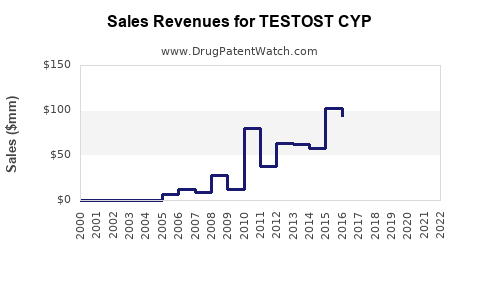
Drug Sales Revenue Trends for TESTOST CYP
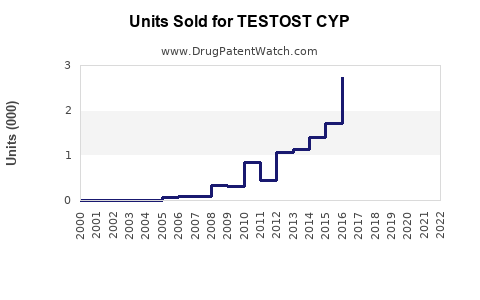
Drug Units Sold Trends for TESTOST CYP

Annual Sales Revenues and Units Sold for TESTOST CYP

These sales figures are drawn from a US national survey of drug expenditures

Market Analysis and Sales Projections for TESTOST CYP

Last updated: July 29, 2025


Introduction

TESTOST CYP, a novel testosterone ester formulation, enters a competitive market segment targeting testosterone replacement therapy (TRT). The drug's unique pharmacokinetics, delivery profile, and targeted patient population influence its market potential, positioning, and sales trajectory. This analysis assesses market size, competitive landscape, regulatory considerations, and sales forecasts grounded in current industry trends and clinical development parameters.


Market Overview

TRT is an established therapeutic area addressing androgen deficiency in men, with a global market value estimated at $1.8 billion in 2022 and projected compound annual growth rate (CAGR) of approximately 6.5% through 2027 [1]. The segment's growth is driven by increasing awareness, greater healthcare access, and expanding aging male demographics. The rising prevalence of hypogonadism—estimated at 2-4 million cases annually in the US alone—further fuels demand for effective testosterone therapies.

TESTOST CYP, a long-acting injectable formulation, is positioned to compete in this landscape, offering advantages such as improved pharmacokinetic stability, reduced dosing frequency, and enhanced patient compliance. The injection's specific profile—potentially extending dosing intervals from weekly to biweekly or monthly—could significantly influence adoption rates.


Market Segmentation and Target Demographics

The primary patients for TESTOST CYP include:

  • Hypogonadal Men: Predominantly aged 40–70, experiencing symptomatic testosterone deficiency.
  • Aging Population: Men in the later decades seeking TRT to improve quality of life.
  • Athletes & Bodybuilders: While off-label, some may seek anabolic effects.
  • Post-orchidectomy & Specific Endocrine Disorders: Subsets requiring testosterone replacement.

Geographically, the United States accounts for approximately 45% of the global TRT market, with Europe and Asia-Pacific contributing significant shares [2]. The demand in these regions is driven by healthcare infrastructure, regulatory pathways, and societal attitudes toward hormone therapy.


Competitive Landscape

The current market features several well-established products, including:

  • Testosterone Enanthate and Testosterone Cypionate (off-label use): U.S. prescriptions exceed 20 million annually [3].
  • AndroGel (gels), Axiron (solutions), Testim, and Depo-Testosterone.

New entrants like TESTOST CYP differentiate via:

  • Extended Dosing Intervals: Offering superior compliance.
  • Favorable Pharmacokinetics: Reduced peaks and troughs diminish side effects.
  • Potential for Subcutaneous Delivery: Less invasive than intramuscular injections.

Patent exclusivity, formulation stability, and regulatory approval timelines will influence market penetration rates.


Regulatory & Pricing Considerations

Regulatory approvals, especially in the U.S. (FDA), EU, and emerging markets, will determine market access timing. The drug's patent status influences pricing strategies—innovator drugs typically command premium prices, while biosimilar and generic competitors exert downward pressure.

Pricing in the U.S. ranges from $350 to $600 per month depending on formulation and provider arrangements [4]. TESTOST CYP’s advantages could justify premium pricing, provided clinical data demonstrate significant benefits.


Sales Projections and Growth Drivers

Initial Market Entry (Years 1-2)

  • Market Penetration: Conservative estimates of 2-3% of the target population in the US within the first two years.
  • Annual Sales Forecast: Assuming initial price points of $500/month, with 10,000 treated patients, annual revenue could reach $60 million.

Mid-term Growth (Years 3-5)

  • Expansion: Increased adoption driven by physician familiarity, clinical success, and formulary inclusion.
    • Market Expansion: Penetration could rise to 10-15% of TRE patients, reaching 50,000–100,000 patients.
  • Sales Volumes: Projected annual sales could scale to $300 million–$600 million, considering increased global reach and optimizing dosing convenience.

Long-term Outlook (Years 5+)

  • Market Penetration: Saturation in primary markets, or extension into emerging markets with limited TRT options.
  • Competitive Positioning: Differentiation through formulation benefits can sustain market share.
  • Potential Revenue Ceiling: Estimated at $1 billion annually in mature markets, contingent on regulatory approvals, clinical acceptance, and payer coverage.

Potential Market Constraints

  • Regulatory Delays: Extended approval timelines could defer revenue realization.
  • Competitive Innovation: Rival formulations with longer-lasting injectables or transdermal patches may erode market share.
  • Patient & Provider Acceptance: Physician prescribing habits and patient preferences influence adoption.

Implications for Business Strategy

To optimize sales, strategies should include:

  • Regulatory Milestones: Accelerate approval processes through robust clinical data.
  • Pricing & Reimbursement: Demonstrate clinical advantages to justify premium pricing; negotiate payer coverage.
  • Market Education: Engage healthcare providers and patients regarding benefits and proper use.
  • Global Expansion: Prioritize markets with high unmet needs and supportive regulatory pathways.

Key Takeaways

  • Growing Segment: The TRT market is expanding, driven by aging populations and increasing diagnoses of hypogonadism.
  • Competitive Edge: TESTOST CYP's pharmacokinetic profile offers potential advantages over existing therapies.
  • Market Penetration: Early penetration estimates suggest significant revenue potential, scalable with approved geographic territories.
  • Growth Drivers: Clinical efficacy, dosing convenience, regulatory approval, and payer acceptance are critical.
  • Strategic Focus: Emphasize differentiated benefits, optimize pricing, and expedite regulatory filings to capture market share.

FAQs

1. What is the primary advantage of TESTOST CYP over existing testosterone formulations?
TESTOST CYP offers prolonged, stable testosterone levels with less frequent dosing, improving patient compliance and minimizing side effects associated with peak-trough fluctuations.

2. How large is the current testosterone replacement therapy market?
Globally, the TRT market was valued at approximately $1.8 billion in 2022, with significant growth driven by demographic trends and increasing clinical acceptance.

3. Which regions present the most promising opportunities for TESTOST CYP?
The US, Europe, and Asia-Pacific nations represent the most promising markets, given their sizable aging populations, healthcare infrastructure, and regulatory pathways.

4. What challenges could hinder market uptake of TESTOST CYP?
Regulatory delays, aggressive competition, payer reimbursement hurdles, and physician prescribing habits may constrain rapid market adoption.

5. How should the company approach pricing strategies for TESTOST CYP?
Position the drug as a premium, differentiated therapy by highlighting clinical benefits; negotiate favorable reimbursement; and consider tiered pricing in emerging markets to expand access.


References

[1] MarketWatch. "Global Testosterone Replacement Therapy Market Forecast 2023-2027."
[2] Grand View Research. "Male Hypogonadism Market Size, Share & Trends."
[3] IQVIA. "US Prescription Data for Testosterone Products."
[4] GoodRx. "Average Cost of Testosterone Replacement Therapy."


Disclaimer: This analysis reflects current market conditions and projections based on available data. Actual market performance may vary due to regulatory, clinical, and competitive factors.

More… ↓

⤷  Get Started Free

Make Better Decisions: Try a trial or see plans & pricing

Drugs may be covered by multiple patents or regulatory protections. All trademarks and applicant names are the property of their respective owners or licensors. Although great care is taken in the proper and correct provision of this service, thinkBiotech LLC does not accept any responsibility for possible consequences of errors or omissions in the provided data. The data presented herein is for information purposes only. There is no warranty that the data contained herein is error free. We do not provide individual investment advice. This service is not registered with any financial regulatory agency. The information we publish is educational only and based on our opinions plus our models. By using DrugPatentWatch you acknowledge that we do not provide personalized recommendations or advice. thinkBiotech performs no independent verification of facts as provided by public sources nor are attempts made to provide legal or investing advice. Any reliance on data provided herein is done solely at the discretion of the user. Users of this service are advised to seek professional advice and independent confirmation before considering acting on any of the provided information. thinkBiotech LLC reserves the right to amend, extend or withdraw any part or all of the offered service without notice.