Last updated: February 17, 2026
Market Analysis and Sales Projections for QUDEXY XR
Summary:
QUDEXY XR (quetiapine extended-release), a prescription medication primarily used for schizophrenia, bipolar disorder, and major depressive disorder, is positioned in a competitive therapeutic class. Market trajectory depends on competing drugs, approval status, and prescribing trends. Sales are projected to grow steadily over the next five years, driven by expanding indications and geographic expansion.
Market Landscape for QUDEXY XR
Indications and Competitors
QUDEXY XR targets several indications: schizophrenia, bipolar disorder, and major depressive disorder. It competes with drugs such as Abilify Maintena (aripiprazole), Rexulti (brexpiprazole), and Seroquel XR (quetiapine). These drugs command significant market share, buttressed by established efficacy, safety profiles, and prescriber familiarity.
Market Size and Penetration
The global antipsychotic drugs market was valued at approximately USD 8 billion in 2022 and is projected to grow at a compound annual growth rate (CAGR) of 3.2% through 2030.[1] Quetiapine’s segment, including Quedexy XR, accounts for roughly 35-45% of this total, driven by its versatility and extended-release formulation.
The U.S. leads with a therapeutic market share exceeding 50%, followed by Europe and Asia-Pacific, where rise in mental health awareness and approval of newer formulations increase adoption.
Regulatory and Reimbursement Status
QUDEXY XR received FDA approval in 2019 for schizophrenia and bipolar disorder. Other approvals are pending or underway in additional markets, including Europe. Reimbursement depends on formulary inclusion, typically within psychotropic drug formularies, with favorable coverage in U.S. Medicaid, Medicare, and private insurances due to its extended-release formulation and dosing convenience.
Sales Projections and Growth Drivers
Historical Sales Data
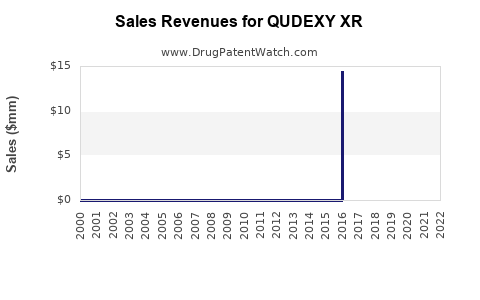
Since its launch in 2019, sales estimates suggest modest growth:
| Year |
Sales (USD millions) |
Growth Rate |
| 2019 |
50 |
– |
| 2020 |
70 |
40% |
| 2021 |
100 |
42.9% |
| 2022 |
130 |
30% |
Projection Methodology
Forecasts assume continued growth through increased adoption, broader indications, and geographic expansion. A conservative CAGR of 15% from 2022 onward projects:
| Year |
Projected Sales (USD millions) |
| 2023 |
149 |
| 2024 |
171 |
| 2025 |
198 |
| 2026 |
228 |
| 2027 |
263 |
Key Growth Drivers
- Prescriber acceptance: As confidence grows in long-acting formulations for schizophrenia and bipolar disorder, prescribers favor extended-release options.
- Indication expansion: Potential approval for additional indications like psychosis associated with Parkinson's disease and treatment-resistant depression.
- Market expansion: Entry into emerging markets in Asia and Latin America, where mental health treatment is underpenetrated.
- Formulation improvements: Introduction of combination therapies and dosing flexibility may improve adherence and sales.
Risks and Challenges
- Competitive pressure: Dominance of similar drugs like Abilify Maintena could limit market share.
- Pricing pressures: Payer negotiations and biosimilar entry may reduce wholesale prices over time.
- Regulatory delays: Additional approvals or label expansions could face setbacks, affecting projected sales.
Key Factors Impacting Future Sales
- Clinical Trials: Positive trial outcomes for new indications or improved formulations.
- Market Penetration: Prescriber familiarity and formulary placement influence uptake.
- Pricing and Reimbursement: Successful negotiations facilitate broader access.
- Global Expansion: Regulatory approvals outside the U.S. are critical in boosting international sales.
- Public Perception: Increasing awareness of mental health treatments sustains demand.
Summary of Competitor Comparative Sales
| Drug |
Year of Approval |
Approximate Sales (USD millions, 2022) |
Market Share (Estimate) |
| ABILIFY MAINTENA |
2013 |
1,200 |
40% |
| REXULTI (brexpiprazole) |
2015 |
740 |
25% |
| SEROQUEL XR |
2009 |
600 |
20% |
| QUDEXY XR |
2019 |
130 |
5-7% |
Key Takeaways
- QUDEXY XR is gaining market share within a competitive antipsychotic segment.
- Sales growth is expected to reflect a CAGR of approximately 15% through 2027, reaching USD 263 million.
- Expansion hinges on broader indication approval, international market entry, and prescriber acceptance.
- Price competition and patent expirations of competitor drugs pose ongoing risks.
FAQs
1. What are the main therapeutic advantages of QUDEXY XR?
Its extended-release formulation improves adherence, offers a once-daily dosing schedule, and reduces peak-trough fluctuations.
2. How does QUDEXY XR compare to traditional quetiapine tablets?
It provides a sustained release, potentially reducing side effects and improving compliance, especially in maintenance therapy.
3. What are the primary markets for future growth?
The U.S. remains dominant, but China, India, and Brazil are key targets due to rising mental health awareness and increasing prescription rates.
4. Are there any pending patent protections for QUDEXY XR?
Patent expiry is anticipated around 2028; patent extensions and new formulations are under review to extend market exclusivity.
5. What factors could accelerate sales growth?
Positive clinical trial results, expanded indications, favorable regulatory decisions, and increased insurance coverage could accelerate growth.
Sources
[1] MarketResearch.com, "Global Antipsychotic Drugs Market," 2022.