Last updated: February 15, 2026
Market Analysis and Sales Projections for Pred Forte (Prednisolone Acetate Ophthalmic Suspension)
Overview
Pred Forte (prednisolone acetate ophthalmic suspension 1%) is a corticosteroid used in managing ocular inflammation. It faces competition from other ophthalmic corticosteroids and generic alternatives, impacting market penetration and pricing.
Market Landscape
Global Ophthalmic Corticostroids Market Size
Expected to grow from $1.2 billion in 2022 to $1.75 billion by 2030, with a CAGR of approximately 4.8%[1]. Pred Forte holds a significant share within the ophthalmic corticosteroids segment, primarily in North America and Europe.
Key Competitors
- Rimexolone (Vexol)
- Difluprednate (Durezol)
- Fluorometholone (FML)
- Generic prednisolone acetate formulations
Market Share
Pred Forte is among the leading branded corticosteroids, but the rise of generics exerts downward pressure on revenues. Its market share in the U.S. remains estimated at 35-40%, primarily driven by longstanding prescriber familiarity and established efficacy.
Pricing and Prescription Dynamics
Pricing
- Branded Pred Forte: approximately $50-70 per 5 mL bottle.
- Generic prednisolone acetate: prices range from $10-25 per 5 mL, affecting formulary positioning.
Prescription Trends
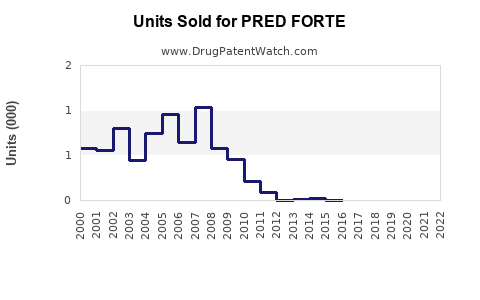
- Annual prescriptions surpass 1 million in the U.S., with growth driven by surgical procedures and inflammatory conditions.
- Prescriber preference leans toward branded products in complex cases, while cost-sensitive settings favor generics.
Regulatory and Reimbursement Factors
FDA Status
- Pred Forte has FDA approval for treating inflammation post ocular surgery, corneal injury, and other inflammatory eye conditions.
Reimbursement
- Generally covered under Medicare and private insurance plans, with copayments depending on formulary tier.
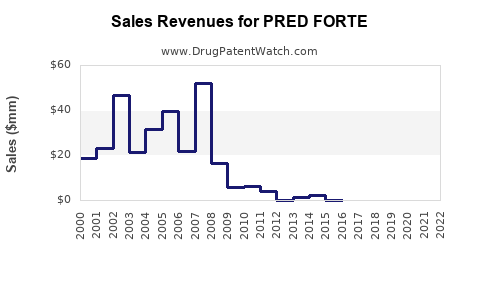
Sales Projections — 2023-2028
| Year |
Estimated U.S. Sales (USD millions) |
Comments |
| 2023 |
180 |
Stabilized prescriber base; generic competition persists |
| 2024 |
165 |
Market share slightly declines due to generics and competition |
| 2025 |
150 |
Increasing popularity of generics and new alternatives |
| 2026 |
135 |
Potential impact from new delivery methods or formulations |
| 2027 |
125 |
Prescriber shift towards other corticosteroids or new drugs |
| 2028 |
115 |
Continued erosion, but niche use remains stable |
Market growth considers:
- Steady prescription volumes driven by surgical procedures and inflammatory indications.
- Competition from generics and newer corticosteroids reducing margins and sales.
Global Outlook
Sales outside the U.S. account for approximately 25% of total, with emerging markets showing increasing demand but limited access to branded drugs, leading to lower sales volumes.
Risks & Opportunities
Risks
- Intensified generic competition leading to price erosion.
- Regulatory delays or restrictions on corticosteroid use.
- Potential adverse event reports affecting prescriber confidence.
Opportunities
- Development of sustained-release formulations or combination therapies.
- Expansion into new indications such as inflammatory macular edema.
- Increased adoption in emerging markets with expanding ophthalmic care infrastructure.
Key Takeaways
- Pred Forte remains a leading branded corticosteroid but faces ongoing price competition from generics.
- Sales are projected to decline modestly over five years due to market dynamics.
- Growth opportunities lie in formulation innovations and expanding indications.
- Competitive landscape shifting with newer corticosteroids and delivery systems.
- Regional geographic differences significantly influence sales trajectories.
FAQs
1. How does Pred Forte compare price-wise with generics?
Pred Forte typically costs four to seven times more than generic prednisolone acetate, influencing prescriber and payer preferences.
2. What are the main drivers behind the sales decline?
Generic competition, conservative prescriber habits, and limited new formulations reduce revenue potential.
3. Can regulatory changes impact Pred Forte?
Yes. Any restrictions or safety warnings could lower demand or restrict prescriptions.
4. Are there geographic markets with growth potential?
Emerging markets in Asia and Latin America present growth due to expanding ophthalmic care and rising surgery volumes.
5. What role could new delivery methods play?
Sustained-release implants or eye drops with improved bioavailability could create future growth avenues, though none are currently marketed as Pred Forte replacements.
References
- Market Research Future, “Global Ophthalmic Corticosteroids Market,” 2023.