Last updated: July 29, 2025
Introduction
Potassium chloride (KCl) is a vital mineral compound widely used across multiple sectors, primarily in healthcare as a critical electrolyte supplement, and in industrial applications such as fertilizers and food processing. As global health concerns, agricultural demands, and industrial growth accelerate, potassium chloride’s market prospects are poised for considerable expansion. This report provides an in-depth analysis of market dynamics, key drivers, competitive landscape, and future sales projections for potassium chloride.
Market Overview
The global potassium chloride market was valued at approximately USD 20 billion in 2022 and is projected to grow at a Compound Annual Growth Rate (CAGR) of around 4-5% through 2030. The demand is driven predominantly by three core sectors:
- Healthcare and pharmaceuticals: Potassium chloride’s role in managing electrolyte imbalances, cardiac health, and as part of IV therapy
- Agriculture: As a primary fertilizer component, especially in potassium-rich crops
- Industrial applications: Food processing, chemical manufacturing, and de-icing applications
The geographic landscape underscores North America and Asia Pacific as the leading markets, attributable to advanced healthcare infrastructure and substantial agricultural activities, respectively.
Market Drivers
1. Rising Global Healthcare Needs
The increasing prevalence of chronic diseases such as hypertension, cardiovascular conditions, and electrolyte disturbances boosts demand for potassium supplements, particularly potassium chloride. The World Health Organization emphasizes the need for electrolyte repletion therapies, further propelling pharmaceutical utilization [1].
2. Agricultural Expansion and Food Security
The agriculture sector’s reliance on potassium-based fertilizers, notably potassium chloride, aligns with the increasing demand for food due to population growth. The FAO reports that fertilizer consumption is projected to grow at a CAGR of 3% until 2030, with potassium chloride representing a significant share [2].
3. Industrial and Commercial Applications
Growing manufacturing activities and road safety measures (de-icing agents) in colder climates sustain steady demand. Additionally, food industry uses, such as flavor enhancement and preservation, contribute substantial consumption.
4. Supply Chain and Raw Material Availability
Potassium chloride is mainly sourced from potash ore, notably in countries like Canada, Belarus, and China. Investments in mining infrastructure and geopolitical stability influence supply, consequently impacting market stability.
Competitive Landscape
Key players include Swiss-based Nutrien Ltd., Mosaic Company (USA), Belaruskali (Belarus), PotashCorp, and incraser Chinese producers. Their strategies focus on capacity expansion, technological innovation in mining and processing, and strategic alliances with agriculture and healthcare sectors.
Recent advancements include green mining initiatives and enhanced purity grades catering to pharmaceutical applications. The market’s fragmentation indicates opportunities for innovative entrants to secure niche segments.
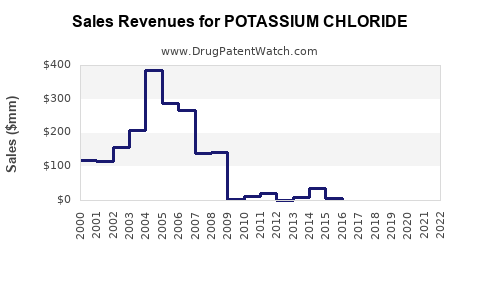
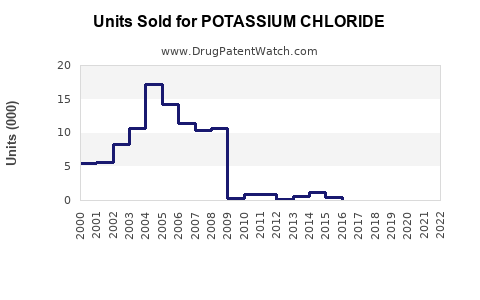
Sales Projections (2023-2030)
Revenue Forecasts
- 2023-2025: Focused on stabilizing supply chains post-pandemic and addressing geopolitical tensions affecting raw material imports, market revenues are expected to grow modestly, at approximately 3-4% CAGR.
- 2026-2030: As demand from healthcare and agriculture sustains growth, and new applications emerge (such as in battery technology for energy storage), the CAGR could accelerate to 5%. Total sales could reach USD 28-30 billion by 2030.
Segment-wise Breakdown
- Pharmaceutical Sector: Expected to comprise around 40-45% of sales by 2030, driven by increased healthcare utilization.
- Agricultural Sector: Constitutes approximately 35-40%, with steady demand for fertilizers.
- Industrial Applications: Projected to account for the remaining 15-20%, buoyed by food processing and de-icing.
Geographic Market Growth
- North America: Stable with a CAGR of 3.5%, bolstered by healthcare and de-icing needs.
- Asia Pacific: Leading growth at approximately 5-6%, driven by expanding agricultural activities and industrialization.
- Europe: Moderate growth (~3%) with a focus on sustainable mining and environmental regulations.
Market Challenges and Risks
- Raw Material Constraints: Political instability or policy restrictions in major potash-producing countries could hinder supply.
- Environmental Regulations: Increasing environmental scrutiny over mining and processing operations may inflate production costs.
- Alternative Electrolyte Supplements: Competition from other minerals and synthetic substitutes could diversify or diminish demand.
- Price Volatility: Fluctuations in global potash prices impact profitability and market stability.
Strategic Opportunities
- Product Diversification: Developing specialty grades tailored for pharmaceutical use offers high-margin opportunities.
- Sustainable Mining: Adoption of eco-friendly extraction methods aligns with regulatory trends and consumer preferences.
- Emerging Markets: Expansion into Africa and Latin America could unlock new demand streams, especially in agriculture.
Conclusion
Potassium chloride’s essentiality across healthcare, agriculture, and industry underpins a resilient growth trajectory. Market expansion hinges on sustainable supply chains, technological innovation, and adapting to emerging applications such as energy storage. The forecasted sales growth of around 4-5% CAGR through 2030 indicates a stable, lucrative opportunity for stakeholders capitalizing on global demand.
Key Takeaways
- The global potassium chloride market is projected to reach USD 28-30 billion by 2030, growing at a CAGR of approximately 4-5%.
- Healthcare and agriculture sectors comprise the primary demand drivers, with industrial applications offering supplementary growth.
- Supply chain stability, technological innovation, and environmental compliance are critical success factors.
- Emerging uses, particularly in energy storage and specialty pharmaceuticals, present future growth opportunities.
- Market risks include geopolitical supply constraints and regulatory changes impacting mining operations.
Frequently Asked Questions
1. What are the primary applications of potassium chloride?
Potassium chloride is predominantly used in healthcare as a potassium supplement, in agriculture as a fertilizer, and in industrial processes such as food preservation and de-icing.
2. Which regions are the largest consumers of potassium chloride?
North America and Asia Pacific lead consumption, driven by healthcare infrastructure and agricultural activity, respectively.
3. What factors could impede market growth?
Supply chain disruptions, environmental regulations, and price volatility in raw materials may hinder growth.
4. How is the market expected to evolve with emerging technology?
Innovations in sustainable mining, specialty pharmaceutical grades, and energy storage applications could diversify and accelerate growth.
5. Which companies dominate the potassium chloride market?
Major players include Nutrien Ltd., Mosaic Company, Belaruskali, and Chinese producers, engaging in capacity expansion and technological development.
References:
[1] World Health Organization. "Electrolyte Imbalance Statistics," 2022.
[2] Food and Agriculture Organization. "Global Fertilizer Consumption Report," 2021.