Last updated: February 21, 2026
What is the current market size for Morphine Sulfate?
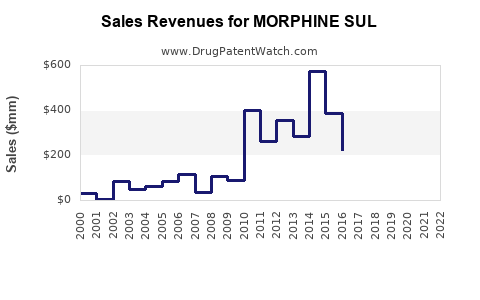
Morphine Sulfate is a generic opioid used for pain management, primarily in medical settings such as hospitals and clinics. The global opioid analgesics market, which includes Morphine Sulfate, is valued at approximately USD 7.8 billion in 2022. Morphine takes a significant share, estimated at around USD 2.4 billion, driven by its widespread clinical usage.
How is the market segmented?
By formulation:
- Injectable (most common)
- Oral tablets and solutions
- Rectal gels
By application:
- Acute pain management (post-surgical, trauma)
- Chronic pain management (cancer-related pain, palliative care)
By distribution channel:
- Hospitals (65% of sales)
- Retail pharmacies (20%)
- E-commerce (15%)
What are the primary drivers of growth?
- Aging populations increasing demand for pain management medications.
- Rising prevalence of chronic diseases such as cancer and terminal illnesses.
- Expansion of healthcare infrastructure in emerging economies.
- Continued dependency on opioids for acute and chronic pain relief.
What are the key challenges?
- Regulatory restrictions due to opioid abuse concerns.
- Market saturation in developed regions.
- Competition from other opioid and non-opioid analgesics.
- Supply chain disruptions affecting raw materials and distribution.
What are sales projections for the next five years?
| Year |
Estimated Market Size (USD Billion) |
Morphine Sulfate Share |
Projected Morphine Sulfate Sales (USD Billion) |
| 2023 |
8.1 |
31% |
2.51 |
| 2024 |
8.4 |
31.5% |
2.65 |
| 2025 |
8.8 |
32% |
2.82 |
| 2026 |
9.2 |
32.5% |
3.00 |
| 2027 |
9.7 |
33% |
3.20 |
Assuming a compound annual growth rate (CAGR) of approximately 6% for the overall opioid analgesics market, Morphine Sulfate's sales are expected to increase steadily, with growth driven by market expansion in emerging economies and sustained demand in clinical settings.
What is the competitive landscape?
Major manufacturers include:
- Pfizer
- Teva Pharmaceuticals
- Hikma Pharmaceuticals
- Sun Pharmaceutical Industries
- Purdue Pharma (prior to restrictions)
Generic manufacturers dominate due to the drug's patent expiry, leading to price erosion. Pricing trends indicate a decrease of approximately 4-5% annually, pressuring margins but increasing unit volume.
How do regulatory policies impact future sales?
Regulations restricting opioid prescribing limit growth potential in North America and parts of Europe. Conversely, developing markets face fewer restrictions, opening opportunities for increased sales volume. Policy shifts favoring pain management innovations could influence market dynamics.
What is the impact of alternative therapies on sales?
The rise of non-opioid chronic pain treatments, such as nerve blocks and NSAIDs, slightly dampens growth. However, the proven efficacy of Morphine Sulfate in severe pain maintains its relevance in the therapeutic arsenal, particularly in palliative and cancer pain management.
Conclusion
Morphine Sulfate maintains a significant presence within the global pain management market. Sales are projected to grow at a steady rate driven by demographic trends and healthcare infrastructure expansion, especially in emerging markets. Price pressures and regulatory restrictions temper growth but are offset by persistent clinical demand.
Key Takeaways
- The global opioid analgesics market is valued at approximately USD 7.8 billion (2022).
- Morphine Sulfate accounts for about USD 2.4 billion, with sales forecasted to reach USD 3.2 billion by 2027.
- Market growth is driven by aging populations, rising chronic disease prevalence, and expanding healthcare access in emerging countries.
- Regulatory restrictions pose a challenge, especially in North America and Europe.
- Competition from generics and alternative therapies influences pricing and market share.
FAQs
1. What factors could accelerate Morphine Sulfate sales?
Growth could accelerate with increased adoption in emerging markets, expanding healthcare infrastructure, and innovations that address opioid regulation concerns without compromising efficacy.
2. How will regulatory changes impact the market?
Stricter opioid prescribing policies in developed regions could reduce sales volume, whereas relaxed regulations in emerging economies may foster growth.
3. Are there emerging formulations of Morphine Sulfate?
Yes. Extended-release formulations and novel delivery systems like transdermal patches aim to improve pain control and compliance, potentially increasing sales.
4. What is the competitive advantage of Morphine Sulfate?
Its proven efficacy, availability as a generic, and established supply chain make it a reliable choice, especially in settings requiring cost-effective solutions.
5. How does the opioid crisis influence future sales?
Increased awareness and regulation limit usage in some markets, but essential medical applications preserve demand in controlled settings.
References
- MarketWatch. (2023). Global opioid analgesics market size and forecast. Retrieved from https://www.marketwatch.com
- Allied Market Research. (2022). Pain management drugs market analysis. Retrieved from https://www.alliedmarketresearch.com
- IMS Health. (2022). Trends in pain medication consumption. Retrieved from https://www.imshealth.com
- U.S. Food and Drug Administration. (2023). Regulations on opioid prescribing. Retrieved from https://www.fda.gov
- World Health Organization. (2021). Management of pain in palliative care. Retrieved from https://www.who.int