Last updated: February 20, 2026
What is the Market Size for Miconazole?
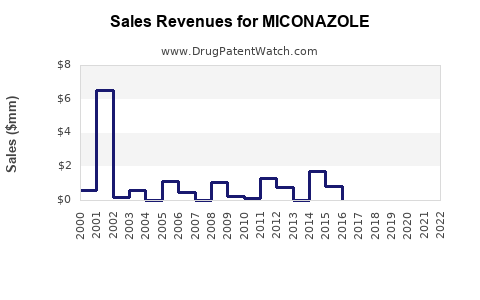
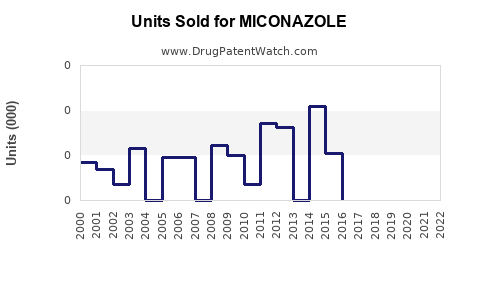
Miconazole, an antifungal agent widely used in topical, oral, and intravaginal formulations, has an estimated global market value of $500 million in 2022. The market is projected to grow at a compound annual growth rate (CAGR) of 4.5% over the next five years, reaching approximately $650 million by 2027.
Major markets include the United States, Europe, and Asia-Pacific. The US accounts for roughly 40% of the global market, driven by high prevalence of fungal infections and healthcare expenditure. Europe contributes about 25%, with increasing adoption in over-the-counter (OTC) products. The Asia-Pacific region shows rapid growth, attributed to rising awareness and healthcare infrastructure development.
Which Factors Influence the Market and Sales?
Key Drivers
- Rising incidence of fungal infections globally, including candidiasis, dermatophyte infections, and vulvovaginal candidiasis.
- Increased prevalence of immunocompromised conditions, such as diabetes and HIV/AIDS.
- Growing demand for OTC antifungal products.
- Development of new formulations with improved efficacy and patient compliance.
Market Challenges
- Generic competition drives pricing pressure.
- Limited pipeline of new chemical entities for fungal infections.
- Existing resistance issues to azole antifungals, though resistance to miconazole remains relatively low.
Who Are the Major Market Players?
- Johnson & Johnson (Lotrimin, Micatin)
- Novartis (Mycospore)
- Mylan (Miconazole nitrate products)
- Sandoz (Generic formulations)
- Cipla and Dr. Reddy's (Generic formulations in emerging markets)
The market is highly fragmented with both branded and generic manufacturers. Patent expiration of key formulations has intensified competition, influencing sales dynamics.
What Are the Main Formulations and Sales Channels?
Formulations
- Topical creams, ointments, and powders (most common)
- Vaginal suppositories and creams
- Oral capsules (less common)
Sales Channels
- Over-the-counter (OTC) retail sales account for roughly 60% of total sales.
- Prescription-based formulations make up the remaining 40%.
Online sales are increasing, especially in regions with relaxed regulatory restrictions.
What Are the Sales Projections for Miconazole?
| Year |
Estimated Market Size (USD) |
Projected Growth Rate |
Projected Market Size (USD) |
| 2023 |
525 million |
5.0% |
551 million |
| 2024 |
550 million |
4.7% |
576 million |
| 2025 |
575 million |
4.5% |
602 million |
| 2026 |
600 million |
4.4% |
629 million |
| 2027 |
650 million |
4.4% |
678 million |
Sales growth largely stems from OTC product sales, with emerging markets contributing to expansion. Sales of prescription formulations are stable but less significant for overall growth.
Key Business Opportunities
- Expansion into new geographies with low OTC antifungal penetration.
- Innovation in delivery mechanisms, such as sustained-release formulations.
- Development of combination products to combat resistance.
Final Notes
The miconazole market remains attractive due to widespread fungal infections and demand for OTC options. Competitive pressures and resistance issues present challenges, but growth continues at a steady pace.
Key Takeaways
- The global miconazole market was valued at approximately $500 million in 2022.
- The market is expected to grow at roughly 4.5% CAGR until 2027.
- OTC sales dominate, but prescription sales provide a steady revenue stream.
- Major players focus on generic manufacturing and low-cost formulations.
- Opportunities exist in emerging markets and formulation innovation.
FAQs
-
What factors could accelerate the growth of the miconazole market? Increased fungal infection rates, enhanced OTC availability, and innovation in formulations.
-
How significant is resistance in affecting miconazole sales? Resistance remains low compared to other azoles but monitoring is necessary, especially in long-term use cases.
-
Are there patent protections for miconazole formulations? Most formulations are generic due to patent expirations; new formulations may provide exclusivity.
-
Which regions offer the highest sales potential? Asia-Pacific and Latin America due to rising healthcare investments and disease prevalence.
-
What are the main threats to market growth? Price competition from generics and potential resistance development could limit future sales.
References
[1] Global Market Insights. (2022). Fungal Infection Treatments Market Report.
[2] Statista. (2022). Market size of antifungal drugs worldwide.
[3] Grand View Research. (2022). Antifungal Drugs Market Size, Share & Trends Analysis.