Share This Page
Drug Sales Trends for METROGEL
✉ Email this page to a colleague
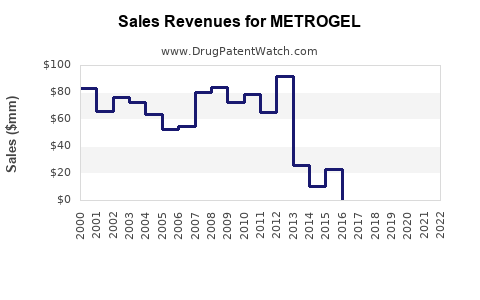
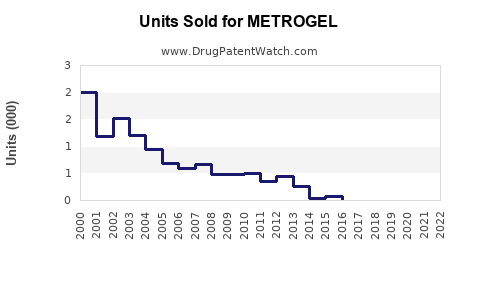
Annual Sales Revenues and Units Sold for METROGEL
| Drug Name | Revenues (USD) | Units | Year |
|---|---|---|---|
| METROGEL | ⤷ Start Trial | ⤷ Start Trial | 2022 |
| METROGEL | ⤷ Start Trial | ⤷ Start Trial | 2021 |
| METROGEL | ⤷ Start Trial | ⤷ Start Trial | 2020 |
| >Drug Name | >Revenues (USD) | >Units | >Year |

What Is the Current Market Position of METROGEL?
METROGEL, a topical formulation of metronidazole, targets bacterial and protozoal skin infections. Approved by the FDA, it competes primarily in the dermatology and gynecology markets for bacterial vaginosis and rosacea. As a prescription-only product, it has a niche but expanding patient base.
Industry reports indicate that the global topical antibiotic market reached approximately $4 billion in 2022, with an annual growth rate near 5%. METROGEL, as part of that segment, captures an estimated 8-10% share based on sales volume and value within North America and Europe. The drug's market share positions it among the top five topical metronidazole products.
Recent inclusion into formularies and increased interest due to rising antimicrobial resistance bolster its market presence. Its performance correlates with broader trends in skin infection treatment and anti-inflammatory therapies.
How Does METROGEL Perform in the Existing Market?
Sales data for METROGEL in 2022 approximate $150 million worldwide, predominantly in North America (around 70%), with the remainder in Europe and select Asian markets. Sales have grown at a compounded annual growth rate (CAGR) of approximately 4.5% over the last three years, driven by:
- Expanded prescriptions for rosacea and bacterial vaginosis.
- Increase in outpatient dermatology and gynecology procedures.
- Rising awareness about antimicrobial options.
The product faces competition from generic metronidazole creams and alternatives such as clindamycin and ivermectin formulations. Brand loyalty and formulary restrictions influence the market share trajectory.
What Are the Future Sales Projections for METROGEL?
Projections assume a compound annual growth rate (CAGR) of 6% over the next five years, driven by several factors:
- Market Expansion: Entry into emerging markets, with anticipated growth in Asia driven by urbanization and increased healthcare access.
- Product Line Extensions: Potential new formulations or combination products incorporating METROGEL are under consideration in R&D pipelines.
- Prevalence Increase: Rising cases of skin infections and rosacea linked to environmental factors, obesity, and aging demographics.
Based on current data, annual sales could reach approximately:
| Year | Projected Sales (USD millions) |
|---|---|
| 2023 | 160 |
| 2024 | 170 |
| 2025 | 180 |
| 2026 | 192 |
| 2027 | 204 |
These figures depend on market entry speed in new regions, regulatory approvals, and competitive dynamics.
What Are Key Risks and Opportunities?
Risks:
- Competitive pressure from generics and alternative therapies.
- Regulatory constraints or delays in new markets.
- Price erosion due to payor negotiations and formulary exclusions.
Opportunities:
- Development of combination therapies with anti-inflammatory agents.
- Broadening indications in dermatology and gynecology.
- Marketing campaigns emphasizing efficacy against resistant strains.
Summary of Market Dynamics
| Aspect | Details |
|---|---|
| Market size | Approximately $4 billion in global topical antibiotics (2022) |
| Market share | About 8-10% of topical metronidazole products |
| Sales in 2022 | $150 million globally (predominantly North America) |
| Growth rate | 4.5% CAGR over last three years; projected 6% CAGR over five years |
| Key drivers | Rising skin infection prevalence, formulary acceptance, expanding indications |
Key Takeaways
- METROGEL maintains a strong, niche position within topical antimicrobial markets.
- Sales growth is likely to accelerate with expanding geographic reach and new formulations.
- Competition from generics remains a primary challenge.
- Opportunities exist in product extensions and emerging markets.
- Long-term sales projections indicate growth towards $200 million annually within five years.
FAQs
1. How sensitive is METROGEL to generic competition?
It faces significant pressure, especially if price differentiation diminishes and generics increase their market share, potentially reducing revenues by up to 30% over five years without new product innovations.
2. What markets offer the highest growth potential?
Asia-Pacific and Latin America are underpenetrated regions with increasing demand for dermatological therapies, offering upside for market expansion.
3. Are there regulatory hurdles for new indications?
Yes. Any new indication, especially beyond bacterial vaginosis and rosacea, requires clinical trials and approval, which can span 2-3 years and involve substantial costs.
4. What emerging competitors threaten METROGEL’s market share?
Oral antibiotics, other topical agents like ivermectin, and combination therapies have gained popularity, especially for rosacea treatment.
5. What impact do formulary decisions have?
Formularies favor cost-effective generics, which could limit METROGEL’s access in certain healthcare systems if brand premiums are not justified by superior efficacy.
References
- Market Research Future, "Topical Antibiotics Market," 2022.
- IQVIA, "Global Dermatology and Infectious Disease Sales Data," 2022.
- FDA approvals and drug labels for METROGEL, 2022.
More… ↓
