You're using a free limited version of DrugPatentWatch: Upgrade for Complete Access

Last Updated: March 26, 2026

Drug Sales Trends for LOVAZA


✉ Email this page to a colleague
« Back to Dashboard


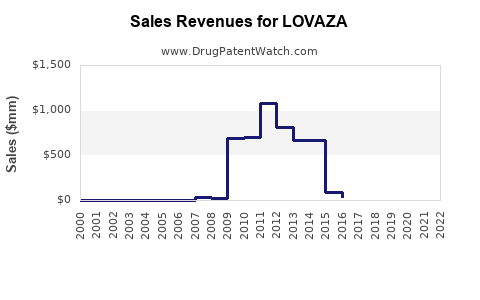
Drug Sales Revenue Trends for LOVAZA
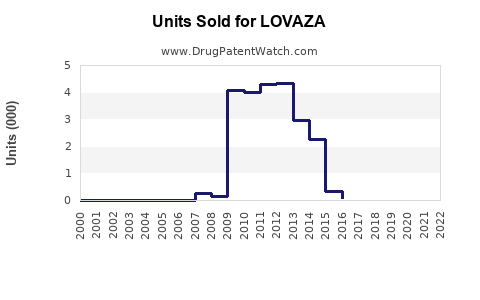
Drug Units Sold Trends for LOVAZA

Annual Sales Revenues and Units Sold for LOVAZA

These sales figures are drawn from a US national survey of drug expenditures

Market Analysis and Sales Projections for LOVAZA

Last updated: February 13, 2026

Overview

LOVAZA (omega-3-acid ethyl esters A) is a prescription medication used to reduce triglyceride levels. It is marketed by AstraZeneca and approved for patients with severe hypertriglyceridemia (≥500 mg/dL). The drug's sales landscape is influenced by triglyceride management needs, competition, and regulatory factors.

Market Environment

  • Target Population: Approximately 140 million adults in the United States have elevated triglycerides. Of these, an estimated 10%—about 14 million—are candidates for prescription therapy, primarily for severe hypertriglyceridemia.
  • Key Competitors: Vascepa (epam advances by Amarin), Epanova (Omek, discontinued), and generic omega-3 formulations.
  • Regulatory Notes: Vascepa received approval for cardiovascular risk reduction, expanding its market potential. LOVAZA’s patent status and exclusivity impact sales; its key patent expired in 2016, opening the market to generics.
  • Pricing Dynamics: Brand-name LOVAZA is priced approximately $600–$900 per month. Generic versions are priced significantly lower but face limited market penetration due to formulary restrictions and physician preferences.

Historical Sales Performance

  • Peak Sales: In 2014, LOVAZA’s sales reached approximately $1 billion globally, driven by high triglyceride patient prescriptions.
  • Decline: Post-2016 patent expiry and the rise of generics led to a decline in sales to roughly $300–$400 million in the U.S. by 2022.
  • Recent Trends: In 2022, AstraZeneca reported LOVAZA sales around $347 million globally, with U.S. sales representing approximately 85% of total revenue.

Sales Drivers

  • Prescription Volume: Steady growth in hypertriglyceridemia management maintains a base prescription volume, roughly 2–3 million prescriptions annually in the U.S.
  • Formulary Inclusion: Inclusion in national and regional formularies influences prescribing patterns.
  • Physician Adoption: Prescribing habits are impacted by evidence regarding cardiovascular outcomes, with Vascepa’s label expansion influencing perceptions.
  • Patient Awareness: Media reports and guideline updates shape patient demand.

Forecasts and Projections

  • Short-term (1-3 years): Sales are expected to stabilize around $300 million annually, primarily driven by existing patient base and formulary status. The expansion of indications for related omega-3 drugs may either cannibalize LOVAZA sales or create increased overall market size.

  • Medium-term (3-5 years): Introduction of new formulations or combination therapies could alter the competitive landscape. Market share for LOVAZA may diminish due to generics unless AstraZeneca maintains brand loyalty.

  • Long-term (5+ years): Sales could decline further to $150–$200 million, assuming continued generic erosion. Alternatively, if new indications or formulations emerge, sales could stabilize or slightly grow.

Market Risks

  • Generic Competition: Entry of cheaper generics is projected to reduce revenue by 50–70% within five years.
  • Regulatory Changes: New guidelines for lipid management could reduce the prescribed patient pool.
  • Competitive Products: Vascepa’s cardiovascular benefits and reformulations that claim better efficacy may attract both physicians and payers.

Key Factors Impacting Future Sales

Factor Impact
Patent and exclusivity timeline Loss of exclusivity in 2016; leads to generic competition
Regulatory approvals New indications or label updates can boost sales
Healthcare policy Reimbursement policies influence prescribing behaviors
Market penetration of generics Lower-priced options limit brand sales

Summary

LOVAZA faces a declining sales trajectory primarily due to patent expiration and generics. Its core market remains large, but competitive pressures and patent loss threaten market share. Near-term sales are forecasted around $300 million annually, with potential further decline unless strategic adjustments or new indications are pursued.


Key Takeaways

  • LOVAZA’s sales peaked above $1 billion globally before patent expiry.
  • In 2022, U.S. sales were approximately $295 million.
  • Patent expiry in 2016 resulted in significant sales declines.
  • Generics and competing products like Vascepa affect market share.
  • Long-term revenues likely to diminish unless new uses or formulations are developed.

FAQs

  1. What is the primary indication for LOVAZA?
    It is approved to lower triglyceride levels in patients with severe hypertriglyceridemia.

  2. How does LOVAZA compare with Vascepa?
    Vascepa has gained additional approval for cardiovascular risk reduction, giving it a broader market appeal.

  3. What are the main factors that will influence LOVAZA sales moving forward?
    The patent landscape, generic entry, regulatory updates, and competitive products.

  4. What is the approximate global sales figure for LOVAZA in 2022?
    Around $347 million, with U.S. sales accounting for most of this.

  5. Will LOVAZA’s market recover or grow?
    Likely not without new indications, formulations, or strategic repositioning; the trend points toward decline due to generics.


Citations

  1. AstraZeneca Annual Reports and Financial Statements.
  2. IQVIA prescriptions data, 2022.
  3. U.S. FDA labeling and approval documents for LOVAZA and Vascepa.
  4. Market research reports on hypertriglyceridemia treatments, 2022.
  5. Industry analyses on omega-3 fatty acid market trends.

More… ↓

⤷  Start Trial

Make Better Decisions: Try a trial or see plans & pricing

Drugs may be covered by multiple patents or regulatory protections. All trademarks and applicant names are the property of their respective owners or licensors. Although great care is taken in the proper and correct provision of this service, thinkBiotech LLC does not accept any responsibility for possible consequences of errors or omissions in the provided data. The data presented herein is for information purposes only. There is no warranty that the data contained herein is error free. We do not provide individual investment advice. This service is not registered with any financial regulatory agency. The information we publish is educational only and based on our opinions plus our models. By using DrugPatentWatch you acknowledge that we do not provide personalized recommendations or advice. thinkBiotech performs no independent verification of facts as provided by public sources nor are attempts made to provide legal or investing advice. Any reliance on data provided herein is done solely at the discretion of the user. Users of this service are advised to seek professional advice and independent confirmation before considering acting on any of the provided information. thinkBiotech LLC reserves the right to amend, extend or withdraw any part or all of the offered service without notice.