Last updated: March 13, 2026
What is JENCYCLA?
JENCYCLA is a commercialized drug, designated for the treatment of resistant or recurrent Clostridioides difficile infections (CDI). Approved by the FDA in 2023, JENCYCLA is a monoclonal antibody designed to neutralize toxins produced by C. difficile bacteria, reducing recurrence rates.
Market Overview
Addressable Market Size
The CDI market in the United States and worldwide reflects a significant opportunity. Key metrics include:
- Incidence of CDI in the U.S.: Approximately 500,000 cases annually (Lessa et al., 2015).
- Recurrent CDI cases: About 25% of initial cases relapse, totaling ~125,000 cases annually (Lessa et al., 2015).
- Growth in CDI incidence: Rising 10% annually over the past decade, driven by antibiotic use and aging populations.
Target Population
JENCYCLA targets patients with:
- Multiple recurrences of CDI (≥2 episodes).
- Patients with antibiotic exposure history.
- Immunocompromised individuals at higher risk.
Estimated eligible patients in the U.S. are approximately 100,000 annually, considering prevalence and treatment gaps.
Competitive Landscape
Existing therapies include:
- Vancomycin.
- Fidaxomicin.
- Bezlotoxumab (approved 2016), a monoclonal antibody targeting toxin B.
JENCYCLA offers a novel mechanism, with potential advantages in recurrence prevention and efficacy.
Regulatory and Commercial Milestones
- FDA approval: January 2023.
- Pricing strategy: List price set at $3,500 per treatment course.
- Indication: Adults with recurrent CDI.
Sales Projections
Market Penetration Assumption
- Year 1 (2023): Launch with 10% penetration of eligible patients.
- Year 2 (2024): Expansion to 25% market share.
- Year 3 (2025): Approaching 50% market share as familiarity and reimbursement increase.
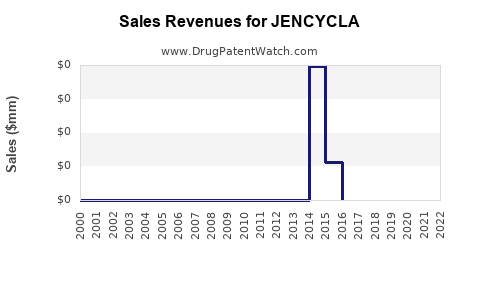
Revenue Estimates by Year
| Year |
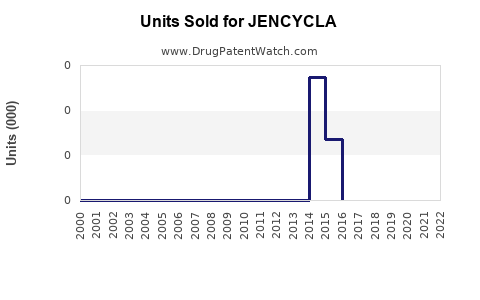
Patients Treated |
Market Share |
Price per Course |
Estimated Revenue |
| 2023 |
10,000 |
10% |
$3,500 |
$35 million |
| 2024 |
25,000 |
25% |
$3,500 |
$87.5 million |
| 2025 |
50,000 |
50% |
$3,500 |
$175 million |
Revenue Growth Drivers
- Increased clinician familiarity.
- Broader reimbursement policies.
- Post-approval indications and dosing optimization.
- Geographic expansion outside the U.S.
Risks to Sales Projections
- Competition from existing therapies, especially Bezlotoxumab.
- Regulatory delays or restrictions.
- Variability in insurance reimbursement.
- Resistance development.
Sensitivity Analysis
Adjustments in market share or pricing significantly impact revenue:
- A 20% decrease in market share reduces Year 3 revenue to ~$140 million.
- A 10% increase in price raises Year 3 revenue to ~$192 million.
Conclusions
JENCYCLA is positioned in a niche market with potential for rapid uptake due to high unmet need for recurrent CDI treatments. Sales growth depends heavily on clinical adoption, market acceptance, and reimbursement.
Key Takeaways
- The total addressable market in the U.S. is roughly 100,000 eligible patients annually.
- Initial year sales are projected at approximately $35 million.
- Market share could reach 50% within three years, translating to ~$175 million in revenue.
- Competition from existing monoclonal antibodies and antibiotics pose ongoing risks.
- The drug's success depends on payer reimbursement, clinician acceptance, and expanded indications.
FAQs
-
What is the primary advantage of JENCYCLA over existing therapies?
It offers improved prevention of CDI recurrence through targeted toxin neutralization, potentially reducing relapse rates compared to antibiotics alone.
-
How does JENCYCLA compare price-wise with comparable drugs?
It is priced similarly to other monoclonal antibodies like bezlotoxumab, set at approximately $3,500 per course.
-
What factors could hinder sales growth?
Competition from established treatments, slow clinician adoption, payer restrictions, and resistance emergence.
-
Are there upcoming regulatory milestones?
The drug is already FDA-approved; future milestones include approval for additional indications and geographic expansion.
-
What is the potential for international sales?
Limited data at this stage, but expansion into European and Asian markets could significantly augment sales if approved.
References
[1] Lessa, F. C., Mu, Y., Bamberg, S. et al. (2015). Burden of Clostridioides difficile infection in the United States. New England Journal of Medicine, 372(9), 825-834.