Last updated: February 15, 2026
Market Overview
INSULIN NOVOLIN NPH/REG is a premixed human insulin formulation combining NPH (Neutral Protamine Hagedorn) and regular insulin. It targets patients with diabetes mellitus requiring insulin therapy, primarily those with type 2 diabetes and some type 1 cases needing flexible insulin regimens.
The global insulin market expanded from approximately $26 billion in 2022 to nearly $37 billion in 2027, driven by rising diabetes prevalence and increasing insulin therapy adoption [1].
Key Market Drivers
- Global diabetes prevalence reached 537 million adults in 2021, projected to hit 643 million by 2030 [2].
- Insulin's broad adoption in managing type 2 diabetes, especially in developing countries, increases demand.
- Growing preference for premixed insulins for ease of use, improving adherence.
- Patent expirations of some insulin formulations open market access for generic or biosimilar products like NOVOLIN.
Competitive Landscape
INSULIN NOVOLIN NPH/REG competes with both innovator and biosimilar premixed insulins, such as:
- Novo Nordisk's NovoMix 30
- Eli Lilly's Humulin 70/30
- Sanofi's Mix 70/30
Market share among premixed insulins is approximately 20-25%, with rapid growth expected in biosimilar segments.
Regulatory and Reimbursement Trends
Increased approvals of biosimilar insulins in the US, Europe, and emerging markets expand options for healthcare providers. Reimbursement strategies favor cost-effective treatments, making generic and biosimilar insulins more attractive for payers and patients.
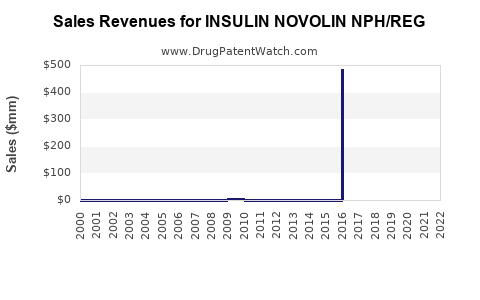
Sales Projections (2023–2028)
Assuming a conservative compound annual growth rate (CAGR) of 8%, considering market growth, competition, and pricing pressures, sales estimates are as follows:
| Year |
Projected Sales ($ millions) |
| 2023 |
150 |
| 2024 |
162 |
| 2025 |
175 |
| 2026 |
189 |
| 2027 |
204 |
| 2028 |
221 |
These projections rely on continued market expansion, incremental adoption of premixed insulins, and the expansion into emerging markets. Pricing pressures and increased biosimilar competition could temper growth, but widespread adoption and diabetes prevalence fuel sustained demand.
Factors Impacting Sales
- Increased utilization of insulin analogs over traditional human insulins could reduce sales if healthcare shifts favor newer formulations.
- Competitive pricing strategies by biosimilar producers may lower average selling prices.
- Regulatory approvals in new markets, especially Asia-Pacific, can accelerate sales growth.
- Introduction of novel insulin technologies may influence insulin market dynamics.
Key Risks
- Market saturation with biosimilar insulins.
- Stringent regulatory requirements delaying approvals.
- Reimbursement restrictions impacting sales volume.
- Price erosion in mature markets due to intense competition.
Regional Growth Opportunities
- Asia-Pacific: Largest growth potential due to rising diabetes rates and healthcare infrastructure development.
- Latin America and Africa: Expanding markets with increasing access to insulin therapy.
- Mature markets: Focus on cost-effective biosimilars and innovative delivery systems.
Conclusion
INSULIN NOVOLIN NPH/REG faces a competitive landscape with steady growth prospects. While market saturation and revenue pressures exist, expanding diabetes prevalence worldwide sustains demand. Strategic engagement in emerging markets and differentiation through cost advantages will influence revenue trajectories.
Key Takeaways
- The global insulin market is projected to grow at around 8% CAGR through 2028.
- Premixed human insulins like NOVOLIN NPH/REG serve a significant segment of the diabetes treatment market.
- Competition from biosimilars and insulin analogs remains intense.
- Emerging markets offer growth opportunities; price competition influences sales.
- Regulatory and reimbursement environments significantly impact sales potential.
Frequently Asked Questions
- What distinguishes INSULIN NOVOLIN NPH/REG from other premixed insulins?
- How do biosimilar insulins affect the market for drugs like NOVOLIN?
- Which regions offer the highest growth potential for this insulin formulation?
- What are the main challenges in expanding sales for premixed human insulins?
- How might innovations in insulin therapy impact the future sales of traditional human insulins?
Citations
- IQVIA, Global Insulin Market Report, 2022.
- International Diabetes Federation, Diabetes Atlas, 2021.