Drug Sales Trends for HUMALOG
Payment Methods and Pharmacy Types for HUMALOG (2022)
Revenues by Pharmacy Type
Units Sold by Pharmacy Type
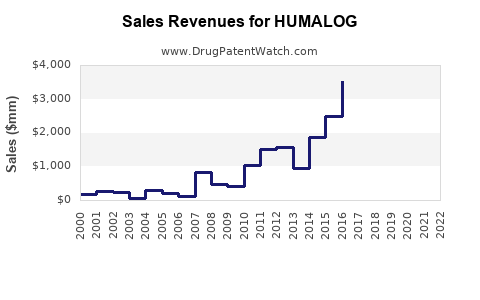
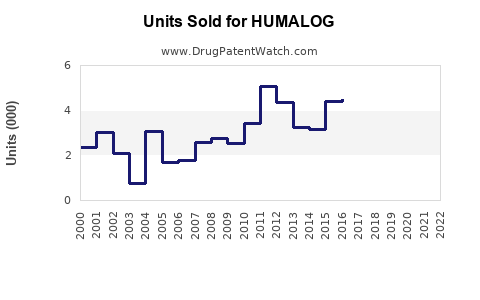
Annual Sales Revenues and Units Sold for HUMALOG
| Drug Name | Revenues (USD) | Units | Year |
|---|---|---|---|
| HUMALOG | ⤷ Start Trial | ⤷ Start Trial | 2022 |
| HUMALOG | ⤷ Start Trial | ⤷ Start Trial | 2021 |
| HUMALOG | ⤷ Start Trial | ⤷ Start Trial | 2020 |
| HUMALOG | ⤷ Start Trial | ⤷ Start Trial | 2019 |
| HUMALOG | ⤷ Start Trial | ⤷ Start Trial | 2018 |
| >Drug Name | >Revenues (USD) | >Units | >Year |
Humalog Market Analysis and Sales Projections: Insulin Lispro Revenue, Competition, Patents, and Generic Risk
Humalog remains a major rapid-acting insulin franchise, but its revenue trajectory is structurally negative. Lilly’s insulin lispro product faces mature-market pricing pressure, biosimilar and authorized-generic competition, concentrated payer purchasing, and substitution by newer rapid-acting products. The franchise remains commercially durable because insulin demand is recurring and clinical switching is slower than in many small-molecule categories.
A base-case model projects Humalog revenue declining from approximately $2.1 billion in 2023 to about $1.3 billion by 2029. The primary risks are faster price erosion and greater substitution by insulin aspart, faster-acting insulin analogs, biosimilar insulin lispro, and lower-cost human insulin.
What is Humalog and how does it compete in the insulin market?
Humalog is Lilly’s branded insulin lispro product. It is a rapid-acting insulin analog used to improve glycemic control in adults and children with diabetes mellitus. Products include vial, cartridge, and prefilled pen presentations, including Humalog KwikPen and related delivery formats.
| Attribute | Humalog |
|---|---|
| Active ingredient | Insulin lispro |
| Sponsor | Eli Lilly and Company |
| Therapeutic class | Rapid-acting prandial insulin |
| Regulatory type | Biologic |
| Original U.S. approval | 1996 |
| Main indications | Type 1 and type 2 diabetes |
| Delivery formats | Vial, cartridge, prefilled pen |
| Primary competitors | NovoLog, Fiasp, Apidra, Lyumjev, biosimilar insulin lispro, human regular insulin |
| Commercial position | Mature, high-volume branded insulin |
| Core market weakness | Price and rebate pressure |
Humalog competes primarily with Novo Nordisk’s NovoLog and Fiasp, Sanofi’s Apidra, Lilly’s own Lyumjev, and lower-cost human regular insulin. Continuous glucose monitoring, insulin pumps, smart pens, and automated insulin-delivery systems affect product selection, but most market pressure remains price-driven.
How much revenue does Humalog generate?
Lilly reported Humalog revenue of approximately $2.1 billion in 2023, down from roughly $2.5 billion in 2022. The decline reflected lower realized prices, increased discounts, channel changes, and competitive pressure rather than a collapse in underlying insulin demand (Eli Lilly and Company, 2024a).
Lilly reports product-level revenue but does not generally provide a long-range standalone Humalog forecast. The following estimates use reported historical revenue, expected insulin price erosion, mature-market volume trends, and continued competition from lower-priced insulin products.
Humalog historical and projected sales
| Year | Estimated or reported revenue | Year-over-year change | Status |
|---|---|---|---|
| 2021 | Approximately $2.7 billion | Decline from prior peak | Company-reported |
| 2022 | Approximately $2.5 billion | Approximately -7% | Company-reported |
| 2023 | Approximately $2.1 billion | Approximately -15% | Company-reported |
| 2024 | Approximately $1.8 billion | Approximately -14% | Analyst estimate |
| 2025 | Approximately $1.65 billion | Approximately -8% | Base-case estimate |
| 2026 | Approximately $1.52 billion | Approximately -8% | Base-case estimate |
| 2027 | Approximately $1.42 billion | Approximately -7% | Base-case estimate |
| 2028 | Approximately $1.34 billion | Approximately -6% | Base-case estimate |
| 2029 | Approximately $1.28 billion | Approximately -5% | Base-case estimate |
The base case implies a 2023-2029 compound annual decline of approximately 8%. The decline should moderate over time because the remaining revenue base includes patients with established treatment routines, pump users, and markets where low-cost substitutes have already captured substantial share.
What are the Humalog sales projections under different market scenarios?
The key variables are net price, formulary access, biosimilar uptake, insulin pump compatibility, and Lilly’s ability to retain patients through lower-priced presentations.
Scenario analysis for Humalog revenue
| Scenario | 2025 revenue | 2027 revenue | 2029 revenue | Main assumptions |
|---|---|---|---|---|
| Bear case | $1.45 billion | $1.10 billion | $0.85 billion | Rapid price cuts, high biosimilar uptake, aggressive formulary exclusion |
| Base case | $1.65 billion | $1.42 billion | $1.28 billion | Continued price erosion, gradual switching, stable clinical demand |
| Bull case | $1.85 billion | $1.72 billion | $1.65 billion | Strong patient retention, limited biosimilar substitution, stable access |
The bear case is plausible if large pharmacy benefit managers use insulin lispro as a preferred-cost product and Lilly responds with deeper discounts. The bull case requires stable coverage and relatively limited substitution, but it does not imply a return to historical peak revenue.
What is the U.S. market outlook for rapid-acting insulin?
The U.S. rapid-acting insulin market is mature and has limited unit growth. Diabetes prevalence supports long-term demand, but the commercial market is being reshaped by affordability programs, price caps, biosimilar availability, and payer consolidation.
The main demand drivers are:
- Growth in the diagnosed diabetes population.
- Continued use of intensive insulin therapy in type 1 diabetes.
- Greater use of insulin pumps and automated delivery systems.
- Treatment persistence among established insulin users.
- Increased access resulting from manufacturer affordability programs.
The main negative drivers are:
- Net price reductions negotiated with pharmacy benefit managers.
- Patient migration to lower-cost insulin.
- Greater use of human regular insulin where clinically acceptable.
- Insulin biosimilar substitution.
- Reduced dependence on branded insulin among Medicare and Medicaid patients.
- Physician and payer acceptance of interchangeable or authorized-generic products.
Humalog is more exposed to net-price erosion than to volume loss. Insulin therapy is difficult to discontinue for patients with type 1 diabetes, but the product selected for that therapy can change.
Which companies are challenging Humalog commercially?
Humalog faces competition from branded rapid-acting insulin, biosimilar insulin, and alternative delivery products.
| Competitor | Company | Product | Competitive issue |
|---|---|---|---|
| NovoLog | Novo Nordisk | Insulin aspart | Direct rapid-acting analog competitor |
| Fiasp | Novo Nordisk | Faster-acting insulin aspart | Mealtime and postprandial positioning |
| Apidra | Sanofi | Insulin glulisine | Established rapid-acting analog |
| Lyumjev | Eli Lilly | Insulin lispro-aabc | Lilly’s newer faster-acting product |
| Admelog | Sanofi | Insulin lispro | Follow-on insulin lispro |
| Insulin lispro authorized generic | Lilly | Insulin lispro | Lower-price channel strategy |
| Regular human insulin | Multiple manufacturers | Human insulin | Lower-cost treatment alternative |
Sanofi’s Admelog is particularly relevant because it is a follow-on insulin lispro product and competes in the same therapeutic category. Lilly has also used lower-cost insulin strategies to defend access and retain volume, although those moves can reduce the revenue captured per unit.
What is the FDA regulatory status of Humalog?
Humalog was originally approved as a biologic license application product. FDA moved insulin products from the drug framework into the Public Health Service Act biologics framework on March 23, 2020. Humalog is therefore regulated as a biologic under section 351(a), while follow-on insulin products may be approved through the 351(k) biosimilar pathway (U.S. Food and Drug Administration, 2020).
Humalog’s original period of U.S. biologic exclusivity has expired. The 12-year reference-product exclusivity period for a biologic approved in 1996 does not provide current commercial protection. Pediatric exclusivity, if applicable to the relevant approval history, also has no practical effect on current market entry.
FDA approval of insulin lispro follow-on products confirms that the regulatory pathway is operational. The existence of a 351(k) pathway reduces the need for competitors to rely on the original product’s approval dossier, although manufacturing, interchangeability, device, and commercial execution remain important barriers.
Does Humalog have Orange Book protection?
Humalog is regulated as a biologic rather than a conventional small-molecule drug. Its principal federal patent and exclusivity analysis is therefore better evaluated through biologic approval records, FDA patent and exclusivity systems, and the Purple Book framework rather than through the standard Orange Book model.
The original composition-of-matter and basic insulin lispro patent estate is expired. Early Humalog patents, including patents covering insulin lispro and related formulations, were filed in the 1980s and early 1990s and generally reached the end of their ordinary patent terms during the 2010s.
| Protection category | Current commercial relevance |
|---|---|
| Original insulin lispro composition patents | Expired |
| Original formulation patents | Largely expired |
| Biologic reference-product exclusivity | Expired |
| Device and pen patents | Potentially relevant to specific presentations |
| Manufacturing patents | Potentially relevant, but generally avoidable |
| New rapid-acting lispro formulations | More relevant to Lyumjev than legacy Humalog |
The absence of strong live core patents means Humalog’s protection is based primarily on manufacturing scale, supply reliability, formulary contracts, brand familiarity, and device-specific rights rather than exclusion from the insulin lispro market.
What patents protect Humalog formulations and delivery devices?
The most important residual intellectual-property issues concern specific presentation technologies, manufacturing processes, pen devices, cartridges, and related delivery systems.
These rights may affect a competitor’s ability to copy a particular pen or presentation, but they do not necessarily prevent sale of insulin lispro in a different vial, cartridge, or injector. Device patents therefore tend to create design-around costs rather than provide broad molecule-level exclusivity.
Formulation and manufacturing barriers
Manufacturing insulin at commercial scale requires:
- Recombinant production and fermentation capacity.
- Protein purification and folding controls.
- Strict potency and impurity specifications.
- Aseptic fill-finish operations.
- Stability testing across vial, cartridge, and pen formats.
- Device assembly and combination-product validation.
- Cold-chain distribution and inventory controls.
These requirements can slow market entry even when the core patents have expired. They do not create the same level of legal protection as a live composition patent. A capable biosimilar manufacturer can address the barriers through process development, comparability studies, and regulatory investment.
Are there Paragraph IV challenges to Humalog?
Traditional Paragraph IV litigation is primarily associated with abbreviated new drug applications for small-molecule drugs. Humalog’s regulatory status as a biologic means that biosimilar applicants generally proceed under section 351(k), not through the standard ANDA Paragraph IV mechanism.
The relevant legal disputes may instead involve:
- Patent-listing and notice procedures under the Biologics Price Competition and Innovation Act.
- Patent disclosures in the Purple Book framework.
- Patent infringement actions under 35 U.S.C. § 271(e)(2).
- Device and combination-product patents.
- Manufacturing and formulation patents.
- Interchangeability and substitution disputes.
Public competition against Humalog has therefore developed more through follow-on insulin approvals and commercial contracting than through a single high-profile Paragraph IV launch event.
What biosimilar and generic entry risks exist for Humalog?
Humalog has high exposure to follow-on insulin competition because its biologic exclusivity and core patent protections have expired. The most likely commercial outcome is not an immediate loss of all Humalog volume. It is a gradual reduction in net price and share as payers use lower-cost alternatives.
Entry-risk assessment
| Risk category | Assessment | Commercial effect |
|---|---|---|
| Core molecule patent risk | Low remaining protection | Enables follow-on competition |
| Biosimilar approval risk | High | Supports additional insulin lispro entrants |
| Interchangeable substitution | Moderate to high | Could accelerate pharmacy substitution |
| Device-copying risk | Moderate | May delay identical pen competition |
| Manufacturing complexity | Moderate | Raises entry cost but does not block entry |
| Payer pressure | High | Reduces net price and margin |
| Patient switching risk | Moderate | Higher in cost-sensitive channels |
| Supply disruption risk | Moderate | Can favor established suppliers |
The highest-value risk is payer-driven net-price compression. Even where Humalog retains volume, rebates and lower list prices can reduce Lilly’s revenue.
How does Humalog compare with Lyumjev, NovoLog, and Fiasp?
Humalog’s principal advantage is scale and familiarity. Lyumjev, Fiasp, and NovoLog compete through speed of absorption, dosing convenience, pump use, and contracting.
| Product | Ingredient | Positioning | Relative Humalog threat |
|---|---|---|---|
| Humalog | Insulin lispro | Established rapid-acting standard | Baseline product |
| Lyumjev | Insulin lispro-aabc | Faster-acting lispro | Cannibalizes or upgrades Lilly’s franchise |
| NovoLog | Insulin aspart | Direct rapid-acting competitor | High |
| Fiasp | Faster-acting insulin aspart | Faster mealtime action | Moderate to high |
| Apidra | Insulin glulisine | Established rapid-acting option | Moderate |
| Admelog | Insulin lispro | Follow-on lispro | High price-based threat |
Lyumjev can protect Lilly’s broader rapid-acting insulin franchise but may cannibalize Humalog sales. The strategic tradeoff is favorable if Lilly converts patients to a newer product with stronger differentiation or longer commercial protection.
What is the impact of insulin price regulation on Humalog sales?
U.S. insulin affordability measures are likely to reduce realized prices. Medicare Part D and Part B insulin cost-sharing limits, manufacturer assistance programs, state-level policies, and payer negotiations can shift value from manufacturers to patients and payers.
The impact is product-specific:
- Medicare price limits reduce patient out-of-pocket costs but can increase manufacturer rebates.
- Commercial plans may demand lower net prices in exchange for preferred formulary status.
- Medicaid rebates place additional pressure on net revenue.
- Cash-pay programs can protect unit volume while lowering average selling price.
- Lower-cost presentations may preserve access but reduce premium-brand revenue.
For Humalog, affordability initiatives are commercially defensive but financially dilutive.
What licensing deals affect Humalog?
Humalog’s commercial history has included distribution, contracting, and manufacturing relationships, but its current revenue outlook is driven more by Lilly’s pricing and channel strategy than by a major new licensing transaction.
Lilly’s most relevant strategic levers are:
- Authorized or lower-priced insulin presentations.
- Formulary contracting with pharmacy benefit managers.
- Direct-to-consumer affordability programs.
- Pen and pump partnerships.
- Internal migration from Humalog to Lyumjev where clinically and commercially appropriate.
A licensing deal involving a competing delivery system could affect Humalog demand, but there is no broadly recognized current transaction that changes the basic patent or exclusivity profile of legacy Humalog.
What is the geographic outlook for Humalog?
The United States remains the largest revenue market and the most exposed to pricing pressure. International markets are generally more reference-price sensitive, with greater use of tenders and government purchasing.
| Region | Outlook |
|---|---|
| United States | Highest revenue, strongest payer pressure |
| Europe | Mature volume, tender-based pricing, biosimilar risk |
| Japan | Mature insulin market with regulatory and pricing controls |
| China | Growth opportunity but intense local and tender competition |
| Emerging markets | Volume growth, lower realized price, access constraints |
International volume can partially offset U.S. revenue declines, but lower pricing limits its ability to replace lost U.S. revenue.
What is the likely generic launch scenario for Humalog?
The most probable launch path is a staged erosion scenario:
- Follow-on insulin lispro products gain formulary access.
- Payers increase rebate demands on Lilly.
- Lilly expands lower-price or authorized-generic channels.
- Humalog retains patients with established prescriptions and pump use.
- Revenue declines faster than unit volume.
- The market stabilizes around several low-cost rapid-acting insulin suppliers.
A complete displacement scenario is unlikely in the near term because insulin supply reliability, device compatibility, physician familiarity, and patient experience remain important. The more likely result is a lower-priced, multi-supplier market.
How strong is the Humalog patent estate?
Humalog’s current patent estate is weak for molecule-level exclusion but stronger around selected delivery systems and manufacturing know-how.
| Patent-estate element | Strength |
|---|---|
| Core insulin lispro rights | Weak or expired |
| Biologic exclusivity | Expired |
| Broad formulation protection | Limited |
| Pen and injector rights | Moderate for specific designs |
| Manufacturing know-how | Moderate to strong operationally |
| Regulatory and quality systems | Strong practical barrier |
| Brand and payer contracts | Strong commercial barrier |
| Overall legal protection | Low to moderate |
| Overall commercial defensibility | Moderate |
Lilly’s principal defenses are scale, supply reliability, contracting, product familiarity, and portfolio management. The patent estate alone does not support premium pricing.
Key Takeaways
- Humalog is a mature rapid-acting insulin franchise with approximately $2.1 billion in 2023 revenue.
- A base-case forecast projects revenue of approximately $1.28 billion by 2029.
- The expected 2023-2029 revenue decline is approximately 8% annually.
- Core insulin lispro patents and original biologic exclusivity have expired.
- Biosimilar and follow-on insulin lispro competition creates high long-term price risk.
- Paragraph IV litigation is not the central entry mechanism because Humalog is regulated as a biologic.
- Device, manufacturing, and formulation rights may delay or shape competition but do not provide broad molecule-level exclusivity.
- Lilly’s lower-cost insulin strategy can preserve volume while reducing net revenue.
- Lyumjev may protect Lilly’s rapid-acting insulin position but can cannibalize Humalog.
- The main investment risk is net-price compression, not a sudden loss of insulin demand.
FAQs
When does Humalog lose exclusivity?
Humalog’s original biologic exclusivity and core insulin lispro patent protection have already expired. Current competition is governed mainly by follow-on biologic approvals, device rights, manufacturing capabilities, and commercial contracting.
Is Admelog a generic version of Humalog?
Admelog is a follow-on insulin lispro product, not a conventional small-molecule generic approved through the standard ANDA pathway. It competes with Humalog through the biologic follow-on framework.
Can pharmacies automatically substitute a Humalog biosimilar?
Automatic substitution depends on the product’s FDA interchangeability status, state pharmacy law, payer policy, and the specific dispensing channel. Biosimilar approval alone does not establish identical substitution rules in every jurisdiction.
Does Lyumjev extend Lilly’s Humalog patent life?
Lyumjev is a separate insulin lispro-aabc product with its own formulation and regulatory profile. Its patents do not automatically extend Humalog’s expired core rights, although it can give Lilly a differentiated rapid-acting insulin franchise.
What is the biggest threat to Humalog revenue?
The biggest threat is sustained net-price erosion caused by payer negotiations, biosimilar insulin lispro competition, lower-cost insulin programs, and switching to competing rapid-acting products.
References
- Eli Lilly and Company. (2024a). 2023 annual report. https://www Lilly.com
- Eli Lilly and Company. (2024b). Form 10-K for the fiscal year ended December 31, 2023. U.S. Securities and Exchange Commission. https://www.sec.gov
- U.S. Food and Drug Administration. (2020). Insulin products and the transition to the biologics license application pathway. https://www.fda.gov
- U.S. Food and Drug Administration. (2024). Purple Book: Database of licensed biological products. https://purplebooksearch.fda.gov
- U.S. Food and Drug Administration. (2024). Biosimilar and interchangeable biosimilar products. https://www.fda.gov
- U.S. Congress. (2010). Biologics Price Competition and Innovation Act of 2009, Public Law 111-148, §7002. https://www.congress.gov
More… ↓
