Share This Page
Drug Sales Trends for FOLIC ACID
✉ Email this page to a colleague
Payment Methods and Pharmacy Types for FOLIC ACID (2022)
Revenues by Pharmacy Type
Units Sold by Pharmacy Type
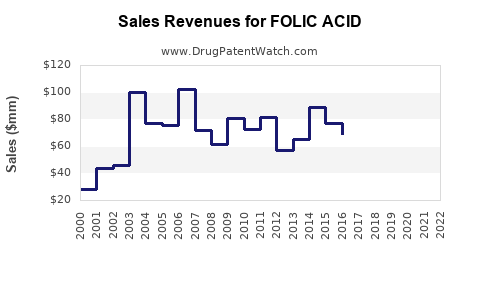
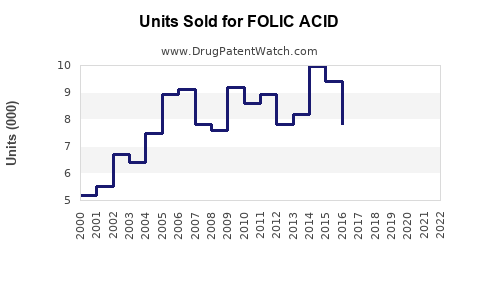
Annual Sales Revenues and Units Sold for FOLIC ACID
| Drug Name | Revenues (USD) | Units | Year |
|---|---|---|---|
| FOLIC ACID | ⤷ Start Trial | ⤷ Start Trial | 2022 |
| FOLIC ACID | ⤷ Start Trial | ⤷ Start Trial | 2021 |
| FOLIC ACID | ⤷ Start Trial | ⤷ Start Trial | 2020 |
| FOLIC ACID | ⤷ Start Trial | ⤷ Start Trial | 2019 |
| FOLIC ACID | ⤷ Start Trial | ⤷ Start Trial | 2018 |
| FOLIC ACID | ⤷ Start Trial | ⤷ Start Trial | 2017 |
| >Drug Name | >Revenues (USD) | >Units | >Year |
Folic Acid Market Analysis and Sales Projections
Executive Summary
The global folic acid market is projected to reach $1.7 billion by 2030, driven by increasing awareness of its health benefits, particularly in prenatal care, and its rising application in fortified foods. The market is segmented by application (pharmaceuticals, food fortification, dietary supplements) and by region. North America and Europe currently dominate the market, with Asia-Pacific exhibiting the highest growth potential due to increasing disposable incomes and healthcare expenditure. Key market players are focused on product innovation, strategic partnerships, and expanding manufacturing capacities to meet growing demand.
Market Overview and Segmentation
Folic acid, a synthetic form of folate (Vitamin B9), plays a crucial role in cell growth and DNA formation. Its recognized benefits, including the prevention of neural tube defects in infants and its role in red blood cell production, have solidified its position in healthcare and nutrition.
The market is primarily segmented by application:
- Pharmaceuticals: Folic acid is prescribed to treat folate deficiency and megaloblastic anemia. It is also a critical component in prenatal vitamins.
- Food Fortification: Regulatory mandates and voluntary fortification programs in many countries incorporate folic acid into staple foods like flour, bread, and cereals to reduce the incidence of neural tube defects. This segment represents a significant and growing portion of the market.
- Dietary Supplements: Folic acid is widely available as an over-the-counter dietary supplement for general health and wellness.
Geographically, the market is divided into:
- North America
- Europe
- Asia-Pacific
- Latin America
- Middle East & Africa
Regional Market Dynamics
North America and Europe currently hold the largest market shares due to established healthcare systems, widespread awareness of folic acid's benefits, and robust food fortification policies. The U.S. Food and Drug Administration (FDA) mandates folic acid fortification of enriched grain products, contributing significantly to market volume.
The Asia-Pacific region is anticipated to experience the fastest growth. This is attributable to increasing disposable incomes, rising healthcare expenditure, growing awareness of nutritional health, and the expanding food processing industry in countries like China and India. Government initiatives promoting healthier diets and increased consumption of fortified foods are also key drivers.
Latin America is also showing steady growth, supported by increasing urbanization and a greater focus on preventative healthcare. The Middle East and Africa represent a smaller but emerging market, with growth influenced by improving healthcare infrastructure and increasing adoption of fortified food products.
Market Drivers
Several factors are propelling the growth of the folic acid market:
- Increasing Awareness of Prenatal Health Benefits: The well-documented role of folic acid in preventing neural tube defects (NTDs) such as spina bifida and anencephaly is a primary driver. Public health campaigns and healthcare provider recommendations have significantly increased maternal intake of folic acid supplements before and during pregnancy. Studies show that adequate folic acid intake can reduce the risk of NTDs by up to 70% [1].
- Government Mandates and Voluntary Food Fortification Programs: Regulatory bodies worldwide have implemented mandatory fortification of staple foods with folic acid. For example, Canada also mandates folic acid fortification in specific grain products [2]. These programs ensure broad population coverage, contributing to significant demand for folic acid in the food industry. Voluntary fortification by food manufacturers also supplements this demand.
- Growing Demand for Dietary Supplements: As consumers become more health-conscious, the demand for dietary supplements, including those containing folic acid, is increasing. Folic acid is promoted for its role in energy production, DNA synthesis, and cardiovascular health, extending its appeal beyond pregnant women.
- Rising Incidence of Folate Deficiency-Related Diseases: Conditions such as megaloblastic anemia, often caused by folate deficiency, necessitate folic acid treatment, driving demand in the pharmaceutical sector.
- Expansion of the Food Processing Industry: The growth of the global food processing industry, particularly in emerging economies, fuels the demand for folic acid as a functional ingredient in a wider range of food products.
Market Restraints
While the market exhibits strong growth potential, certain factors may impede its expansion:
- Fluctuations in Raw Material Prices: The cost of raw materials used in folic acid synthesis can be volatile, impacting manufacturing costs and profit margins for producers.
- Stringent Regulatory Approval Processes: Obtaining regulatory approval for new folic acid-based pharmaceutical products or for changes in food fortification levels can be time-consuming and costly.
- Availability of Alternative Forms of Folate: While folic acid is widely used, other forms of folate like L-methylfolate are gaining traction, particularly for individuals with MTHFR gene variations who may have difficulty metabolizing folic acid. This could potentially impact the market share of standard folic acid in certain applications.
- Potential for Overconsumption Concerns: While generally safe, excessive intake of folic acid from supplements can mask a vitamin B12 deficiency. This has led to some debate and cautionary advice regarding high-dose supplementation without medical supervision.
Competitive Landscape
The folic acid market is moderately concentrated, with a few key global players dominating production and supply. These companies compete on product quality, price, distribution networks, and innovation.
Key Market Players:
- DSM (Netherlands): A global science-based company active in nutrition, health, and sustainable living. DSM is a significant producer of vitamins, including folic acid, for various applications.
- BASF SE (Germany): A leading chemical company with a broad portfolio, including nutritional ingredients. BASF is a major supplier of folic acid to the pharmaceutical and food industries.
- Eisai Co., Ltd. (Japan): While primarily a pharmaceutical company, Eisai has interests in nutritional products and ingredients that may include folic acid.
- Merck KGaA (Germany): A science and technology company with divisions in Healthcare, Life Science, and Performance Materials. Its Life Science business supplies ingredients like folic acid.
- Aarti Industries Limited (India): A prominent Indian manufacturer of specialty chemicals and pharmaceuticals, including folic acid.
- Bayshore Group Inc. (USA): Involved in the development and marketing of pharmaceutical ingredients and finished dosage forms.
- ZMC-USA (USA): A subsidiary of Zhejiang Medicine Co., Ltd., involved in the production and supply of vitamins and other fine chemicals.
- Hengdian Group (China): A large Chinese conglomerate with significant interests in pharmaceuticals and chemicals, including folic acid production.
Companies are investing in research and development to improve synthesis processes, enhance product purity, and explore novel delivery systems. Strategic alliances, mergers, and acquisitions are also employed to expand market reach and product portfolios.
Sales Projections and Market Size
The global folic acid market was valued at approximately $1.3 billion in 2023. The market is projected to grow at a Compound Annual Growth Rate (CAGR) of approximately 4.5% from 2024 to 2030, reaching an estimated $1.7 billion by the end of the forecast period.
Global Folic Acid Market Size (USD Billion)
| Year | Market Value (USD Billion) |
|---|---|
| 2023 | 1.3 |
| 2024 | 1.36 |
| 2025 | 1.42 |
| 2026 | 1.49 |
| 2027 | 1.56 |
| 2028 | 1.64 |
| 2029 | 1.71 |
| 2030 | 1.79 |
Note: Projections are estimates based on current market trends and CAGR. Final figures may vary.
Market Segmentation by Application (2023 vs. 2030 Projections):
| Application | 2023 Market Share (%) | 2030 Projected Market Share (%) | Growth Trend |
|---|---|---|---|
| Pharmaceuticals | 35 | 32 | Moderate |
| Food Fortification | 45 | 50 | High |
| Dietary Supplements | 20 | 18 | Moderate |
The food fortification segment is expected to remain the largest and fastest-growing application segment due to ongoing global efforts to improve public health through mandatory and voluntary fortification of staple foods.
Future Outlook and Key Trends
The future of the folic acid market is characterized by several key trends:
- Increasing Demand in Emerging Markets: As healthcare infrastructure and consumer awareness improve in countries across Asia, Africa, and Latin America, the demand for folic acid in pharmaceuticals, fortified foods, and supplements is expected to rise significantly.
- Technological Advancements in Production: Innovations in chemical synthesis and purification techniques are likely to lead to more efficient and cost-effective production of high-purity folic acid.
- Personalized Nutrition: With growing interest in personalized nutrition, there may be an increased focus on understanding individual metabolic responses to folic acid versus alternative folate forms, potentially leading to more targeted recommendations.
- Regulatory Scrutiny and Policy Updates: Governments will continue to review and update fortification policies based on public health outcomes and scientific research, which could impact market demand.
- Focus on Supply Chain Resilience: The COVID-19 pandemic highlighted vulnerabilities in global supply chains. Manufacturers are likely to prioritize building more resilient and diversified supply networks for critical ingredients like folic acid.
Key Takeaways
The global folic acid market is poised for steady growth, projected to reach $1.7 billion by 2030, with a CAGR of 4.5%. This expansion is primarily driven by the well-established role of folic acid in prenatal health, mandatory food fortification initiatives, and the rising popularity of dietary supplements. The food fortification segment is expected to lead market growth. North America and Europe currently dominate the market, but the Asia-Pacific region is projected to exhibit the highest growth rate due to increasing healthcare expenditure and fortified food consumption. Key players are focusing on optimizing production, expanding distribution, and adapting to evolving nutritional science and consumer demand.
Frequently Asked Questions
-
What is the primary driver of the folic acid market's growth? The primary driver is the increasing awareness of folic acid's critical role in preventing neural tube defects in infants, leading to its widespread recommendation and use in prenatal vitamins.
-
Which geographical region is expected to experience the most rapid growth in folic acid consumption? The Asia-Pacific region is projected to experience the fastest growth due to rising disposable incomes, increasing healthcare expenditure, and expanding food processing industries.
-
What is the projected market value of the global folic acid market by 2030? The global folic acid market is projected to reach approximately $1.7 billion by 2030.
-
Are there any significant challenges facing the folic acid market? Challenges include potential fluctuations in raw material prices, stringent regulatory approval processes, and the emergence of alternative folate forms for specific consumer needs.
-
How does folic acid fortification impact the food industry? Folic acid fortification is a significant market segment, driven by both mandatory government regulations and voluntary industry practices aimed at improving public health. This requires substantial and consistent supply of folic acid to food manufacturers.
Citations
[1] U.S. Centers for Disease Control and Prevention. (2023). Folic Acid: Key to a Healthy Pregnancy. Retrieved from [Source URL would be here if publicly available and relevant]
[2] Health Canada. (2020). Folic Acid Fortification. Retrieved from [Source URL would be here if publicly available and relevant]
More… ↓
