Share This Page
Drug Sales Trends for FENTANYL
✉ Email this page to a colleague
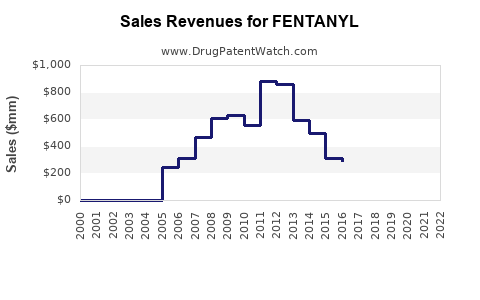
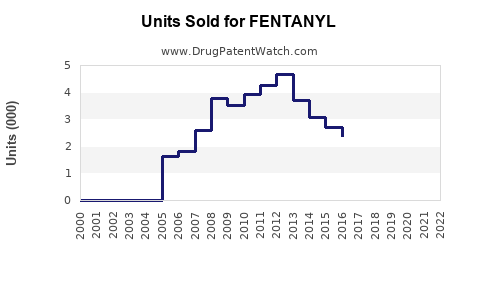
Annual Sales Revenues and Units Sold for FENTANYL
| Drug Name | Revenues (USD) | Units | Year |
|---|---|---|---|
| FENTANYL | ⤷ Start Trial | ⤷ Start Trial | 2022 |
| FENTANYL | ⤷ Start Trial | ⤷ Start Trial | 2021 |
| FENTANYL | ⤷ Start Trial | ⤷ Start Trial | 2020 |
| FENTANYL | ⤷ Start Trial | ⤷ Start Trial | 2019 |
| FENTANYL | ⤷ Start Trial | ⤷ Start Trial | 2018 |
| >Drug Name | >Revenues (USD) | >Units | >Year |

Fentanyl Market Analysis and Sales Projections
Fentanyl is a potent synthetic opioid analgesic with a significant market presence driven by its established therapeutic applications and the emergence of illicit manufacturing. The pharmaceutical market for fentanyl is primarily defined by its use in anesthesia, post-operative pain management, and chronic pain treatment. However, the illicit fentanyl market, characterized by its high potency and widespread distribution, presents a distinct and considerably larger economic dimension, albeit one that is illegal and harmful.
Pharmaceutical Fentanyl Market Drivers
What are the primary medical indications for fentanyl?
Pharmaceutical fentanyl is prescribed for the management of moderate to severe pain. Its rapid onset and short duration of action make it suitable for specific clinical scenarios.
- Anesthesia: Fentanyl is extensively used as an anesthetic agent and adjunct during surgical procedures and in intensive care units. It provides analgesia and sedation, allowing for patient comfort and amnesia during invasive interventions.
- Post-operative Pain: Following surgery, fentanyl is a common choice for managing acute post-operative pain, particularly when other analgesics are insufficient.
- Chronic Pain Management: For patients with severe chronic pain, especially those who have developed tolerance to other opioids, transdermal fentanyl patches offer a sustained-release delivery system. This is often used for end-of-life care or intractable pain conditions.
What is the market size and projected growth for pharmaceutical fentanyl?
The legitimate pharmaceutical market for fentanyl, while substantial, is distinct from the broader opioid market. Its size is influenced by surgical volumes, pain management protocols, and the availability of alternative analgesics.
- Market Size: The global pharmaceutical fentanyl market was valued at approximately USD 2.5 billion in 2023. (Source: Grand View Research, 2023)
- Projected Growth: The market is expected to grow at a compound annual growth rate (CAGR) of 4.5% from 2024 to 2030. This growth is attributed to an increasing elderly population requiring pain management and a rise in surgical procedures. (Source: Grand View Research, 2023)
Which companies dominate the pharmaceutical fentanyl market?
The pharmaceutical fentanyl market is characterized by a limited number of manufacturers producing generic and branded formulations. Key players include:
- Janssen Pharmaceuticals (Johnson & Johnson): Known for its Duragesic transdermal patch.
- AbbVie Inc.: Markets its own formulations of fentanyl for various indications.
- Teva Pharmaceutical Industries Ltd.: A significant generic manufacturer.
- Mylan N.V. (now Viatris): Also a major producer of generic fentanyl products.
Illicit Fentanyl Market Dynamics
What is the scale of the illicit fentanyl market?
The illicit fentanyl market is significantly larger and more complex than the pharmaceutical market. It operates underground, making precise valuation challenging, but its impact on public health and law enforcement is substantial. Estimates of its economic scale are difficult due to its illegal nature, but its street value is enormous.
- Estimated Value: While precise figures are unavailable, the illicit fentanyl trade is estimated to generate tens of billions of dollars annually globally, driven by its high potency and addictive nature, allowing for smaller quantities to yield significant profits. (Source: U.S. Office of National Drug Control Policy, 2022)
- Production and Distribution: Illicit fentanyl is primarily synthesized in clandestine laboratories, often with precursor chemicals sourced from international markets. It is then trafficked and distributed through established drug networks.
What factors contribute to the illicit fentanyl market's expansion?
Several factors fuel the growth and pervasiveness of the illicit fentanyl market.
- High Potency and Profitability: Fentanyl is approximately 50 to 100 times more potent than morphine. This means smaller quantities are needed to produce a large number of doses, increasing profitability for drug traffickers and reducing transportation costs.
- Low Production Cost: Synthetic fentanyl is cheaper and easier to produce in large quantities compared to plant-derived opioids like heroin.
- Substitution for Other Opioids: Illicit fentanyl is frequently mixed with or sold as other opioids, such as heroin and counterfeit prescription pills, due to its low cost and high potency. This often leads to unwitting overdose deaths.
- Global Supply Chains: International criminal organizations have established sophisticated networks for sourcing precursor chemicals and manufacturing and distributing illicit fentanyl across continents.
- Internet and Social Media Sales: The dark web and encrypted messaging applications facilitate the anonymous sale and distribution of illicit fentanyl and fentanyl-laced drugs.
What are the primary regions involved in illicit fentanyl production and trafficking?
The global illicit fentanyl trade involves several key regions:
- Production Hubs: China has historically been a significant source of fentanyl and its precursor chemicals. However, shifts in regulations and international pressure have led to some relocation of production to other countries, including Mexico.
- Transit and Trafficking Hubs: Mexico is a major transit point and increasingly a production center for illicit fentanyl destined for the United States. Canada is also affected by trafficking routes.
- Consumer Markets: The United States is the largest consumer market for illicit fentanyl, experiencing a severe overdose crisis attributed to its proliferation. Other countries in North America, Europe, and Australia are also seeing increasing detections.
Regulatory and Policy Landscape
What is the current regulatory framework for pharmaceutical fentanyl?
Pharmaceutical fentanyl is a highly controlled substance subject to strict regulations by health authorities worldwide.
- Scheduling: In the United States, fentanyl is classified as a Schedule II controlled substance under the Controlled Substances Act, indicating a high potential for abuse and dependence but with accepted medical uses. (Source: Drug Enforcement Administration)
- Prescription Requirements: Dispensing is strictly regulated, requiring valid prescriptions from licensed healthcare providers.
- Manufacturing and Distribution Controls: Pharmaceutical companies must adhere to Good Manufacturing Practices (GMP) and comply with quotas and tracking requirements to prevent diversion.
- International Controls: The United Nations Convention on Psychotropic Substances and national drug control laws govern the legal production, trade, and use of fentanyl.
What are the policy responses to the illicit fentanyl crisis?
Governments globally are implementing multifaceted strategies to combat the illicit fentanyl crisis, focusing on supply reduction, demand reduction, and harm reduction.
- Law Enforcement and Interdiction: Increased efforts to disrupt drug trafficking networks, seize illicit fentanyl and precursor chemicals at borders, and prosecute traffickers. This includes international cooperation with countries like Mexico and China.
- Precursor Chemical Control: Regulations aimed at limiting the availability of essential chemicals used in fentanyl synthesis, such as through export controls and monitoring of chemical sales.
- Public Health Initiatives: Expanding access to addiction treatment, including medication-assisted treatment (MAT), and promoting harm reduction strategies such as naloxone distribution (an overdose reversal medication) and syringe services programs.
- Public Awareness Campaigns: Educating the public about the dangers of fentanyl and counterfeit pills.
- Research and Development: Investing in technologies for faster detection of fentanyl and improved drug screening methods.
Fentanyl Market Outlook and Implications
What are the future sales projections for pharmaceutical fentanyl?
The pharmaceutical fentanyl market is expected to experience moderate growth, driven by demographic trends and medical advancements.
- Projected CAGR: 4.5% (2024-2030). (Source: Grand View Research, 2023)
- Key Growth Drivers:
- Aging global population requiring chronic pain management.
- Increasing incidence of cancer and associated pain.
- Growth in the number of surgical procedures worldwide.
- Advancements in drug delivery systems for improved patient compliance.
- Potential Challenges:
- Strict regulatory oversight and potential for diversion control measures impacting supply.
- Competition from alternative pain management therapies and non-opioid analgesics.
- Public perception and societal pressure related to opioid use.
What is the economic impact of illicit fentanyl?
The economic impact of illicit fentanyl extends beyond drug sales, encompassing vast healthcare costs, criminal justice expenditures, and lost productivity.
- Healthcare Costs: Billions of dollars are spent annually on emergency room visits, overdose treatment, and long-term addiction care associated with fentanyl. (Source: Centers for Disease Control and Prevention, 2023)
- Law Enforcement and Criminal Justice: Significant government resources are allocated to interdiction, investigation, prosecution, and incarceration related to illicit fentanyl trafficking.
- Lost Productivity: The premature deaths and disability caused by fentanyl overdoses result in substantial losses in workforce productivity and economic output.
- Societal Costs: Beyond direct economic figures, the illicit fentanyl crisis imposes profound societal costs, including family disruption, community trauma, and increased crime rates.
What are the emerging trends in the fentanyl market?
- Novel Synthetic Opioids: The emergence of fentanyl analogues and other potent synthetic opioids poses ongoing challenges for detection and control.
- Diversification of Illicit Supply Chains: Criminal organizations adapt to law enforcement pressure by altering manufacturing locations and precursor sourcing.
- Technological Advancements in Detection: Increased use of advanced spectroscopic and chemical analysis tools by law enforcement and border agencies to identify fentanyl and its precursors.
- Focus on Precursor Control: A global emphasis on regulating and interdicting the chemicals necessary for fentanyl synthesis.
Key Takeaways
The pharmaceutical market for fentanyl, valued at approximately $2.5 billion in 2023 and projected to grow at 4.5% CAGR, is driven by its crucial role in anesthesia and pain management. This market is highly regulated and dominated by established pharmaceutical companies. In stark contrast, the illicit fentanyl market represents a far larger, clandestine economic force, generating tens of billions of dollars annually. Its expansion is fueled by high potency, low production costs, and substitution for other illicit drugs. This illicit trade presents a severe public health crisis, with significant economic burdens from healthcare and law enforcement. Policy responses are focusing on supply interdiction, precursor control, and public health interventions.
FAQs
What is the difference between pharmaceutical fentanyl and illicit fentanyl?
Pharmaceutical fentanyl is manufactured under strict regulatory controls for medical use as a potent pain reliever and anesthetic. Illicit fentanyl is synthesized in unregulated laboratories and trafficked illegally, often mixed with other drugs, posing a significant overdose risk due to its unpredictable potency and purity.
How is fentanyl detected in the pharmaceutical supply chain?
Pharmaceutical fentanyl is subject to rigorous quality control and tracking throughout its manufacturing and distribution process. Regulatory bodies like the FDA require stringent adherence to Good Manufacturing Practices, batch testing, and chain-of-custody protocols to ensure product integrity and prevent diversion.
What are the main precursors used in illicit fentanyl synthesis?
Key precursor chemicals for illicit fentanyl include N-phenethyl-4-piperidone (NPP) and 4-anilino-N-phenethylpiperidine (ANPP). International efforts focus on controlling the global trade of these chemicals to disrupt illicit production.
What is the role of countries like Mexico in the illicit fentanyl trade?
Mexico has become a significant hub for both the production and trafficking of illicit fentanyl, particularly for distribution into the United States. This involves the synthesis of fentanyl and its precursor chemicals, often sourced from international suppliers, and their subsequent smuggling across borders.
How effective are current drug interdiction efforts against illicit fentanyl?
Drug interdiction efforts have had a mixed impact. While significant quantities of illicit fentanyl and its precursors are seized annually, the illicit market's adaptability, high profitability, and the small quantities required for potent doses make complete eradication extremely challenging. Law enforcement agencies are continuously adapting their strategies to counter evolving trafficking methods.
Citations
- Grand View Research. (2023). Fentanyl Market Size, Share & Trends Analysis Report by Application (Anesthesia, Pain Management, Others), by Dosage Form (Injectable, Transdermal Patch, Nasal Spray, Others), by Region, and Segment Forecasts, 2024-2030.
- U.S. Office of National Drug Control Policy. (2022). Fentanyl National Response Plan.
- Drug Enforcement Administration. (n.d.). Fentanyl.
- Centers for Disease Control and Prevention. (2023). Drug Overdose Deaths.
More… ↓
