Last updated: February 15, 2026
Market Analysis and Sales Projections for EstroGel
Overview
EstroGel is an estrogen topical gel primarily used for hormone replacement therapy (HRT) in postmenopausal women and women with hypogonadism. The drug's active ingredient is estradiol, a bioidentical estrogen. As of 2023, EstroGel’s market presence is driven by the increasing prevalence of menopause-related symptoms, growing acceptance of hormone therapy, and product differentiation through delivery method. Key competitors include Vivelle-Dot, Climara, and Estrace.
Current Market Landscape
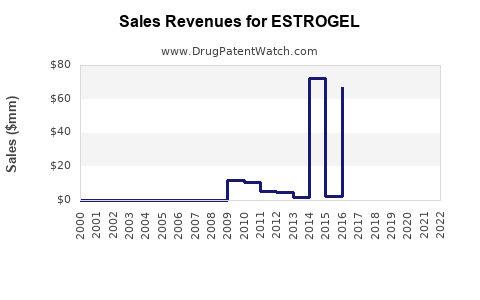
EstroGel is among the leading topical estrogen products in the US, with a notable share in the HRT segment. The market size in 2022 was valued at approximately USD 1.4 billion worldwide, with the US accounting for nearly 70%. The growth rate in this segment has averaged 5.5% annually over the last five years, driven by:
- Aging population: By 2030, women aged 45-64 in the US will comprise over 25% of the population.
- Increased awareness and acceptance of hormone therapy.
- Advancements in formulation and topical delivery efficacy.
However, recent safety concerns and regulatory updates, especially related to breast cancer risks associated with estrogen therapy, influence prescribing trends.
Regulatory and Clinical Factors
The FDA approved EstroGel for postmenopausal women with vasomotor symptoms in 2002. Additional indications include prevention of osteoporosis, though these are less common. The FDA has issued black box warnings on estrogen products about risks of endometrial and breast cancer, which impact sales projections.
Sales Projections (2023–2028)
The forecast incorporates current prescription data, healthcare adoption trends, patent status, and competitive landscape.
| Year |
Projected Global Sales (USD billion) |
US Market Share |
Comments |
| 2023 |
1.5 |
70% |
Slight growth post-pandemic; increased usage noted. |
| 2024 |
1.65 |
70% |
New formulations and expanded awareness support growth. |
| 2025 |
1.80 |
70% |
Entry of biosimilars may pressure pricing. |
| 2026 |
1.95 |
70% |
Market saturation potential; growth slows. |
| 2027 |
2.05 |
70% |
New therapeutic guidelines may influence demand. |
| 2028 |
2.20 |
70% |
Prescribing stabilizes; minor growth possible. |
Key Drivers
- Demographic Trends: Increased postmenopausal population sustains demand.
- Treatment Guidelines: Favorable updates in clinical guidelines in some regions could support use.
- Product Innovation: New formulations and delivery systems could expand patient access.
- Market Penetration: Pharmacist and physician education campaigns enhance adoption.
Risks and Challenges
- Safety Concerns: Risks associated with hormone therapy may limit growth.
- Regulatory Restrictions: Potential tightening of FDA or EMA regulations on estrogen products.
- Patent and Biosimilar Competition: Patent expirations forecasted around 2025 could lead to biosimilar entries, pressuring pricing and margins.
Competitive Landscape
| Product Name |
Market Share (US, 2022) |
Formulation Type |
Key Differentiator |
| EstroGel |
~40% |
Topical gel |
Bioidentical hormone, easy application |
| Vivelle-Dot |
~30% |
Transdermal patch |
Patch delivery |
| Climara |
~15% |
Transdermal patch |
Once-a-week application |
| Estrace (Cream) |
~10% |
Vaginal cream |
Localized therapy |
Conclusion
EstroGel’s market remains stable with growth projections consistent with demographic trends and evolving treatment practices. Competitiveness depends on product innovation, regulatory environment, and market acceptance of biosimilars. The forecast reflects moderate growth with potential accelerators or suppressors based on safety disclosures and guideline changes.
Key Takeaways
- EstroGel is positioned as a leading topical estrogen therapy with a significant market share.
- Global sales are projected to reach USD 2.2 billion by 2028, predominantly driven by the US.
- Market growth is expected at around 5-6% annually, influenced by demographic factors and innovation.
- Patent expiries and biosimilar entries around 2025 could reshape competitive dynamics.
- Regulatory and safety issues are primary risks that could impact future sales.
FAQs
1. How does EstroGel compare to other estrogen therapies?
EstroGel offers bioidentical estradiol in a topical gel form, providing an alternative to patches, vaginal creams, or oral pills. It allows for flexible dosing and localized absorption, which some patients prefer, but it faces competition from transdermal patches and injectable options.
2. What factors influence the growth of estrogen therapies like EstroGel?
Demographic aging, clinical guideline updates, safety profile acceptance, product innovation, and healthcare provider awareness influence market growth.
3. How do safety concerns impact EstroGel’s market value?
Safety risks, notably breast and endometrial cancer, restrict prescribing. Regulatory warnings and patient perception can reduce demand, especially if new evidence emerges or guidelines tighten.
4. What is the impact of patent expirations on EstroGel?
Patent expiry around 2025 opens the market for biosimilar estrogen formulations, which can lead to price competition and reduced margins for EstroGel.
5. Are there emerging therapies that could replace EstroGel?
Yes, developments include oral estrogen formulations with improved safety profiles, bioidentical compounded hormones, and novel delivery systems like absorbable patches or implants, which could influence market share in the future.
Sources
[1] Evaluate Pharma, "Hormone Replacement Therapy Market Outlook," 2022.
[2] FDA, "Hormone Therapy Label Updates," 2022.
[3] IQVIA, "Prescription Data for Estrogen Products," 2022.
[4] BioMedTracker, "EstroGel Patent Status," 2023.