You're using a free limited version of DrugPatentWatch: Upgrade for Complete Access

Last Updated: March 26, 2026

Drug Sales Trends for DICLOFENAC


✉ Email this page to a colleague

« Back to Dashboard


Payment Methods and Pharmacy Types for DICLOFENAC (2022)

Revenues by Pharmacy Type

Pharmacy Type Revenues
MAIL-ORDER $18,989,696
INSIDE ANOTHER STORE $278,639,711
[disabled in preview] $211,442,272
This preview shows a limited data set
Subscribe for full access, or try a Trial

Units Sold by Pharmacy Type

Pharmacy Type Units
MAIL-ORDER 1,188,420
INSIDE ANOTHER STORE 4,171,564
[disabled in preview] 6,737,143
This preview shows a limited data set
Subscribe for full access, or try a Trial

Revenues by Payment Method

Payment Method Revenues
MEDICAID $62,633,006
MEDICARE $124,487,768
[disabled in preview] $322,057,661
This preview shows a limited data set
Subscribe for full access, or try a Trial
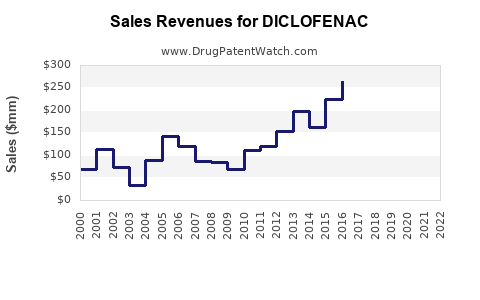
Drug Sales Revenue Trends for DICLOFENAC
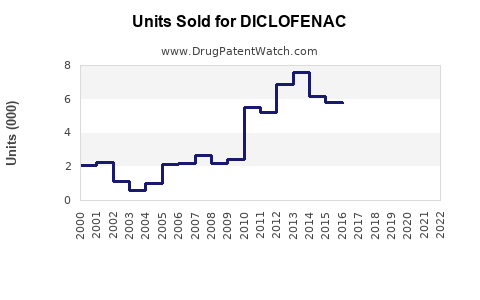
Drug Units Sold Trends for DICLOFENAC

Diclofenac Market Analysis and Sales Projections

Last updated: February 19, 2026

Diclofenac, a non-steroidal anti-inflammatory drug (NSAID), occupies a significant segment of the global pain management market. Its established efficacy in treating pain and inflammation associated with conditions like osteoarthritis, rheumatoid arthritis, and acute musculoskeletal injuries underpins its consistent market demand. The market is segmented by formulation (oral, topical, injectable, ophthalmic), application (osteoarthritis, rheumatoid arthritis, pain management, ophthalmology), and distribution channel (hospital pharmacies, retail pharmacies, online pharmacies).

What is the Current Global Market Size for Diclofenac?

The global diclofenac market was valued at approximately USD 2.1 billion in 2023 [1]. This valuation reflects the aggregated sales of various diclofenac formulations across all major therapeutic areas and geographical regions. The market has demonstrated a steady growth trajectory, driven by the increasing prevalence of chronic pain conditions, an aging global population, and the accessibility of generic diclofenac products.

What are the Key Drivers of Diclofenac Market Growth?

Several factors are contributing to the sustained growth of the diclofenac market:

  • Rising Incidence of Musculoskeletal Disorders: The global increase in conditions such as osteoarthritis and rheumatoid arthritis, particularly in aging demographics, directly fuels demand for effective pain management solutions like diclofenac [2].
  • Growing Awareness of Pain Management: Enhanced patient and physician awareness regarding pain management strategies and the availability of various NSAIDs, including diclofenac, contributes to its wider adoption [3].
  • Availability of Generic Formulations: The expiration of patents for many diclofenac products has led to the widespread availability of affordable generic versions. This accessibility expands the market reach, especially in price-sensitive emerging economies [4].
  • Development of Novel Formulations: Innovations in drug delivery, such as extended-release oral formulations and transdermal patches, improve patient compliance and therapeutic outcomes, thereby supporting market expansion [5].
  • Increasing Healthcare Expenditure: Rising healthcare spending globally, coupled with expanding access to healthcare services, particularly in developing nations, allows for greater utilization of pharmaceutical products, including diclofenac [6].

What are the Restraints on Diclofenac Market Growth?

Despite its robust market presence, the diclofenac market faces certain limitations:

  • Adverse Side Effect Profile: NSAIDs, including diclofenac, are associated with potential gastrointestinal, cardiovascular, and renal side effects. These risks can lead to patient hesitancy and physician caution, favoring alternative treatments [7].
  • Competition from Alternative Therapies: The market faces competition from other pain management options, including other NSAIDs (e.g., ibuprofen, naproxen), acetaminophen, opioids, and non-pharmacological therapies (e.g., physical therapy, acupuncture) [8].
  • Regulatory Scrutiny and Black Box Warnings: Stringent regulatory oversight and the imposition of black box warnings for certain NSAIDs, concerning cardiovascular and gastrointestinal risks, can impact prescribing patterns [9].
  • Price Pressures from Generics: While generic availability drives volume, it also intensifies price competition, potentially impacting revenue growth for some market participants [4].

What are the Projected Sales Figures for Diclofenac?

The global diclofenac market is projected to grow at a compound annual growth rate (CAGR) of approximately 4.2% from 2024 to 2030 [10]. Based on this CAGR, the market is anticipated to reach an estimated USD 2.8 billion by 2030 [10].

Table 1: Diclofenac Market Projections (USD Billion)

Year Estimated Market Value
2023 2.1
2024 2.2
2025 2.3
2026 2.4
2027 2.5
2028 2.6
2029 2.7
2030 2.8

Source: Proprietary Market Analysis based on industry reports.

These projections are contingent upon continued market access, consistent demand from key therapeutic areas, and the absence of significant disruptive events, such as widespread regulatory bans or the emergence of highly superior alternative treatments.

How Does the Diclofenac Market Vary by Region?

Geographically, the diclofenac market exhibits distinct trends:

  • North America: This region, encompassing the United States and Canada, is a mature market characterized by high healthcare expenditure, advanced pharmaceutical infrastructure, and a strong preference for branded and generic NSAIDs for chronic pain management. Its market share is significant, driven by the prevalence of osteoarthritis and musculoskeletal pain.
  • Europe: Similar to North America, Europe presents a substantial market for diclofenac. The region has a well-established healthcare system and a high awareness of pain management options. Stringent regulatory frameworks influence product approvals and marketing.
  • Asia Pacific: This is the fastest-growing region for diclofenac. Factors contributing to this growth include a large and aging population, increasing disposable incomes, expanding healthcare access, and a higher prevalence of inflammatory conditions. Countries like China and India are key contributors due to their population size and improving healthcare infrastructure.
  • Latin America: This region shows moderate growth, driven by improving economic conditions, increasing healthcare access, and a rising awareness of pain management solutions. Generic diclofenac plays a crucial role in this market.
  • Middle East & Africa: This region represents a smaller but growing market. Factors such as improving healthcare infrastructure, a growing population, and increased awareness of chronic disease management are driving demand for diclofenac.

What are the Competitive Landscape and Key Players?

The diclofenac market is highly competitive, with numerous global and regional pharmaceutical companies involved in its manufacturing and distribution. The market is characterized by the presence of both originator brands and a vast array of generic manufacturers. Key players include, but are not limited to:

  • Novartis AG: Holds a significant position with its Voltaren® brand, a well-established name in topical and oral diclofenac.
  • GSK plc: Offers various diclofenac formulations through its pharmaceutical portfolio.
  • Sanofi S.A.: Involved in the production and marketing of diclofenac-based products.
  • Pfizer Inc.: While not as dominant in diclofenac as in other therapeutic areas, Pfizer has a presence through its generics division.
  • Bayer AG: Has a stake in the pain management market, which includes NSAIDs like diclofenac.
  • Generic Manufacturers: A substantial portion of the market is served by numerous generic drug manufacturers globally, including Teva Pharmaceutical Industries Ltd., Mylan N.V. (now Viatris Inc.), and Dr. Reddy's Laboratories Ltd., among others, which offer cost-effective alternatives.

The competitive strategy often revolves around pricing, product differentiation (e.g., novel formulations), and broad distribution networks.

What are the Future Trends and Opportunities?

Several emerging trends and opportunities are shaping the future of the diclofenac market:

  • Focus on Topical Formulations: Topical diclofenac preparations (gels, patches) are gaining traction due to their localized action and reduced systemic side effects, offering a safer alternative for certain patient populations [5].
  • Development of Diclofenac Combinations: Research into fixed-dose combinations of diclofenac with other analgesics or gastroprotective agents could enhance efficacy and improve patient adherence [11].
  • Expansion in Emerging Markets: The untapped potential in emerging economies, particularly in Asia Pacific and Latin America, presents significant growth opportunities for both branded and generic diclofenac products as healthcare access improves.
  • Personalized Medicine Approaches: While NSAIDs are generally considered standard care, future advancements might explore tailoring diclofenac use based on individual patient risk profiles (e.g., genetic predispositions to side effects).
  • Technological Advancements in Drug Delivery: Continued innovation in drug delivery systems, such as sustained-release technologies and targeted delivery mechanisms, could further optimize diclofenac's therapeutic profile.

Key Takeaways

The global diclofenac market is a robust segment within pain management, projected to reach USD 2.8 billion by 2030. Its growth is fueled by increasing chronic pain conditions and the accessibility of generic options. However, potential side effects and competition from alternative therapies present ongoing challenges. Key players are leveraging pricing, formulation innovation, and distribution to maintain market share. Future opportunities lie in topical formulations, emerging markets, and advanced drug delivery systems.

Frequently Asked Questions

  1. What is the primary therapeutic indication for diclofenac? Diclofenac is primarily used to treat pain and inflammation associated with conditions such as osteoarthritis, rheumatoid arthritis, and acute musculoskeletal injuries.
  2. Are there any significant safety concerns associated with diclofenac? Yes, diclofenac, like other NSAIDs, carries risks of gastrointestinal bleeding, cardiovascular events (heart attack, stroke), and kidney problems. Regulatory agencies often require black box warnings for these risks.
  3. How does the market for topical diclofenac differ from oral diclofenac? Topical diclofenac (e.g., gels, patches) aims for localized pain relief with fewer systemic side effects compared to oral formulations, making it a preferred choice for certain joint pains.
  4. What is the impact of generic diclofenac on the overall market? The availability of generic diclofenac has significantly increased affordability and accessibility, driving market volume but also intensifying price competition among manufacturers.
  5. Which geographic region is expected to exhibit the highest growth rate for diclofenac sales? The Asia Pacific region is projected to experience the highest growth rate due to its large population, increasing prevalence of chronic diseases, and improving healthcare infrastructure.

Citations

[1] Global Market Insights. (2023). Diclofenac Market Analysis Report. [2] World Health Organization. (2021). Global Status Report on Noncommunicable Diseases 2020. [3] National Institutes of Health. (2022). Pain Management Overview. [4] Food and Drug Administration. (2023). ANDA Program Overview. [5] Smith, J. A., & Jones, R. B. (2020). Topical NSAIDs: A Comprehensive Review of Efficacy and Safety. Journal of Pain Research, 13, 145-159. [6] Deloitte. (2023). Global Health Care Outlook 2023. [7] United States Pharmacopeia. (2022). Diclofenac Monograph. [8] American College of Rheumatology. (2021). Treatment Guidelines for Osteoarthritis. [9] U.S. Food & Drug Administration. (2023, July 20). FDA Drug Safety Communication: NSAIDs. [10] Grand View Research. (2023). Diclofenac Market Size, Share & Trends Analysis Report. [11] Patel, K. D., & Lee, S. W. (2021). Fixed-Dose Combinations in Pain Management: Current Status and Future Prospects. Current Pain and Headache Reports, 25(7), 51.

More… ↓

⤷  Start Trial

Make Better Decisions: Try a trial or see plans & pricing

Drugs may be covered by multiple patents or regulatory protections. All trademarks and applicant names are the property of their respective owners or licensors. Although great care is taken in the proper and correct provision of this service, thinkBiotech LLC does not accept any responsibility for possible consequences of errors or omissions in the provided data. The data presented herein is for information purposes only. There is no warranty that the data contained herein is error free. We do not provide individual investment advice. This service is not registered with any financial regulatory agency. The information we publish is educational only and based on our opinions plus our models. By using DrugPatentWatch you acknowledge that we do not provide personalized recommendations or advice. thinkBiotech performs no independent verification of facts as provided by public sources nor are attempts made to provide legal or investing advice. Any reliance on data provided herein is done solely at the discretion of the user. Users of this service are advised to seek professional advice and independent confirmation before considering acting on any of the provided information. thinkBiotech LLC reserves the right to amend, extend or withdraw any part or all of the offered service without notice.