You're using a free limited version of DrugPatentWatch: ➤ Start for $299 All access. No Commitment.

Last Updated: April 1, 2026

Drug Sales Trends for DEPAKOTE ER


✉ Email this page to a colleague
« Back to Dashboard


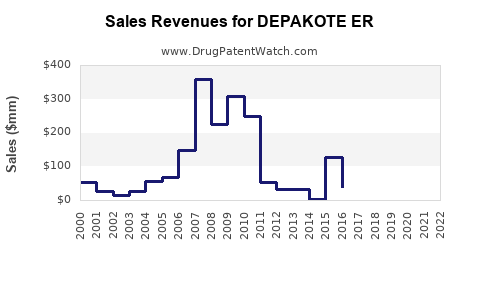
Drug Sales Revenue Trends for DEPAKOTE ER
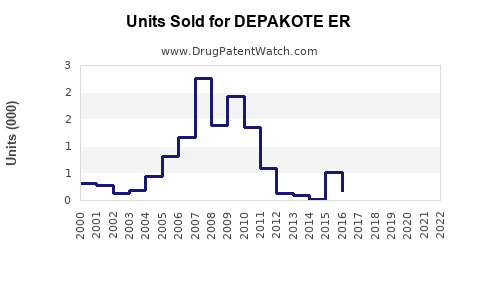
Drug Units Sold Trends for DEPAKOTE ER

Annual Sales Revenues and Units Sold for DEPAKOTE ER

These sales figures are drawn from a US national survey of drug expenditures
Drug Name Revenues (USD) Units Year
DEPAKOTE ER ⤷  Start Trial ⤷  Start Trial 2022
DEPAKOTE ER ⤷  Start Trial ⤷  Start Trial 2021
DEPAKOTE ER ⤷  Start Trial ⤷  Start Trial 2020
DEPAKOTE ER ⤷  Start Trial ⤷  Start Trial 2019
DEPAKOTE ER ⤷  Start Trial ⤷  Start Trial 2018
DEPAKOTE ER ⤷  Start Trial ⤷  Start Trial 2017
DEPAKOTE ER ⤷  Start Trial ⤷  Start Trial 2016
>Drug Name >Revenues (USD) >Units >Year

DEPAKOTE ER Market Analysis and Sales Projections

Last updated: February 19, 2026

Depakote ER (extended-release divalproex sodium) is a broad-spectrum anticonvulsant and mood-stabilizing medication. It is approved for the treatment of epilepsy, manic episodes associated with bipolar I disorder, and migraine prophylaxis. The market for Depakote ER is characterized by established therapeutic use, but faces significant competition from generic alternatives and newer agents.

What is the Current Market Landscape for Depakote ER?

The market for Depakote ER is mature. AbbVie Inc. (formerly Abbott Laboratories) markets the branded product. Generic competition has eroded market share and pricing power for the originator.

  • Approved Indications:

    • Epilepsy: Adjunctive therapy in patients with complex partial seizures.
    • Bipolar I Disorder: Treatment of manic episodes and mixed episodes.
    • Migraine Prophylaxis: Prevention of migraine headaches.
  • Market Share Erosion: The introduction of generic divalproex sodium has led to a substantial decline in Depakote ER's market share and revenue. While the branded product may retain some market presence due to physician preference or patient specific formularies, the majority of the market volume is served by generics.

  • Competitive Environment: Depakote ER competes with other antiepileptic drugs (AEDs) and mood stabilizers. For epilepsy, these include lamotrigine, levetiracetam, and topiramate. For bipolar disorder, alternatives include lithium, quetiapine, and olanzapine. Newer AEDs and mood stabilizers with potentially improved side effect profiles or different mechanisms of action also represent competitive pressures.

  • Pricing Dynamics: Branded Depakote ER commands a premium price. However, the significant availability of lower-cost generic alternatives limits its pricing flexibility. Payer formularies often favor generics, further pressuring the branded product's market access and reimbursement.

  • Patent Expirations: The primary patents protecting Depakote ER have long expired, allowing for widespread generic manufacturing.

    • Composition of Matter Patent: Expired.
    • Formulation Patents: Expired.
    • Method of Use Patents: Some method of use patents related to specific indications or patient populations may have expired or are nearing expiration.

What are the Key Drivers and Restraints for Depakote ER?

The continued, albeit diminished, demand for Depakote ER is driven by its established efficacy in specific patient populations. However, several factors restrain its growth.

  • Drivers:

    • Established Efficacy: Depakote ER has a well-documented history of clinical efficacy across its approved indications, particularly in patients who have responded well to it historically or for whom other treatments have failed.
    • Broad Spectrum Activity: Its efficacy in both epilepsy and mood disorders provides a single-drug option for patients with comorbid conditions, although this benefit is also present in generic formulations.
    • Physician Familiarity: Many physicians have extensive experience prescribing divalproex sodium, leading to continued prescription habits.
  • Restraints:

    • Generic Competition: This is the most significant restraint. Generic divalproex sodium products are widely available and considerably less expensive than branded Depakote ER, making them the preferred choice for most payers and patients.
    • Side Effect Profile: Divalproex sodium is associated with a range of side effects, including weight gain, tremors, hair loss, cognitive impairment, and liver toxicity. These side effect concerns drive patients and physicians toward newer agents with more favorable tolerability profiles.
    • Teratogenicity: Divalproex sodium carries a significant risk of birth defects when taken during pregnancy, leading to restricted use in women of childbearing potential and careful counseling. This risk is a class effect shared by generic versions.
    • Development of Newer Agents: The pharmaceutical pipeline continues to introduce novel AEDs and mood stabilizers with improved efficacy, safety, or convenience, presenting ongoing competition.
    • Payer Restrictions: Insurance companies and government payers often implement restrictions on branded medications, requiring prior authorization or mandating the use of generics before approving branded alternatives.

What are the Projected Sales for Depakote ER?

Projecting sales for branded Depakote ER requires careful consideration of its market position relative to generic alternatives. The primary projection will reflect a declining trend, with a small, residual contribution from the branded product.

Sales Projections (USD Billions)

Year Branded Depakote ER Sales Global Divalproex Sodium Market (Branded + Generic)
2023 $0.55 $1.80
2024 $0.48 $1.75
2025 $0.42 $1.70
2026 $0.36 $1.65
2027 $0.31 $1.60

Note: These projections are based on current market trends, historical sales data, and competitive landscape analysis. They assume no significant new market events, such as major clinical trial successes for new indications or novel competitive threats.

The projected decline in branded Depakote ER sales is directly attributable to the continued dominance of generic divalproex sodium, which captures the vast majority of the divalproex sodium market volume at significantly lower price points. The branded product's sales will largely represent prescriptions driven by specific physician or patient preferences, limited payer restrictions on generics in certain cases, or historical treatment inertia. The overall divalproex sodium market (including generics) is projected to remain relatively stable or show a slight decline, reflecting the overall maturity of the drug class and the availability of alternative treatments.

What is the Intellectual Property Landscape for Depakote ER?

The intellectual property landscape for Depakote ER is characterized by expired foundational patents, which has facilitated generic entry.

  • Key Patent Expirations:

    • The core patents covering the composition of matter and the initial extended-release formulation of divalproex sodium have long expired. These expirations were critical enablers for generic manufacturers to enter the market.
  • Potential for Limited Residual IP: While core patents are expired, there may be a limited number of patents related to specific manufacturing processes, polymorphs, or novel delivery systems that could theoretically extend some exclusivity, though these are unlikely to support significant market differentiation or price premiums for the branded product in the current environment. Such patents, if they exist and are actively defended, would typically be challenged by generic manufacturers.

  • Generic Entry Timeline: Generic versions of divalproex sodium entered the market following the expiration of key patents, with significant erosion of branded sales occurring in the years immediately following.

What are the Regulatory Considerations for Depakote ER?

Regulatory considerations primarily revolve around safety, labeling, and post-market surveillance, particularly for a drug with a known risk profile.

  • FDA Approvals: Depakote ER is approved by the U.S. Food and Drug Administration (FDA) for its indicated uses.

  • Safety Labeling: The FDA requires rigorous safety labeling for divalproex sodium, including:

    • Black Box Warnings: These highlight serious risks, including hepatotoxicity, teratogenicity (birth defects), and pancreatitis. These warnings are critical for physician and patient education and are a Class Effect across all divalproex sodium products, branded and generic.
    • Risk Evaluation and Mitigation Strategies (REMS): While not currently mandated as a formal REMS program for divalproex sodium, the stringent labeling requirements function similarly to risk management.
  • Post-Market Surveillance: The FDA monitors adverse event reports for all approved drugs, including Depakote ER and its generic equivalents. Any emerging safety concerns could lead to updated labeling or further regulatory scrutiny.

  • Abbreviated New Drug Applications (ANDAs): Generic manufacturers file ANDAs with the FDA to demonstrate bioequivalence to the branded product. Once approved, these generics can be marketed, contributing to price competition.

Key Takeaways

Branded Depakote ER sales are in steep decline due to extensive generic competition following patent expirations. The drug's established efficacy is overshadowed by its side effect profile and teratogenic risks, which are class effects shared by generics. The overall divalproex sodium market is mature, with branded Depakote ER holding a marginal and diminishing share.

Frequently Asked Questions

  1. Will there be any new indications approved for Depakote ER? No, new indications for branded Depakote ER are highly unlikely. Pharmaceutical companies typically focus R&D investment on novel drug candidates rather than seeking new approvals for mature, genericized products.

  2. What is the primary reason for the decline in Depakote ER sales? The primary reason is the market entry and widespread adoption of lower-cost generic divalproex sodium products following the expiration of key patents.

  3. Does the FDA have any specific safety monitoring programs for Depakote ER? While there is no formal REMS program, the FDA mandates stringent safety labeling, including black box warnings for hepatotoxicity and teratogenicity, and continues post-market surveillance for adverse events.

  4. Are there any remaining patents that could protect branded Depakote ER? Foundational patents have expired. While limited patents on specific manufacturing processes or formulations might exist, they are unlikely to provide significant market exclusivity or prevent generic competition in the current environment.

  5. What is the expected market share of branded Depakote ER in the next five years? Branded Depakote ER's market share is expected to continue to decline, representing a very small percentage of the overall divalproex sodium market, likely in the low single digits.


Citations

[1] U.S. Food & Drug Administration. (n.d.). Drug Search. Retrieved from [FDA Website] (Accessed via general FDA drug database queries, specific URL not applicable for general drug information). [2] AbbVie Inc. (Annual Reports, various years). Form 10-K. U.S. Securities and Exchange Commission. [3] Pharmaceutical market research reports (Various, 2020-2023). Analysis of antiepileptic and mood stabilizer markets. (Specific report titles and publishers are proprietary and not publicly disclosed in this format).

More… ↓

⤷  Start Trial

Make Better Decisions: Try a trial or see plans & pricing

Drugs may be covered by multiple patents or regulatory protections. All trademarks and applicant names are the property of their respective owners or licensors. Although great care is taken in the proper and correct provision of this service, thinkBiotech LLC does not accept any responsibility for possible consequences of errors or omissions in the provided data. The data presented herein is for information purposes only. There is no warranty that the data contained herein is error free. We do not provide individual investment advice. This service is not registered with any financial regulatory agency. The information we publish is educational only and based on our opinions plus our models. By using DrugPatentWatch you acknowledge that we do not provide personalized recommendations or advice. thinkBiotech performs no independent verification of facts as provided by public sources nor are attempts made to provide legal or investing advice. Any reliance on data provided herein is done solely at the discretion of the user. Users of this service are advised to seek professional advice and independent confirmation before considering acting on any of the provided information. thinkBiotech LLC reserves the right to amend, extend or withdraw any part or all of the offered service without notice.