Share This Page
Drug Sales Trends for DAYPRO
✉ Email this page to a colleague
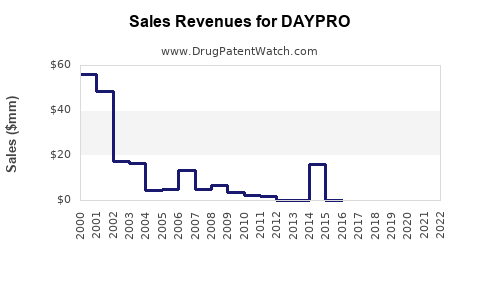
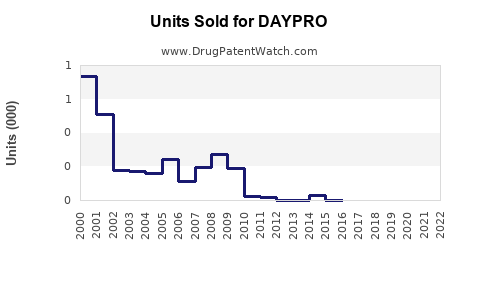
Annual Sales Revenues and Units Sold for DAYPRO
| Drug Name | Revenues (USD) | Units | Year |
|---|---|---|---|
| DAYPRO | ⤷ Start Trial | ⤷ Start Trial | 2022 |
| DAYPRO | ⤷ Start Trial | ⤷ Start Trial | 2021 |
| DAYPRO | ⤷ Start Trial | ⤷ Start Trial | 2020 |
| DAYPRO | ⤷ Start Trial | ⤷ Start Trial | 2019 |
| >Drug Name | >Revenues (USD) | >Units | >Year |
DAYPRO (Oxaprozin) Market Analysis, Sales Forecast, Patent Status, and Generic Competition
DAYPRO is the former U.S. brand name for oxaprozin, a once-daily nonsteroidal anti-inflammatory drug approved for osteoarthritis and rheumatoid arthritis. The brand has limited commercial relevance because U.S. sales have shifted to generic oxaprozin. The market is mature, price-sensitive, and unlikely to support meaningful branded growth.
A reasonable base-case estimate places U.S. generic oxaprozin sales at approximately $8 million to $20 million annually, with global sales potentially reaching $15 million to $40 million depending on country coverage and pricing. Base-case revenue is expected to decline gradually through 2030 as prescribers favor lower-cost NSAIDs and newer treatment options.
What is DAYPRO and how large is its addressable market?
DAYPRO contains oxaprozin, an NSAID with a relatively long elimination half-life that supports once-daily administration. The FDA approved DAYPRO for acute and long-term treatment of osteoarthritis and rheumatoid arthritis. The product is available in 600-mg tablets, with total daily doses generally ranging from 600 mg to 1,200 mg under prescribing instructions.[1]
| Attribute | DAYPRO / oxaprozin |
|---|---|
| Active ingredient | Oxaprozin |
| Drug class | NSAID |
| Original brand | DAYPRO |
| Primary indications | Osteoarthritis; rheumatoid arthritis |
| Common strength | 600 mg tablet |
| Administration | Usually once daily |
| U.S. regulatory status | Approved; generic products marketed |
| Current commercial position | Mature generic |
| Main competitors | Ibuprofen, naproxen, diclofenac, meloxicam, celecoxib |
| Biosimilar risk | Not applicable; oxaprozin is a small molecule |
The addressable market is the chronic and intermittent NSAID market, but oxaprozin captures only a small portion of that category. Prescribers have many alternatives, including inexpensive over-the-counter ibuprofen and naproxen, prescription meloxicam, diclofenac, celecoxib and other generic NSAIDs.
Oxaprozin’s once-daily dosing can support adherence in selected patients. Its long half-life also creates safety considerations, including gastrointestinal bleeding, cardiovascular events, renal toxicity, hypertension and fluid retention. These risks limit differentiation from competing NSAIDs.
How much are DAYPRO and generic oxaprozin expected to sell?
Public sources do not provide a current, separately reported DAYPRO revenue stream. The relevant commercial market is generic oxaprozin rather than the discontinued or reduced brand franchise.
The following forecast is an analyst scenario based on the product’s mature generic status, low differentiation, broad NSAID competition and limited evidence of branded promotion.
| Year | U.S. sales range | Global sales range | Base-case U.S. estimate |
|---|---|---|---|
| 2024 | $8 million-$20 million | $15 million-$40 million | $13 million |
| 2025 | $8 million-$19 million | $15 million-$38 million | $12.5 million |
| 2026 | $7.5 million-$18 million | $14 million-$36 million | $11.8 million |
| 2027 | $7 million-$17 million | $13 million-$34 million | $11.1 million |
| 2028 | $6.5 million-$16 million | $12 million-$32 million | $10.5 million |
| 2029 | $6 million-$15 million | $11 million-$30 million | $9.8 million |
| 2030 | $5.5 million-$14 million | $10 million-$28 million | $9.2 million |
These figures are market estimates, not reported DAYPRO sales. Revenue depends on prescription volume, wholesaler purchasing, Medicaid and commercial reimbursement, generic supplier participation, tablet pricing and the availability of competing NSAIDs.
Base-case assumptions
The base case assumes:
- U.S. prescription volume declines by approximately 2% to 4% annually.
- Average generic pricing remains low and may decline modestly.
- No new branded formulation receives significant commercial investment.
- No major manufacturing interruption creates a sustained price increase.
- Oxaprozin remains available through at least one or more generic suppliers.
- Clinical use remains concentrated in patients already receiving the drug.
The upside case would require a supply disruption affecting competing NSAIDs, a niche formulary preference for once-daily therapy or a successful branded relaunch. The downside case includes additional generic entrants, supplier withdrawal, stronger use of meloxicam or celecoxib, or further substitution with over-the-counter products.
What drives demand for oxaprozin?
Demand is driven primarily by established prescribing habits and the convenience of once-daily administration. Oxaprozin is not a high-growth therapy and has limited ability to expand the overall NSAID market.
Positive commercial drivers
Once-daily dosing can be useful for patients with chronic osteoarthritis or rheumatoid arthritis. Existing patients may remain on oxaprozin when treatment is tolerated and effective. Generic pricing also allows the product to remain on formularies despite limited promotional activity.
A shortage of another prescription NSAID could produce temporary volume gains. Pharmacy-level substitution may also preserve demand if multiple generic suppliers continue to list oxaprozin.
Negative commercial drivers
Oxaprozin competes against drugs with stronger prescribing familiarity, broader dosage flexibility or lower consumer cost. Ibuprofen and naproxen are widely available without a prescription. Meloxicam has strong generic penetration and is commonly used for chronic musculoskeletal pain. Celecoxib provides a prescription alternative for patients in whom gastrointestinal tolerability is a concern.
Safety warnings apply across the NSAID class. The FDA requires boxed warnings for serious cardiovascular and gastrointestinal risks, limiting the ability of oxaprozin to gain share solely through efficacy claims.[1]
What is the FDA regulatory status of DAYPRO?
DAYPRO is an FDA-approved small-molecule prescription NSAID. Generic oxaprozin products may be approved through the abbreviated new drug application pathway if they demonstrate pharmaceutical equivalence and bioequivalence to the reference product.[2]
The principal regulatory issues are standard NSAID requirements:
- Cardiovascular thrombotic risk.
- Gastrointestinal bleeding and ulceration.
- Renal impairment and fluid retention.
- Hypertension.
- Hepatic laboratory abnormalities.
- Drug interactions involving anticoagulants, antiplatelet drugs, corticosteroids, ACE inhibitors, angiotensin receptor blockers and diuretics.
Because oxaprozin is a mature small molecule, regulatory differentiation would likely require a new dosage form, delivery system, combination product or labeling-supported clinical benefit. A conventional generic tablet has limited regulatory and commercial leverage.
What is the Orange Book status of DAYPRO?
The Orange Book is relevant to the reference drug and any approved generic equivalents, but the patent and exclusivity value associated with DAYPRO is historical rather than current.
The original DAYPRO regulatory exclusivity and any patent protection associated with its initial launch expired long ago. Generic oxaprozin products therefore compete primarily on price, supply reliability and formulary access rather than on patent barriers.
No meaningful current exclusivity period is expected to protect a new DAYPRO launch. Pediatric exclusivity is not a current commercial driver, and the product is not a biologic subject to the Biologics Price Competition and Innovation Act.
What patents protect DAYPRO and oxaprozin?
The original oxaprozin patent estate is commercially exhausted in the United States. Any foundational compound or original formulation patents would have expired after the statutory patent term, subject to historical patent-term rules and any applicable extensions.
The relevant IP categories are:
| IP category | Current commercial significance |
|---|---|
| Oxaprozin compound patents | Expired or commercially exhausted |
| Original tablet formulation | Expired or not a meaningful barrier |
| Method-of-use patents | Limited value for standard osteoarthritis and rheumatoid arthritis use |
| Polymorph or solid-state patents | No established market barrier of significance |
| Extended-release formulations | Potentially valuable only if separately patented and approved |
| Manufacturing patents | Could restrict a specific process but would not block ordinary generic manufacture |
| Trademark rights | May protect the DAYPRO name but not oxaprozin supply |
A manufacturer could attempt to protect a new formulation, salt, polymorph, combination or delivery system. Such patents would need to provide a clinically relevant and commercially adopted product to create meaningful value. A formulation patent alone would not restore broad DAYPRO exclusivity if standard oxaprozin tablets remain available.
Are there Paragraph IV challenges for DAYPRO?
Paragraph IV litigation is not expected to be a major current issue for DAYPRO. Paragraph IV certifications arise when an abbreviated new drug applicant asserts that a listed patent is invalid, unenforceable or will not be infringed. Foundational oxaprozin protection is too old to create a current barrier comparable to recently approved branded drugs.
Any future Paragraph IV dispute would most likely involve:
- A newly developed oxaprozin formulation.
- A controlled-release product.
- A fixed-dose combination.
- A narrow method of use.
- A patent covering a manufacturing process or solid form.
Such a dispute would not necessarily prevent generic manufacturers from selling conventional oxaprozin tablets. The commercial impact would depend on whether the challenged patent covered the principal market product or only a differentiated formulation.
Which companies compete with DAYPRO?
The competitive landscape is fragmented. The relevant competitors include both prescription generics and nonprescription products.
| Competitor | Commercial position | Competitive effect |
|---|---|---|
| Ibuprofen | High-volume OTC and prescription NSAID | Strong price and familiarity advantage |
| Naproxen | High-volume OTC and prescription NSAID | Strong chronic-use alternative |
| Meloxicam | Widely used prescription generic | Major chronic osteoarthritis competitor |
| Diclofenac | Prescription and topical products | Broad dosage-form competition |
| Celecoxib | Generic prescription COX-2 inhibitor | Alternative for selected patients |
| Etodolac | Generic prescription NSAID | Smaller competing market |
| Indomethacin | Generic prescription NSAID | Used in narrower clinical settings |
| Acetaminophen | Non-NSAID analgesic | Competes where anti-inflammatory effect is not required |
Supplier concentration can change quickly in mature generic markets. Manufacturers may withdraw when prices fall below acceptable margins, while shortages can temporarily improve pricing for remaining suppliers. The market has little brand loyalty at the pharmacy level.
What generic entry risks exist for DAYPRO?
Generic entry is already established, so the primary risk is not initial launch but ongoing substitution and price erosion. DAYPRO has limited protection against generic competition because oxaprozin tablets are standardized, clinically familiar and eligible for conventional generic approval.
The main risks are:
- Additional generic suppliers entering the market.
- Pharmacy substitution away from any branded product.
- Formulary preference for meloxicam, naproxen or diclofenac.
- Declining reimbursement for low-volume generic products.
- Manufacturing interruptions that reduce availability.
- Reduced prescribing caused by NSAID safety concerns.
- Patient movement to OTC products.
The main countervailing risk is supplier exit. If only one or two manufacturers remain, oxaprozin prices can rise temporarily. That effect would likely increase revenue without creating sustainable volume growth.
How does DAYPRO compare with competing NSAIDs?
Oxaprozin’s principal differentiator is dosing convenience, not superior market access or strong intellectual property.
| Factor | Oxaprozin | Naproxen | Meloxicam | Celecoxib |
|---|---|---|---|---|
| Typical use | Chronic OA and RA | Acute and chronic pain/inflammation | Chronic OA and RA | OA, RA and selected pain uses |
| Dosing convenience | Once daily | Often once or twice daily | Once daily | Once or twice daily |
| OTC availability | No | Yes | No | No |
| Generic competition | Established | Extensive | Extensive | Extensive |
| Brand value | Minimal | Minimal in prescription segment | Minimal | Limited |
| Safety differentiation | None established | None established | None established | COX-2 selectivity |
| Patent risk | Low | Low | Low | Low for standard generic |
Oxaprozin may retain a niche among patients who respond to it and prefer once-daily dosing. It does not have a clear economic advantage over generic meloxicam or naproxen.
What licensing deals or partnerships affect DAYPRO?
No major current licensing transaction is central to the DAYPRO commercial outlook. The original brand history involved legacy pharmaceutical ownership and commercialization arrangements, but those relationships do not create a current growth platform for oxaprozin.
A future licensing opportunity would likely involve a reformulated product rather than conventional DAYPRO tablets. Potential structures could include:
- A controlled-release oxaprozin product.
- A combination product for osteoarthritis.
- A topical or localized delivery system.
- A product targeting adherence or gastrointestinal tolerability.
- A regional commercialization agreement in markets where oxaprozin remains branded.
The economics would be constrained by the low value of the underlying molecule and the availability of inexpensive alternatives.
What is the litigation status of DAYPRO?
No major active patent litigation is expected to materially affect the conventional oxaprozin tablet market. Any future dispute would be more likely to concern a reformulation, a manufacturing process or a narrow method-of-use claim than the core DAYPRO product.
The absence of a significant litigation barrier reduces launch risk for generic manufacturers but also limits the ability of a brand owner to defend premium pricing.
What geographic markets offer the most opportunity?
The United States remains the most transparent market but is heavily genericized. International opportunity depends on local registration, reimbursement and brand persistence.
Potentially attractive markets have several characteristics:
- A meaningful prescription NSAID market.
- Continued use of branded or semi-branded products.
- Less aggressive generic substitution.
- Limited access to competing OTC products.
- Established treatment guidelines for chronic arthritis.
- Local manufacturing or distribution capability.
European markets are generally price-sensitive and subject to national reimbursement controls. Emerging markets may offer higher nominal growth but lower realized prices and greater regulatory complexity. The commercial opportunity is therefore more likely to be a stable niche than a large international franchise.
What manufacturing and IP barriers affect oxaprozin?
Manufacturing barriers are modest for conventional tablets. Oxaprozin is a mature small molecule with established formulation technology. The principal operational issues are API sourcing, quality control, supplier qualification, regulatory filings and maintaining adequate production economics.
A process patent could affect a specific manufacturing route, but it would not normally prevent production through an alternative route. The more relevant barriers are commercial:
- Low product demand.
- Limited pricing power.
- Small inventory requirements.
- Risk of supplier withdrawal.
- Need to maintain regulatory compliance for a low-revenue product.
Key Takeaways
- DAYPRO is the former brand for oxaprozin, a once-daily NSAID used for osteoarthritis and rheumatoid arthritis.
- U.S. commercial activity is primarily generic and is not supported by meaningful current exclusivity.
- Estimated U.S. generic oxaprozin sales are approximately $8 million to $20 million annually.
- Base-case U.S. revenue is projected to decline from about $13 million in 2024 to about $9 million in 2030.
- Generic substitution, meloxicam, naproxen, ibuprofen and diclofenac are the main competitive pressures.
- No major current Paragraph IV or patent-litigation risk is expected for standard oxaprozin tablets.
- Any meaningful commercial upside would require a differentiated formulation, supply disruption or regional branded opportunity.
- The product is a mature, low-growth generic niche rather than a platform for significant pharmaceutical investment.
FAQs About DAYPRO Sales, Patents, and Market Potential
Is DAYPRO still sold in the United States?
DAYPRO has limited current brand relevance in the United States. Oxaprozin is available primarily through generic products, subject to manufacturer and pharmacy availability.
Is oxaprozin a high-revenue drug?
No. Oxaprozin is a mature generic NSAID with a small market relative to ibuprofen, naproxen, meloxicam and celecoxib.
Does DAYPRO have biosimilar competition?
No. Oxaprozin is a small-molecule drug, so the relevant competitors are generic drugs approved through the ANDA pathway, not biosimilars.
Could a new DAYPRO formulation obtain patent protection?
A new formulation, delivery system, combination or solid form could potentially receive patent protection if it satisfies patentability requirements. Protection would depend on the specific invention and would not automatically cover conventional oxaprozin tablets.
What would increase the value of the oxaprozin market?
The strongest value drivers would be a differentiated once-daily formulation with clinical advantages, a sustained shortage of competing NSAIDs, reduced supplier competition or successful commercialization in markets where branded prescribing remains common.
References
- U.S. Food and Drug Administration. (2015). Daypro (oxaprozin) prescribing information. FDA.
- U.S. Food and Drug Administration. (2023). Approved drug products with therapeutic equivalence evaluations: Orange Book. FDA.
- U.S. Food and Drug Administration. (2023). Generic drugs: Questions and answers. FDA.
- U.S. Food and Drug Administration. (2020). FDA strengthens warning that non-aspirin nonsteroidal anti-inflammatory drugs increase chance of heart attack or stroke. FDA.
- DailyMed. (2024). Oxaprozin tablet prescribing information. National Library of Medicine.
More… ↓
