Drug Sales Trends for CANASA
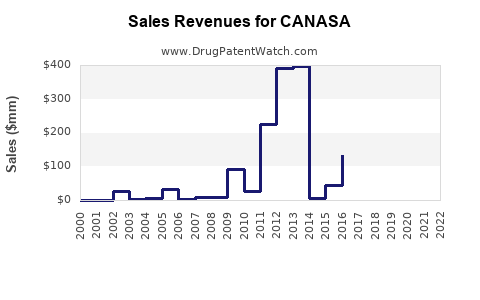
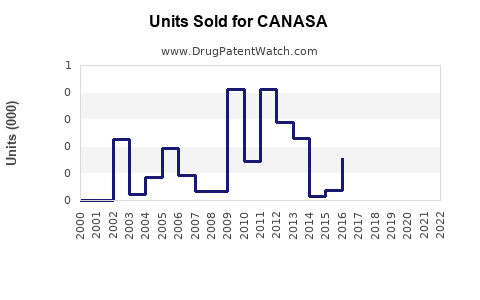
Annual Sales Revenues and Units Sold for CANASA
| Drug Name | Revenues (USD) | Units | Year |
|---|---|---|---|
| CANASA | ⤷ Start Trial | ⤷ Start Trial | 2022 |
| CANASA | ⤷ Start Trial | ⤷ Start Trial | 2021 |
| CANASA | ⤷ Start Trial | ⤷ Start Trial | 2020 |
| CANASA | ⤷ Start Trial | ⤷ Start Trial | 2019 |
| CANASA | ⤷ Start Trial | ⤷ Start Trial | 2018 |
| CANASA | ⤷ Start Trial | ⤷ Start Trial | 2017 |
| >Drug Name | >Revenues (USD) | >Units | >Year |
Canasa Market Analysis, Sales Projections, Patent Position, and Generic Competition
Canasa is a mature mesalamine product for ulcerative proctitis with declining commercial value after generic entry. The product retains clinical utility in patients with disease limited to the rectum, but its market is constrained by generic mesalamine suppositories, competing rectal formulations, low treatment duration in some patients, and limited differentiation from other 5-aminosalicylic acid products.
Bausch Health does not report Canasa revenue as a standalone line item. It reports broader Salix segment results, which limits direct verification of product-level sales. The projections below are scenario estimates rather than company guidance. Under the base case, U.S. Canasa revenue declines at approximately 15% to 20% annually through 2029.
What is Canasa and what market does it address?
Canasa is the brand name for mesalamine 1,000 mg rectal suppositories. The FDA approved Canasa for the treatment of ulcerative proctitis in adults and pediatric patients at least 5 years old, subject to labeling limitations and clinical use considerations.[1]
Canasa targets disease confined to the distal rectum. Its principal advantages are direct local delivery, once-daily dosing in the labeled regimen, and established use in mild-to-moderate ulcerative proctitis. Its limitations include restricted anatomical coverage, the inconvenience of rectal administration, and substitution by lower-cost generic mesalamine.
Canasa product profile
| Attribute | Canasa |
|---|---|
| Active ingredient | Mesalamine |
| Dosage form | Rectal suppository |
| Strength | 1,000 mg |
| Primary indication | Ulcerative proctitis |
| Administration | Rectal |
| FDA application | NDA 020631 |
| Sponsor/marketer | Salix Pharmaceuticals, a Bausch Health company |
| Competitive class | 5-aminosalicylic acid, or 5-ASA |
| Main substitutes | Generic mesalamine suppositories, mesalamine enemas, mesalamine foam, oral mesalamine, topical corticosteroids |
| Biosimilar exposure | None |
Canasa is a small segment of the broader inflammatory bowel disease market. Its addressable population is narrower than the population treated with oral mesalamine, biologics, or small-molecule therapies for ulcerative colitis.
How large is the Canasa market?
The Canasa market is commercially meaningful but small relative to major inflammatory bowel disease products. Market demand is concentrated in the United States because the product’s commercial history, reimbursement, and generic competition are primarily U.S.-driven.
The addressable market consists of:
- Patients with ulcerative proctitis limited to the rectum.
- Patients who cannot tolerate or do not respond adequately to oral therapy.
- Patients requiring topical maintenance treatment.
- Patients whose physicians prefer mesalamine before corticosteroids or advanced therapies.
The market is reduced by several factors:
- Many patients have left-sided or extensive ulcerative colitis and require oral or systemic treatment.
- Generic mesalamine is available at materially lower prices.
- Some physicians use enemas or foam products for broader distal-colon coverage.
- Patients with moderate or severe disease may progress to corticosteroids, immunomodulators, biologics, or oral small molecules.
- Rectal administration reduces persistence for some patients.
Clinical guidelines continue to support rectal mesalamine for mild-to-moderate ulcerative proctitis, which protects the therapeutic category even as it limits brand pricing power.[2]
What are Canasa sales projections through 2029?
Bausch does not provide a separately reported Canasa revenue figure in its public segment disclosures. The following estimates use a modeled U.S. branded-revenue base of approximately $35 million for 2024. The range reflects variation in payer mix, generic substitution, prescription volume, and manufacturer contracting.
Canasa revenue forecast
| Year | Low case | Base case | High case | Base-case annual change |
|---|---|---|---|---|
| 2024 | $25 million | $35 million | $50 million | Base year |
| 2025 | $20 million | $29 million | $44 million | -17% |
| 2026 | $16 million | $24 million | $39 million | -17% |
| 2027 | $13 million | $20 million | $34 million | -17% |
| 2028 | $11 million | $17 million | $30 million | -15% |
| 2029 | $9 million | $15 million | $27 million | -12% |
The base case implies a decline of roughly 57% from 2024 to 2029. The high case assumes slower generic conversion, stable physician preference, and continued use of branded Canasa among patients with favorable reimbursement. The low case assumes further price compression, broader generic availability, and continued prescription migration to alternative rectal formulations.
These figures represent branded-product revenue, not total mesalamine suppository market value. Generic sales could increase while Canasa revenue declines.
What could change the forecast?
The main upside factors are:
- A branded-generic supply disruption.
- Improved reimbursement for Canasa relative to generic alternatives.
- Contracting arrangements that preserve preferred formulary status.
- Greater diagnosis of ulcerative proctitis.
- Evidence supporting long-term topical mesalamine maintenance.
- Manufacturing or quality problems affecting generic competitors.
The main downside factors are:
- Additional generic suppliers.
- Higher generic substitution rates.
- Lower wholesale acquisition price.
- Payer exclusion of Canasa.
- Increased use of mesalamine foam or enemas.
- Reduced treatment persistence caused by administration inconvenience.
Who competes with Canasa?
Canasa competes primarily with generic mesalamine products rather than with high-priced biologics. The most direct competition is generic mesalamine 1,000 mg suppository.
Direct and indirect competitors
| Competitor category | Examples | Competitive impact |
|---|---|---|
| Generic suppository | Generic mesalamine 1,000 mg suppository | Highest direct threat |
| Mesalamine enemas | Rowasa and generic equivalents | Broader distal-colon coverage |
| Mesalamine foam | Rectal foam products | Easier administration for some patients |
| Oral mesalamine | Lialda, Apriso, Asacol HD, generic products | Used when disease extends beyond the rectum |
| Topical corticosteroids | Hydrocortisone suppositories, foam, enemas | Alternative induction therapy |
| Advanced therapies | Biologics and oral small molecules | Relevant for refractory or extensive disease |
Generic mesalamine suppositories create the strongest price pressure because they closely match Canasa’s active ingredient, strength, route, and clinical use. Enemas and foams can compete when physicians seek treatment beyond the rectum or when patients prefer a different delivery format.
What is the FDA and Orange Book status of Canasa?
Canasa is an FDA-approved small-molecule drug, not a biologic. It is regulated through an NDA rather than a biologics license application. The product is listed in FDA drug databases and has been subject to abbreviated new drug applications for generic mesalamine suppository products.[1][3]
The commercial importance of Orange Book patents has declined because generic mesalamine suppositories have entered the market. A generic applicant may use Paragraph IV certification to challenge listed patents or may wait until relevant patents and regulatory exclusivities no longer block approval.
Regulatory position
| Issue | Canasa status |
|---|---|
| FDA approval pathway | NDA |
| Generic pathway | ANDA |
| Biosimilar pathway | Not applicable |
| Orange Book relevance | Product and patent-listing reference |
| Pediatric status | Label includes pediatric use beginning at age 5 |
| Current commercial risk | Generic substitution and reimbursement pressure |
Canasa’s regulatory exclusivity is no longer the central commercial protection. The principal issue is whether remaining listed patents, regulatory requirements, manufacturing controls, or market-access contracts can limit generic substitution.
When did Canasa lose exclusivity?
Canasa’s core commercial protection has expired or become ineffective against current generic competition. Generic mesalamine suppository products have been approved and marketed, eliminating the prospect of durable branded exclusivity based solely on the original product approval.
The key timing points are:
| Period | Commercial event |
|---|---|
| 1990s | Original FDA approval and commercial launch of mesalamine suppository therapy |
| 2010s | Salix and later Bausch commercialized Canasa as a branded rectal mesalamine product |
| Late 2010s onward | Generic mesalamine suppository competition entered the market |
| 2020s | Revenue erosion shifted from patent expiry risk to generic substitution and net-price compression |
The exact market-impact date depends on the approval and launch timing of each ANDA holder. Generic approval does not always produce immediate full substitution because pharmacies, payers, wholesalers, and manufacturers adopt products at different speeds.
What patent protection covers Canasa?
The historical Canasa patent estate focused on mesalamine suppository composition, formulation, delivery, and use in ulcerative proctitis. These protections were more valuable before generic entry than they are today.
Patent-strength assessment
| Patent category | Current commercial strength |
|---|---|
| Original active ingredient protection | Low; mesalamine is an established generic molecule |
| Basic suppository formulation | Low to moderate, depending on surviving claims |
| Manufacturing process | Moderate if process-specific and difficult to design around |
| Method of treating ulcerative proctitis | Low to moderate after generic approval |
| New dosage or delivery technology | Potentially stronger if separately patented |
| Trade secrets and manufacturing know-how | Potentially relevant, but not a substitute for market exclusivity |
A patent estate can remain legally active while having limited commercial value. For Canasa, generic approval and market availability indicate that the surviving estate does not provide a practical barrier to all competing products.
Are there Paragraph IV challenges to Canasa?
Generic mesalamine manufacturers use the ANDA pathway. Paragraph IV certifications may be relevant where an applicant challenges listed patents before expiration. Public commercial data do not establish a current, material Canasa Paragraph IV litigation campaign comparable to the patent disputes surrounding major biologic or specialty pharmaceutical products.
The practical risk is generic substitution rather than a new wave of branded patent litigation. Once generic products are approved and available, future revenue depends more on payer preference, pharmacy substitution, supply reliability, and brand contracting.
What litigation and settlement issues affect Canasa?
Canasa does not have the litigation profile of high-revenue drugs such as Xifaxan, Humira, or major oncology products. The relevant legal risks are likely to involve:
- ANDA patent challenges.
- Product liability and labeling claims.
- Manufacturing or quality-control disputes.
- Contracting and distribution arrangements.
- Patent disputes concerning formulation or manufacturing claims.
No publicly disclosed settlement should be treated as a durable barrier to generic competition unless it specifically restricts launch timing, product scope, or manufacturing rights. The existence of a historical settlement would not by itself restore Canasa’s former pricing power.
How strong is the Canasa patent estate?
The Canasa patent estate is commercially weak to moderate. The active ingredient is generic, direct generic competition exists, and the indication is well established. Potentially valuable protection would need to cover a differentiated formulation, delivery system, manufacturing process, or newly approved indication.
The strongest remaining barriers are operational rather than exclusionary:
- Regulatory compliance for sterile or controlled manufacturing steps.
- Consistent suppository quality and stability.
- Reliable API supply.
- Scale economics.
- Distribution access.
- Payer contracting.
These barriers may reduce the number of viable competitors but are unlikely to support premium pricing comparable to a protected novel drug.
What is the generic launch risk for Canasa?
Generic launch risk is high because the product has:
- A well-characterized active ingredient.
- A simple dosage form relative to complex biologics.
- A narrow but established indication.
- Existing FDA-approved generic pathways.
- Limited clinical differentiation from generic mesalamine suppositories.
The likely launch pattern is gradual price erosion rather than an immediate collapse. One or two generic suppliers may initially maintain higher prices, while additional suppliers increase substitution and reduce net revenue.
Generic launch scenarios
| Scenario | Effect on Canasa |
|---|---|
| Limited generic supply | Brand retains a meaningful but shrinking niche |
| Two to four active generic suppliers | Rapid prescription and price erosion |
| Broad generic availability | Brand becomes a small residual market |
| Generic supply disruption | Temporary recovery in brand demand or price |
| New differentiated rectal product | Canasa loses share to improved administration or coverage |
How does Canasa compare with other mesalamine products?
Canasa has the narrowest anatomical coverage among major mesalamine formulations. Its advantage is targeted treatment of ulcerative proctitis. Its disadvantage is that it is poorly suited to disease extending beyond the rectum.
| Product type | Primary coverage | Main commercial advantage | Main weakness |
|---|---|---|---|
| Canasa suppository | Rectum | Direct local delivery | Narrow disease coverage |
| Mesalamine enema | Rectum and distal colon | Broader topical reach | Administration burden |
| Mesalamine foam | Rectum and distal colon | Patient-friendly delivery for some users | Higher product cost |
| Oral mesalamine | Colon, depending on formulation | Convenient systemic delivery | Less targeted local treatment |
| Corticosteroid foam or suppository | Rectum and distal colon | Useful for induction | Less suitable for long-term maintenance |
Canasa is most defensible when physicians prioritize local mesalamine treatment and patients respond to suppository therapy. It is less defensible when payers prioritize the lowest-cost equivalent or when disease extends beyond the rectum.
What is the investment outlook for Canasa?
Canasa should be treated as a cash-generating but declining mature product rather than a growth asset. Its value depends on residual branded prescriptions, manufacturing efficiency, low promotional spending, and the ability to maintain access for patients who remain on the brand.
The product is unlikely to justify major standalone R&D investment unless the owner develops:
- A differentiated delivery system.
- A longer-acting formulation.
- A broader distal-colon product.
- A combination product.
- A new indication with meaningful market size.
- Evidence supporting superior adherence or remission outcomes.
For licensing or acquisition analysis, Canasa’s value should be based on declining net sales, contribution margin, supply reliability, and remaining contractual or regulatory protections. A valuation based on historical branded peak sales would overstate current opportunity.
Key Takeaways
- Canasa is a mesalamine 1,000 mg rectal suppository for ulcerative proctitis.
- The product has high generic substitution risk and limited clinical differentiation.
- Bausch does not separately disclose Canasa revenue, so product-level projections require a scenario model.
- A base-case forecast places branded Canasa revenue at approximately $35 million in 2024 and $15 million in 2029.
- Generic mesalamine suppositories are the principal competitive threat.
- Patent protection is no longer a strong commercial barrier to generic entry.
- Canasa has no biosimilar risk because it is a small-molecule drug.
- The product’s residual value depends on payer access, manufacturing reliability, patient preference, and low operating costs.
- New investment would require a differentiated formulation or delivery system.
FAQs
Is Canasa still a profitable drug?
Canasa may remain profitable because it is a mature product with an established manufacturing and commercial infrastructure. Profitability is likely declining as generic competition reduces price and volume.
Is generic mesalamine suppository the same as Canasa?
Generic mesalamine suppositories contain the same active ingredient and are intended to provide the same therapeutic use. Inactive ingredients, manufacturing processes, labeling details, and supplier quality systems may differ.
Can Canasa sales grow despite generic competition?
Sustained growth is unlikely without a new indication, improved formulation, supply disruption among generics, or a major reimbursement change. Short-term sales increases remain possible in isolated payer or supply situations.
Does Canasa compete with biologic ulcerative colitis drugs?
Canasa competes indirectly with biologics. Biologics generally treat more extensive or refractory disease, while Canasa is used mainly for mild-to-moderate ulcerative proctitis.
Is Canasa a good licensing target?
Canasa is more suitable as a harvesting asset than as a growth-oriented licensing target. Its attractiveness depends on acquisition price, manufacturing margin, generic erosion, and the availability of differentiated follow-on products.
References
-
U.S. Food and Drug Administration. (n.d.). Canasa: Mesalamine rectal suppository prescribing information. Drugs@FDA. https://www.accessdata.fda.gov/scripts/cder/daf/
-
American Gastroenterological Association. (2020). Clinical practice guideline on the management of mild-to-moderate ulcerative colitis. Gastroenterology, 158(5), 1450-1461. https://www.gastrojournal.org/
-
U.S. Food and Drug Administration. (n.d.). Approved drug products with therapeutic equivalence evaluations. Orange Book. https://www.accessdata.fda.gov/scripts/cder/ob/
-
Bausch Health Companies Inc. (2024). Annual report pursuant to Section 13 or 15(d) of the Securities Exchange Act of 1934. https://ir.bausch.com/
-
U.S. Food and Drug Administration. (n.d.). Abbreviated new drug application approvals and generic drug resources. https://www.fda.gov/drugs/generic-drugs/abbreviated-new-drug-application-anda-approvals
More… ↓
