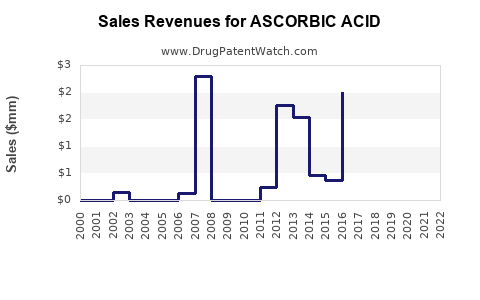
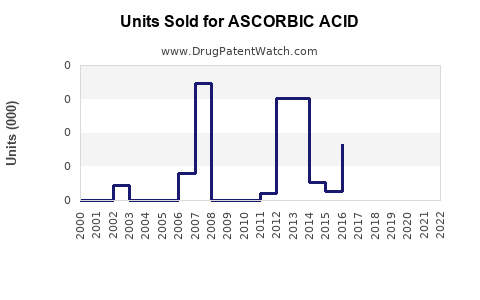
Last updated: February 21, 2026
What is the Current Global Market Size for Ascorbic Acid?
The global ascorbic acid market was valued at approximately $1.2 billion in 2022. It is projected to grow at a compound annual growth rate (CAGR) of 4.2% from 2023 to 2030. The market is segmented by applications, with the pharmaceutical sector holding about 45%, food and beverage 35%, and cosmetics 20%. Major producing countries include China, the United States, and India.
What are the Key Drivers Influencing Market Growth?
-
Health Awareness and Supplementation: Rising consumer awareness about health benefits boosts demand for vitamin C supplements. The global dietary supplements market, including vitamin C, is expected to grow from $140 billion in 2022 to over $230 billion by 2027.
-
Food Fortification and Preservation: Ascorbic acid is used as an antioxidant and preservative in processed foods. Regulations encouraging food fortification support increased consumption.
-
Pharmaceutical Applications: It is used in intravenous therapies, especially in hospitals and clinics, driving demand in healthcare sectors. The hospital segment is expected to grow at a CAGR of around 3.8% during 2023-2030.
-
Cosmetics Industry: An increasing trend toward skincare products containing vitamin C boosts demand in cosmetics. The segment is projected to expand at a CAGR of 4.7% through 2030.
How Does Regional Market Distribution Look?
| Region |
Market Share (2022) |
CAGR (2023-2030) |
Key Factors |
| Asia-Pacific |
50% |
4.5% |
Dominance in manufacturing and exports, low raw material costs |
| North America |
20% |
3.8% |
High consumer health awareness, strong pharmaceutical sector |
| Europe |
15% |
3.5% |
Strict quality regulations, focus on food additives |
| Rest of World |
15% |
4.0% |
Growing markets in Latin America, Africa, and the Middle East |
What are the Main Companies in the Ascorbic Acid Market?
- CSPC Pharmaceutical Group (China)
- Shandong Xinhua Pharmaceutical (China)
- DSM (Netherlands)
- Kawaken Pharmaceutical (Japan)
- Nippon Fine Chemical (Japan)
- North China Pharmaceutical (China)
These players control over 60% of the global production capacity. The market is characterized by high consolidation, with several Chinese firms competing on price.
What Are the Production Trends and Raw Material Costs?
Ascorbic acid production mainly relies on two pathways:
- German Method (controversial): uses acetone as a raw material.
- Biological Method: fermentation-based processes using glucose or sorbitol, dominant since they are more environmentally friendly.
Raw material costs, primarily glucose or sorbitol, account for roughly 40% of production costs. Fluctuations in raw material prices directly influence market prices.
What Are Sales Projections for the Next Five Years?
| Year |
Estimated Market Size |
Growth Rate |
Key Drivers |
| 2023 |
$1.3 billion |
4.2% |
Increased supplement demand |
| 2024 |
$1.36 billion |
4.6% |
Expansion in food and pharma sectors |
| 2025 |
$1.43 billion |
4.9% |
Increased regulation adherence |
| 2026 |
$1.5 billion |
4.8% |
Innovation in cosmetic formulations |
| 2027 |
$1.58 billion |
4.7% |
Market penetration in emerging regions |
What Risks Could Affect Market Growth?
- Raw Material Price Fluctuations: Changes in glucose or sorbitol costs impact profitability.
- Regulation and Quality Standards: Stricter regulations could hinder small producers.
- Environmental Regulations: Shift toward sustainable processes might increase production costs.
- Market Saturation: High reliance on Chinese manufacturing could lead to price competition and oversupply.
Conclusion
The ascorbic acid market exhibits steady growth driven by health supplement demand, food fortification, and ongoing applications in pharmaceuticals and cosmetics. Regional dynamics favor Asia-Pacific's dominance due to manufacturing capacity and cost advantages. Companies should monitor raw material prices, regulatory changes, and sustainability pressures for strategic positioning.
Key Takeaways
- The global market size was approximately $1.2 billion in 2022, with a projected CAGR of over 4% to 2030.
- Asia-Pacific leads the industry with 50% market share, mainly Chinadominate production.
- Core applications include dietary supplements (45%), food preservatives (35%), and cosmetics (20%).
- Production costs are sensitive to glucose/sorbitol raw material prices, influencing market prices.
- Market growth is tempered by regulatory and environmental considerations, especially in developed regions.
FAQs
1. What are the main drivers of growth in the ascorbic acid market?
Health awareness, food fortification, pharmaceutical applications, and cosmetic innovations.
2. Which regions are expected to dominate the market from 2023 to 2030?
Asia-Pacific leads with around half of the global demand, followed by North America and Europe.
3. How does raw material cost affect pricing and profitability?
Fluctuations in glucose and sorbitol prices influence production costs, impacting market prices and margins.
4. What are key strategies for companies to succeed in this market?
Invest in sustainable production, diversify application segments, and navigate regulatory environments effectively.
5. What challenges does the market face in the coming years?
Price volatility of raw materials, environmental regulations, and market oversaturation from Chinese manufacturers.
References
[1] MarketsandMarkets. 2023. "Ascorbic Acid Market by Application, End-Use Sector, and Region."
[2] Grand View Research. 2022. "Vitamin C Market Size, Share & Trends."
[3] Asia-Pacific Economic Cooperation. 2022. "Market Insights on Food Additives."