Share This Page
Drug Sales Trends for APRISO
✉ Email this page to a colleague
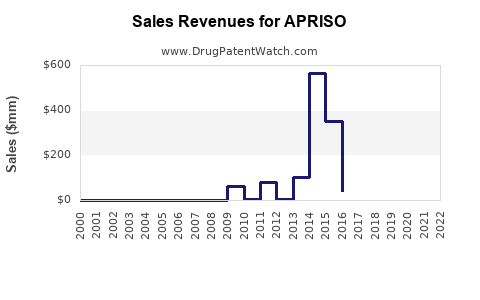
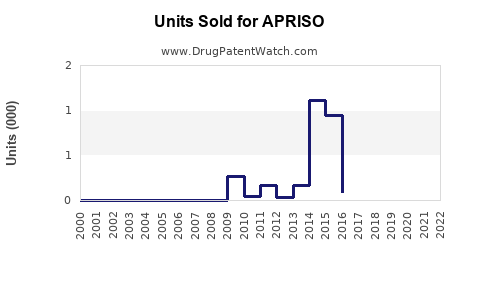
Annual Sales Revenues and Units Sold for APRISO
| Drug Name | Revenues (USD) | Units | Year |
|---|---|---|---|
| APRISO | ⤷ Start Trial | ⤷ Start Trial | 2022 |
| APRISO | ⤷ Start Trial | ⤷ Start Trial | 2021 |
| APRISO | ⤷ Start Trial | ⤷ Start Trial | 2020 |
| APRISO | ⤷ Start Trial | ⤷ Start Trial | 2019 |
| APRISO | ⤷ Start Trial | ⤷ Start Trial | 2018 |
| >Drug Name | >Revenues (USD) | >Units | >Year |
APRISO Market Analysis and Sales Projections: Mesalamine Extended-Release Outlook
APRISO is a mature oral mesalamine product used for maintenance of remission in adults with ulcerative colitis. Its commercial value is constrained by generic mesalamine extended-release competition, limited use in induction therapy, and extensive substitution within the broader 5-aminosalicylic acid market. The brand remains commercially relevant through physician familiarity, once-daily dosing, and managed-care positioning, but long-term sales are more likely to decline gradually than expand.
Public filings do not disclose standalone APRISO revenue. The following analysis uses FDA labeling, market structure, generic competition, Bausch Health disclosures, and scenario-based assumptions to estimate the product’s commercial trajectory.
What is APRISO and how is it used?
APRISO contains mesalamine, also known as 5-aminosalicylic acid or 5-ASA. It is an extended-release oral capsule approved for the maintenance of remission in adults with ulcerative colitis.
| Product attribute | APRISO |
|---|---|
| Active ingredient | Mesalamine |
| Dosage form | Extended-release capsules |
| Strength | 0.375 g per capsule |
| Recommended dose | 1.5 g once daily, or four capsules |
| Indication | Maintenance of remission of ulcerative colitis |
| Induction indication | No |
| Route | Oral |
| Original FDA approval | 2008 |
| Current commercial owner | Bausch Health through its Salix Pharmaceuticals business |
| Primary competitors | Generic mesalamine ER, Lialda, Delzicol, Asacol HD, Pentasa |
APRISO uses a proprietary extended-release delivery system designed to release mesalamine throughout the colon. The formulation is intended to support once-daily dosing, which differentiates it from some older mesalamine products that require multiple daily administrations.[1]
What is the U.S. market for APRISO and mesalamine?
The U.S. ulcerative colitis market is divided among oral 5-ASA drugs, corticosteroids, immunomodulators, biologics, and small-molecule therapies. Mesalamine remains widely used in mild-to-moderate disease and in maintenance therapy, despite increasing use of advanced treatments in moderate-to-severe disease.
The relevant commercial market has three layers:
- The total ulcerative colitis treatment market, which includes biologics and targeted immunotherapies.
- The oral mesalamine market, which includes branded and generic formulations.
- The APRISO addressable segment, consisting primarily of adult patients receiving once-daily extended-release mesalamine for maintenance.
APRISO does not compete directly across all ulcerative colitis treatment stages. Its strongest commercial position is in patients with mild disease, patients in remission, and patients who prefer an oral maintenance regimen.
Key demand drivers
- Continued prevalence of ulcerative colitis in the United States.
- Long-term maintenance treatment among patients who respond to mesalamine.
- Preference for oral therapy in mild-to-moderate disease.
- Once-daily dosing.
- Generic pricing pressure that expands total mesalamine use but reduces branded revenue.
- Switching between mesalamine formulations based on insurance coverage and formulary status.
Key demand constraints
- APRISO is not approved for induction of remission.
- Biologics and small molecules are taking share in moderate-to-severe disease.
- Generic mesalamine products are available at lower prices.
- Payers frequently require generic substitution.
- Clinical differentiation among oral mesalamine products is limited for many patients.
How large are APRISO sales?
Bausch Health reports revenue by business segment and major products but does not consistently disclose standalone APRISO revenue in public annual filings. Salix revenue is substantially concentrated in XIFAXAN, while APRISO is a smaller product within the gastrointestinal portfolio.[2]
A reasonable estimate places current U.S. branded APRISO net sales in the low tens of millions of dollars annually, rather than in the hundreds of millions. The estimate reflects the product’s mature status, generic competition, and lack of product-level disclosure.
Estimated U.S. branded APRISO sales
| Year | Low case | Base case | High case |
|---|---|---|---|
| 2023 | $15 million | $25 million | $40 million |
| 2024 | $13 million | $22 million | $35 million |
| 2025 | $11 million | $19 million | $31 million |
| 2026 | $9 million | $16 million | $28 million |
| 2027 | $8 million | $14 million | $25 million |
| 2028 | $7 million | $12 million | $22 million |
These figures represent estimated branded net sales, not total sales of mesalamine products and not total prescription-market spending. The base case assumes annual branded erosion of approximately 12% to 15%, driven by generic substitution and formulary pressure.
What are the APRISO sales projections through 2028?
The base-case projection is for APRISO branded U.S. sales to decline from approximately $22 million in 2024 to about $12 million in 2028. This represents a compound annual decline of approximately 13%.
Base-case projection
| Year | Estimated sales | Annual change | Market interpretation |
|---|---|---|---|
| 2024 | $22 million | N/A | Mature branded demand |
| 2025 | $19 million | -14% | Continued generic substitution |
| 2026 | $16 million | -16% | Further payer migration |
| 2027 | $14 million | -13% | Stable clinical demand, lower brand capture |
| 2028 | $12 million | -14% | Residual branded maintenance market |
Upside scenario
APRISO could perform better if Bausch secures favorable formulary placement, maintains supply reliability, limits net price erosion, or promotes adherence benefits associated with once-daily dosing. Under that scenario, sales could remain near $20 million to $25 million by 2028.
Downside scenario
A faster decline could result from broader generic availability, aggressive payer substitution, a major formulary exclusion, or a shift toward authorized or marketed generic versions. Under that scenario, sales could fall below $10 million by 2027.
The central commercial conclusion is that APRISO has residual cash-flow value but limited growth potential. Its value depends more on cost control, pricing discipline, and portfolio fit than on market expansion.
How does APRISO compare with competing mesalamine products?
APRISO competes with several formulations that use different release mechanisms and dosing schedules.
| Product | Ingredient | Formulation profile | Main commercial position |
|---|---|---|---|
| APRISO | Mesalamine | Extended-release capsule; once daily | Maintenance of remission |
| Lialda | Mesalamine | Multi-Matrix System tablet; once daily | Broad oral mesalamine franchise |
| Delzicol | Mesalamine | Delayed-release capsule | Maintenance and active disease use |
| Asacol HD | Mesalamine | Delayed-release tablet | Older branded formulation |
| Pentasa | Mesalamine | Controlled-release capsule | Small-intestinal and colonic delivery |
| Generic mesalamine ER | Mesalamine | Formulation-specific generic equivalents | Low-cost substitution |
Lialda has generally had greater commercial scale than APRISO because of broader physician familiarity, once-daily dosing, and stronger historical market presence. APRISO’s main differentiation is formulation and dosing convenience rather than a clearly superior efficacy profile.
The products are not always therapeutically interchangeable on a milligram-for-milligram basis. Release characteristics, tablet or capsule design, and labeling can affect substitution decisions. Formulary policies often determine the initial product selected.
What generic entry risks affect APRISO?
Generic competition is the largest risk to APRISO revenue. Mesalamine is a chemically defined small molecule, and the regulatory pathway for generic approval is substantially less complex than the pathway for a biosimilar.
Generic entry risks include:
- Additional abbreviated new drug applications for mesalamine extended-release capsules.
- Formulation-specific substitution by pharmacy benefit managers.
- Lower average selling prices.
- Mandatory or preferred generic placement.
- Declining physician sensitivity to brand differences.
- Reduced return on promotional spending.
The key distinction is that generic mesalamine products must demonstrate pharmaceutical equivalence and bioequivalence to the relevant reference product. A generic manufacturer does not need to reproduce every commercial attribute of APRISO, but it must satisfy FDA requirements for the applicable dosage form and release profile.[3]
Generic launch scenarios
| Scenario | Timing | Commercial effect |
|---|---|---|
| Limited generic competition | One or two suppliers | Moderate price erosion |
| Standard generic competition | Several approved suppliers | 30% to 60% branded volume loss over time |
| Aggressive competition | Multiple suppliers and preferred formulary placement | 60% to 85% branded volume loss |
| Authorized generic strategy | Brand owner supplies or licenses generic | Revenue retention through lower-margin volume |
The most likely outcome is continued erosion rather than an abrupt market disappearance. Patients already stabilized on APRISO may remain on the brand, while new prescriptions and refill conversions increasingly move to lower-cost alternatives.
What patents and exclusivity protect APRISO?
APRISO’s principal protection is no longer expected to come from meaningful market exclusivity. The product was approved in 2008, and its original regulatory exclusivity periods have expired.
| Protection type | APRISO status |
|---|---|
| New chemical entity exclusivity | Expired |
| Five-year NCE exclusivity | Not applicable to current commercial period |
| Three-year clinical investigation exclusivity | Expired |
| Orphan-drug exclusivity | Not applicable |
| Patent protection | Any relevant protection is mature or expired, subject to patent-by-patent review |
| Generic pathway | Available under the ANDA framework |
The commercial question is therefore not whether APRISO has a remaining exclusivity moat comparable to a new drug. It does not. The relevant barriers are formulation complexity, manufacturing consistency, FDA approval requirements, supply continuity, payer contracting, and brand-prescription persistence.
Formulation and manufacturing barriers
APRISO’s extended-release behavior depends on the design of the capsule and the release characteristics of the mesalamine-containing granules. Generic manufacturers must meet applicable quality and bioequivalence standards. Manufacturing barriers can delay entry, but they are unlikely to create durable exclusivity for a mature mesalamine product.
The product’s manufacturing value is therefore operational rather than patent-based. Reliable supply, low manufacturing cost, and consistent release performance can support continued sales even after patent expiry.
What is the FDA and Orange Book status of APRISO?
APRISO is an FDA-approved prescription drug marketed under New Drug Application 022301. Its approved use is maintenance of remission in adults with ulcerative colitis.[1]
The FDA Orange Book provides the relevant reference-product and therapeutic-equivalence framework for generic competition. For APRISO, commercial assessment should focus on:
- Whether the reference product remains actively marketed.
- The number of approved or pending ANDAs.
- Therapeutic-equivalence ratings for generic products.
- Any listed patents or regulatory exclusivity codes.
- Whether a generic product is approved for the same strength and release characteristics.
Because Orange Book entries and ANDA status can change, current launch-risk analysis requires review of the live FDA listing rather than reliance on historical patent dates.[4]
Are Paragraph IV challenges relevant to APRISO?
Paragraph IV litigation risk is likely to be lower than for a high-value, patent-protected drug because APRISO’s commercial opportunity is comparatively limited and its principal exclusivity period has elapsed.
A generic applicant can use a Paragraph IV certification when it asserts that a listed patent is invalid, unenforceable, or will not be infringed. If a brand owner receives appropriate notice and files suit within the statutory period, FDA approval may be subject to a 30-month stay, subject to statutory exceptions.[5]
For APRISO, the practical risk assessment is:
| Issue | Assessment |
|---|---|
| Incentive to file Paragraph IV | Moderate to low |
| Value of delayed entry | Limited by modest brand sales |
| Litigation economics | Less attractive than for blockbuster drugs |
| Formulation challenge | More relevant than active-ingredient challenge |
| Likely commercial effect | Generic entry and price erosion rather than prolonged litigation |
No major current litigation outcome should be assumed without a review of PACER, FDA records, and the latest Orange Book entry.
What is the competitive outlook for APRISO?
APRISO faces competition from both other mesalamine products and therapies that reduce dependence on 5-ASA treatment.
Direct competitors
Lialda is the strongest branded comparator in oral mesalamine. Generic mesalamine ER products are the most important price competitors. Delzicol and Pentasa compete through different delivery profiles and prescribing habits.
Indirect competitors
For patients with more active or refractory disease, physicians may use:
- Budesonide formulations.
- Systemic corticosteroids.
- Immunomodulators.
- Tumor necrosis factor inhibitors.
- Interleukin inhibitors.
- Janus kinase inhibitors.
- S1P receptor modulators.
- Other targeted small molecules.
These therapies generally do not replace APRISO in all patients. They reduce the addressable population when disease severity exceeds the practical role of oral mesalamine.
Which companies are positioned to challenge APRISO?
Generic pharmaceutical companies with experience in oral solid-dose products and modified-release formulations are the most likely competitors. The commercial opportunity is suitable for manufacturers that can achieve FDA approval with limited promotional infrastructure and compete primarily on price.
Potential competitive groups include:
- Large generic manufacturers with established gastroenterology portfolios.
- Specialty generic companies focused on modified-release capsules.
- Contract manufacturers supplying private-label or authorized-generic products.
- Pharmaceutical companies expanding existing mesalamine portfolios.
The competitive landscape is fragmented. No single generic entrant needs to displace the entire brand franchise. A small number of formulary-preferred products can materially reduce APRISO revenue.
What licensing or partnering opportunities exist for APRISO?
APRISO has limited licensing upside as a standalone asset. Potential transaction value would be based on cash flow, manufacturing economics, and portfolio synergies rather than patent duration.
Possible transaction structures include:
- Acquisition by a generic or specialty-pharmaceutical company.
- Regional licensing outside the United States.
- Authorized-generic commercialization.
- Portfolio bundling with other gastroenterology products.
- Contract manufacturing and supply arrangements.
A buyer would likely discount the asset for generic erosion, limited indication breadth, and low growth. The product could still have strategic value if it fills manufacturing capacity, supports a gastroenterology sales platform, or generates stable cash flow at low promotional cost.
What revenue exposure does APRISO create for Bausch Health?
APRISO is unlikely to represent a material share of Bausch Health’s consolidated revenue. Within Salix, the product is smaller than XIFAXAN and other major gastrointestinal assets. Its importance is more likely operational than transformational.
The main exposure categories are:
| Exposure | Commercial impact |
|---|---|
| Generic substitution | Primary downside risk |
| Net price reduction | Direct revenue and margin pressure |
| Supply disruption | Potential rapid prescription loss |
| Formulary exclusion | Lower new-patient acquisition |
| Manufacturing cost inflation | Reduced residual profitability |
| Brand loyalty | Supports slower erosion |
| Portfolio divestiture | Possible strategic monetization |
APRISO can remain profitable after significant revenue decline if manufacturing and commercial costs are low. A mature product with modest sales may still generate attractive contribution margin when it requires limited sales-force support.
Key Takeaways
- APRISO is a mature mesalamine extended-release product for maintenance of remission in adult ulcerative colitis.
- Its FDA approval dates to 2008, and meaningful new-drug exclusivity has expired.
- Generic mesalamine extended-release products are the central threat to branded revenue.
- Public filings do not provide standalone APRISO sales.
- Estimated U.S. branded sales are approximately $19 million to $25 million in 2025, with a base-case decline to about $12 million by 2028.
- Lialda and generic mesalamine products are the principal direct competitors.
- APRISO’s commercial durability depends on once-daily dosing, physician familiarity, formulary access, supply reliability, and low operating costs.
- Paragraph IV litigation is less economically attractive than it would be for a blockbuster product because the residual brand opportunity is limited.
- The product has cash-flow and portfolio value but limited growth or exclusivity value.
FAQs about APRISO market size and commercial outlook
Is APRISO still a branded drug?
Yes. APRISO remains an FDA-approved branded mesalamine product marketed through Bausch Health’s Salix business, although generic competition reduces its commercial share.
Can APRISO be used to induce remission?
No. APRISO is labeled for maintenance of remission in adults with ulcerative colitis. It is not labeled for induction of remission.
Is generic mesalamine the same as APRISO?
Generic mesalamine products may have the same active ingredient but can differ in release mechanism, dosage form, strength, and labeling. Substitution depends on the specific FDA-approved product and applicable state and payer rules.
Does APRISO have biosimilar risk?
No. APRISO contains a small-molecule active ingredient, not a biologic. Its competitive risk comes from generic drug products rather than biosimilars.
Could APRISO sales increase after a licensing deal?
A licensing deal could improve distribution or reduce operating costs, but sustained sales growth would require stronger formulary access, differentiated positioning, or a new approved use. The mature generic market makes a material increase unlikely without a significant commercial change.
References
- U.S. Food and Drug Administration. (2019). APRISO (mesalamine) extended-release capsules prescribing information.
- Bausch Health Companies Inc. (2024). Annual report on Form 10-K for the fiscal year ended December 31, 2023.
- U.S. Food and Drug Administration. (2024). Generic drugs: Questions and answers.
- U.S. Food and Drug Administration. (2024). Approved drug products with therapeutic equivalence evaluations, 44th edition.
- U.S. Congress. (1984). Drug Price Competition and Patent Term Restoration Act of 1984, Pub. L. No. 98-417.
More… ↓
