Share This Page
Drug Sales Trends for AMPHET/DEXTR
✉ Email this page to a colleague
Payment Methods and Pharmacy Types for AMPHET/DEXTR (2022)
Revenues by Pharmacy Type
Units Sold by Pharmacy Type
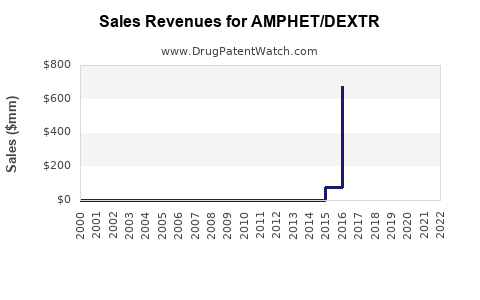
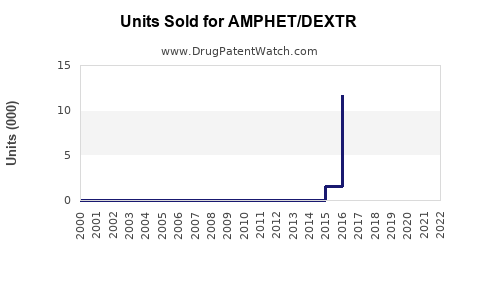
Annual Sales Revenues and Units Sold for AMPHET/DEXTR
| Drug Name | Revenues (USD) | Units | Year |
|---|---|---|---|
| AMPHET/DEXTR | ⤷ Start Trial | ⤷ Start Trial | 2022 |
| AMPHET/DEXTR | ⤷ Start Trial | ⤷ Start Trial | 2021 |
| AMPHET/DEXTR | ⤷ Start Trial | ⤷ Start Trial | 2020 |
| AMPHET/DEXTR | ⤷ Start Trial | ⤷ Start Trial | 2019 |
| AMPHET/DEXTR | ⤷ Start Trial | ⤷ Start Trial | 2018 |
| AMPHET/DEXTR | ⤷ Start Trial | ⤷ Start Trial | 2017 |
| >Drug Name | >Revenues (USD) | >Units | >Year |
Amphetamine/Dextroamphetamine Market Analysis and Sales Projections
Amphetamine/dextroamphetamine, commonly marketed as Adderall and Adderall XR, is a mature U.S. central nervous system stimulant market dominated by generic manufacturers. The market has durable prescription demand but limited pricing power, no meaningful remaining brand exclusivity, recurring supply constraints, and regulatory exposure from controlled-substance quotas. A base-case U.S. manufacturer-sales forecast is approximately $1.1 billion in 2025, increasing to $1.3 billion by 2029, with volume growth offset by generic price erosion.
What is the amphetamine/dextroamphetamine market?
Amphetamine/dextroamphetamine is approved for attention-deficit/hyperactivity disorder and narcolepsy. The immediate-release product contains mixed amphetamine salts, while Adderall XR uses an extended-release formulation. Both products are Schedule II controlled substances in the United States.
The market has four commercial segments:
| Segment | Main products | Commercial status |
|---|---|---|
| Immediate-release tablets | Generic amphetamine/dextroamphetamine; Adderall | Mature generic market |
| Extended-release capsules | Generic amphetamine/dextroamphetamine ER; Adderall XR | Mature generic market with greater formulation complexity |
| Brand products | Adderall and Adderall XR | Limited branded share |
| Competing stimulants | Vyvanse, generic lisdexamfetamine, methylphenidate products | Main substitutes |
The FDA approved Adderall XR for ADHD in 2001. Generic immediate-release products have been available for many years, and multiple manufacturers sell generic extended-release capsules. The active ingredient is supplied through regulated controlled-substance manufacturing channels, making production capacity and quota allocations central commercial constraints.[1]
How large is the U.S. amphetamine/dextroamphetamine market?
Public companies generally do not report amphetamine/dextroamphetamine sales as a separate product category. Generic manufacturers report broader portfolios, and pharmacy benefit managers do not disclose complete net-price data. The most reliable market indicators are prescription volume, product availability, average manufacturer pricing, and the number of approved suppliers.
A practical market model places U.S. amphetamine/dextroamphetamine demand at approximately 45 million to 55 million 30-day-equivalent prescriptions annually. The market’s total manufacturer-level value is estimated at approximately $1.0 billion to $1.4 billion in 2025.
| Metric | 2025 estimate | 2029 base case |
|---|---|---|
| U.S. 30-day-equivalent prescriptions | 45-55 million | 49-60 million |
| Annual prescription-volume growth | 1%-4% | 2%-3% |
| Manufacturer net sales | $1.0-$1.3 billion | $1.2-$1.4 billion |
| Generic share of volume | More than 95% | More than 97% |
| Brand share of volume | Less than 5% | Less than 3% |
| Primary commercial risk | Supply shortages and quota limits | Price erosion and substitution |
These figures are modeled estimates rather than reported company revenue. They distinguish manufacturer sales from retail cash prices, which can be materially higher.
What are the sales projections for amphetamine/dextroamphetamine?
The base case assumes continued ADHD diagnosis growth, stable adult treatment demand, improving but recurring supply availability, and annual generic price declines of approximately 2% to 4%.
| Year | Low case | Base case | High case |
|---|---|---|---|
| 2025 | $0.95B | $1.10B | $1.30B |
| 2026 | $0.97B | $1.15B | $1.36B |
| 2027 | $1.00B | $1.19B | $1.42B |
| 2028 | $1.03B | $1.24B | $1.48B |
| 2029 | $1.06B | $1.29B | $1.55B |
Base-case assumptions
The base case uses the following commercial assumptions:
- Prescription volume grows 2% to 3% annually.
- Generic penetration increases modestly as brand utilization declines.
- Average net price declines 2% to 3% annually.
- Supply shortages remain episodic rather than permanent.
- No major withdrawal of FDA-approved manufacturers occurs.
- Generic lisdexamfetamine captures part of the extended-release stimulant market but does not displace amphetamine/dextroamphetamine broadly.
- Prescribers continue to use immediate-release amphetamine products for titration, flexible dosing, and lower cost.
Under these assumptions, the market grows in nominal sales because prescription volume exceeds price erosion. Real, inflation-adjusted growth is limited.
What factors will drive amphetamine/dextroamphetamine sales?
ADHD diagnosis and treatment expansion
Demand is supported by increased diagnosis among adults, continued pediatric treatment, and treatment persistence among patients who respond to stimulant therapy. The Centers for Disease Control and Prevention reports substantial use of prescription stimulants among children and adolescents, while adult diagnosis and treatment have expanded through primary care and telehealth channels.[2]
The market is less dependent on new patient starts than on refill persistence. Patients who tolerate amphetamine/dextroamphetamine often remain on therapy for extended periods, although switches occur because of side effects, supply disruptions, insurance formulary changes, or prescriber preference.
Supply availability
The FDA placed multiple amphetamine mixed-salt presentations on its drug shortage database after manufacturing disruptions and demand growth. Shortages have affected both immediate-release and extended-release presentations, with the severity varying by strength, package size, and manufacturer.[3]
Shortages can increase nominal sales for manufacturers with available inventory, but they also reduce total prescriptions when patients switch to other stimulants or cannot fill prescriptions. The commercial effect is therefore uneven:
- Manufacturers with quota capacity and reliable active pharmaceutical ingredient supply gain share.
- Smaller manufacturers may lose sales when a specific strength is unavailable.
- Pharmacies and prescribers may substitute methylphenidate or lisdexamfetamine.
- Patients may receive partial fills, producing lower realized prescription volume.
Controlled-substance quotas
The Drug Enforcement Administration establishes annual production quotas for Schedule II stimulants. Quotas restrict the amount of amphetamine base and related substances that manufacturers can produce, even when prescription demand exceeds available inventory.[4]
Quota allocation is a structural constraint rather than a conventional patent or market-access issue. A supplier with an approved product but insufficient quota may not be able to increase sales during a shortage.
Generic competition
Generic competition is intense. The immediate-release market has limited technical barriers, while extended-release products require more complex release characteristics, manufacturing controls, and bioequivalence support. Generic prices remain below brand prices, and pharmacy benefit managers typically place generic products on preferred tiers.
When does amphetamine/dextroamphetamine lose exclusivity?
Core U.S. exclusivity for amphetamine/dextroamphetamine has already expired. The current market is not protected by an active compound patent or meaningful regulatory exclusivity period.
Adderall and Adderall XR have faced generic competition for years. The key commercial barriers now involve:
- FDA approval and bioequivalence requirements
- Controlled-substance manufacturing registration
- DEA quota access
- Reliable active pharmaceutical ingredient supply
- Formulation and release-profile manufacturing
- Pharmacy and wholesaler contracts
The principal patent risk is therefore not loss of exclusivity. It is the cost and timing of launching a competing generic product, especially an extended-release formulation.
What formulations are protected by amphetamine/dextroamphetamine patents?
Immediate-release tablets are relatively straightforward formulations and have limited defensibility. Extended-release capsules historically provided stronger formulation protection because release timing depends on bead technology, coating systems, particle size, and dissolution performance.
The historical Adderall XR patent estate covered extended-release delivery concepts rather than the amphetamine molecule itself. Those patent barriers have expired or ceased to be commercially decisive. Current generic competition confirms that the market has moved from patent protection to manufacturing and supply execution.
Potentially protectable technical areas include:
| Technical area | Current commercial significance |
|---|---|
| Extended-release bead systems | Moderate manufacturing barrier |
| Release-rate coatings | Moderate |
| Capsule filling and bead uniformity | Moderate |
| Alternative dosage strengths | Low patent value; useful for portfolio breadth |
| Abuse-deterrent formulations | Limited market adoption |
| Pediatric liquid or orally disintegrating forms | Potential niche opportunity |
| Manufacturing process controls | May support trade-secret protection |
A new formulation would require a differentiated clinical or commercial benefit to justify development. A minor release-profile change would face a difficult reimbursement and substitution environment.
What is the FDA regulatory status of amphetamine/dextroamphetamine?
Amphetamine/dextroamphetamine is FDA-approved for ADHD and narcolepsy. Immediate-release tablets and extended-release capsules are available from multiple approved manufacturers. Products are approved under abbreviated new drug applications when they demonstrate pharmaceutical equivalence and bioequivalence to the reference product.
Important regulatory characteristics include:
- Schedule II classification
- No refills under federal controlled-substance rules
- State-level prescribing and dispensing requirements
- Manufacturing quotas administered by the DEA
- FDA oversight of shortages, labeling, manufacturing, and product quality
- Bioequivalence requirements for generic immediate-release and extended-release products
Telemedicine prescribing policies can affect initiation and continuation of stimulant therapy. Changes to federal telehealth rules, state prescribing requirements, or electronic prescribing mandates could alter access and refill behavior.
What is the Orange Book status of Adderall and Adderall XR?
The Orange Book lists approved reference products and corresponding generic products. For a mature product such as Adderall or Adderall XR, Orange Book relevance is primarily regulatory and litigation-related rather than exclusivity-related.
The market implications are:
- Generic applicants can rely on the reference product’s safety and efficacy findings.
- Paragraph IV certifications were relevant during the original generic-entry period.
- Current entrants generally face fewer core patent obstacles than earlier applicants.
- Any newly listed formulation patent would need to be evaluated by strength, dosage form, expiration date, and claims scope.
- Orange Book-listed patents do not necessarily prevent approval if the applicant certifies patent expiry or provides a successful patent challenge.
An accurate current patent-by-patent Orange Book table requires a live FDA Orange Book record because listings and delistings can change. The commercial conclusion remains that the core amphetamine/dextroamphetamine market is genericized.
Which companies compete in the amphetamine/dextroamphetamine market?
The competitive field includes branded and generic pharmaceutical companies. Historical and current market participants have included:
- Teva Pharmaceuticals
- Sandoz
- Prasco Laboratories
- Rhodes Pharmaceuticals
- Lannett Company
- Amneal Pharmaceuticals
- ANI Pharmaceuticals
- Hikma Pharmaceuticals
- Tris Pharma
- Takeda Pharmaceutical, through the legacy Shire portfolio
The exact supplier ranking varies by strength, dosage form, channel, and shortage conditions. A company may have meaningful sales in extended-release capsules but limited participation in immediate-release tablets.
How does amphetamine/dextroamphetamine compare with competing ADHD drugs?
| Product | Generic status | Main advantage | Main commercial risk |
|---|---|---|---|
| Amphetamine/dextroamphetamine IR | Generic | Low cost and flexible dosing | Short duration and supply volatility |
| Amphetamine/dextroamphetamine ER | Generic | Extended coverage | Formulation and shortage issues |
| Lisdexamfetamine | Generic available | Prodrug profile and once-daily use | Higher cost and generic price erosion |
| Methylphenidate IR/ER | Generic | Broad clinical use and alternatives | Product-specific shortages |
| Atomoxetine | Generic | Nonstimulant treatment | Lower demand and slower onset |
| Guanfacine ER | Generic | Nonstimulant option | Sedation and lower stimulant efficacy |
Generic lisdexamfetamine creates the most direct competitive pressure in the long-acting stimulant segment. It is less likely to eliminate amphetamine/dextroamphetamine demand because clinicians use the products differently and patients respond variably.
What patent litigation and Paragraph IV risks remain?
Historical Paragraph IV litigation involved generic challenges to branded amphetamine/dextroamphetamine products, particularly extended-release formulations. Those disputes were relevant before broad generic entry and are no longer the principal market risk for standard products.
Future litigation risk could arise from:
- A new branded extended-release formulation
- A reformulated abuse-deterrent product
- A long-acting delivery system with a new patent estate
- Patent claims directed to manufacturing processes
- ANDA litigation involving a newly approved reference product
For standard immediate-release and extended-release amphetamine/dextroamphetamine products, patent litigation risk is low relative to regulatory, manufacturing, and supply-chain risk.
Are licensing deals material to the market?
No disclosed licensing arrangement is necessary for a generic manufacturer to sell standard amphetamine/dextroamphetamine once FDA approval, controlled-substance registration, and quota requirements are satisfied.
The most relevant commercial transaction is the historical transfer of the Shire business to Takeda. That transaction affected ownership of the Adderall franchise but did not preserve meaningful market exclusivity after generic entry.[5]
Licensing could become relevant if a company develops:
- A differentiated extended-release delivery platform
- A pediatric formulation
- An abuse-deterrent stimulant
- A combination product
- A specialty product with a new clinical indication
What generic launch scenarios exist?
Base scenario
Generic supply remains adequate most of the year, with intermittent shortages in selected strengths. Prescription volume rises 2% to 3% annually, while net prices decline. Market sales reach approximately $1.3 billion by 2029.
Upside scenario
Diagnosis growth, adult treatment expansion, and improved supply availability produce 4% to 5% volume growth. Manufacturers with quota capacity gain share. Sales reach approximately $1.5 billion by 2029.
Downside scenario
Persistent shortages, stricter telehealth controls, substitution into methylphenidate or nonstimulants, and aggressive generic pricing reduce market value. Sales remain near $1.0 billion to $1.1 billion through 2029.
How strong is the amphetamine/dextroamphetamine patent estate?
The patent estate is weak for standard products and moderate for complex extended-release technology.
| Risk category | Assessment |
|---|---|
| Compound patent protection | None of commercial significance |
| Immediate-release formulation | Weak |
| Extended-release formulation | Historical strength, limited current blocking power |
| Method-of-use patents | Low relevance for approved ADHD and narcolepsy uses |
| Manufacturing know-how | Moderate |
| Regulatory exclusivity | Expired for core products |
| Supply-chain barriers | High |
| DEA quota barriers | High |
The market’s defensibility is operational rather than intellectual-property based. Scale, quota access, inventory management, and wholesaler relationships matter more than patent ownership.
Key Takeaways
- Amphetamine/dextroamphetamine is a mature, heavily genericized U.S. stimulant market.
- Estimated 2025 manufacturer sales are approximately $1.0 billion to $1.3 billion.
- Base-case sales could reach approximately $1.3 billion by 2029.
- Core compound and formulation exclusivity has expired.
- Generic competition exceeds 95% of prescription volume.
- DEA quotas and manufacturing capacity are more important than patents.
- Extended-release products have higher technical barriers than immediate-release tablets.
- Generic lisdexamfetamine is the main long-acting competitive threat.
- Brand revenue exposure is limited; generic manufacturers capture most market value.
- The main downside risks are shortages, quota limits, price erosion, and substitution.
FAQs
Is Adderall still patent protected?
Core Adderall and Adderall XR patent protection has expired or is no longer commercially blocking for standard generic products. The market is dominated by FDA-approved generics.
What is the largest commercial risk for amphetamine/dextroamphetamine manufacturers?
The largest risk is supply disruption caused by DEA quota limits, active pharmaceutical ingredient shortages, manufacturing deviations, or uneven inventory across strengths.
Will generic Vyvanse reduce Adderall sales?
Generic lisdexamfetamine will pressure long-acting amphetamine products, but it is unlikely to eliminate Adderall demand because immediate-release dosing, price, patient response, and prescribing preferences differ.
Can a new amphetamine formulation obtain patent protection?
Yes. A new delivery system, abuse-deterrent design, combination product, or clinically differentiated formulation may obtain patents. Patent value depends on whether the product gains formulary access and meaningful clinical adoption.
Is amphetamine/dextroamphetamine an attractive licensing target?
A standard generic product has limited licensing value because the market is mature and price competitive. A differentiated long-acting or pediatric formulation could support licensing if it has defensible patents and a clear reimbursement advantage.
References
- U.S. Food and Drug Administration. (2023). Adderall and Adderall XR prescribing information.
- Centers for Disease Control and Prevention. (2023). Data and statistics on ADHD.
- U.S. Food and Drug Administration. (2024). Drug shortages: Amphetamine mixed salts.
- U.S. Drug Enforcement Administration. (2024). Established aggregate production quotas for controlled substances.
- Takeda Pharmaceutical Company Limited. (2019). Annual report and acquisition information relating to Shire plc.
More… ↓
