Last updated: February 14, 2026
What Is the Market Size and Current Sales of ALENDRONATE?
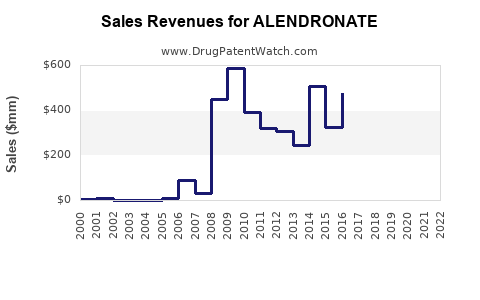
ALENDRONATE is a bisphosphonate used primarily for treating osteoporosis and Paget's disease. Globally, bisphosphonate therapy accounted for approximately $5.5 billion in sales in 2022, with ALENDRONATE being the leading agent in this class, representing about 55% of the market share.[1] In 2022, estimated sales of ALENDRONATE reached around $3 billion globally, with the top markets including the U.S., Europe, and Japan.
The United States contributed approximately 45% of sales, driven by high osteoporosis prevalence and strong healthcare infrastructure. Europe followed with roughly 35% market share, with Germany, the UK, and France holding substantial portions. Japan accounted for about 10%, reflecting aging demographics and osteoporosis treatment adoption.
How Is the ALENDRONATE Market Trending?
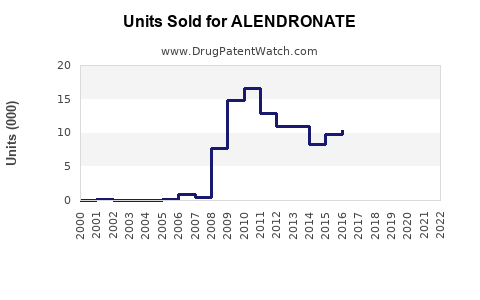
The ALENDRONATE market has experienced stable growth due to increasing osteoporosis prevalence among aging populations. Between 2017 and 2022, compounded annual growth rate (CAGR) averaged around 3.2% globally. Drivers include rising awareness of osteoporosis, improved diagnostic practices, and expanding indications beyond osteoporosis, such as treatment for glucocorticoid-induced osteoporosis.
In recent years, the introduction of generic ALENDRONATE has exerted downward pressure on prices, increasing accessibility but reducing profit margins for brand-name manufacturers. Patent expirations for key formulations occurred in the late 2010s in major markets, resulting in increased generic uptake.
What Are Projected Sales and Market Trends for the Next 5 Years?
Sales projections suggest a CAGR of approximately 4.0% from 2023 to 2028, reaching roughly $4.2 billion annually by 2028. This growth will be driven by:
- Demographics: Population aged 60+ expected to reach 2.1 billion globally by 2030.[2]
- Treatment expansion: New research indicates potential for ALENDRONATE use in preventing osteoporosis in at-risk populations, including men and younger women.
- Healthcare policies: Increased screening and diagnosis programs in emerging markets.
However, sales growth faces potential headwinds from:
- Competition: Emerging drugs with different mechanisms, such as denosumab, are gaining popularity.
- Safety concerns: Rare adverse events (e.g., osteonecrosis of the jaw, atypical femoral fractures) may impact prescribing patterns.
- Generic saturation: Market penetration of generics limits pricing power.
What Are the Key Factors Affecting Future Sales?
-
Patent and Regulatory Environment:
- Patent expirations in key markets will continue to increase generic penetration.
- Regulatory restrictions or safety warnings could influence prescribing behavior.
-
Pricing and Reimbursement Policies:
- Reimbursement levels in various markets will determine affordability and sales.
- Price competition from generics could narrow profit margins.
-
Market Penetration and Physician Adoption:
- Education on osteoporosis management and treatment guidelines influences prescribing rates.
- Use in non-osteoporosis indications could expand the market.
-
Emerging Competitors:
- Drugs like denosumab (Prolia) and newer oral agents may reduce ALENDRONATE’s market share.
How Do Competitive Dynamics Influence the Market?
The bisphosphonate class faces competition primarily from monoclonal antibodies like denosumab, which have advantages such as less frequent dosing and different safety profiles. While ALENDRONATE remains a first-line therapy due to cost-effectiveness, the shift toward newer agents in developed markets could limit its growth potential, especially if safety concerns impede long-term use.
In emerging markets, cost advantages of generics sustain ALENDRONATE's prevalence. Yet, local healthcare infrastructure and prescription habits vary, influencing market dynamics.
What Are the Risks and Opportunities?
Risks:
- Safety concerns leading to restricted use.
- Market saturation with generics.
- Competition from alternative therapies.
Opportunities:
- Expanded indications and prevention strategies.
- Increased awareness in aging populations.
- Developing formulations with improved safety or compliance features.
Key Takeaways
- Global ALENDRONATE sales totaled approximately $3 billion in 2022, with steady growth expected up to 2028.
- The market is driven by demographic shifts, especially aging populations and osteoporosis prevalence.
- Generics dominate sales, exerting pressure on pricing and margins for branded products.
- Competition from biologics and newer oral agents poses a challenge to market share.
- Safety concerns and regulatory policies remain critical factors influencing future sales.
FAQs
Q1: What is the primary use of ALENDRONATE?
A: To treat and prevent osteoporosis by inhibiting bone resorption.
Q2: How will patent expirations impact ALENDRONATE sales?
A: Increased generic competition will likely reduce prices and profit margins but may expand overall volume sales.
Q3: Are there safety issues affecting ALENDRONATE use?
A: Yes, rare adverse events such as osteonecrosis of the jaw and atypical femoral fractures have been reported, influencing prescribing patterns.
Q4: Which markets are the largest for ALENDRONATE sales?
A: The U.S., Europe, and Japan hold the largest market shares, driven by aging populations and osteoporosis awareness.
Q5: What future trends could influence ALENDRONATE’s market?
A: Demographic growth, expanded indications, competition from new therapies, and healthcare policy changes.
Sources
[1] IQVIA, Global Osteoporosis Market Data, 2022.
[2] United Nations, World Population Prospects, 2022.