Last updated: February 19, 2026
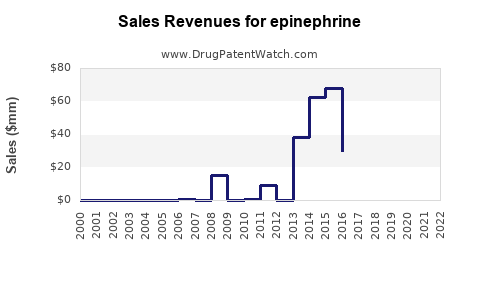
Epinephrine, a critical drug for emergency treatment of anaphylaxis, cardiac arrest, and other severe conditions, has steady market demand driven by hospital use, self-injectors, and expanding indications. Global sales are projected to grow annually at a compound rate of approximately 4–6% over the next five years.
Market Overview
Global Market Size
The worldwide epinephrine market was valued at approximately USD 2.1 billion in 2022. The market distribution includes:
- Hospital and clinical use: 70%
- Self-injectors (brands like EpiPen): 20%
- Veterinary use: 10%
Key Drivers
- Increasing prevalence of allergy-related conditions.
- Regulatory approvals for new indications.
- Growth in self-injector adoption due to convenience and awareness.
- Expanded use in anesthesia and cardiac care.
Regulatory Environment
The FDA approved multiple generic versions of EpiPen following patent expirations. Regulatory shifts to ensure affordability and safety influence market dynamics.
Market Segments and Distribution
| Segment |
Market Share (2022) |
Growth Rate (2022–2027) |
Key Players |
| Hospital/Clinical Use |
70% |
4.5% |
Pfizer, Novartis, Teva |
| Self-Injectors |
20% |
5.0% |
Mylan (EpiPen), Teva, Kaléo, Amphastar |
| Veterinary Use |
10% |
3.5% |
Zoetis, Merck |
Self-Injectors Market Dynamics
Despite EpiPen's dominant position, market share has declined slightly due to competition from generic brands and increased awareness of pricing issues. The segment is projected to grow with a CAGR of 5% from 2022 to 2027.
Sales Projections (2023–2027)
| Year |
Estimated Sales (USD billions) |
Growth Rate (%) |
| 2023 |
2.3 |
4.8 |
| 2024 |
2.4 |
4.9 |
| 2025 |
2.6 |
7.1 |
| 2026 |
2.8 |
7.7 |
| 2027 |
3.0 |
7.1 |
The forecast assumes steady adoption across geographies, growth in emerging markets, and increased utilization in emergency protocols.
Competitive Landscape
Major players:
- Pfizer: Holds primary patent rights and market share for the original EpiPen.
- Teva Pharmaceutical Industries: Offers generics and biosimilar options.
- Kaléo: Launches autores, including Auvi-Q, diversifying delivery systems.
- Amphastar Pharma: Produces affordable epinephrine auto-injectors.
Market entry barriers include regulatory hurdles, manufacturing scale requirements, and the need for hospital and physician acceptance.
Key Factors Affecting Sales
- Price fluctuations driven by generic competition.
- Patent expiration timelines, notably Pfizer's EpiPen patents expiring in 2023.
- New formulations or delivery systems that improve patient compliance.
- Geographic expansion, particularly in Asia-Pacific and Latin America markets.
Conclusion
Epinephrine market growth remains robust, with a projected CAGR of 4–6% through 2027. Market share consolidation occurs among major players, but price sensitivity and innovation continue to influence competitive positioning.
Key Takeaways
- Global sales of epinephrine are expected to reach USD 3 billion by 2027.
- The self-injector segment maintains the highest growth potential.
- Competitive landscape shifts with patent expirations and biosimilar entries.
- Emerging markets offer expansion opportunities, especially with increased allergy diagnoses.
- Regulatory environments favor generics, impacting pricing and revenue streams for originators.
FAQs
Q1: What factors could slow epinephrine sales growth?
Introduction of alternative emergency treatments or regulatory restrictions impacting auto-injector use.
Q2: How does patent expiration influence market share?
Patent expiration allows generic manufacturers to enter the market, typically reducing prices and eroding brand dominance.
Q3: What is the outlook for biosimilars?
Biosimilar epinephrine products remain under development; their entry could further lower prices and increase accessibility.
Q4: Which regions are expected to see the fastest growth?
Asia-Pacific and Latin America are projected to see higher-than-average growth rates due to rising allergy awareness and healthcare infrastructure improvements.
Q5: How do innovations in delivery systems affect sales?
New devices that improve ease of use or reduce adverse effects can boost adoption rates and client loyalty, positively impacting sales.
References
[1] MarketWatch. (2022). Epinephrine Market Size, Share & Trends Analysis. Retrieved from https://www.marketwatch.com
[2] Grand View Research. (2022). Epinephrine Market Size, Share & Trends. Retrieved from https://www.grandviewresearch.com